



by Flynn Shan Benson
Worth: $11.00
FilmInk rates movies out of $20 — the score indicates the amount we believe a ticket to the movie to be worth
Cast:
Ruby Ruiz, Kare Adea, Maricel Soriano, Soliman Cruz
Intro:
... if the story itself is uninspiring, Robinson, who previously worked as a photographer and music video director, brings a precise vision to the cinematography.
First Light, the debut feature of Filipino-Australian director James J. Robinson, begins, appropriately, before dawn.
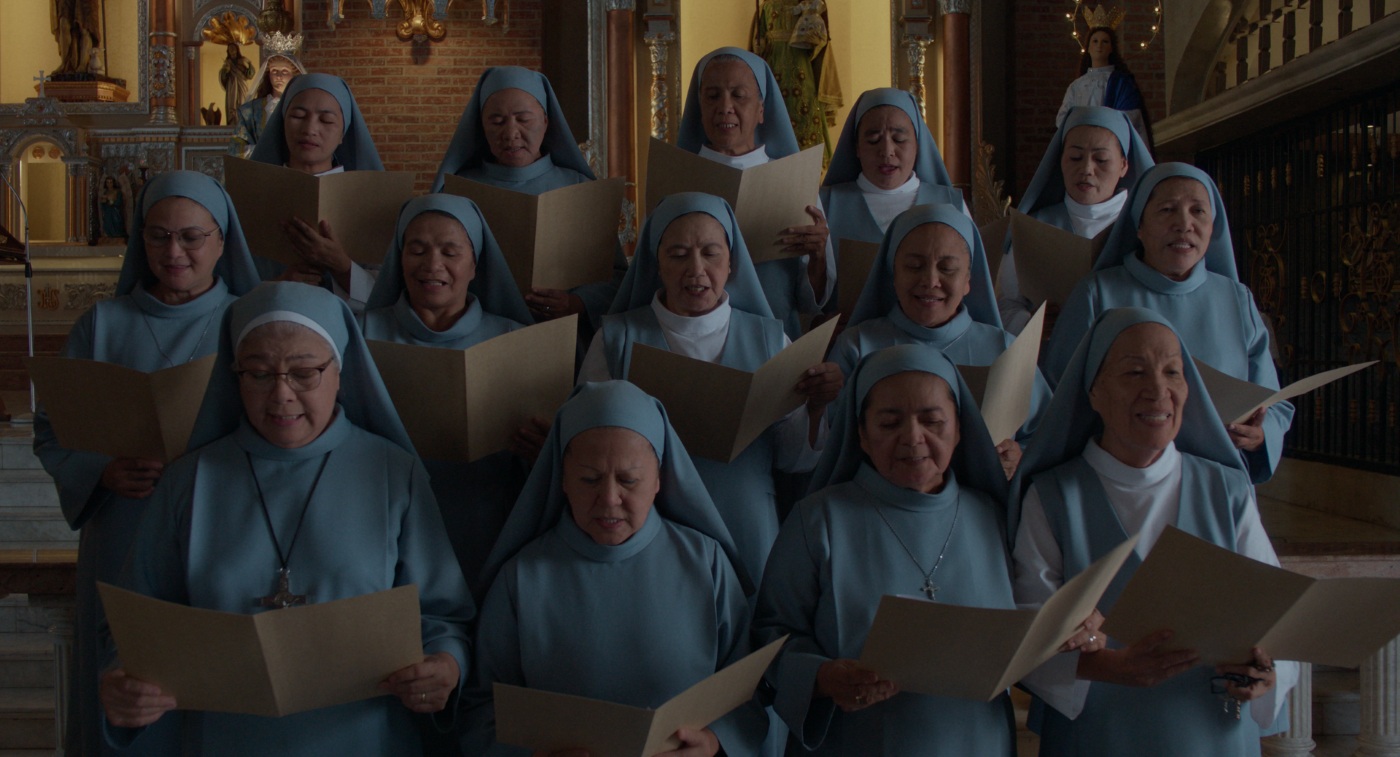
In a Filipino convent, nuns light their torches and begin their daily devotions. Under one of these habits is Sister Yolanda (Ruby Ruiz), an elderly member of the convent who spends her days in patient, if not humourless, devotion: assisting at the local church, tending to the sick, training a novice nun (Kare Adea). But the edifice of the church is rotting and in disrepair, crudely foreshadowing the spiritual drama that will unfold.
The story moves at a slow, at times enervating pace, until the inciting incident arrives: Sister Yolanda called to see a young man in hospital who is on the verge of death after an accident on a construction site. The doctors and police officer assure her that nothing can be done, so we see — in a scene that is so graphic as to be exploitative — Sister Yolanda perform the last rites on the terrified youth, reassuring him that there is a life after this one.
The circumstances of his death weigh on her, leading her to play amateur detective and examine the circumstances around it. Traversing a Filipino society of aristocratic homes and bare shacks, she finds not only a life lost for tragic and sordid reasons, but a world that only pays lip service to religious ideals.
Ruiz brings a remarkable warmth and intensity to the role, convincingly realising a character who, like Pope Francis, believes that devotion does not equate to severity; her story, however, does not offer much of a genuine dilemma for the audience. For Australian viewers, any depiction of contemporary Catholicism comes fraught with knowledge of institutional abuse and hypocrisy, meaning that it is only palatable when the Pope talks about social justice, or in slick, superficial films like Conclave. Robinson caters entirely to this crowd, presenting Catholicism as a colonial weed on the Filipino landscape, while any genuine depth of feeling is found only in characters who identify, in a distinctly modern, Western way, as spiritual rather than religious.
But if the story itself is uninspiring, Robinson, who previously worked as a photographer and music video director, brings a precise vision to the cinematography. He excels not only in creating shots of beauty — capturing minute gradations of light over the horizon, carefully framing characters against expansive backgrounds — but in achieving genuinely distinctive images, patiently letting scenes play out from behind a dashboard, or behind an operating theatre. Through his lens, both an altar and a lunch counter are shown with equal reverence. Hopefully his next project will let him realise the promise shown here.
