


by Cain Noble-Davies
Worth: $15.99
FilmInk rates movies out of $20 — the score indicates the amount we believe a ticket to the movie to be worth
Cast:
Scarlett Spears, Tom Hanks, Tim Allen, Greta Lee, Joan Cusack, Conan O’Brien
Intro:
... the film still succeeds at that particular blend of exciting, fun, and heartbreaking entertainment that truly makes this franchise so beloved.
Along with kickstarting computer-animated cinema and putting Pixar on the map, Toy Story is also one of the cleverest and sneakiest family film series ever. With a little CGI-as-plastic sheen, these films have managed to make body horror, existential angst, and railing against the machinations of unjust gods… into the kind of material that’s appropriate for all ages.
For just over thirty years, this franchise has served as a silver bullet aimed right at the idea that media made for younger audiences has to be dumbed-down, overloaded with noise, and/or something adults needn’t be bothered with. Sure, the whole affair could’ve just ridden off into the sunset on a high after the exceptionally brutal Toy Story 3, but the toys are indeed back in town and going strong.
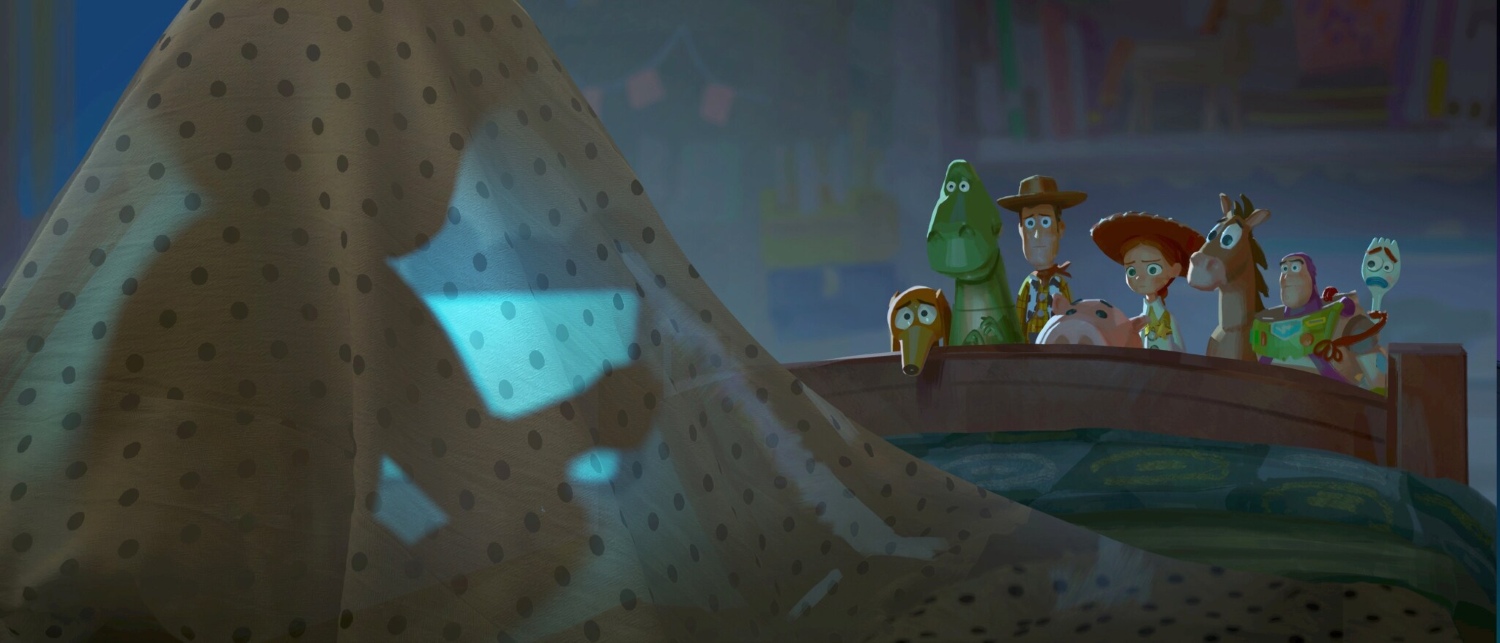
While Toy Story 5’s main plot still focuses on the fear of being replaced (in this case, by Greta Lee as the legally-distinct ‘Lily’Pad) and a larger-than-life journey back home, much like the previous films, the kid-friendly existentialism that gave those films their insatiable bite is in much lesser supply this time around. It’s a lot more straight-forward in its depiction of what toys get up to when no-one else is looking, and there’s certainly much less philosophising about the purpose of toys in gigantic human hands. That, along with the decreased presence of the supporting cast, to the point where even a returning Tom Hanks as Woody feels a bit superfluous, and the cutting between the main action and what are essentially Chekhov’s Brigade of Buzzes on their own adventure, make this much wonkier than past instalments.
However, that becomes more than manageable as, with a diminished focus on the more cerebral edges of the franchise’s ethos, what remains turns out really well. And it all starts with what, for many, felt like a warning flare when the film’s first teaser trailer dropped last November: Lilypad as the new antagonist. We won’t rehash arguments about media made for screens serving as cautionary tales against screens, but suffice it to say, that one inclusion at the time felt like a harbinger for this series to show just how long-in-the-tooth it has become, like the Abe Simpson “Old man yells at cloud” meme with a frog-like border.
But mercifully, that is not the case. The actual “Toy meets Tech” messaging is thoughtful and nuanced, presenting Lily as the new face in town (err, bedroom) who just wants what is best for her owner, same as the older toys. It pays lip service to the ways that social media can distort one’s understanding of real human connection (and even warns against letting technology choose friends for people, which feels timely considering recent A.I. concerns), but doesn’t throw the digital baby out with the bathwater. It doesn’t cast dispersions on the specific ways that children play, only highlights the importance of play in and of itself and the way it can bring people together. U
And with that in mind, beyond the deeper thematic details, the film still succeeds at that particular blend of exciting, fun, and heartbreaking entertainment that truly makes this franchise so beloved. The sense of humour, mixing subtler gags like toy camera Snappy’s flash going off whenever she has an idea, and a few macabre jokes, like a particularly-unfortunate name for a pet pig. It may not hold as much horror cred as its older siblings (no exploding toy soldiers or Stygian rubbish bins or furnaces or ventriloquist’s dummies to be found here), but there’s solid tension in its narrative make-up, and particularly when it focuses on Jessie and her trauma, it pulls tears out of the audience’s eyeballs like an industrial vacuum cleaner.

It also just looks great. There isn’t as much drastic advancement in terms of visual tech here compared to that between 4 and 3, but Andrew Stanton’s direction exudes confidence in the story being told and respect for whatever audience will see it. It’s evident right from the opening with the aforementioned Buzzes, succinctly showing the series’ existential backbone in an appreciably mature and engaging way, while still letting the rest of the film do its own thing. It’s old hat for Pixar at this point, but in keeping with its level-headed musings on the attention spans of today’s youth, the film backs up its narrative convictions not just by keeping things visually engaging but by giving the audience much to think and feel about in a way that further highlights children’s media as more than just an electronic babysitter. When done properly, that is.
Toy Story 5 has a few wobbles and does feel somewhat held back by its attachment to its own franchise with the obligatory return of familiar faces, but it still manages to shine in spite of that. Its approach to commenting on modern screen culture feels (if you’ll pardon the pun) light-years ahead of the sentiments typically found in the mainstream, both for kids and adults, and when it aims to make the audience laugh and/or cry, it succeeds with equal receptiveness to let it happen and come back for more. It may not hit quite as hard as previous films, but in favour of trying new things and actually talking sense while doing so, it’s a fair compromise and another notch in the franchise’s still-enviable track record.
