



by Cain Noble-Davies
Worth: $16.50
FilmInk rates movies out of $20 — the score indicates the amount we believe a ticket to the movie to be worth
Cast:
Paul Rudd, Nick Jonas, Jack Reynor, Havana Rose Liu
Intro:
… a feel-good movie that isn’t afraid to make the audience (and even its characters) earn those feels …
John Carney’s approach to highlighting the cinematic journeys of musos trying to find fulfillment, identity, or just the joy of the lyrical moment is at once obsessively fixated on authenticity, yet knowingly and wilfully built on the MTV aesthetic of music as a gateway to fantasy. His oeuvre, at its best, is the embodiment of a Dolly Parton quote: “I may look fake, but I’m real where it counts.” It’s the kind of earnestness that elevates even the super-polished sheen on Begin Again, and it’s an approach that further serves him well with his latest.
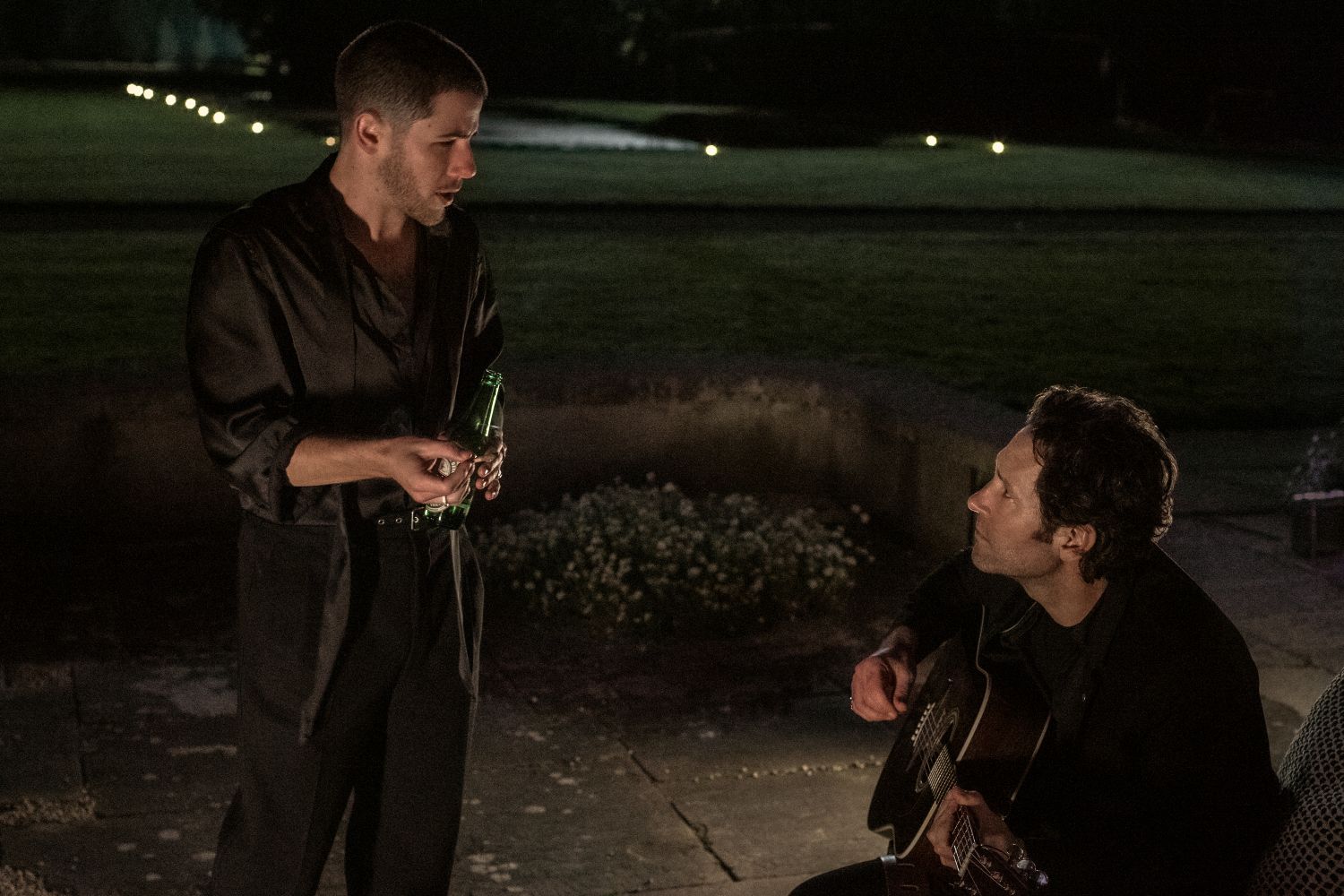
Much like when he cast Adam Levine as a singer willing to drown himself in overproduced noise in Begin Again, bringing in Nick Jonas to play a former child singer desperately trying to show that he’s serious and grown-up now is very apt. Jonas turns out to be enjoyably punchable, robbing Paul Rudd’s faded wedding singer Rick of recognition for a genuine hit.
Underneath the put-on charisma, Jonas gets across a surprisingly genuine worry of being stuck in the baby-faced days and going to extremes to avert that fate. The cracks in his voice and facial expression when things get confrontational has echoes of Justin Bieber’s ‘Boyfriend’ era, Miley Cyrus on ‘Can’t Be Tamed’ and ‘We Can’t Stop’, Nick Jonas’s own image shift with ‘Jealous’ back in 2013 (even the green-screening for the mock music video is a dead ringer), and Donny Osmond’s ‘Soldier Of Love’ – the artifice to cover a very real and deep-set fear of the reality of time.
As the film digs into Rick’s desperation at being ripped-off, it ventures close to a psychological thriller in the pervasive way that the narrative gaslighting gets. It’s like Carney took the chord of the bathroom scene from his Sing Street and just sustained it for minutes on end; that’s how uncomfortable this gets.
And yet, it’s also just as warm and approachable as the filmmaker’s other work. The dialogue is full of funny quips, the characters are enjoyable (co-writer Peter McDonald clearly gave himself the best part as guitarist Sandy), and the music still has that Carney/Gary Clark (composer) ear-candy quality. Not quite ‘Drive It Like You Stole It’ [Sing Street] levels of catchy, but that’s a high ceiling to reach. The way the story and even the performers wrap around the core song ‘How To Write A Song (Without You)’ gives it the right emotional weight, and it holds up to the musical duo’s pedigree.
Paul Rudd may not be the strongest singer that could’ve been cast for the lead (much like Keira Knightley in Begin Again), but Carney’s musical ear is similar to that of Lorne from Angel: It’s not about the ability of the singer, but what the act of singing reveals about their soul. And in that regard, combined with supercharging the jarring intensity through how likeable he is, he serves as a great voice for the film’s bigger remarks about the joys of music and the many things it can mean to people. And how due credit is still nice.
Power Ballad shows Irish polymath John Carney experimenting with more anxious and nervy tones but still offering that iconic singalong bliss that makes his films worth keeping in the playlist. Paul Rudd and Nick Jonas are terrific in the central roles, both for their rivalry and how well they convey the depth of their characters, and whether they’re bringing new material or playing the oldies, the music remains fantastic. It’s a feel-good movie that isn’t afraid to make the audience (and even its characters) earn those feels, with Carney playing both instruments and hearts like a Stradivarius.
