

by Hope Challis, OT
A wide shot of Owen screaming into his hands in an isolated rural field is played for laughs in romantic comedy Finding Emily. But its underlying message strikes to the core of romance in the digital age: the absolute agony and disillusionment of forced social masking and the inner turmoil of being pressured to perform an inauthentic version of yourself.
People will walk into the film expecting a formulaic by-the-numbers romcom. The marketing highlights the juxtaposition through its protagonists’ personalities – led by Australia’s Angourie Rice as Emily Raine, an American type A cynical psychology student and Spike Fearn’s Owen Brompton, a type B Manchester wallflower musician and sound technician. The film and its promotional marketing champaign show a clever nod to social media, modern slang, and call backs to Bridget Jones’ Diary and Notting Hill [both also produced by Working Title Films].
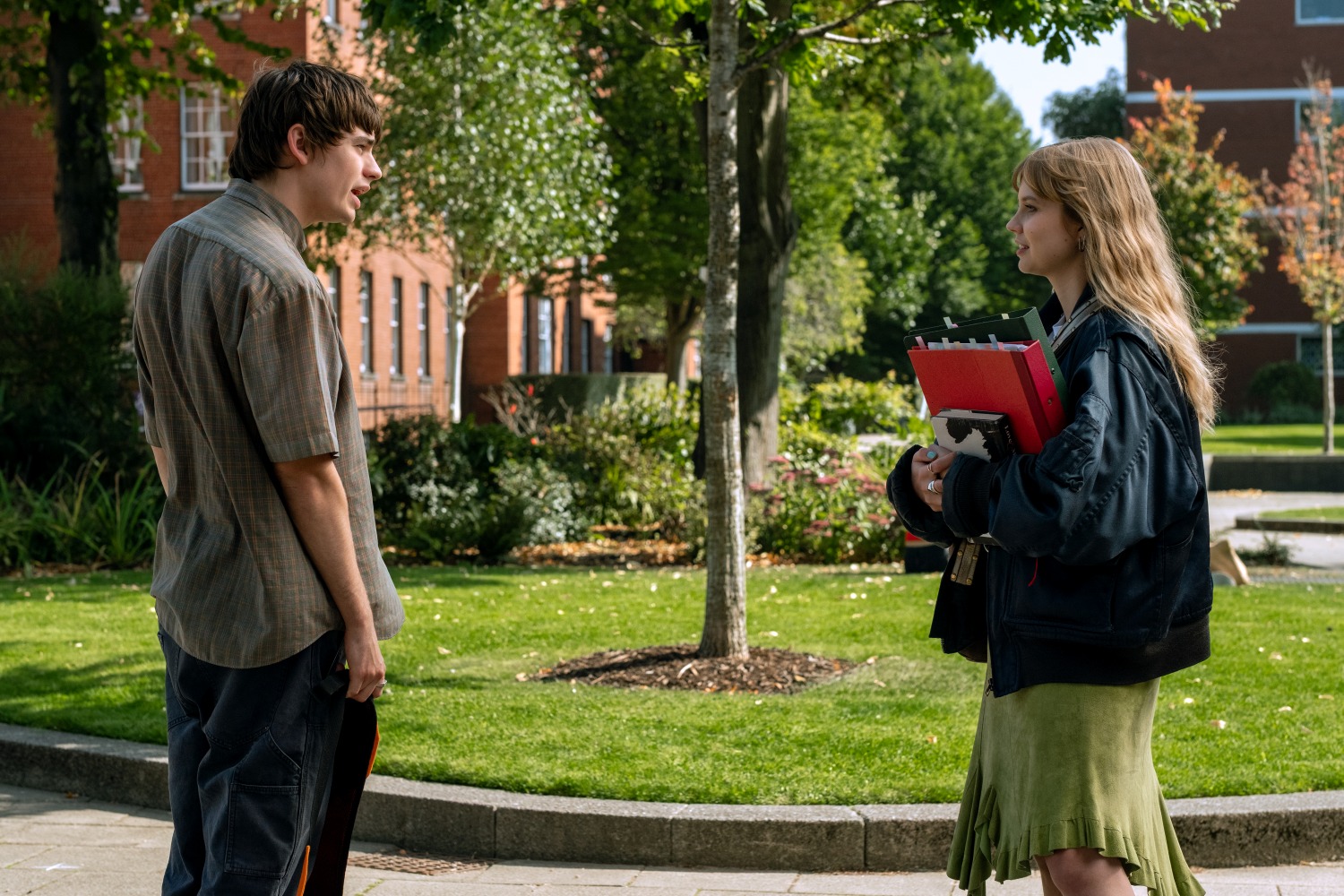
The narrative subverts these nostalgic films. Directed by Alicia MacDonald and written by Rachel Hirons, Finding Emily follows Owen, who is pushed out of his comfort zone into situational masking for love, after connecting with a girl named Emily on a night out. Failing to capture the last digit of her phone number, Owen is pursued by psychology student Emily to track down the elusive girl of his dreams. Hirons’ screenplay cleverly redefines the classic romantic lead for modern audiences – Owen suppresses his natural discomfort, introversion, and sensory boundaries. This allows him to keep up with Emily’s high-octane and psychologically manipulative schemes, all designed to prove her academic theory that romance is merely a hangover from modern evolution.
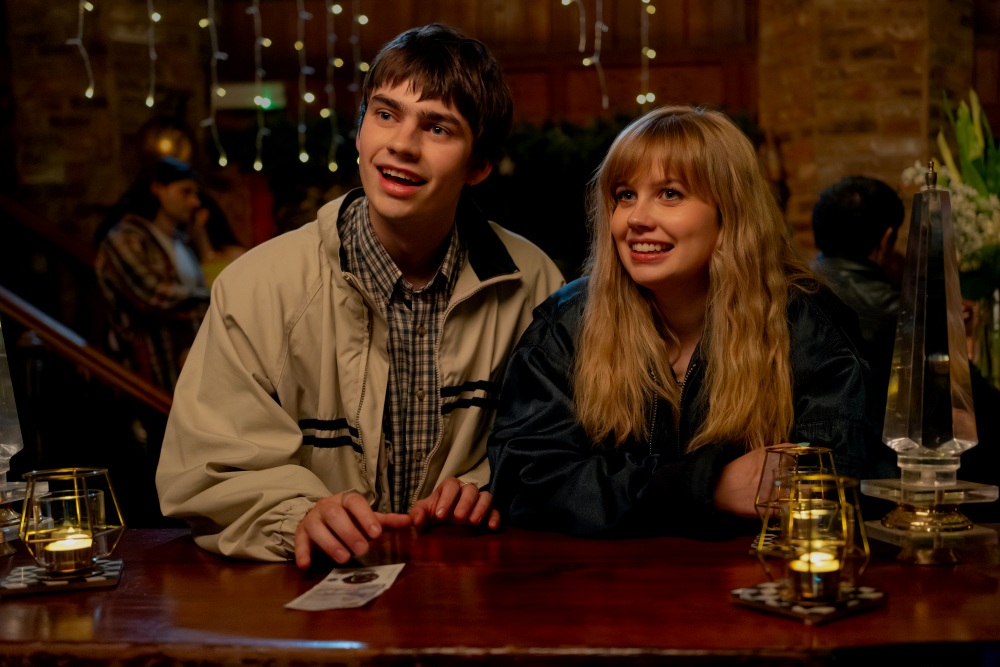
For Rice, this role is a darker inversion of her breakout role as Cady Heron in Mean Girls: The Musical. While Cady was the naïve ingenue corrupted by high school’s cruel dynamics, Emily, like Regina George, is the architect of it on the university campus.
Finding Emily leads to an unfair power dynamic packaged as a “will-they-won’t-they” romance or “friends-to-lovers” trope. Owen, besotted with the idea of the Emily that he briefly met, uses this search as an organic romance objective to find her, echoing other romantic leads without knowing her – chasing the illusion like in John Green’s book/mini-series Looking for Alaska. Finding Emily twists this, in a Bridget Jones-esque slip up for the digital generation, with Owen mistakenly CCing every single Emily on Manchester University campus in an email when he meant to BCC. Chaos ensues.
Vitally, this is framed by the film as a digital disaster, leading to Owen’s image being defamed as he uses his masking to cope with the loss of his mother by fixating on the mystery. As his character is destroyed, Emily’s rises, thriving gleefully, using him as her own Stanford Prison Experiment. She actively leverages his lack of social filter and suffering to elevate her academic standing; asking the audience to question which mask is more detrimental, the mask we wear for social anxiety or the mask of calculated ambition?
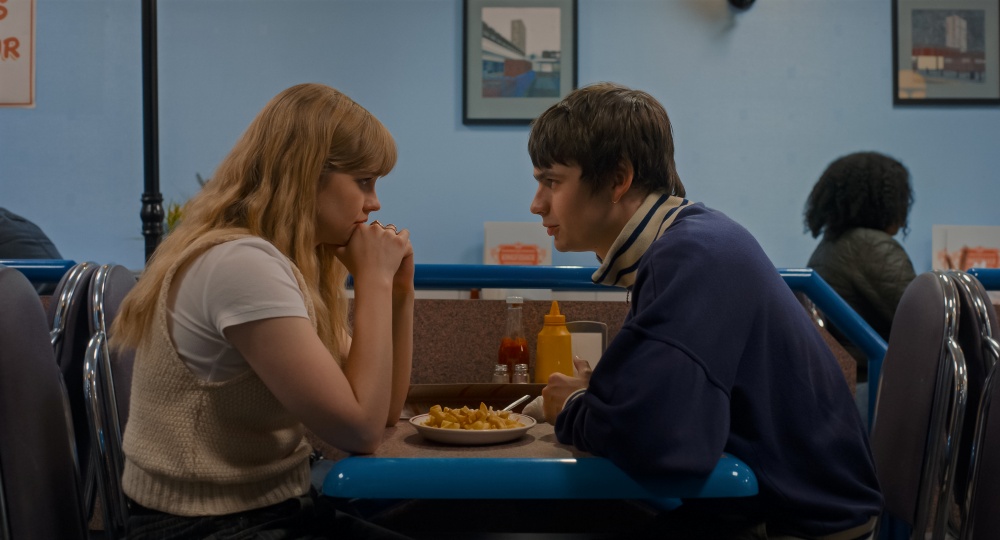
This narrative tension peaks when Owen plays guitar during a podcast appearance. A trope made fun of in Greta Gerwig’s Barbie – while romcoms of yesteryear like 10 Things I Hate About You view this through an idealised romantic lens – the film leans hard into the darker territory of Owen’s attempts of connection, coming across as invasive and creepy despite his character being firmly rooted as the “hopeless romantic”.
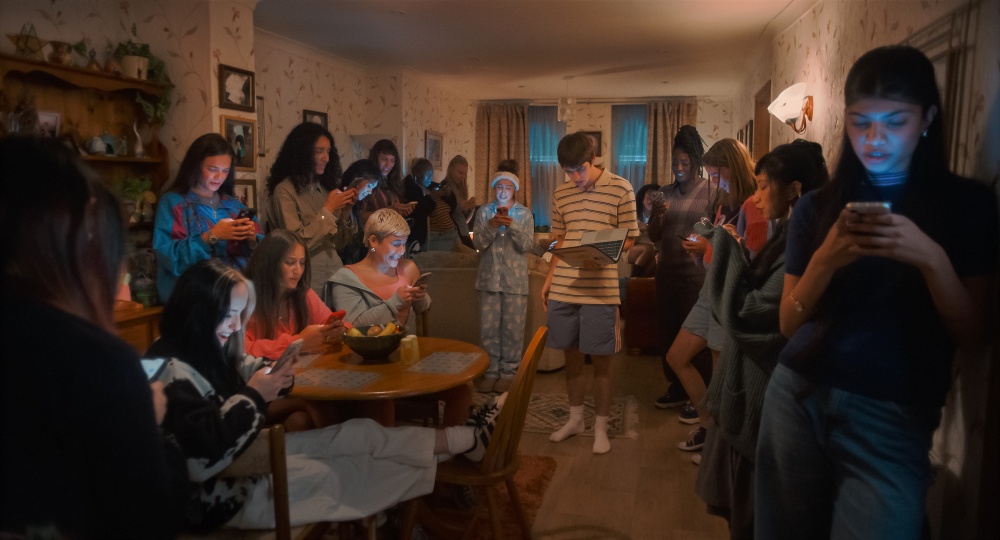
Owen speaks of his experience, which in true romcom fashion backfires spectacularly. The internet and a fierce group of on-campus 318 (!!) Emilys, dubbing him an incel of the highest order, spinning a narrative that he has been radicalised by the Mano-sphere intent on harming the Emilys of the world. It’s the type of harmful ideological thinking explored in another British production, Adolescence, which also critiqued toxic masculinity culture. Yet for Owen, this couldn’t be further from the truth. Instead, the film showcases just how far some will go in pursuing their ambitions. Emily, to quote Taylor Swift, is “only cryptic and Machiavellian cause she cares” … mainly about her academic grades. She forces introverted Owen from a small handmade “wanted” poster into a massive spectacle and intense scrutiny impacting all aspects of his life and mental health, in pursuit of love that he himself starts to doubt under the pressure.
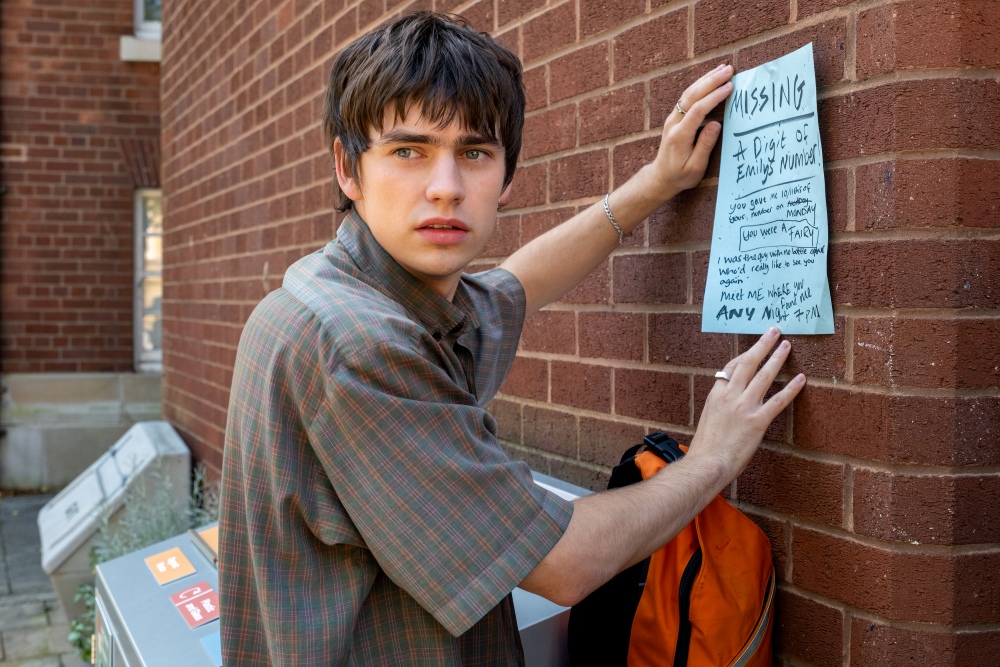
Owen’s euphoric rise and later crash is scored to a Manchester-centric Indie and Electro-Synth soundtrack. Owen demonstrates signs of neurodivergence in sensory overload, intense hyper fixation and reliance on scripting and masking. While MacDonald and Hirons may not have explicitly written Owen as neurodivergent, Fearn’s raw, sensory-driven acting choices create an accidental masterpiece of neurodivergent representation complete with movement-seeking like jumping down flights of stairs. Other examples include Owen driven by his earnestness upon realising that he doesn’t have Emily’s phone number, taking the next step of asking literally everyone and every Emily on campus about her to find her, not realising the implication of his actions. Sensory overwhelm occurs when he isolates himself in a field or when he gets confused by the podcast hosts twisting of his words and his intense focus on finding Emily and then clearing his name. Or when he CCs all the Emilys and they physically manifest in his space until he closes his laptop.
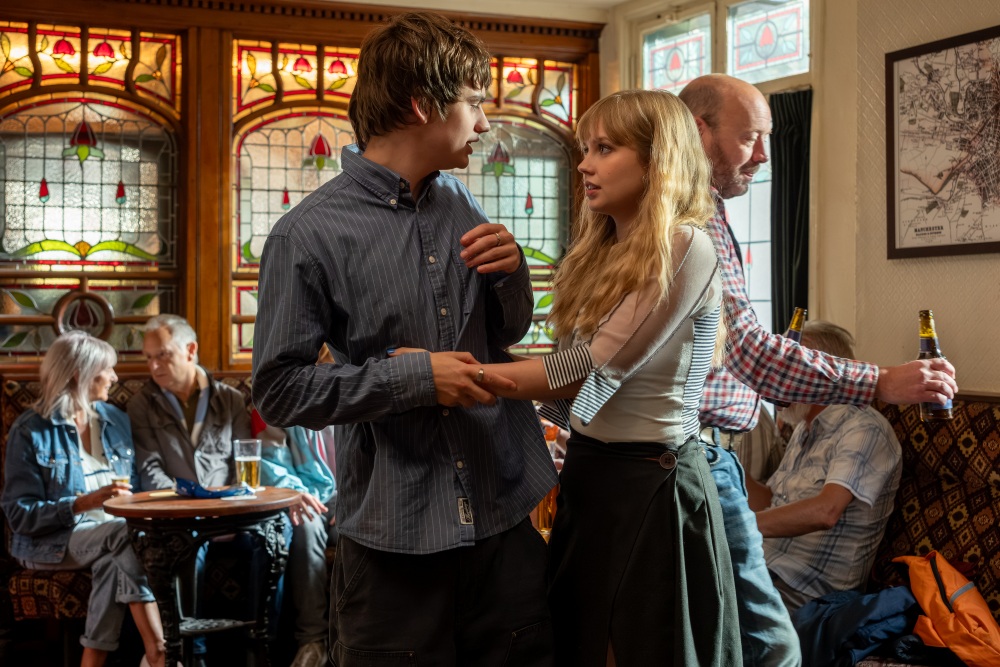
In modern dating in a hyper online landscape, people expect the flawless “main character energy” of the manic pixie person; in Owen’s case, a literal fairy. This film takes that trope, repackaging it, and asking viewers to consider all sides of the coin. The yearner, the parasocial relationship target and the audience, through Emily’s experience and the digital audience tracking playing out in real time; juxtapositioned with real life audiences in the cinema. Ultimately, the film falls short when its rushed conclusion forces the leads together, claiming that both have changed for the better. This cheapens the impact and the psychological weight as it almost feels like Emily has manipulated the outcome rather than Owen actively choosing her.
Hope Challis is an Adelaide based Arts Journalist, Adelaide Correspondent for Theatre Thoughts Australia, and a paediatric Occupational Therapist (OT). Navigating life with her own lived experience of disability including a paralysed vocal cord and monocular vision. Hope is deeply passionate about promoting accessibility and inclusion across education, film and the performing arts.
