




by Stephen Vagg
Cinema Center Films was a short-lived film studio that operated in the late 1960s and early 1970s. Many of Cinema Center’s movies were distributed by National General, a huge theatrical chain. During this period, National General also made some of its own movies.
A bit of backstory about National General. After World War Two, the American government forced the major studios to sell off their cinemas as part of an anti-trust decree; 20th Century Fox’s theatres were sold and became part of a new company, National General Corporation. In the 1960s, National General decided it would make movies. Now, it seems weird that the government would allow this, after having forced studios to divest itself of theatres twenty years earlier – it’s a movie studio owning cinemas again. However, by the 1960s, the film industry was in a slump, National General argued that it would help filmmakers if they entered production, and so the government gave permission.
National General originally announced its production arm would be called “Carthay Center Productions” – a name later changed to “National General Productions” (“National General Pictures” was also used). The man in charge of National General’s film division for most of its operation was an executive called Irving Levin; he wasn’t the only figure involved in making movies at the studio – other key ones were Dan A. Polier and Charles Boasberg – but for the purposes of this article, we’ll say that the mogul was Levin.
By our count, National General produced twelve in-house features. This doesn’t include all those films that it distributed for Cinema Center Films, and other production companies. There may be others that we have overlooked but here, as far as we can determine it, is the dozen:
The Quiller Memorandum (1966) – National General’s first production, a classy spy thriller starring George Segal, with a script from Harold Pinter and directed by Michael Anderson. It was a co-production with Britain’s Rank Organisation. This movie did okay at the box office but wasn’t a hit and did not lead to a hoped-for franchise. Still, the movie has its fans.
Divorce American Style (1967) – a comedy about, you guessed it, divorce starring Dick Van Dyke and Debbie Reynolds from up-and-coming TV writer-producers Bud Yorkin and Norman Lear. Lear wanted to cast Joan Hackett in the lead but claims in his memoirs that Irving Levin insisted on Reynolds, in part because (a) Levin was mates with Reynolds’ husband Harry Karl and (b) apparently Hackett shagged the wife of a key executive at Columbia Pictures who co-financed. Incidentally, Yorkin and Lear signed a two-movie deal with National General and Divorce American Style was reasonably popular at the box-office, but the studio rejected their next project, The Night they Raided Minsky’s, so they made that for United Artists. Lear and Yorkin went on to conquer television in the 1970s (All in the Family, etc) but it’s to National General’s credit that the studio recognised their talent.
How Sweet It Is (1968) – a romantic comedy about a married couple and their son travelling through Europe starring James Garner and Debbie Reynolds. It was made by another TV team, this time director Jerry Paris and writers Gary Marshall and Jerry Belson. The movie flopped commercially; Marshall admitted it was ten years too late in terms of tone and subject matter. Again, National General did show an eye for new talent at least, in employing Marshall at the beginning of his career.
Charro (1969) – a serious Western with Elvis Presley not singing or even shaving. This film has a solid story and Presley was quite good – he had the potential to be a superb actor – but it was flatly directed by Charles Warren and comes across as an episode of a TV show. The film’s low cost meant it enjoyed some profitability, but Presley’s excellent efforts were not rewarded. This is one of the studio’s movies that could and should have been much better.
The Stalking Moon (1969) – a serious Western that was meant to be the first in a three-picture deal between National General and George Stevens, but wound up being made by the team responsible for the movie of To Kill a Mockingbird (Gregory Peck, Robert Mulligan, Alan Pakula). The Stalking Moon was full of classy names – Eva Marie Saint, Robert Forster – and tried to be an elevated action movie but it was a box office disappointment and, truth be told, is a slightly flat effort.
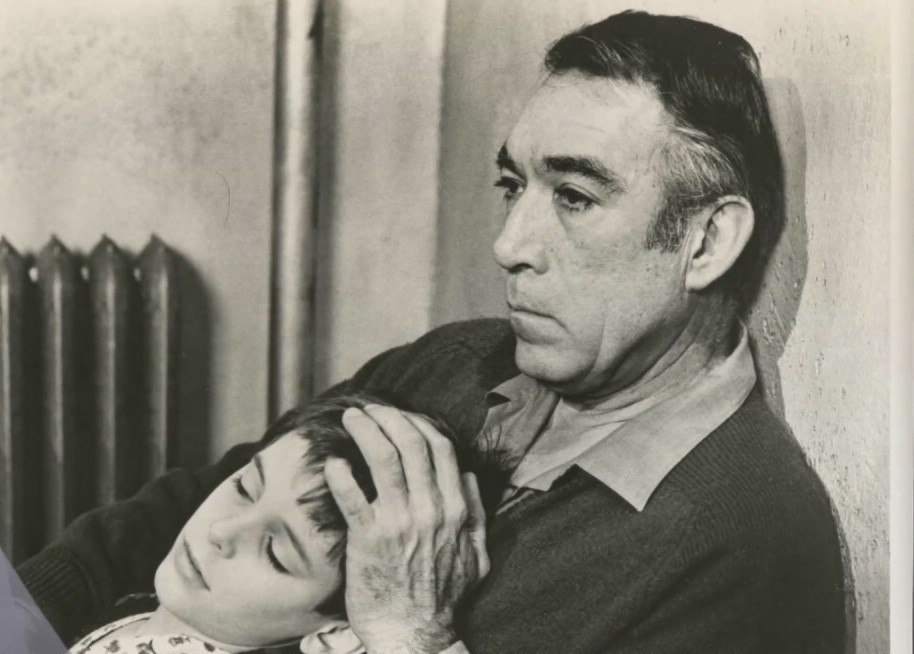
Dream of Kings (1969) – guy cry movie with Anthony Quinn raising money for his dying son that tried but failed – like so many late ‘60s Quinn films – to repeat the success of Zorba the Greek. A flop. We were unaware this movie even existed.
Daddy’s Gone A-Hunting (1969) – a stalking thriller from director Mark Robson. Co-writer Larry Cohen wrote the script for Alfred Hitchcock and was unhappy with Robson’s directing and the casting of the leads: British “it”-girl-at-the-time Carol White and Canadian newcomer Scott Hylands. Cohen claimed White (who turned down Ken Russell’s Women in Love to make the movie) was cast because she was sleeping with the head of National General, Irv Levin. In her memoir, White confirmed this affair – indeed, she wrote about it at length, claiming “the vibes and chemicals that sparked between us were both very animal and basic” (both were married to other people). In fairness to Levin, White was a hot star at the time, coming off Ken Loach’s Poor Cow (1967) (which had been distributed in the US by National General), and was thought to be the next Julie Christie, so it wasn’t that odd she was cast. Daddy’s Gone a Hunting was a box office disappointment, but it did have one positive impact – Cohen was so unhappy by what happened to his script, he decided to turn director soon after with Bone (1970).
The Grasshopper (1970) – a drama about a woman being loved and left in Las Vegas, based on a novel by Aussie Mark McShane, from the writers and director of How Sweet It Is (the original director, Don Medford, was fired during filming and replaced by Jerry Paris). This movie was originally meant to star Carol White, but she was turfed for some reason (White is vague about it in her memoirs) and the filmmakers went with Jacqueline Bisset, who got her first real chance outside of “The Girl” parts. Her co-star was Jim Brown, branching out from action films. Despite sincere work from everyone, the public didn’t seem to go for The Grasshopper – there were probably too many dramas about young people at the time. Garry Marshall was proud of the film and claimed the sexy ad campaign misled audiences.
Cheyenne Social Club (1970) – a comic Western with Henry Fonda and James Stewart as cowboys who run a brothel. The sort of movie you expect to be directed by Burt Kennedy or Andrew McLaglen, it was made by Gene Kelly, after McLaglen turned it down. This movie actually did alright at the box office.
El Condor (1970) – a fun buddy Western shot in Spain from John Guillermin starring Lee Van Cleef and Jim Brown and a script by Larry Cohen.
The Baby Maker (1970) – a drama from writer-director James Bridges, his feature debut, about Barbara Hershey being a surrogate mother for a rich couple. Scott Glenn is her boyfriend. Not a commercial blockbuster but it received some nice reviews and the film has become a favourite.
The Todd Killings (1971) – a thriller based on serial killer Charles Schmid from TV director Barry Shear that has a surprisingly low profile.
In addition to the aforementioned movies, National General announced some projects that were never made, two of which in particular sound fantastic: an adaption of the off-Broadway musical Your Own thing, and a version of Elmore Leonard’s novel Forty Lashes Less One (well, it started as a script for National General then became a novel – Quentin Tarantino expressed interest in filming this at one stage).
National General was also going to make some features eventually filmed by other studios, including: Chino (eventually done with Charles Bronson), The Devil’s Advocate from the novel by Australia’s own Morris West (un-memorably shot with John Mills in 1975), and most tantalisingly, The French Connection based on the book by Robin Moore from director William Friedkin and producer Philip D’Antoni. The French Connection was originally set up at National General who paid for Alex Jacobs (Point Blank) to write a script, but everyone disliked Jacobs’ work and the studio dropped the project; Friedkin and D’Antoni got a new script from Ernest Tidyman and eventually set up the film at Fox, where it won Oscars and became a smash. Friedkin wrote in his memoirs that whenever he ran into Levin in later years, he would tease the executive for letting The French Connection slip through his fingers; that’s a little mean considering most of Friedkin’s movies were commercial flops but The French Connection might have been the blockbuster that saved the producing arm at National General. As it was, the studio pulled out of production in 1972, having lost an estimated $20 million on filmmaking according to chairman Gene Klein.
National General’s collection of in-house movies fell equally into four categories: melodramas, thrillers, comedies, Westerns. Many of the films were widely seen but none were big hits. The studio possibly over relied on television talent behind the scenes (Norman Lear, Bud Yorkin, Jerry Paris, Garry Marshall, Charles Marquis Warren, Barry Shear) and old timey stars (Henry Fonda, Debbie Reynolds, Anthony Quinn, Elvis Presley) – but there was plenty of new blood in there: James Bridges, Garry Marshall, Jacqueline Bisset, Jim Brown, Norman Lear. A lot of the experienced directors seemed to have “off” days working for the studio eg Mark Robson, Robert Mulligan, Michael Anderson.
After it ceased in-house productions, National General continued acting as a distributor for a few years, working with Cinema Center Films and then First Artists (a ‘70s company formed by mega stars such as Steve McQueen and Barbara Streisand). They distributed European films (Eagle in a Cage, Light at the End of the World), Bruce Lee movies (Fist of Fury), early First Artists efforts (Judge Roy Bean, The Getaway), Harry Alan Towers movies (Long John Silver), a Michael Crichton sex film no one remembers (Extreme Close Up) and a JFK assassination move (Executive Action).
The company wound up, selling its distribution interests to Warners and its cinemas to Mann Theatres. Levin quit the company in 1972 and went on to a colourful business career that included co-owning the Boston Celtics.
What to make of the in-house productions of National General Pictures? No classics, a few missed opportunities, a lot of bad luck. Making movies is hard. Still, we guess if you run a studio, it increases your chance of shagging movie stars.
