


by Ben Weir
The First Part
Has the discourse about making a livelihood from the creative industries reached a new intensity lately? I think the answer is a resounding ‘Yes’ and, also a little ‘No’. Yes because: Artificial Intelligence, distribution monopolies, defunded public broadcasters, universities, local production quotas, and many more issues. Talk to any creative trying to earn a living from their output and they’ll passionately share their ‘challenges’ with you as much as they will their successes. And No because creative pursuits have always been challenged, undervalued, and open to all sorts of criticism, from anyone and everyone who cares to give it. Struggle is an integral part of the creative dynamic.
In his short story The Critic As Artist, Oscar Wilde’s two characters, Ernest and Gilbert, muse on this very topic. It’s a great read. Early on, Gilbert offers up this pearl of acerbic wisdom, “Yes: the public is wonderfully tolerant. It forgives everything except genius.”
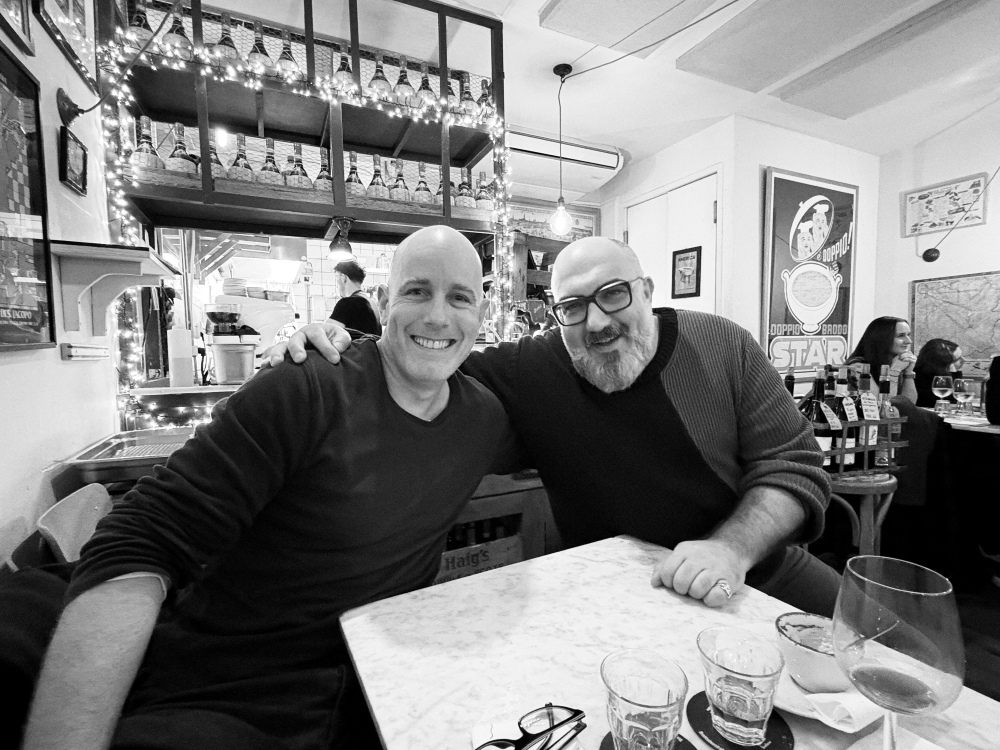
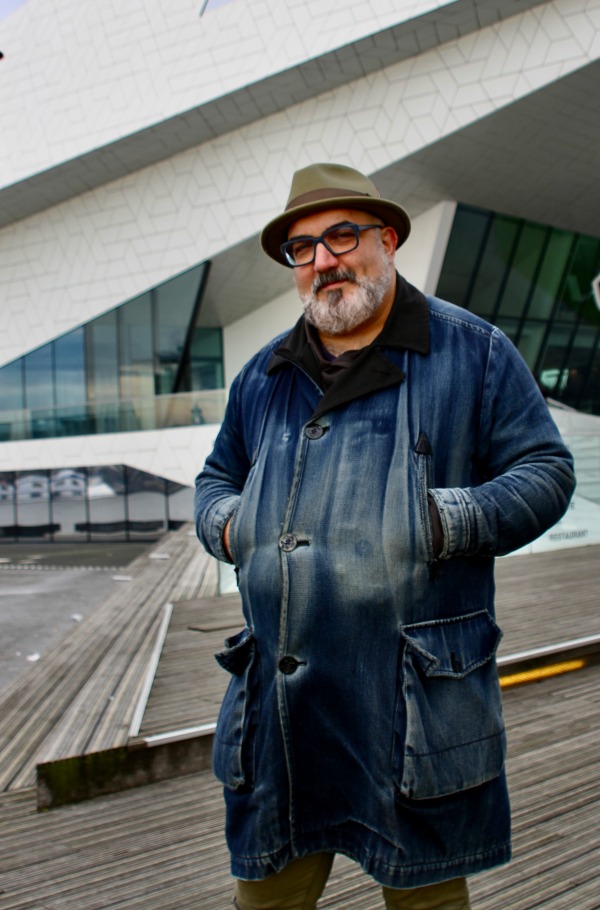 I needed to talk more on this and other subjects. I realised what I had to do. I had to catch up with my old friend Massimo Benvegnu [left]. He’s a fascinating man who has lived a wildly interesting professional life. Lucky for me, he loves a chat.
It’s been 20 years since we last shared the air. He and I first met on the Rialto Bridge in Venice, from where he efficiently whisked me through the slack-jawed throngs of tourists to a local restaurant, where I had the best fish crudo I’ve ever tasted in my life.
We talked film, blues guitar, good food, and more film. These are important elements in Massimo’s world. Mine too.
Massimo was born in Padova, Italy, and majored in Film Studies at the University of Bologna. He started his career working for producer Ronald Shedlo and screenwriter Christopher Hampton helping to develop feature film projects in both Italy and the UK.
He has produced documentaries that have screened at festivals worldwide.
Massimo has a long and established reputation as a programmer, curator and film critic. He has worked for major festivals such as Venice and Locarno and is currently the General Director of Biografilm Festival, an international film festival held in Bologna, Italy. The festival is dedicated to biographies, documentaries, and life stories.
He’s also authored several books and essays. Massimo wrote the first monograph ever published in Italy about Australian filmmaker Peter Weir.
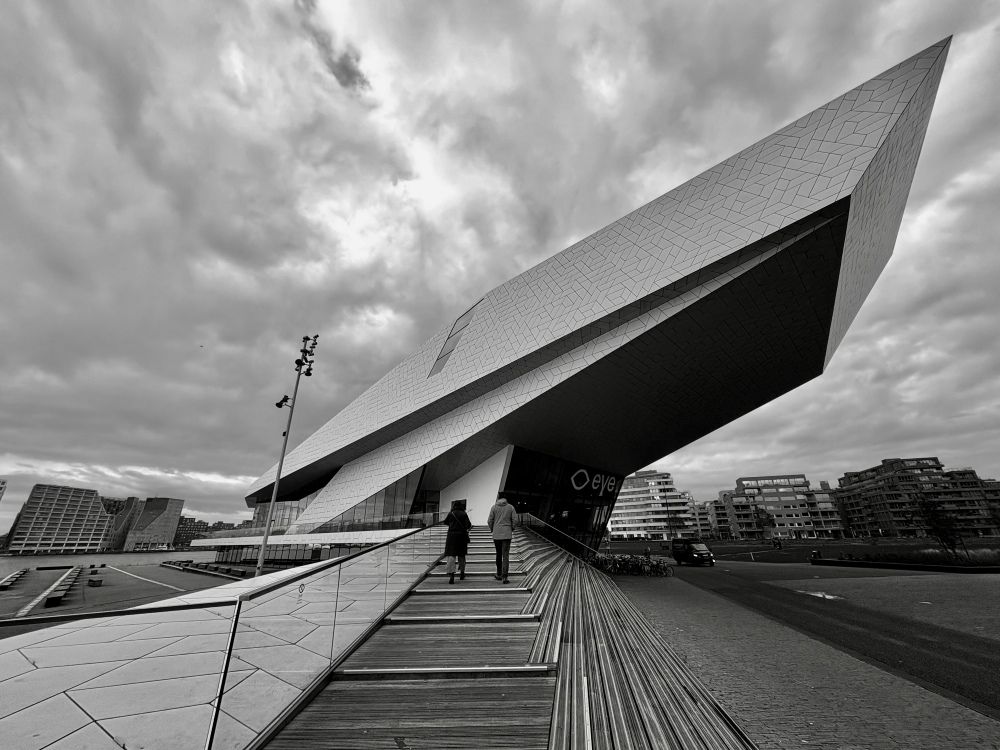
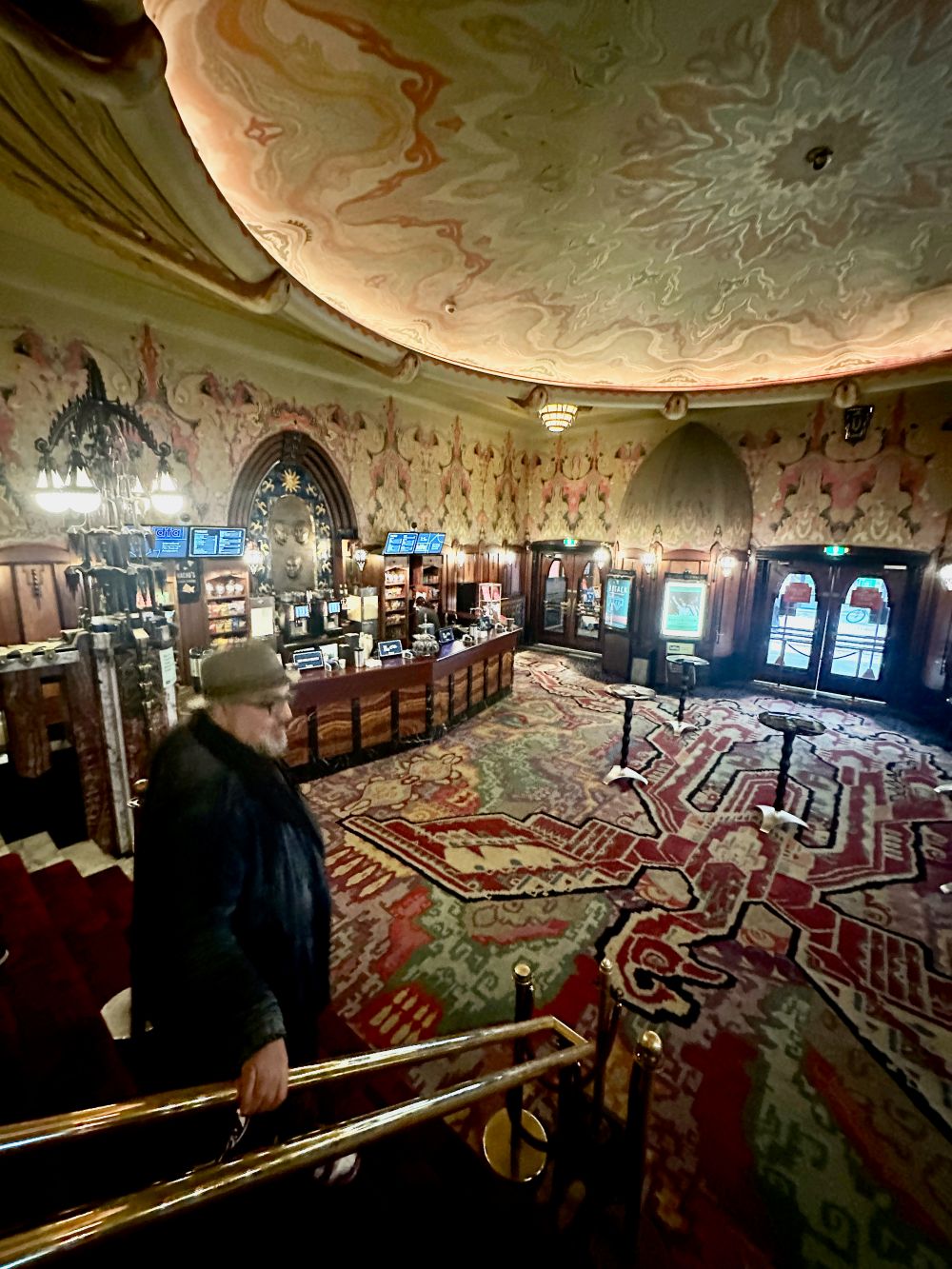
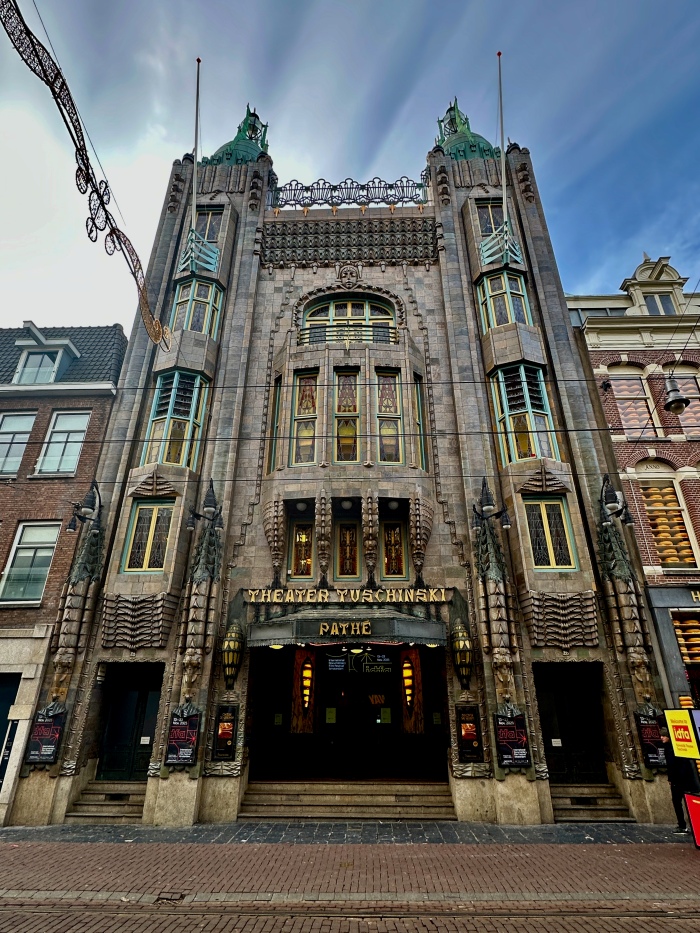
Signore Benvegnu meets me at 10am outside my hotel. After hearty greetings, he instantly slips into the role of the cinema-centric tour guide. We’ve agreed to have our chat at Eye Filmmuseum, a striking new addition to the Amsterdam foreshore and the home for all things film and cinema. On our way there, Massimo takes me to the Royal Theatre Tuschinski. It is honestly one of the most beautiful theatres I’ve ever seen. As we snoop around the rich interior, I’m privy to a history lesson of the building’s origins, its tragedies, some architectural factoids, and the odd scandalous story.
A flower market, espresso to go, several churches and some Hollywood anecdotes on the short ferry ride to The Eye, and before I could say stroopwaffel, we had whizzed through the Tilda Swinton exhibition.
“I liked her in Orlando,” was pretty much all I could muster.
We found a table in the cafe facing the harbour and got down to brass tacks.
So, you worked at Eye for a number of years. What were you doing here?
“I started working in the programming department of the National Film Museum in Amsterdam about a year and a half before the opening of this building. So, I was literally part of the taskforce that was working with the museum, planning what was going to happen in this new environment. It was quite a remarkable experience to see a cultural spot being born.
“Coming from Italy, especially coming from Venice, you know in the last five hundred years in Venice they only built one bridge, and when it comes to cultural institutions, everything has been around for centuries, so it was a very interesting process for me to see something being born from scratch. When you realise that you are at the beginning of building a ship, you know you can make a difference. You can come up with some solutions that might improve the navigation.”
You and I have been talking about cultural accessibility a bit. So, the question is, Eye Filmmuseum is here now, but why is it important?
“Well, historically, cinema is not the most prominent of arts in the Netherlands, the way it is in say Italy or France, where it borders on being a religion. Here, there was no venue for film in this country that could show the significance of cinema. It was important to make a statement, to open something new, and to give a new cultural landmark to the city. That was pretty much the politics behind the concept of opening a new cinema museum.
“When it was created, the concept was to make it super accessible. Everything you see, there are no barriers. The facilities, the way you navigate through here – it’s a very public building. You get the sense of that in the architecture. It was conceived like that.
“Also, it was built on a plot of land that was industrial before, petrochemical plants. We use it now for culture. Culture is the new currency. It’s no longer petrol.”
 Surely, someone struggling to pay the bills, or working 3 jobs would find it hard to justify spending money on a cultural pursuit?
“I think that the biggest problem is not economic or structural, it’s really in the mentality. Let’s face it, every city has a public library. Every city has a public theatre. There are art galleries, street art, there’s a lot that can be done. But the desire has to be there. People have to think that art, culture, whatever you want to call it, is there for you, that it’s part of your everyday life.
“It’s not unusual for a Dutch person to put art in their daily routine. They go to work. They run their errands. And there’s a moment where they go see something – a piece of art or a film, a play, a ballet. It’s part of the daily trajectory inside the city.
“It’s very surprising because you know, again, in Italy and other parts of the world, there’s this class distinction. The idea that art does not talk to me. This is not for me. It’s for the bourgeois or the higher class, or students, or the educated. Here, it’s a little bit more like, no, art is just like the sidewalks. It’s part of our everyday experience. That was very refreshing when I started working here.”
Is that why you like films so much? Because film is an artform where access is more ‘democratised’ than say, Renaissance painting, or the ballet?
“That was always what I was drawn to. I find the whole contemporary art scene rather pretentious. And, in my choice of personal heroes, in my hall of fame, I champion the people that have been able to reach mainstream success. Not just the one underground, independent filmmaker who talks to himself and to his circle of friends. I really admire people who are able to speak to a broad audience without compromising their craft.”
