


Our industry is dividing into two camps. Craft and algorithm are competing for the same roles, and that gap is closing faster than most actors want to admit.
I know because we are briefed daily by producers across Australia and the US, as casting teams search for actors who also bring a built-in audience.
It starts the moment someone searches your name.
For years, performers could rely on a clear sequence of professional steps: headshots, showreel, representation, audition. That framework still exists, but it no longer tells the whole story. What has changed is not just the technology surrounding the industry, but the behaviour of the people making decisions within it.
Before a casting director calls someone in, before a producer signs off, before an executive decides whether a performer feels right for a role, they look them up. Quietly, quickly, as a matter of course.
They are no longer assessing talent through formal materials alone. They are looking at Instagram, TikTok, the broader digital footprint that now sits around the work. Whether performers like it or not, social presence has become part of the casting equation.
In many cases, it is where the first impression is formed.
I have represented actors who are enormously talented but considered brand-unsafe because of their social media. I have also represented actors getting opportunities directly because of how connected they are to their online audiences. We have all heard of streamers deliberately casting creators in lead roles to capture the Gen Z audience. As Gen Y and Beta grow up, this will only continue as the lines between social media performance and screen performance blur further.
I remember when a film actor would not even consider doing a television series. It was considered the B-grade option for people who couldn’t make it in features. Now it is completely normal to see Academy Award winners headline TV. The same shift is happening here, and it is moving just as fast.
Many actors resist this conversation because they assume any discussion of social media is really a demand that they become influencers. It is not. The industry is not asking every actor to chase trends or turn themselves into a full-time content machine. What it is asking – increasingly, and often without saying so directly – is simple.
Does this performer understand how to exist in a public-facing, audience-driven market?
This is about documenting your career, being present and discoverable. Not being an influencer. That distinction matters because it gets to the heart of what so many actors still misunderstand.
A strong headshot and a good showreel still matter. But neither carries the full weight they once did. They are static assets in an industry that now places growing value on context, personality, visibility and self-definition.
A digital presence gives decision-makers something those older materials often cannot: a sense of who a performer is, how they communicate, what kind of world they inhabit and whether they appear genuinely engaged with their own career. Those are not superficial concerns. They are commercial ones. In a crowded market, anything that reduces uncertainty becomes valuable.
That is particularly true in acting, where the gap between aspiration and sustainable work has always been enormous. The percentage of people who genuinely sustain themselves full-time from acting is very small, even among those seriously pursuing it. Talent is essential, but rarely the only deciding factor.
And here is the part that true thespians have always hated to hear: film and television have never been purely artistic endeavours. Investment requires return. Greenlight decisions have always been made with an audience in mind, a market to reach, a financial outcome to justify. That is not a new corruption of the craft. It is the foundation the industry was built on. What has changed is that social media has made the commercial equation more visible, and the performer’s role within it more explicit.
Professionalism, clarity, positioning and relevance all play a role. What is different now is how those qualities are being assessed.
The commercial reality of the wider industry reinforces this shift. Marketing budgets have moved aggressively into digital and social channels, and creator-led campaigns continue to absorb spend that once went to traditional media.
YouTube is now outperforming Netflix and every other streamer – not by points, by yards.
Once money moves, decision-making follows. Casting, producers and investors start valuing the things those channels reward: visibility, consistency, connection and the ability to hold attention. An actor who still believes their social presence has nothing to do with their career is operating from an older version of the industry.
This is why I think of social media as a kind of audit.
People are actively assessing professionalism, relevance and self-awareness. They are looking for signs that a performer understands the ecosystem they are trying to work in. If an actor’s digital presence is absent, confusing or entirely disconnected from their professional ambition, that communicates something. If it is clear, considered and current, it communicates something else entirely: that you understand where the industry is going and you want to be part of it.
What cannot easily be replicated is lived experience, actual personality, a genuine point of view and the specific way an individual moves through the world. A digital presence is one of the few places where those qualities can be seen at scale. That is why social media is no longer just social. It is part of how a performer proves they exist in the market as more than a face and a bio.
The point is not to manufacture a false personality or perform constant accessibility. It is to stop treating public presence as though it sits beneath the profession, when it has already become part of the profession.
Actors do not need to abandon the craft to acknowledge this shift. They need to understand that the craft now sits inside a much wider commercial and cultural frame. The performer who grasps that is easier to place, easier to understand and, increasingly, easier to back when it comes to funding.
If you are not sure where to start, the principle is simple: show up consistently, document the work, and let your personality exist in public. You need to decide that your career is worth the time investment. Sam Nolan and I have gone into much more depth on this in our Ask The Agents podcast, and it is worth a listen if you want the practical side of the conversation.
Ultimately, this is not about what the industry ought to be. It is about what it already is. The old fantasy of being discovered in a vacuum was always rare, and it is less realistic now than ever. To be discovered, you need to be discoverable. By the time an actor walks into the room, the assessment has often already begun.
Celeste Barber is the clearest case study we have. She did not wait to be cast. She built an audience of millions through social media parody, and the industry came to her. Television, film, global brand deals, a charity fundraiser that became the largest in Facebook history. The platform was the audition. The work followed.
The industry may not have formally announced that shift. But it has happened anyway.
Chelsea Bonner, ICON Management‘s founder and CEO, was born into the Australian performing and creative arts. Her family has worked across theatre, film and fashion for four generations. Over more than two decades she has represented talent from every angle the industry offers, fashion, screen, creators, entertainment and digital media. In recent years she has become one of Australia’s most prominent voices on the impact of generative AI on creative workers: building ethical AI technologies from the inside, making formal submissions to government, and publishing work that has placed the protection of Australian creativity firmly on the national agenda.
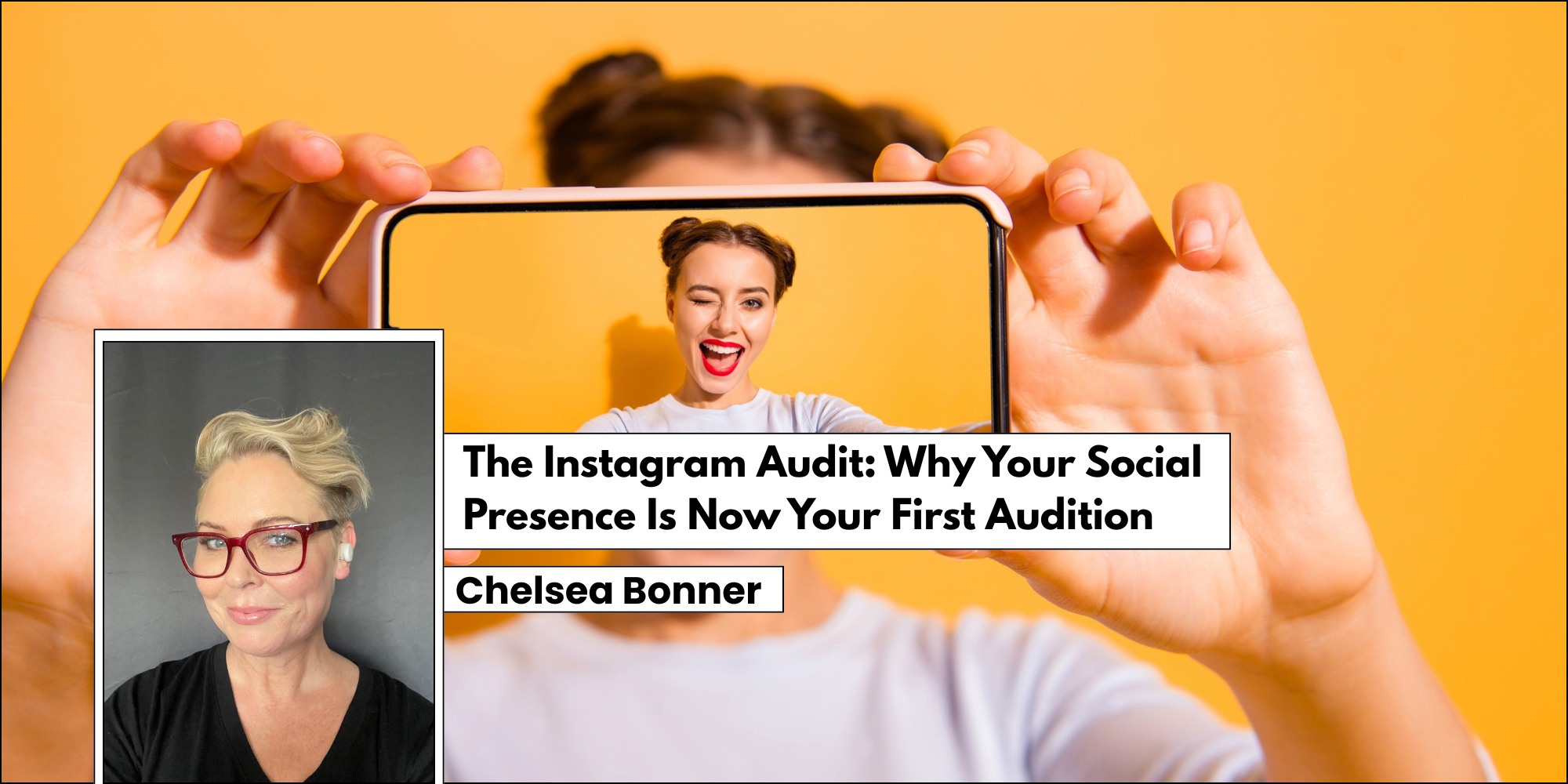
Background Image Source: Depositphotos
