



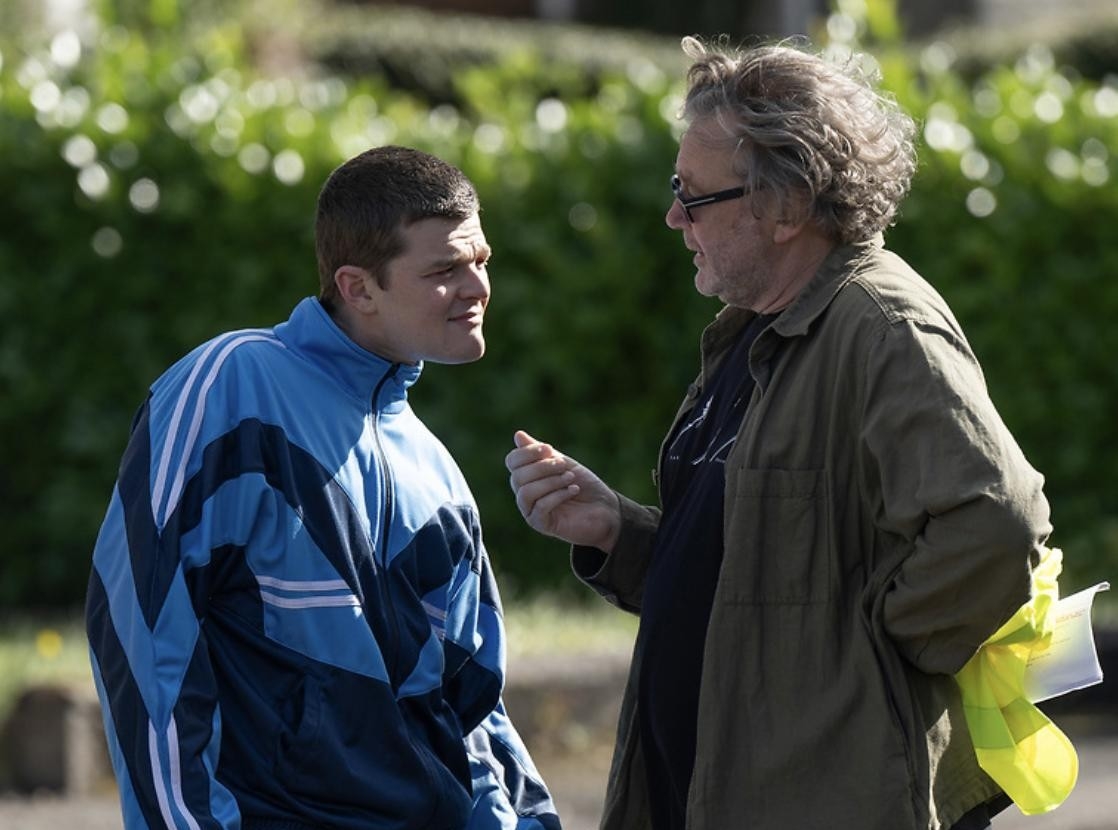
by Julian Wood
I Swear is the perfectly-titled biopic of John Davidson, a Scottish man who has Tourette syndrome, and who has made such a difference in terms of getting people to understand and accept Tourette’s. As most people now know, this condition causes involuntary ticks, some of which can be physical and some of which can be verbal, such as the disinhibited blurting out of swear words.
In this film, some of the things that come out of John’s mouth are wildly inappropriate in a way which inevitably mixes the embarrassing with the absurdly comic.
John is played with great technical skill and emotional depth by Robert Aramayo, who recently received a much-deserved BAFTA award.
When we recently spoke with the film’s director Kirk Jones and leading man, Robert Aramayo, we started by asking about the tone of the film and, in particular, how to handle the difficult balancing act between comedy and tragedy built into John Davidson’s life and the reactions of others.
“I am not sure why, but I have always been drawn to these contrasts,” said Jones. “With my first film, Waking Ned Devine, I remember finding great pleasure in moving people emotionally and then, literally seconds later, lifting them up with a laugh or a smile or a joke. When I looked at John Davdison’s story, I just felt I could identify extreme levels of drama, comedy and tragedy in it. For those reasons, I was really interested in exploring this in the film.
“I wanted to make sure that my idea for the tone of the film was in tune with John’s life. I said to him, if I find a level of humour with this condition, would that annoy or upset you, and he said no. He also said that his life has been hysterical and tragic all at the same time. And when he says that, he does not mean periods of years – both good and bad, he means it is this mix every hour and every second. If he meets someone in the street who knows him or knows his condition or is sympathetic, then even if he shouts something inappropriate, they will just say ‘oh, hi John good to see you.’ But if later, he then walks into a shop and they don’t know him, they could be upset or angry or aggressive. Every moment of his life is unpredictable. So, I was really excited by this but, also, it is a little bit scary mixing such a potent mix of two emotions. I have never done that before, but I felt if I could just tell John’s story in a truthful and honest way, the audience – who are not stupid – will follow the signals and the tone, the mood… They might laugh they might cry they might do a bit of both.”
Is the film ‘about disability’, we wonder? “The Tourette’s community mostly don’t like the word disability,” answers Jones. “They use ‘condition’. And it is diverse as well, in a similar way to autism. But also, I understand the idea of disability and half the people I speak to do use that term because they associate it with a form of behaviour that makes you stand out or as something that might hold one back or affect other people’s opinion of you. I remember quite early on, John saying ‘your ‘normal’ is not the same as everyone else’s.’
“But I think also, historically we have grown up ignoring disabilities, because we don’t really know what to do or say. We are terrified of saying the wrong thing or doing the wrong thing. Again, I heard John say ‘ignore the ticks but not the person.’ You could relate that more broadly. Just speak to people! Say hi to them as you would anyone else you meet on a train or in a café or something. Maybe that seems a lot to ask only because we all have that ingrained fear.”
Robert Aramayo’s portrayal is so crucial to the film, and it is the thing that many people will talk about when seeing the film. One wonders how he felt about approaching that responsibility. “Well, it was a shared responsibility for me, Kirk and everyone involved. We all felt that pressure to tell his story authentically. But also, it is a movie about John Davidson the person, it is not just about Tourette syndrome. That was important to all of us. We wanted to show this man getting older, his successes and the things he struggled with. Also, there have been docos about John, but to tell it as a feature is a very different way of telling the story. That was exciting too, because we could look at some of the more intimate moments of that life in a way that would be best expressed when approached in this fictional way.”
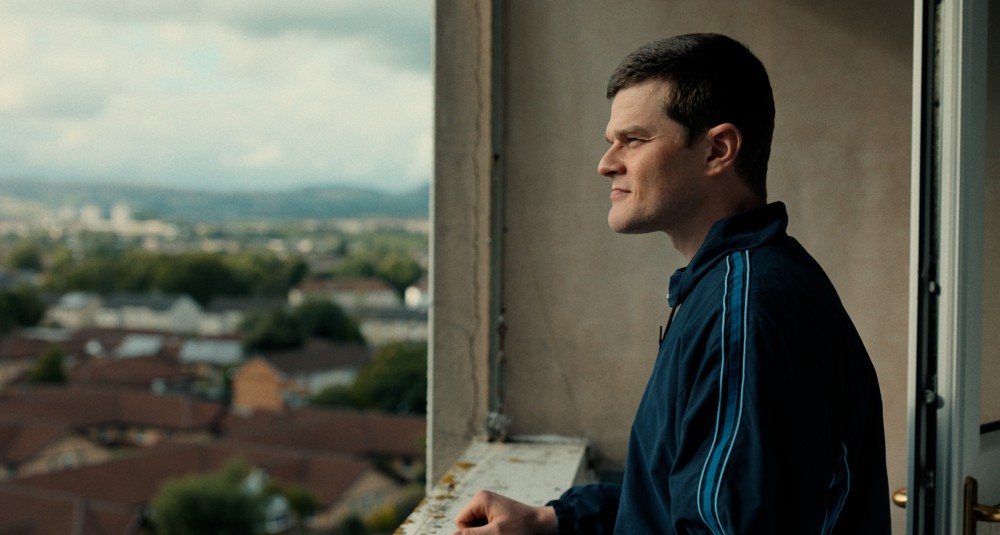
As we speak, we wonder if Aramayo swears a lot in real life, perhaps even more so having played the role. He bats that question away, but Kirk jumps in saying, “I think you do. I know I do.” Aramayo’s point though, is that the swearing is only the most ear-catching element of the portrayal.
“It is really not about the swearing,” he says. “I suppose the swearing is interesting at times, or as interesting as any other tick. It is about the involuntary response. Also, sometimes the ticks are funny even to the person doing it but lots of times it isn’t.”
One of the things that he thought more about when researching the role and meeting people is that Tourette’s is individually variable. “Meeting people and talking to as many people as I could with the condition, made me realise that more. But it is also what we were saying earlier, the experience depends a lot on how people respond, about their understanding.”
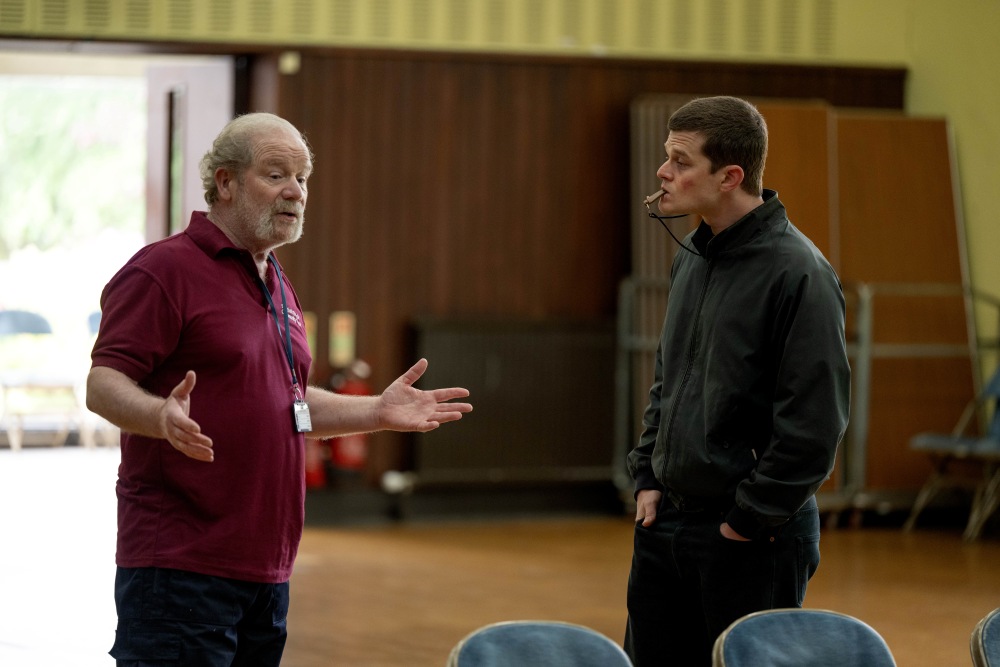
We note that the film is stuffed full of great British character actors, from Maxine Peake to Peter Mullan and Shirley Henderson. Was that something that impressed Aramayo? “Yes definitely,” he answers enthusiastically. “And I had a unique relationship with each of them. Kirk had managed to put so many great actors in there! And when he was telling who was going to play those roles, it was a mix of excitement but also quite daunting. Because they are all legends. Kirk was passionate about getting the tight people in those roles.”
The film is set in the small Scottish town of Galashiels in Southeast Scotland. One wonders how much that specificity of place matters as opposed to just thinking of the film as ‘generally British’? “I think this is the first time that I have worked on a biopic,” says Jones. “There was no question that it had to be set in Galashiels. We feel that it is like one of the characters in the film. It is very specific, and incidentally it is a challenge for Rob as it’s a very specific accent too. But also, it’s John’s town, he is known there, I can’t imagine him living anywhere else.
“The Brits can be a bit obsessed with class,” ends Jones. “I think a lot of films that people consider to be a mark of being truly British – you know, Brassed Off, Full Monty or Billy Elliot. They are all set in what we could describe as a working class background, but I never really thought about that element here. This is just the place it is. I think if you are going to write this story in this way, then you have to set it in the place properly. When writing I just wrote and presented what I saw of Galashiels.”
I Swear is in cinemas now
