

By Erin Free
Belgian-American writer and executive producer Alexander Menu was inspired by a real-life war hero when penning the moving WW1 drama Sound Of The Somme, which just enjoyed a screening at The Red Poppy Film Festival.
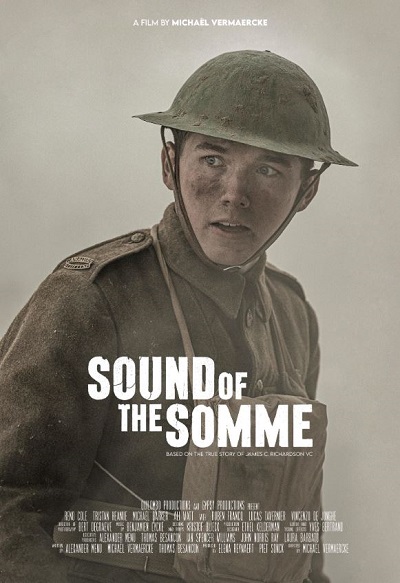
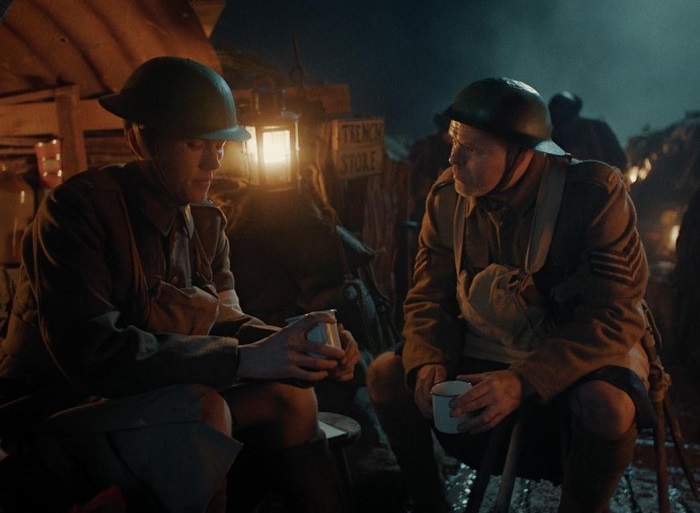
Born in Belgium and currently based in the US, Alexander Menu – who has worked extensively in the short film space with titles like The Things We Face (2017), Ciunas (2019), Two Niner (2020), The Iain Banks Appreciation Society (2021) and Fake (2021) – takes on his biggest and most ambitious project yet with Sound Of The Somme. Directed by Michael Vermaercke (The Disturbers, Leegte) and produced by Elena Reynaert (via Quilombo) AND Piet Sonck (via Gypsy Productions), this fifteen-minute mini-epic boasts an ensemble cast, a period setting, and the explosives and pyrotechnics demanded by a battlefield milieu. Set against the grim, crushing background of the trenches of WW1 France, Sound Of The Somme tells the true story of James C. Richardson, a young Scottish bagpiper who refuses to stop playing, even as the earth and sky around him crackles and explodes with gun and mortar fire. Played with striking sensitivity by young actor Reno Cole, James C. Richardson is an unlikely but truly admirable hero…

What was the genesis of the film? How did the story come to you and your team?
“I grew up in Ypres Belgium, a place where the scars of World War I are still very much present. It’s impossible to walk those streets or fields without feeling the weight of history. When I later moved to the United States, I felt a strong urge to tell a story connected to The Great War, but not in the conventional sense. I wasn’t interested in depicting combat in a traditional, action-driven way. Instead, I wanted to explore the internal battles of a soldier, the emotional and psychological weight carried by someone in the midst of unimaginable circumstances.
Music, and specifically the sound of bagpipes, has always had a profound emotional impact on me. There’s something both haunting and deeply human about it. That led me quite naturally to the story of Piper James C. Richardson, a figure whose bravery is widely recognized, but whose humanity felt just as compelling to explore. What struck me immediately was that I was the exact same age as James when I first learned about him. That created an instant, almost personal connection, and it made his story feel less like distant history, and more like something immediate and relatable.
I had met director Michaël Vermaercke a few years prior, and when I shared the idea of Sound Of The Somme with him, he immediately connected with it. He brought a clear vision and sensitivity to the material, and he immediately joined the project for rewrites shortly after. It also felt like a very natural step to collaborate with producer Elena Reynaert from Quilombo, someone I had worked with before and who has always been incredibly supportive of ambitious, story-driven projects. From there, it became a truly collaborative effort, with everyone aligned around telling a deeply human story set against the backdrop of war.”
The actors are all great…can you tell us about the casting process?
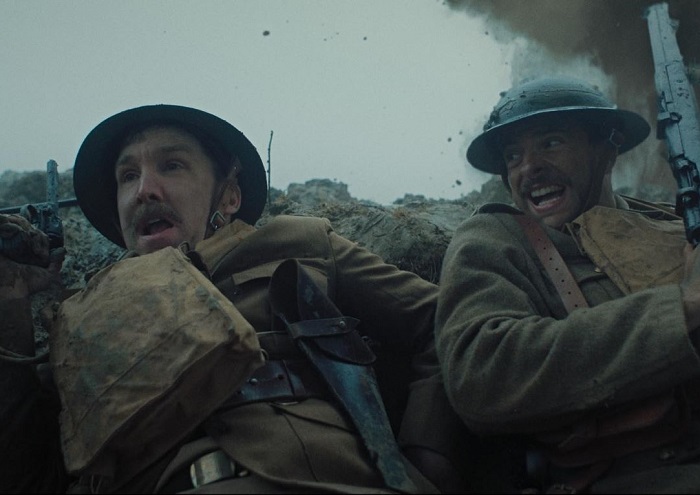
“The casting process was a journey of finding the perfect balance between historical authenticity and raw emotional presence. We started with the pivotal role of James. It’s a challenging character to portray because the actor needs to radiate a certain sense of innocence and youth, while simultaneously being capable of such a profound, heroic act.
We knew from the start that we wanted to work with a Scottish cast for the lead roles to maintain that authentic connection to James’ roots. The first round consisted of online tapes for specific scenes we had sent out, and Reno Cole and Michael Barker stood out immediately. There was actually no debate at all; we knew instantly they were the ones to embody the role of James and Private Horne. We also found the fantastic Ali Watt in Scotland to play Major George D. Lynch, and for Arden Mackie, we cast Tristan Heanue, an Irishman who fit the part perfectly.
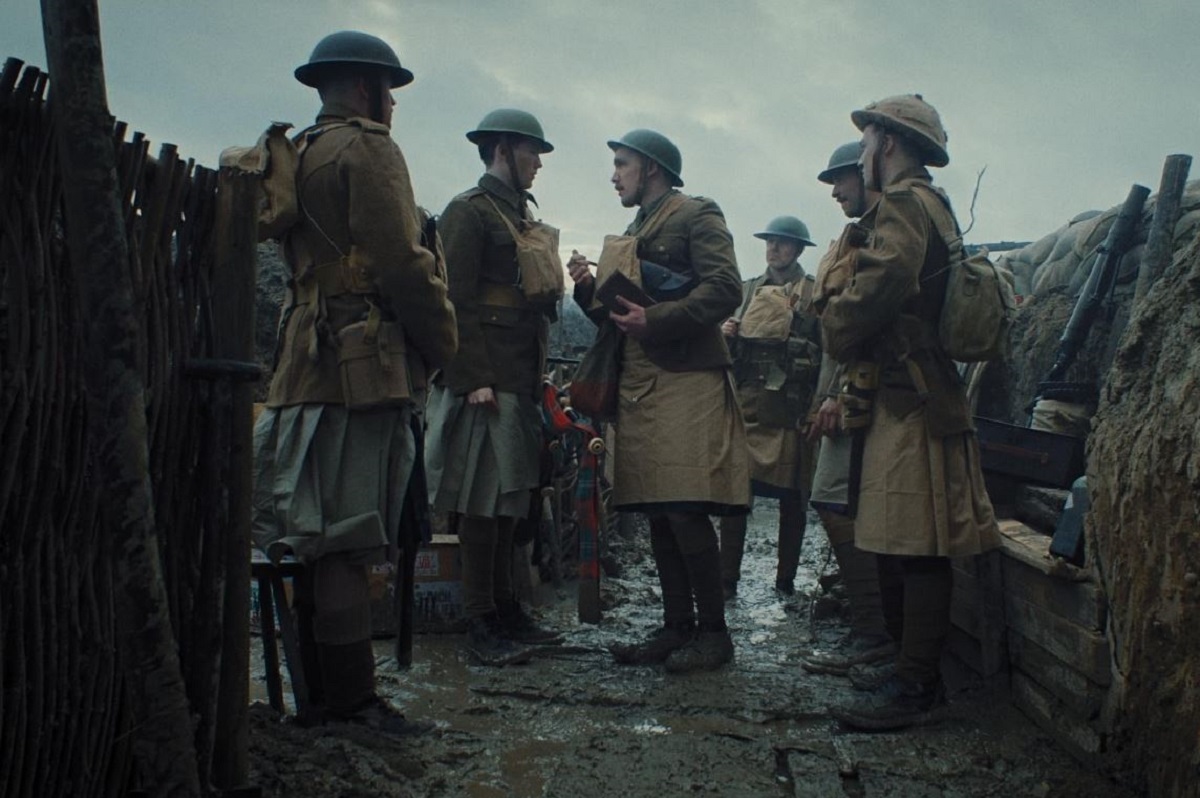
The rest of the cast was rounded out by talented Belgian actors who worked closely with voice coaches to ensure their accents were spot on. Of course, a film like this requires a strong ensemble of extras, and we found an incredible partner in the re-enactment group SRD 1914-18. To truly ground the actors in this world, we organized a bootcamp the day before the first shoot. The re-enactment group taught the entire cast how to wear the period uniforms correctly, how to handle the rifles, and even how soldiers of that era spoke to one another. During pre-production, we also took the Scottish cast to the In Flanders Fields Museum in Ypres. It was important for them to absorb the weight of what happened here during WWI so they could bring that history onto the screen with them.”
The film has an incredibly polished and authentic feel…can you talk a little about your budget and how you created such an incredible sense of atmosphere?
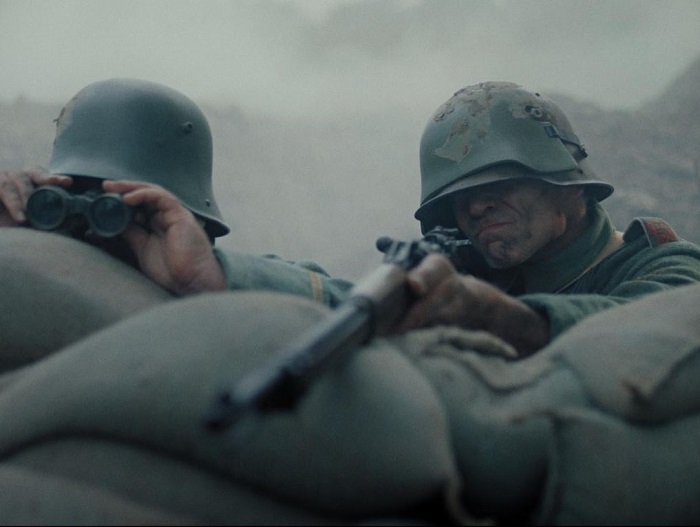
“Director Michael Vermaercke had the idea to keep the camera close on James, only occasionally breaking away to focus on other characters or incidents. That way, the perspective was focused, intense and narrow. We only had to recreate a small part of the trenches and the battlefield, which made it realistic to manage such a task with a limited budget.
Still, this remained an ambitious production. There were a lot of obstacles. Luckily, this production could count on a lot of support from many people around Ypres. We found a partner in Wienerberger for providing a suitable location on a former mining site. Lavaert Group did all the ground work with their excavator. The re-enactment group SRD 1914-18 was key in contributing decor elements, props and costumes. MovieFX produced smoke effects and post-production company VC Studios polished the film with the necessary VFX during post-production. With the help of these valued partners, sponsors and many volunteers, we were able to shoot Sound Of The Somme on a limited budget.”
You were writing characters based on real people…does that create another level of responsibility for a screenwriter?
“There are several characters in Sound Of The Somme that are based on real people. James is, of course, at the centre of it, and I feel incredibly fortunate to have been able to understand him on a deeper level thanks to the extensive research of Ian Spencer Williams. In addition, figures like Sergeant Major Arden Mackie and Major George David Lynch are also rooted in historical reality, men who either lost their lives during the war or lived on to tell the story of Piper Richardson.
Writing characters based on real people is both a privilege and a responsibility. On one hand, you are given a foundation such as photographs, historical records and personal accounts that help shape the character. There’s a tangible starting point, which can be incredibly inspiring. On the other hand, you also carry the responsibility of honouring their memory. These were real individuals with real lives, families, and sacrifices.
As a writer, you inevitably have to interpret and to some extent, imagine aspects of their personalities and experiences, especially when crafting a narrative arc. The challenge lies in finding the balance between historical truth and emotional truth. You want to remain respectful and accurate, while also creating a story that resonates with contemporary audiences. In many ways, that tension is what makes the process so meaningful.”
How did the screening go at The Red Poppy Film Festival? And where is the film off to next?
“The screening at Red Poppy Film Festival was a fantastic experience. There was a strong presence of filmmakers, audiences, and government officials, which created a very engaged and thoughtful atmosphere. It was especially meaningful to see how the story resonated with an international audience, far from where the events originally took place. It was also my first time in Sydney, and the experience of sharing the film there made it even more memorable. The city itself, along with the warmth of the people we met, made a lasting impression. I can confidently say it won’t be my last visit. Looking ahead, Sound Of The Somme will continue its festival journey with selections at The Julien Dubuque International Film Festival (USA), The Fastnet Film Festival (Ireland), and The International Filmfest Emden-Norderney (Germany). We’re excited to keep sharing the film with new audiences and to see how it continues to connect across different cultures and countries.”
What is next for you? Any new projects in the offing?
“Sound Of The Somme only captures a small fragment of James C. Richardson’s life. His story extends far beyond the battlefield, from his early years in Scotland to his family’s move to Canada, and ultimately to the personal sacrifices made not just by him, but by his entire family. His sister Alice, who was a gifted Highland dancer, and his brother David, who struggles to belong and served in the navy, were also deeply affected by the war, and their stories are equally compelling. We see this short film as the beginning of a much larger narrative. There are still many layers to explore, particularly the emotional motivations behind some of James’ most defining actions during the war. For instance, there is a very specific and deeply meaningful reason why he returned to retrieve his bagpipes in the midst of battle, but that’s a story we’re saving for the feature film.
I’ve also recently completed a new short film script titled “Cavell”, also set against the backdrop of World War I but this time in German-occupied Belgium. For years, I’ve been drawn to the story of Edith Cavell, a British nurse who risked everything to save lives, only to discover consequences even bravery cannot escape. What continues to resonate with me is the perspective she offers: a woman navigating and challenging a world overwhelmingly defined by men and conflict. It’s a deeply human story of conviction, sacrifice, and moral complexity. I’m excited to begin taking the next steps in bringing this newest passion project to life.”
Stay tuned for more on Sound Of The Somme.