


by James Mottram
Paolo Sorrentino has long been fascinated by power in his movies. From chronicling former Italian PM, Giulio Andreotti, in 2008’s Il Divo to the world of PM Silvio Silvio Berlusconi in Loro to the hallowed corridors of the Vatican in his TV shows The Young Pope and The New Pope, the Italian filmmaker has been drawn time and again to those who wield influence over whole nations.
His latest film, La Grazia once again gets into bed with the great and the good, with a little less of the gaudy excess of his earlier works and a little more elegance. The film reunites him with Toni Servillo, the veteran Italian actor with whom he’s collaborated for twenty-five years, since he featured in the director’s 2001 debut One Man Up. “We work well together,” says Sorentino. “He’s a very brave actor, and that means that I can count on his courage in many situations.”
Sorrentino wrote the lead character in La Grazia with Servillo in mind – and it’s not hard to see why. He plays Mariano De Santis, the fictional president of Italy. Depicting a man who has the fate of many in his hands, it’s a perfect companion to his Andreotti in Il Divo and the world-weary journalist Jep Gambardella in Sorrentino’s Oscar-winning The Great Beauty, two performances that won Servillo the European Film Awards’ Best Actor prize.
This time, Servillo went one better, collecting the Volpi Cup at last September’s Venice Film Festival for Best Actor for his turn as Mariano. That “courage” Sorrentino mentions is in plentiful supply, with Servillo on song as the ageing politician. A self-described “grey, boring man, a man of the law”, Mariano faces some near-impossible decisions as he enters the final phase of his career – including a contentious euthanasia bill. “I have thought for years that moral dilemmas are very interesting for storytelling,” Sorrentino notes.
What is heartening is that Mariano is not a corrupt leader. “It’s the portrait of a politician that exists less and less in the current world,” acknowledges the filmmaker. “He’s not perfect, but he’s the idea of how a politician should be, in terms of moving in a very serious environment and feeling always accountable and responsible for the decisions that he makes. If we think about how many politicians nowadays seem to be very uncertain and have certainties that are based on nothing, on peanuts … that’s what scares me.”
Chosen as the curtain-raiser for Venice, the festival’s artistic director Alberto Barbera admitted that La Grazia took him and his selection committee by surprise. “It’s a different Sorrentino from what we are used to,” he commented. “Far less baroque and formalistic than the previous films he made. It’s a very unexpected story.” Critics agreed, with the film’s more mature outlook far better received than Sorrentino’s last film, Parthenope.
With the film shot in Turin, La Grazia flew under the radar when it was being made. Was this due to the issues it contains? “It was not my goal to keep secrecy,” Sorrentino shrugs. “I didn’t speak a lot about it, but I was not asked many questions about it, either. So that’s the way it went.”
While some speculated that Mariano is inspired by Italian politician Sergio Mattarella, who has been serving as president since 2015, Sorrentino says that the character is entirely fictional. But what is very alive are the issues inside the film – notably euthanasia. “I do hope the film will heat the debate on this subject,” he says, “which is very important, because in Italy, the law frame about assisted suicide and euthanasia is very complex.”
As Sorrentino explains, the core of the issue is what is called ‘active euthanasia’. “In Italy, passive euthanasia is allowed, meaning stopping treatment and stopping feeding. And the assisted suicide is allowed by law as well, but the demands are so confusing if you consider the atrocious suffering of people that ask for assisted suicide. But the core of the issue is to have a law for active euthanasia, which hopefully this film will contribute to.”
So, in this case – as with so many of his other works – was he primarily interested in exploring the tentacles of power? “I don’t think so,” he says, shaking his head. “I tend to use myself as a reference. And I’m not a powerful man, a man of power.”
The 55-year-old, who grew up in Naples, sounds a little melancholic. “I long for lightness, but it does not belong to me. Like my president, I sleep very little, and I dream of being light, but I carry a lot of weight.”
Perhaps Sorrentino’s burdens do not come from supporting a nation, as Mariano must endure, but from the emotional toll that his work takes. “You know, it’s not easy to be light-hearted when you have to be accountable for so many things,” he says. “As is the case of the President, when you have many responsibilities, but also when you work creatively. Because a creative work is the result of a constant questioning that is very heavy.”
Typified by the violent storm that engulfs Mariano at one point, Sorrentino makes no apologies about the film’s more sombre, tragi-comic tone, believing it entirely fitting for the story that unfolds. “It’s what the premise of the story is, the story of a man who’s about to retire. And inevitably, it’s a critical moment in the life of all human beings, and therefore he’s disoriented. Melancholy is a natural element of a story that I was telling.”
Could he ever see himself go into politics? Or is it an impossible job? “No, it’s not impossible,” he says, “but you have to bear in mind that you are fulfilling a mandate that you were given by the people that elected you, and the idea of a politician as a representative of a community … that is something that is not embodied by current time politicians that lack an accountability. For them, politics is just an easy, bad-quality performance. They believe that politics is just a stage, and they perform very badly, which is not good.”
La Grazia is streaming on Mubi from 8 May 2026
La Grazia can be viewed by taking up our exclusive 30 day free trial with Mubi.
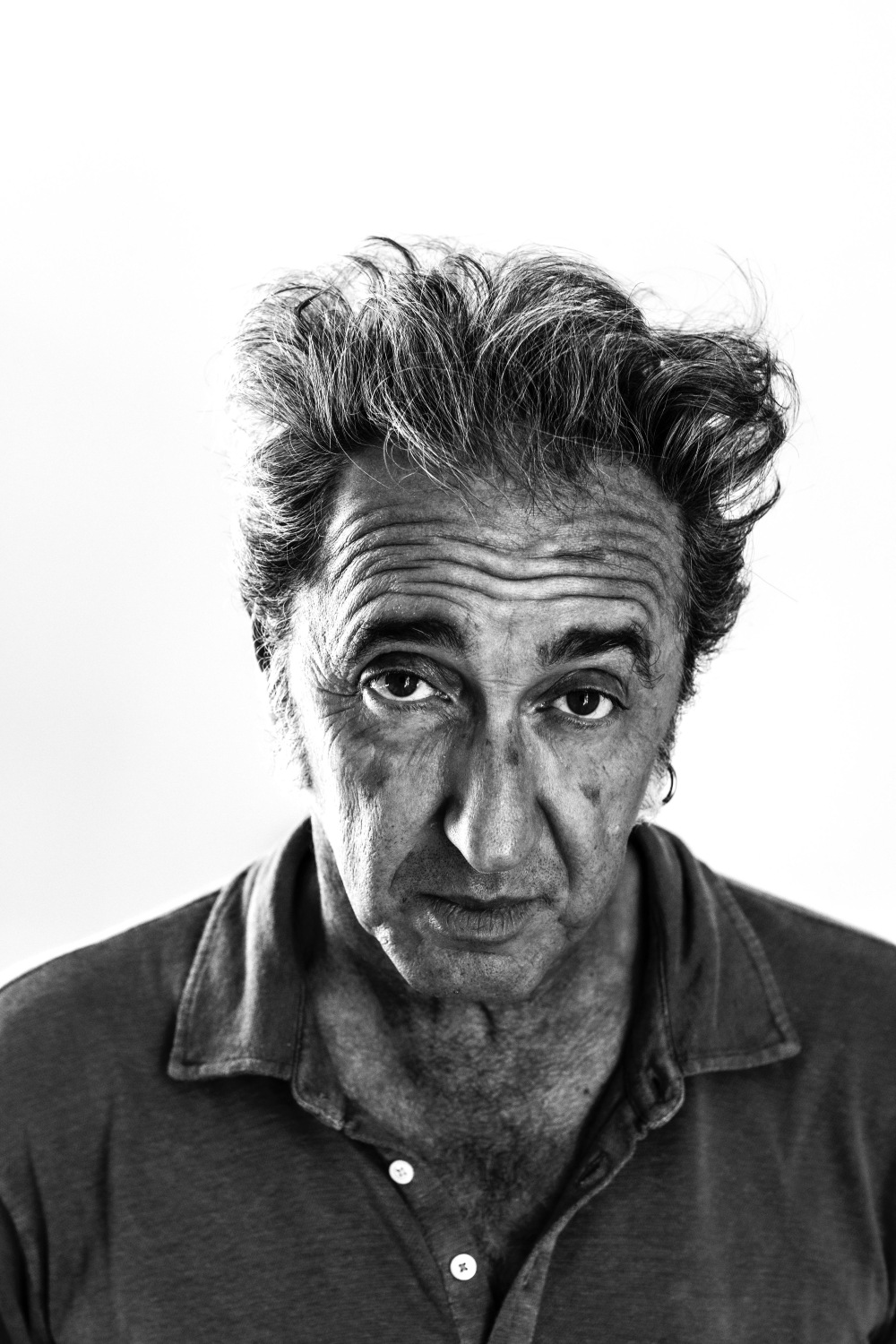
Photo by Michael Avedon
