



by Andrea Baker
More than a decade later, the #OscarsSoWhite campaign continues to shape awards outcomes.
At the Oscars (Academy of Motion Picture Arts and Sciences) ceremony, host Conan O’Brien remarked that participants had come from many countries. The 28 nominees included Latinos, Asians, and Blacks. Across the 25 categories, they won six Oscars.
The Black horror-thriller, Sinners, directed by Ryan Coogler, received 16 nominations, which is the most in the history of the Academy. The film won four Oscars.
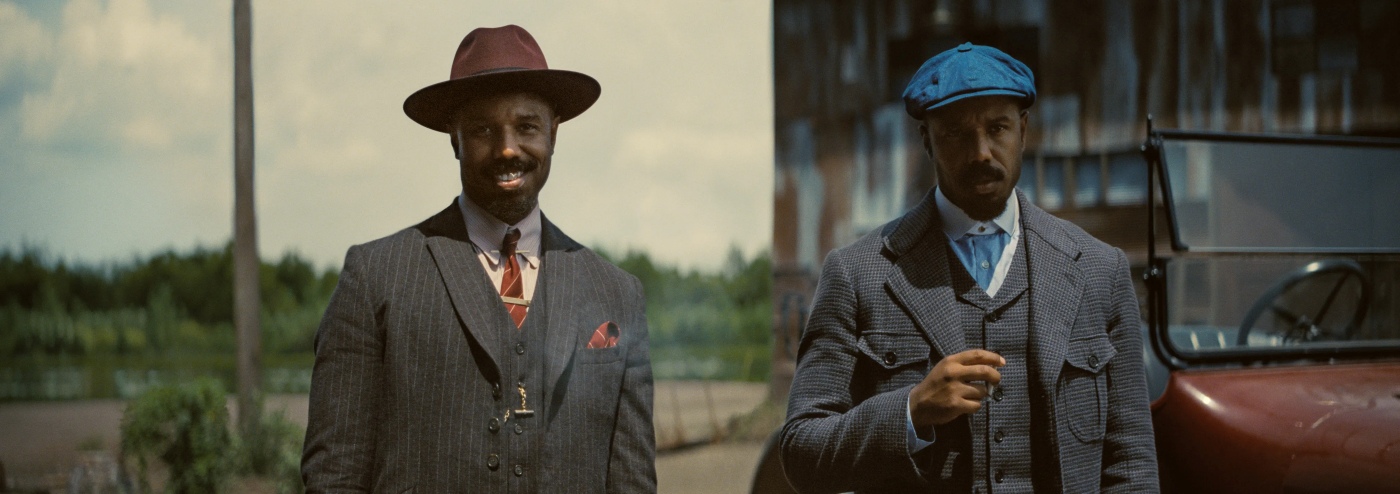
Set in 1932 Mississippi, the film follows twin brothers (Michael B. Jordan in dual roles) who return to the Jim Crow South to open a juke joint and escape their past. Jordan received his first Oscar for Best Actor, making him the sixth Black male actor to win in this category (the last Black winner was Will Smith in 2022). Jordan thanked Coogler for giving him “an opportunity and space for me to be seen”.
Coogler won for Best Original Screenplay and Ludwig Göransson for the film’s Best Original Score. Autumn Durald Arkapaw received the Best Cinematography award, making her the first woman to win an Oscar in that category.
Best Song and Best Animated Feature Film went to KPop Demon Hunters, a story about a K-pop girl group navigating the music industry. “For those who look like me, I’m so sorry it took so long for us to see us in a movie like this”, Maggie Kang said, the film’s South Korean Canadian writer and producer.
Hot favourites, It Was Just an Accident (Iran), and The Secret Agent (Brazil) lost in the International film category to the Norwegian film, Sentimental Value, directed by Joachim Trier, who referred to Black American writer and civil rights activist James Baldwin, in his acceptance speech.
Best actress went to Irish performer Jessie Buckley for her role as William Shakespeare’s wife, Agnes, in Hamnet, by Chinese director Chloé Zhao.
One Battle After Another, about a paranoid ex-revolutionary by American writer-director Paul Thomas Anderson, won the most (six) Oscars: in the new category for Best Casting, then for Best Adapted Screenplay, Best Director, Best Film, Best Supporting Actor (Sean Penn) and Editing (Andy Jurgensen).
Addressing Hollywood colourblindness: #Oscarssowhite
In 2014, the historically significant, Black magazine Ebony said that the lack of Hollywood recognition affects Black people’s careers, cultural validation and their representation in storytelling. That year, Coogler’s feature debut, Fruitvale Station, a biographical drama about a young Black man killed by police in California, won the Grand Jury Prize and Audience Award at Sundance, but it was overlooked by the Oscars.
#Oscarssowhite went viral in 2015 after a Black activist and lawyer, April Reign, tweeted that all acting nominations for the Academy Awards were given to White actors. Over the years, there have been small wins. In 2019, Spike Lee won Best Adapted Screenplay for BlacKkKlansman.
Critics argue that the Academy’s historically homogeneous voting membership of White men limits diversity and inclusion in the winners’ stakes. By 2020, the Academy’s inclusion reforms expanded voting members to include “45% women, 36% underrepresented ethnic/racial communities, and 49% internationals from 68 countries.” Reign, who now leads diversity initiatives as a media strategist, said changes to the voting membership are a positive step.
Annenberg Inclusion Initiative
Since 2005, the Annenberg Inclusion Initiative, based at the University of Southern California and led by Dr. Stacy L. Smith, has been the global think tank studying diversity and inclusion in entertainment through research and targeted projects.
Between 1929 and 2024, Smith’s team found that six percent of Oscar nominations went to underrepresented racial and ethnic groups. Diversity improved after the 2015 #Oscarssowhite backlash, where nominees from underrepresented groups rose from about eight percent (2008–15) to 17 percent (2016–23).
In 2020, South Korean director Bong Joon-ho took home the Best Director award for Parasite, which was also the first non-English language film to win an Oscar for Best Picture. The next year, Chinese writer-director Zhao became the first woman of colour to win both Oscars for Nomadland.
By 2023, Malaysian actress Michelle Yeoh and Chinese actor Ke Huy Quan took home Oscars for their performances in Everything Everywhere All at Once. The following year, Piegan Blackfeet and Nez Perce woman, Lily Gladstone, won Best Actress for Martin Scorsese’s Killers of the Flower Moon, a painful story about the native American Osage tribe. Gladstone was the first Indigenous person to win an Oscar.
Today, the Academy has about 11,104 members, which includes 33 percent who identify as women and 24 percent from underrepresented communities. A quarter of its members live outside the United States, such as Europe, Asia, Africa, Oceania and South America.
Global Initiatives – Global Future
The Annenberg Inclusion Initiative also suggests tools for institutional change in Hollywood, for example, the “inclusion rider” concept, encouraging contractual diversity commitments across gender, race, LGBTQ+ status, or disability in film production.
There is a shift away from Hollywood-based films to global productions, due to rising local costs, diversifying labour, storytelling, aesthetics, and evolving international finance.
Netflix is also commissioning local-language originals, giving greater space for postcolonial and Global South storytelling.
However, streaming monopolies, such as Paramount’s bid for Warner Bros, may impact cultural inequity by consolidating immense film production power under a single, centralised structure.
After its centenary ceremony in 2028, the Oscars will leave the American Broadcasting Company, shifting to an exclusive global streaming partnership with YouTube from 2029 to 2033. YouTube boasts an audience of 2.6 billion viewers, and the Oscars hope to reach a younger and more global and culturally and linguistically diverse audiences.
“The future of the Academy is global”, its CEO Bill Kramer said.
