


by Stephen Vagg
One of the most hotly anticipated films of 2026 is Christopher Nolan’s version of The Odyssey, based on the poems of Homer from Ancient Greece. Homer was just one of many scribes plying their trade back in the old days when Greece was a super power, a time when they invented Western philosophy, the Olympics, marble bathrooms, all that stuff – a period the country has never really gotten over, to be honest.
Among the achievements of the Greeks during this time was its theatre, which formed the basis of Western theatre. This included playwrights like Aeschylus, Euripides, Aristophanes and Sophocles (497/496 –406/405 BC), whose play Antigone was filmed by the ABC in 1966.
Antigone was actually the third in Sophocles’ Oedipus trilogy, following on from Oedipus Rex and Oedipus at Colonus. Even those only vaguely familiar with Greek drama would have heard of Oedipus Rex because of its high concept (i.e. man marries own mother). That and Antigone are Sophocles’ two most famous plays (to be fair, only seven survive).
The plot of Antigone revolves around the titular character, the daughter of Oedipus and his mother (so she’s both her mother’s daughter and granddaughter, Chinatown-style, an issue not explored in the play).
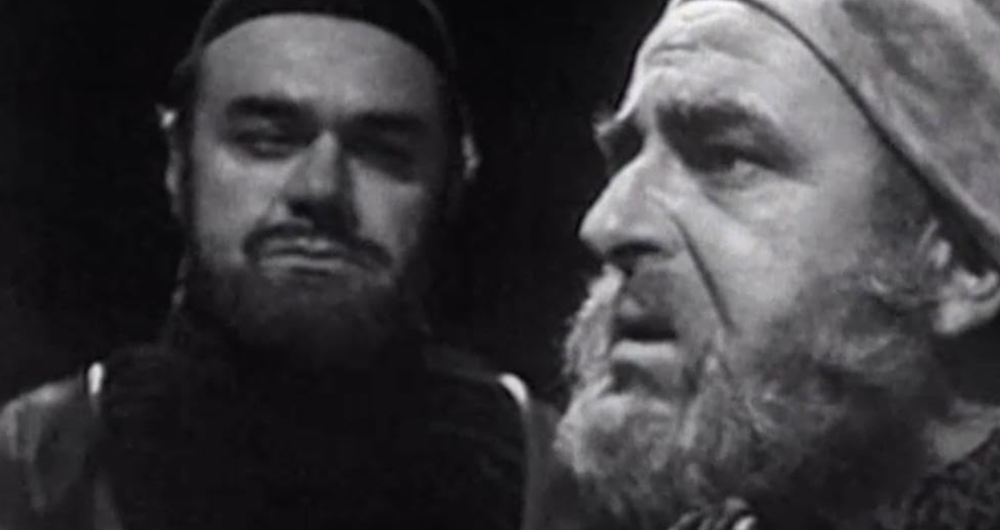
The play starts with dad dead and Antigone’s two brothers killing themselves fighting on different sides in a civil war over who would run Thebes. The new king, Creon, says that the brother who died fighting for him gets a hero’s burial while the brother who fought against him should be unburied as a traitor. Antigone defies Creon by burying the traitorous brother and gets busted. Even though Antigone is engaged to Creon’s son Haemon, she’s condemned to be walled up alive, so she kills herself. Haemon commits suicide too and his mother, Eurydice, dies in despair. Creon feels bad. The end. Anyway, the full text is here.
Incidentally, the whole Antigone/Oedipus story had its origins in Greek mythology, thus Sophocles was adapting pre-existing IP. He wasn’t the only one – Euripides also wrote an Antigone play, but it doesn’t survive.
Antigone is one of the better remembered Ancient Greek plays, in part because it has a decent female role, and has been adapted numerous times over the years – French author Jean Anouilh did a version that was performed on stage in London by Laurence Olivier and Vivien Leigh and later filmed for British television. There was a 1961 film of the play that starred Irene Papas and both the Sophocles play and the Anouilh adaptation were performed regularly in Australia on radio and stage in the 1950s and 1960s. Antigone has gone a little out of fashion now, but occasionally, state-funded theatre companies still blow the dust off the play and inflict it on their subscribers.
The ABC decided to film Antigone in 1966. Old time verse dramas weren’t uncommon on the national broadcaster by that stage – they were regularly done on ABC radio, and ABC television had presented television versions of Everyman, The Play of Herod, and The Play of Daniel, along with adaptations of writers like William Shakespeare, Ben Jonson, Moliere, Jean Anouilh and Christopher Fry (it only ever filmed one Australian verse drama, Ned Kelly, although adapted a heap for radio).
The ABC’s new head of drama, Englishman David Goddard, had been pushing for more Australian written content – he was a champion of Australian Playhouse and Bellbird – but still felt obliged to put on the occasional classic. Antigone was part of a series of three Greek tragedies filmed by the ABC in 1966 to commemorate the 2,500th anniversary of Greek theatre (he may have used approximate dating): the others were Point of Departure and Phoenix Too Frequent; the latter two were based on more recent adaptations of the plays but Antigone went back to Sophocles (we are pretty sure it was the oldest play ever directly adapted by the ABC).
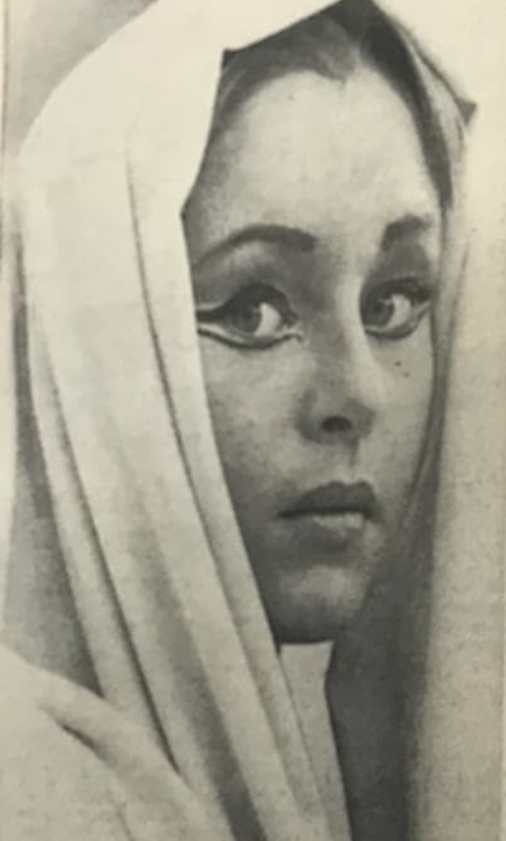 The role of Antigone was given to Liza Goddard, David Goddard’s daughter, who was then just seventeen. This is unlikely to have gone down too well – imagine if the daughter of the head of ABC drama today was given a choice role in a prestige drama production. In fact, Liza Goddard was in a bunch of ABC productions while her dad had the top job, including Point of Departure, Romeo and Juliet and The Empty Day as well as her better known regular part on Skippy. In fairness, Liza Goddard was/is an excellent actor, beautiful and spirited, and she’s very good as Antigone – her youth adds immensely to the tragedy of the role. Even if director Patrick Barton was sucking up to the boss by casting her, she deserved the role.
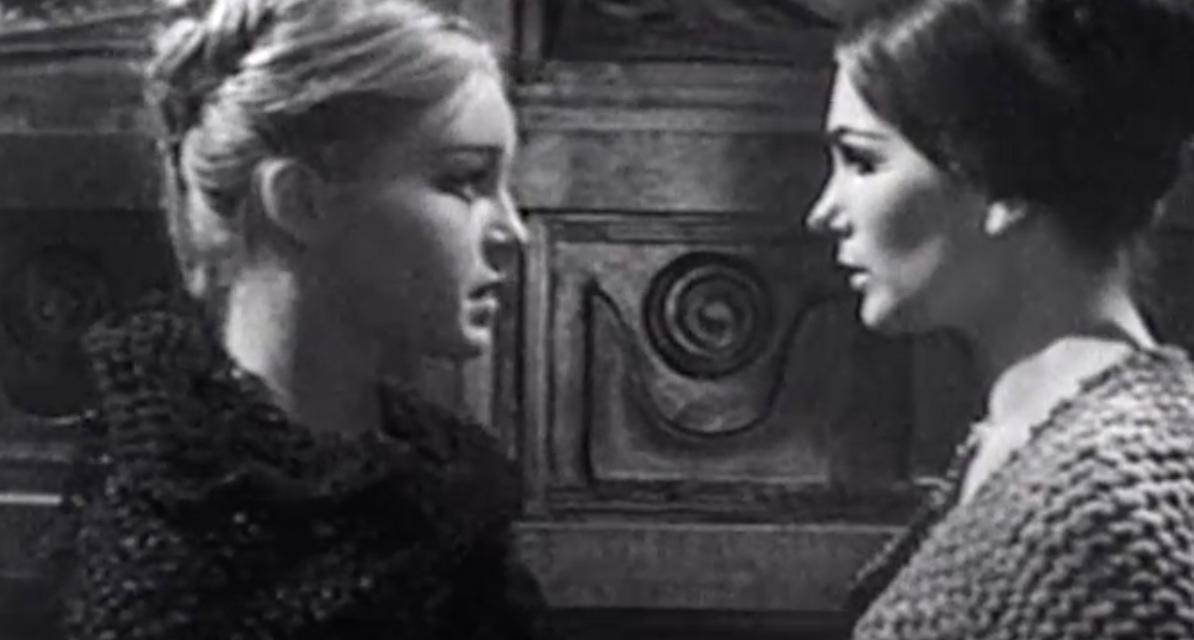
Other key roles were played by Raymond Westwell (Creon), John Derum (Creon’s son), Kevin Miles (head of the chorus), Joan MacArthur (Creon’s wife), and Anne Charleston (Antigone’s sister). Patrick Barton directed quite stylishly – the lighting is very impressive.
As a production of Antigone, this is fine. It hasn’t been adapted particularly well for television – there’s a lot of reporting of things that happen off stage (like the death of Creon’s wife… you can show that sort of thing, you know). Raymond Westwell’s incredibly restrained reaction to the deaths of Creon’s son and wife was a legitimate performance choice, but perhaps one influenced by the fact that the director, and actor were British. Maybe that’s a prejudicial reading, but Creon’s entire life has been destroyed and Westwell plays it in full stiff-upper-lip mode. There’s nothing particularly Australian about this production of Antigone – it feels like an attempt to copy the BBC.
Look, that’s great, that’s fine, it’s just that there were about four hundred Australian plays that could have been filmed instead of Antigone, something we think of every time someone produces it in Australia. But anyway, happy birthday Sophocles.
The author would like to thank Reinier Wels for his assistance with this article. Unless otherwise specified, all opinions are those of the author.
