



by Cain Noble-Davies
Worth: $13.99
FilmInk rates movies out of $20 — the score indicates the amount we believe a ticket to the movie to be worth
Cast:
Zhu Yilong, Wu Lei, Ni Ni, William Franklyn-Miller
Intro:
… an impressive view over extremely troubled waters.
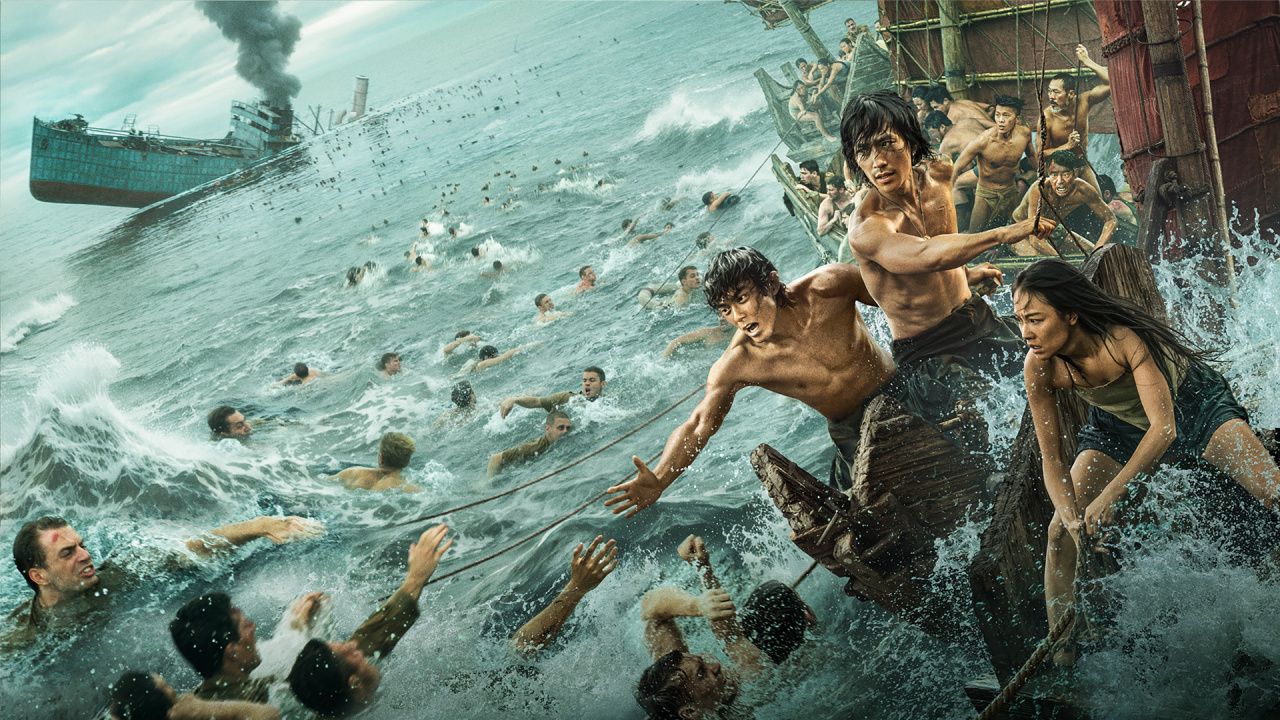
On the 1st of October, 1942, the Japanese ship Lisbon Maru was torpedoed by the American submarine the USS Grouper off the coast of the island of Dongji. In the Lisbon Maru’s hold were 1816 British soldiers captured in the wake of the Battle of Hong Kong, en route to a Japanese prison camp. Alerted to the wreck, local fishermen sailed out and managed to save the POWs.
This dramatization of a quite fascinating moment in World War II history looks and sounds fantastic. DP Weizhe Gao gives both Dongji Island and the surrounding waters a sense of immense scale, making the ocean itself feel like something that can and will swallow anyone caught unawares within it. From an expansive use of drone shots to the kind of underwater photography that’d make James Cameron beam, to more intimate moments that get to show off the attention put into the set details for both Dongji and the Lisbon Maru, the visuals alone give the film’s core tenets of survival and collaboration a feeling of tremendous weight and urgency. This is boosted by Atli Örvarsson’s soundtrack, with blockbuster-sized strings soaring over the landscape, and rattling booms of bass to punctuate the horrors of war.
Similar to Sully or Thirteen Lives, the script aims for a rousing communal spirit, showing people looking out for others for no other reason than recognising their fellow humans and knowing that it’s the right thing to do. In the film’s own words: “Those in peril at sea must be saved.”
For the most part, the film balances the tragic framing of the event – such as the sequence of British POWs singing ‘It’s A Long Way to Tipperary’ in the face of imminent drowning – with the fist-raising feeling of hope once the boats go out and begin the rescue effort. The third act, in particular, is affecting in highlighting the innate heroism of an act like this, of saving a life for its own sake, and it makes for moving cinema.
However, the film is hampered by severe and bordering-on-self-destructive tonal issues. In the lead-up to the rescue, having fishermen Ah Bi (Zhu Yilong) and Ah Dang (Wu Lei) face language barrier issues with British soldier Thomas Newman (William Franklyn-Miller), the film goes to excessive lengths to show the conditions inflicted on the people of Dongji under Japanese rule. Beheadings, immolation, disembowelment, a child being stabbed to death; war is not supposed to be pretty, but the extent of the brutality can cross into just plain unpleasant, maybe even exploitative.
Where this becomes a major issue is when it interferes with the ‘we must band together’ tone of the story, and indeed the real-life event. As much as it gets right in its depiction of the actual rescue, the moments around it, where Ah Bi and Ah Dang go full Rambo on Japanese soldiers, give the film an unfortunate vindictive streak that doesn’t fit with the larger message. At points, it becomes less about the importance of saving lives, and more about the satisfaction of taking them. And this is without getting into how the framing for the Ah brothers as singular heroic figures, like the mythic tone of films such as Sisu or RRR, waters down the collective heroism that the Lisbon Maru rescue is historically remembered for. Even Sully, with its pre-occupation with persecution complexes, didn’t resort to tricks like this.
Dongji Rescue is an impressive view over extremely troubled waters. When the film properly focuses on the brief, it offers a heartfelt and impactful depiction of a moment in war when ethnic and cultural barriers eroded to show the true humanity shared by all. But a few too many times, its use of action-hero gratuity and just plain distasteful brutality end up drawing into question who this narrative ultimately serves: the memory of the POWs lost at sea, or the power fantasies of those who suffered under Japanese rule. There is space for both to be recognised and honoured, but the way that this film goes about it (especially in comparison to the empathy and compassion displayed by Fang Li’s documentary The Sinking of the Lisbon Maru from less than a year ago) ends up cutting into the film’s genuine merits. Historical accuracy is one thing, but thematic consistency is another.
