


by Helen Barlow
Michel Gondry is a natural-born eccentric with a wild imagination, whose filmmaking has gained a cult-like following.
Working across film, television and music videos, the Versailles-born 62-year-old, together with Charlie Kaufman, won an Academy Award for 2004’s Eternal Sunshine of the Spotless Mind, which Gondry directed. He was able to make the film after honing his skills directing high profile music videos with Bjork, Kylie Minogue, Sinead O’Connor, Daft Punk, The Chemical Brothers, Paul McCartney, The White Stripes, The Rolling Stones and many more.
His other beloved films include The Science of Sleep, Be Kind Rewind and most recently, The Book of Solutions starring Pierre Niney.
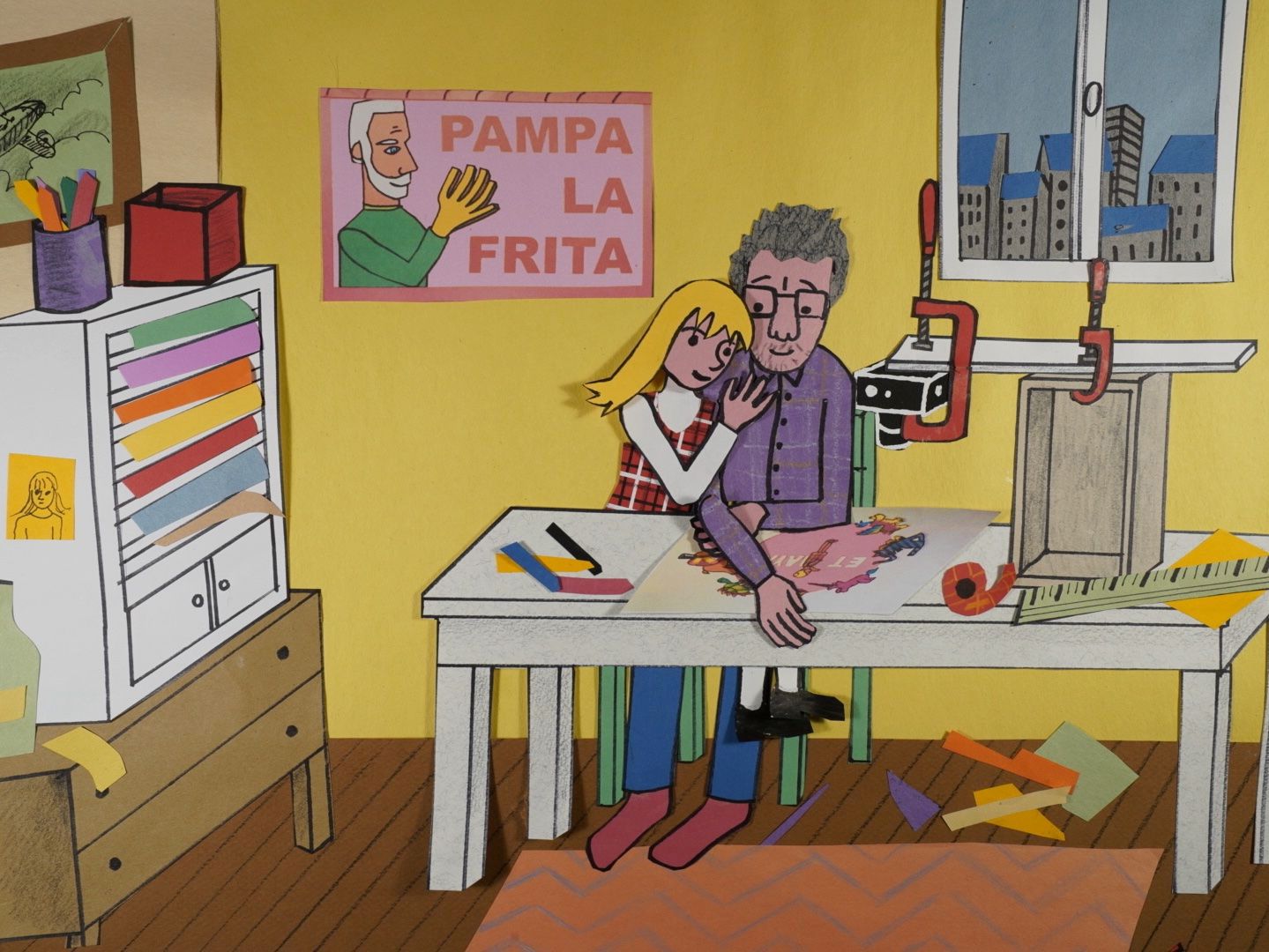
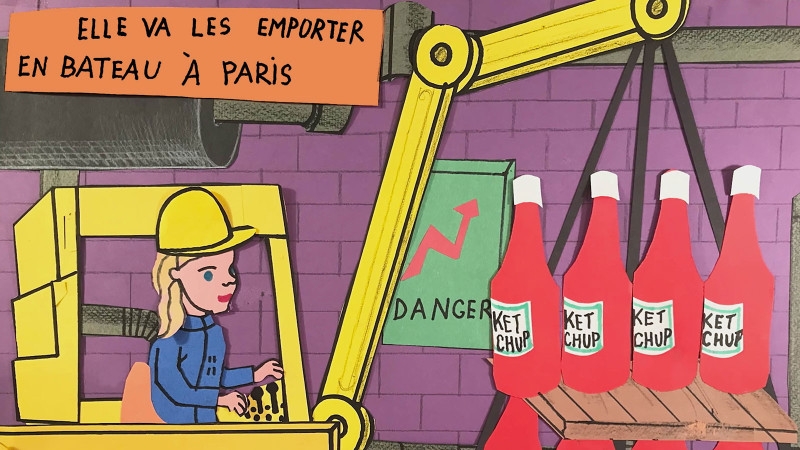
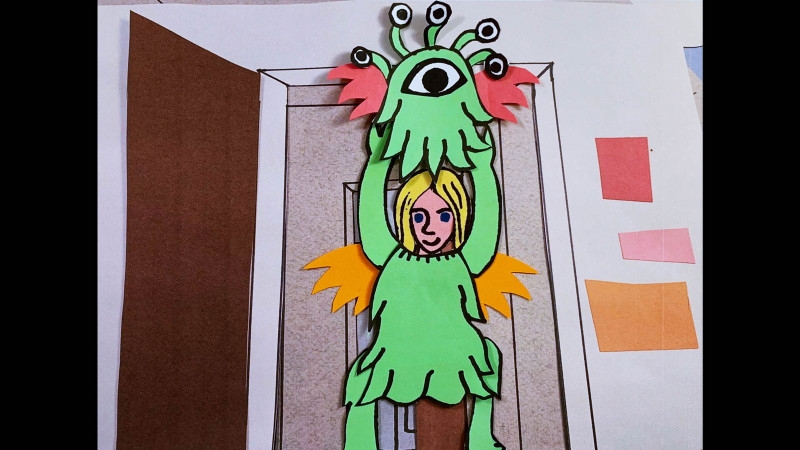
This year, his first animated feature, Maya, Give Me a Title, premiered at the Berlin Film Festival where it won the top prize in the children’s section. The 62-minute feature is a compilation of shorts that Gondry made whilst in a different country to entertain his daughter, Maya, over six years from the time she was four. Maya would give her father a title for a story, and, using paper cut-outs and stop-motion animation, he would turn it into an animated short where she is the hero.
Pierre Niney narrates the film, using words originally read to Maya by her mother, as we watch the young girl on numerous adventures, including being saved by a cat after she’s enveloped by a giant snowball, as a fearless photographer, an alien, a mermaid and an admiral at sea.
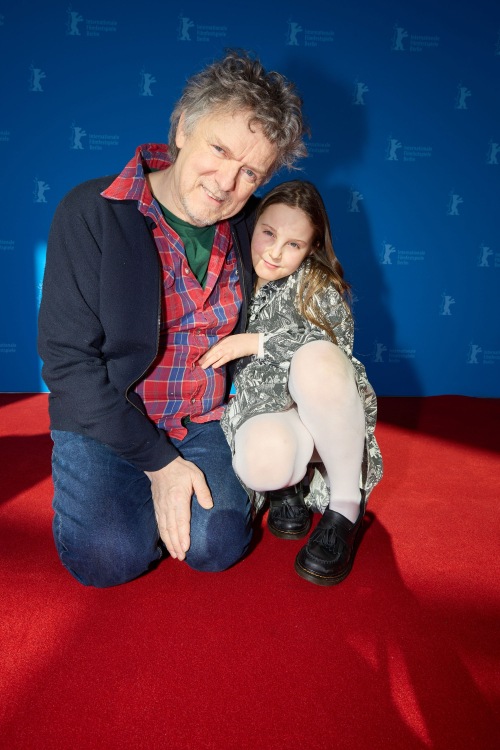
In our interview, where Maya sits in the background with her grandfather, Gondry says he splits his time between Paris and Los Angeles.
 Why did you decide to make a feature out of these little movies?
“I never thought they would end up like that. I was really trying hard to make them fun to watch, to entertain Maya, but not especially for any other audience, maybe her mother and her family. Still, I was working hard as if it was for a million people, rather than for one person. Then I realised it had been a lot of work, and I thought the films were quite good. So, I came up with the idea of turning them into a longer movie and I asked Maya, as I was concerned that she would be upset, but she was not upset.”
This is only a selection of the short films. How many were there in all?
“We disagree about the number. I think it’s between 50 and 100, but I did a lot.”
Who made the selection? Was there a veto on some of them, like, ‘that one is for me’.
“We talked about it. We talked with my editor and producer and then we decided. I had no pressure from outside, I only wanted to make sure Maya understood it would be nice. I wanted to make it look nice, that it would be fun to watch and that it would fit the title.”
When Maya grows up and becomes a teenager, will you do a film for Maya the teenager?
“No. But you know what I think of when she becomes a teenager? She’s going to show the films to her friends, and I’ll be proud.”
Do you want her to follow in your footsteps?
“In general, I want her to be happy. So, if it makes her happy, yes, but I’m not trying to push her in that direction. I also have an older son, and when I see them grow, I like that they are unique. They have something of me in them, of course, but it’s not what makes me proud. It’s that they are their own person.”
Did you have to find your inner child to make this movie? It’s a story for your child, and there’s a lot of action and excitement and wonderful things happen.
“No, it just came like that. If I would have done it for an adult friend, it would be exactly the same. I think the fun part is that I do it for myself and I’m sure it’s more fun for Maya to see that. It’s just me, and that’s what I do. Actually, the last one in this collection, with all the magical animals, was the only one I made more for children. There is not much of a story, and they like it. It’s funny.”
Kids have a lot of imagination. When do you think that they lose that ability to imagine something that is absurd but makes sense for them? You had some absurd things in your previous films.
“I tried to keep it, and also I got lucky, because I found a job that was helping me to keep it. I’m not a specialist in psychology, but I think that to find a job or to fit in the adult world, you are asked to lose that because it becomes absurd in the bad sense of the word, so you have to adapt. But some people, many people, manage to keep this absurdity and poetry, or whatever you call it, and choose the kind of work that can suit this way of thinking.”
What is for you the magic of animation?
“Normally, if you want to see a glass move, you have to move it with your hand. With animation, you move it on its own. That’s the main magic. So, you draw a little character, and he walks on his own. It’s like you create life.”
There’s also a freedom.
“Yes, of course, freedom. I can make a big disaster, a big event, or a huge construction. But when you shoot in real situations, scale is a problem. You have to buy big stuff and employ a lot of people.”
What is your relationship with Pierre Niney?
“It started because when he was nominated for the Best New Actor in the Cesars 10 years ago, he asked me if I could be his godfather. They have to pick somebody, and he chose me, and I accepted. When the right role arrived for him in The Book of Solutions, I asked him, and he said yes, and we worked very well together. So, I asked him to do the voice here and he said yes right away. While he’s charming and he’s a great actor in the French tradition, with great diction and a very good rhythm, what really amazed me is his timing. He’s very convincing.”
[In our interview, Gondry refuses to discuss his cancelled studio movie, ‘Golden’, a musical inspired by Pharrell Williams’ childhood in Virginia Beach. The film was in post-production and reportedly it didn’t live up to the expectations of Gondry, Williams and the other producers, so it was canned.]
Maya, Give Me a Title screens at the Melbourne International Film Festival on August 13, 19 and 23, together with Alice Rohrwacher’s French short film An Urban Allegory. Click here for more information.
