



by Stephen Vagg
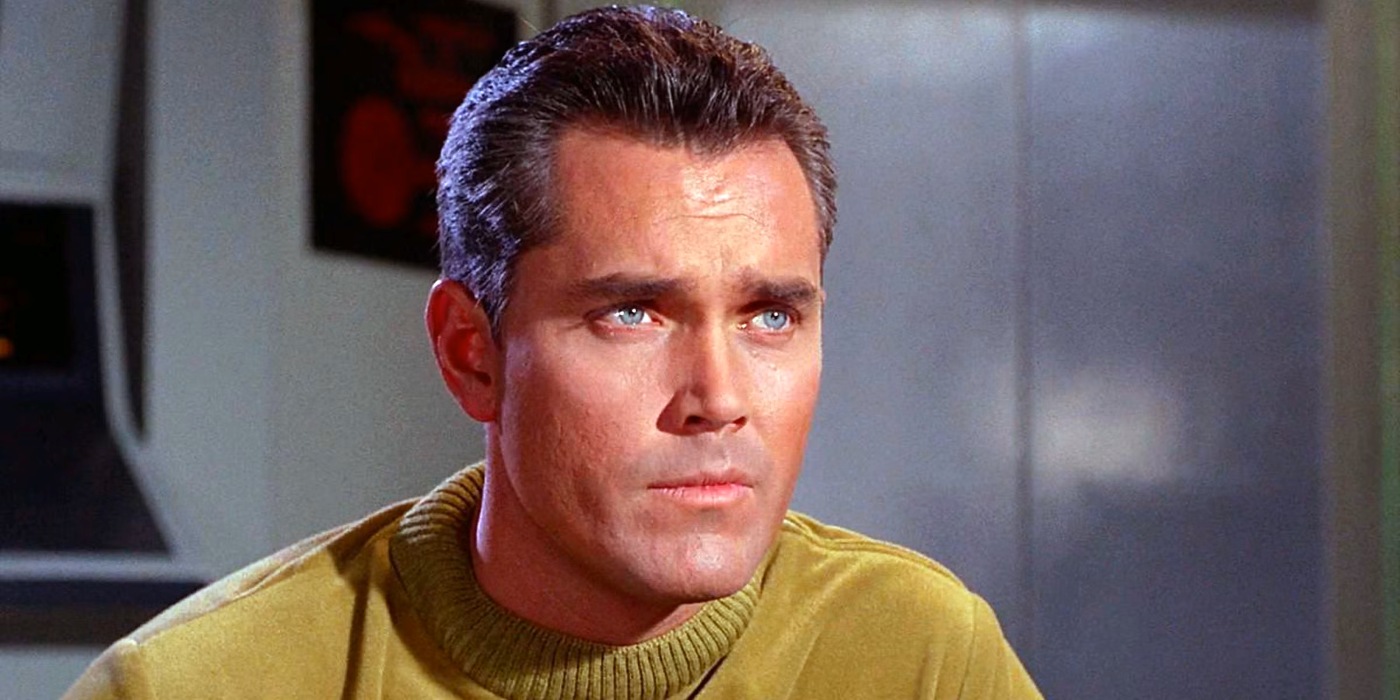
The original Star Trek captain.
Few men were given more of an opportunity to become a movie star than Jeffrey Hunter – he was blessed with a “look” that was perfect for his time (the 1950s), a long-term studio contract, lead roles in important films and television series… it was over fifteen years of chances. Yet he never became a star. He had/has his fans, absolutely – someone wrote a book about him, there’s a fan website, he had a cameo as himself in Mardi Gras (1958), he still has a lingering fame due to his appearances in The Searchers and King of Kings… but, we also think that it’s fair to say that he never broke through in the way that it seemed he was going to for over a decade.
This article explores possible reasons why.
“Jeffrey Hunter” was his stage name – he was born Henry McKinnies in 1926. He joined the navy towards the end of World War Two, but did not see active service, working in the communications division. Like so many actors of his generation, Hunter’s stint in the services enabled him to attend college – he studied theatre at Northwestern University in Illinois, appeared in various stage productions, and was one of several students in a quasi-famous 1950 indie film version of Julius Caesar, starring none other than Charlton Heston.
Hunter moved to Los Angeles to study his masters in radio and was spotted by talent scouts in a college production of All My Sons. The actor had a handsome, All-American, Ken Doll-esque, square-jawed look that was in fashion at the time – both Paramount and 20th Century Fox were interested in signing him, and Hunter ended up accepting a long-term contract at the latter.

He picked the right studio – Fox had a liking for wholesome, clean-cut male actors, perhaps inspired by the popularity of their biggest male star, the wholesome Tyrone Power. Indeed, for years it seemed that Fox were forever trying to discover the next Tyrone Power, promoting names like Richard Greene, John Payne, William Eythe, Lon McAllister, John Harvey, Mark Stevens, Glenn Langan, Robert Arthur, William Lundigan and Robert Wagner, as well as Jeffrey Hunter (as the studio now dubbed him). Fox put the former radio man to work almost immediately, and in their ‘A’ pictures too, although in small parts: Fourteen Hours (1951), Call Me Mister (1951), Take Care of My Little Girl (1951), The Frogmen (1951).
Hunter got the best scene in the latter, being badly injured while playing a prank on a beach. This led to promotion to “male juvenile” leads, where he would be the young spunk supporting Fox’s bigger stars – Red Skies of Montana (1952) with Richard Widmark, Belles on their Toes (1952) with Jeanne Crain, and Dreamboat (1952) with Clifton Webb.
Fox was so high on Hunter that they gave him the lead roles in two films: Lure of the Wilderness (1952) and Sailor of the King (1953). The latter was especially notable as it was a one man show, a remake of CS Forester’s classic novel Brown on Resolution with Hunter single-handedly delaying a German warship long enough for the British to arrive. We like this film, mostly due to its story, although it’s not as good as Forester’s original novel (which is remarkable). It also wasn’t that popular at the box office, part of which might have been (to be frank) due to Hunter. Don’t get us wrong, his performance is absolutely fine (be warned, we’ll be using that description for his acting a lot), and running around without his shirt off for most of the movie ensured that he had a decent fan magazine following. But he didn’t have that X factor of great, or even second tier stars – Hunter lacked individuality, a presence that compelled the audience to look at him, and we think this is what would hold him back as a star for the rest of his career. He was also limited in his acting ability – reviewing the movie, Variety noted that Hunter “plays his part solidly in a single key” and they were right. Imagine Sailor of the King with another young actor of the time with more warmth and/or sense of connection with the audience – say, Rock Hudson or Tony Curtis. Jeffrey Hunter had a more generic presence. To be honest, there is not much that he could have done about it – star factor is something that you’re born with or not, and if you don’t have it, all you can do is work at being the best actor you can be.
Fox seemed to sense this, and eased off on its Hunter-as-a-star build-up program. The studio put him in cheaper action-ers, Three Young Texans (1954) and Princess of the Nile (1954), and when looking for a young leading man to play the title role in their expensive swashbuckler, Prince Valiant (1954), gave the part to another Fox contract player, Robert Wagner. Wagner was absurdly miscast as Prince Valiant, but he had a far warmer screen presence and had been in some bigger hits for the studio (Beneath the 12 Mile Reef, Titanic, With a Song in My Heart, Broken Lance). Fox also cast Wagner in the lead of White Feather (1955), while Hunter was in support.
Hunter continued to play support to bigger stars in decent movies – Raymond Massey in Seven Angry Men (1955), Anthony Quinn in Seven Cities of Gold (1955), Robert Ryan in The Proud Ones (1956), Robert Wagner again in Kiss Before Dying (1956). He also did radio and television.
Hunter’s specialty by this time might best be described as “sensible principled character who acts as a counterpoint to a neurotic lead”. After all, that is what he played in Seven Angry Men, Kiss Before Dying and The Searchers (1956), the film that revitalized Hunter’s career.
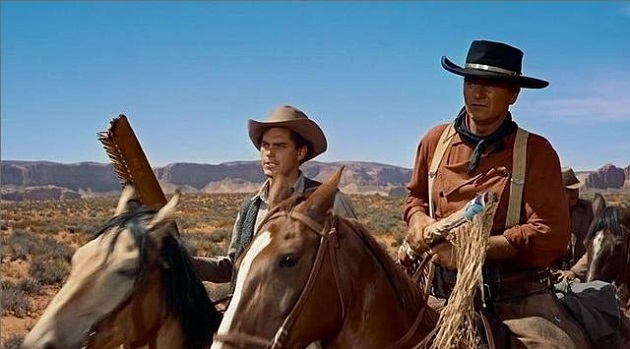 John Wayne towers over The Searchers so much that it’s easy to forget that the character of Martin Pawley (played by Hunter) is almost as rich and complex on the page as Wayne’s Ethan Edwards – Martin is Indian, raised by whites, bound by vengeance, determined to save his sister, hating Ethan but also admiring him. It’s a fabulous part and Hunter is absolutely… fine. He acts as an effective counterpoint to Wayne, handles the physical aspects of the part, doesn’t overact, doesn’t wreck the movie, he holds his own with one of the great stars in Hollywood giving arguably his greatest performance. There’s a reason that critics don’t rhapsodise too much over Jeffrey Hunter, but it’s a fine performance, far superior to those given by other male juveniles who supported John Wayne in Ford pictures – John Agar, Harry Carey Jr, Ben Johnson, Claude Jarman Jnr. The Searchers was a hit, quickly became a classic, and remains Hunter’s most famous picture.
The same year, Hunter also appeared in a solid Disney adventure drama, The Great Locomotive Chase (1956), based on the real Civil War incident that inspired Buster Keaton’s The General (1927), only played straight. This was a box office disappointment (the heroes get executed) but was well reviewed, and a solid credit for Hunter.
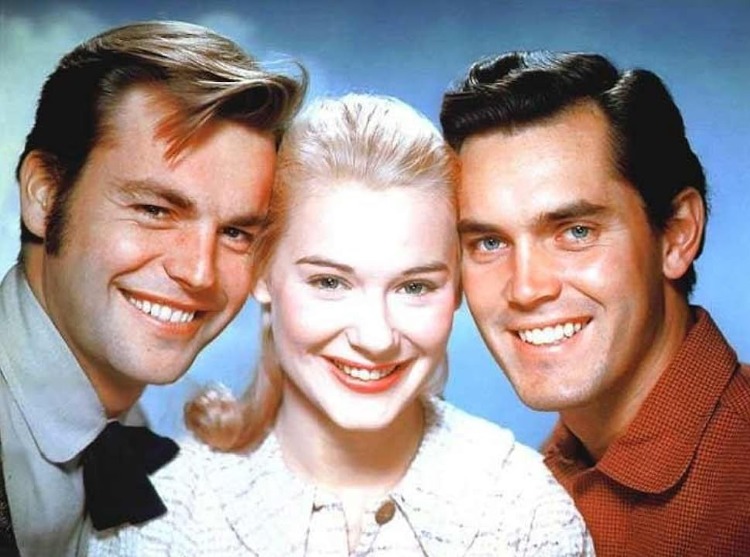 And so, he was back. Kind of. Although he still wasn’t a star, Hunter did find himself much in demand for middle tier adventure stories – Gun for a Coward (1957) with Fred MacMurray; The True Story of Jesse James (1957), again with Wagner (Hunter was Frank James to Wagner’s Jesse, pictured left with Hope Lange), for director Nicholas Ray; The Way to the Gold (1957), actually playing a lead.
Fox gave Hunter a genuine change of pace when it cast him as one of several young actors in the suburban drama No Down Payment (1957). His plot involved his wife Patricia Owens being sexually assaulted by Cameron Mitchell, Hunter confronting Mitchell about it and being beaten up. He was, to be honest, a little dull on screen and clearly outshone in terms of acting ability by co-stars like Mitchell, Tony Randall and Joanne Woodward, but once more, Hunter’s character acted as an effective counterpoint to the more neurotic ones and the film was classy – written by Phil Yordan (and his blacklisted helper Ben Maddow), directed by Martin Ritt, produced by Jerry Wald.
Hunter went to Britain to appear in a spy movie, Count Five and Die (1957). He was going to make Appointment with a Shadow (1957) at Universal – written by Australia’s own Alec Coppel – but fell ill with hepatitis and was replaced by George Nader. Hunter was out of action for over a year.
This might have been fatal for his career, but John Ford remembered Hunter and gave the actor a part in the political drama The Last Hurrah (1958) with Spencer Tracy – and if it was a support role and the film flopped, well, it never hurts to be in a John Ford/Spencer Tracy movie. Fox put Hunter and several of its other contract players – including Robert Wagner yet again – in the World War Two soap, In Love and War (1958) which was a hit, his first big one since The Searchers. Again, Hunter was effective as a decent, solid ordinary person in a sea of emotionally turbulent characters.
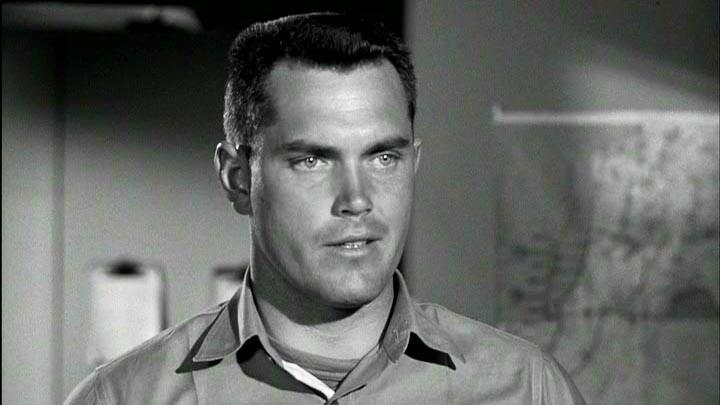 The film’s success launched Hunter on a hot streak of leading roles: John Ford’s Sergeant Rutledge (1960), playing the lawyer defending Woody Strode; two films for Phil Karlson – Key Witness (1960), a thriller, and Hell to Eternity (1960) [left], a war biopic; and most of all, the epic King of Kings (1961) from director Nicholas Ray, where Hunter played Jesus.
Sergeant Rutledge did not do much at the box office, but it was still a John Ford movie and thus was classy for Hunter to be associated with it. This was their third (and final) collaboration. To our knowledge, it’s never been really interrogated why John Ford had such a fondness for Jeffrey Hunter. In her memoirs, Maureen O’Hara argued that Ford was queer and claimed she once saw him kissing a male actor (without naming the guy), and we wondered if it was Hunter. After all, Australia’s own Frank Thring claimed to have had sex with Hunter while making King of Kings via the immortal quote “Fuck he was a bad Christ. But Christ he was a good fuck.”
And yes, that is gossipy, but it goes to casting motivations, so we are entitled to raise it, if only to annoy the John Ford film bros. After all, Ford did get Hunter to audition for The Searchers with his shirt off.
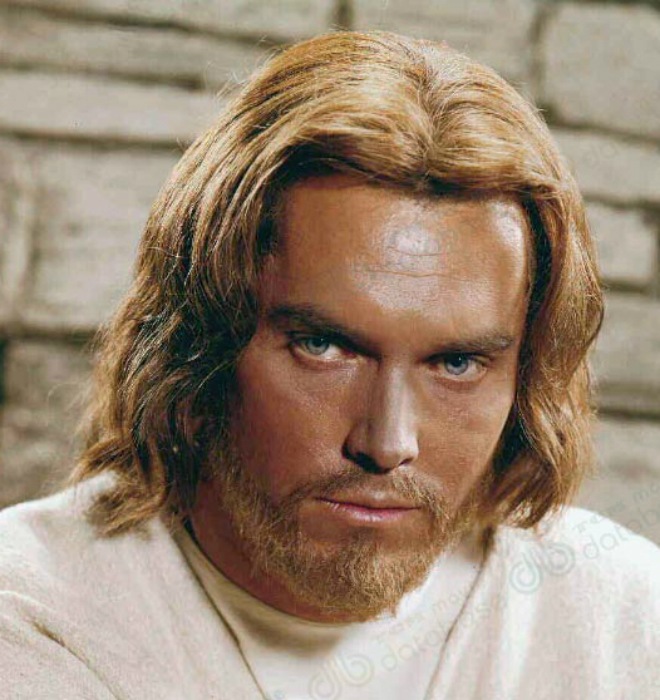 Speaking of King of Kings, Hunter’s casting led to mean jokes at his expense such as ‘I Was a Teenage Jesus’. The actual film was much-maligned, but made a pack of money and is actually really good. Hunter‘s performance is absolutely fine – we know we keep writing that, but it’s true. To be fair, Jesus isn’t much of a role (even Max Von Sydow struggled to make it interesting) and Hunter’s calmness (or lack of personality if you want to be mean) suits how the filmmakers want to play it. Like The Searchers, he doesn’t damage the film – a backhanded compliment yes, but a more individual, unique, charismatic star might have thrown it off balance.
Another big hit was Hell to Eternity – Hunter’s nice, polite acting style made him ideal to portray true life figures such as war hero Guy Gabaldon – he was very handsome and his acting wouldn’t offend. The movie is interesting, though it seems to have been forgotten.
Hunter stayed in star parts for the next few years – Man Trap (1962), a thriller; No Man is an Island (1962), another war film biopic; Gold for the Caesars (1963), a peplum with Australia’s Ron Randell (who’d been in King of Kings). He was one of many cameos in The Longest Day (1962), effectively dying on Omaha Beach, one of the best bits in the movie.
But despite all these efforts, Hunter still never established himself as a star. He didn’t make any box office polls, never really sparked a devoted fan base or publicity heat, Hollywood executives didn’t get that excited, the top directors didn’t come running. For all his conscientious efforts and sensitive acting, Hunter tended to blend into the scenery a little. We don’t mean to be cruel about this, and Hunter fans will no doubt feel very strongly otherwise, and we respect that – but for someone to be in so many hits and still not really register as a big name, there had to be something missing.
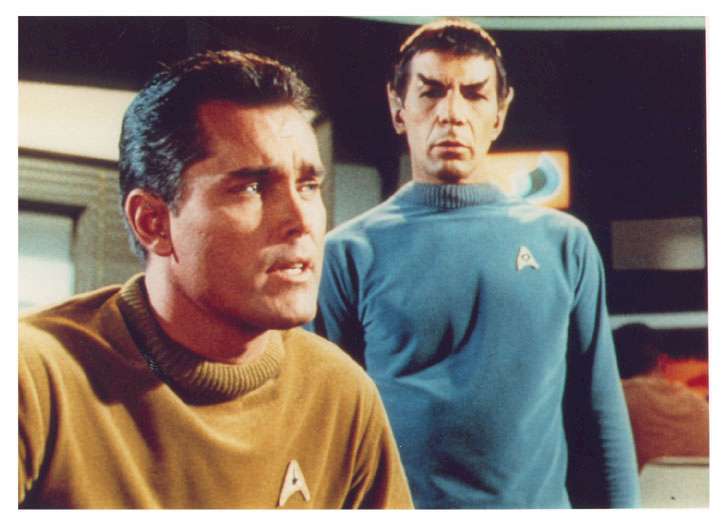 Hunter went into television playing the title role in Temple Houston (1963); this only lasted a season but had enough of a fan base that someone wrote a whole (very good) book about it. He then played the star role of Captain Pike in “The Cage”, the first pilot for Star Trek; creator Gene Rodenberry liked his work but when the network asked for a second pilot, Hunter dropped out of the series (apparently his wife talked him out of it). The writers created Captain Kirk instead, William Shatner stepped in and history was (eventually) created. Would Star Trek have been as big a phenomenon with Hunter instead of Shatner? All Trekkies will have thoughts on this. Our view – Hunter is (you guessed it) absolutely fine in “The Cage”, and the series would still have had its fans with that writing and cast, but would it have had as many fans? Shatner simply had things as an actor that Hunter did not – flamboyance, intensity, warmth, humour, a glimpse of madness. Leonard Nimoy wrote in his memoirs that he believed the character of Spock would not have worked with Hunter’s Captain Pike as “Hunter was more reticent and less dramatic in his acting choices, leaving Spock’s maneuvering space less clearly defined.” However, it must be said, Gene Roddenberry always spoke well of Hunter.
Hunter kept busy in movies, although he only played leading parts in “Bs” and/or European genre pieces, which got more obscure as the decade went on – Brainstorm (1965), Murieta (1965), Dimension 5 (1965), Village Portrait (1966), The Christmas Kid (1967), A Witch without a Broom (1967), Find a Place to Die (1968), Sexy Susan Sins Again (1968), Cry Chicago (1969).
He regularly guest-starred on television and played support in the occasional bigger budgeted movie like Custer of the West (1968), and The Private Life of Sgt O’Farrell (1968). He tried a pilot, Journey to Fear, but it was not picked up and unsuccessfully tried to get cast as Mike Brady in The Brady Bunch – Hunter auditioned twice but Sherwood Schwartz turned him down because he felt the actor was too handsome. (We’re not sure that was it – Robert Reed had more warmth and comic skill.) Hunter’s career was firmly in Ric Dalton territory when he died in May 1969 after falling down the stairs at his home (possibly exacerbated by concussion suffered months earlier from an explosion while making Cry Chicago). He was only 42.
It’s interesting to speculate what sort of career Hunter would have had if he’d lived. We imagine there would have been a lot of telemovies, Europuddings and guest shots on television dramas, along with the occasional lead in a series. Although one never knows.
Film writers don’t really discuss Jeffrey Hunter in depth, aside from his die hard fans. Roger Moore referred to the actor as his best friend in Moore’s memoirs, but never gives us any Jeffrey Hunter stories. John Ford’s biographers rarely analyse Hunter’s work. We don’t think this was necessarily malicious – he just doesn’t seem to have left much of an imprint (as a movie presence, we are not referring to his family who must have been devastated by his early passing).
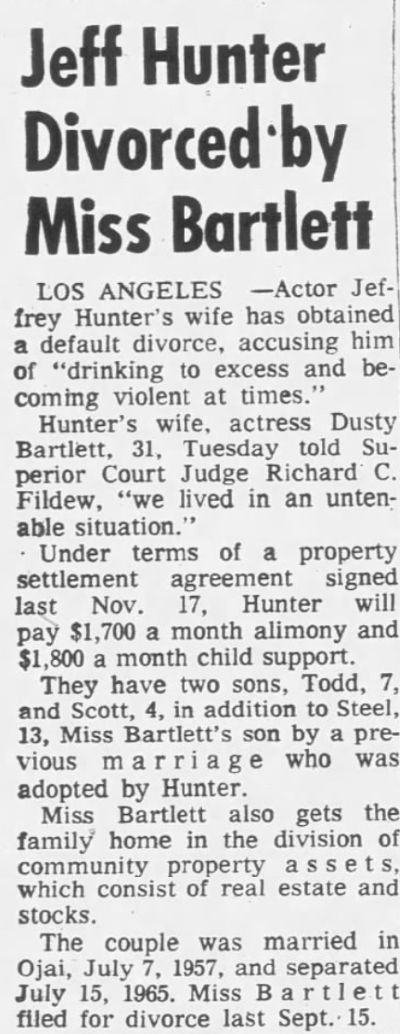 There was more than meets the eye: when Hunter divorced his second wife, she accused him of mismanaging their finances, having a drinking problem and hitting her. Sidney Pink who made two films with the actor, confirmed in his memoirs, “I liked Jeff Hunter; normally he was as gentle as a puppy, but when he got drunk, he became frighteningly mean.”
It’s remarkable looking back, how many chances Hunter got to be a star. While he probably felt unfairly overshadowed by Robert Wagner, 20th Century Fox did give him fantastic parts and stayed loyal for many years. He was also given excellent chances by John Ford, Nicholas Ray, Gene Roddenberry, Phil Karlson. Female contemporaries of Hunter did not get as many chances. Nor did male actors who weren’t as handsome or who weren’t white. Still, it’s a fairly handy filmography – The Searchers, King of Kings, Hell to Eternity, The Cage, The Last Hurrah, A Kiss Before Dying, Key Witness, In Love and War, Sergeant Rutledge, The Great Locomotive Chase. And he worked with directors like John Ford, Nicholas Ray, Robert Siodmak, Martin Ritt and Phil Karlson, sometimes more than once. That’s a lot to be proud of.
