



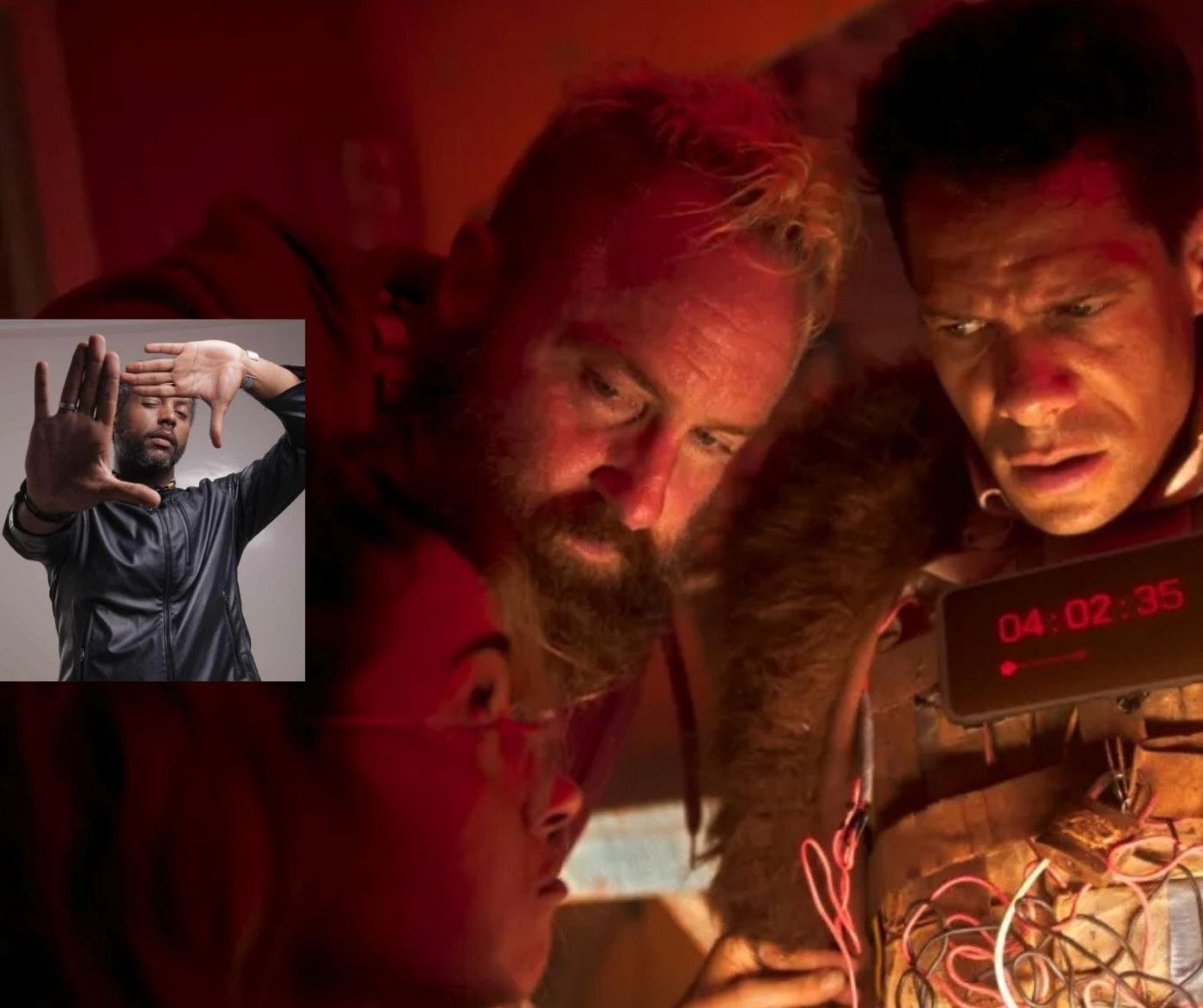
by Gill Pringle in Jeddah, Saudi Arabia at the 4th Red Sea International Film Festival
Standing out among the largely Middle Eastern and North Africa programming at this year’s Red Sea International Film Festival, Congolese director-writer Jean Luc Herbulot had a secret ingredient in his action thriller Zero – namely Willem Dafoe.
And despite Herbulot not even advertising the fact of Dafoe’s inclusion in his film, it’s impossible not to recognise the distinctive voice of the Poor Things and Florida Project star.
Zero opens in the bustling heart of Dakar, Senegal, where two white Americans wake to a nightmare: bombs strapped to their chests, and only have ten hours before they explode.
With no idea who’s behind it, their only hope for survival is to listen to the instructions of Dafoe’s mysterious voice on the phone, forcing them to complete a series of bizarre and perilous tasks across the city.
Racing against time in this twisted scavenger hunt, the vibrant streets of Dakar become a high-stakes labyrinth of survival. Darkly thrilling and filled with unexpected political commentary on colonialism and African society, this tense thriller keeps you guessing until the very last second – in a savage world where every move counts.
“It’s those kinds of moments where you have a wish list of three people, and you’re like, we’re never gonna get them and Willem was the first one on the list,” says Herbulot when we meet in Jeddah. “We were ready for him to say no.” But, then the veteran actor surprised Herbulot by saying yes after he sent him a rough cut of the film. “We shot the movie first with my voice as the guy – which is always a pleasure as a director, to play God, right?! And Willem replaced me by being the real God. We did just two sessions in Rome – because he lives in Rome – all by zoom. So, I never even met him in person.
“He’s so great and humanly perfect, and we had a lot of fun moments that are not actually in the movie because it’s not the right tone. And he was singing, crying and doing stuff that wasn’t even in the script, and taking pleasure in that. That was one of the highlights of my life as a director,” Herbulot says of Dafoe, 69.
With little time to spare, he recalls how Dafoe instantly understood what he was aiming for in voicing a man whose menacing voice appears only at the end of the telephone, instructing the two American victims what to do before the bombs strapped to their bodies explode.
“I just said to him: ‘You’re God. It’s as simple as this: Play God’. Sometimes the best direction for actors is two or three words. So, it was very simple with him, which is, ‘Willem, do you want to play God?’ He had fun with that, torturing those guys and sometimes being their dad. There was a lot of different tones to his voice because I wanted it to be quite neurotic and psychopathic in the way that sometimes it’s very warm and then sometimes, he’s very cold. There was a lot of different tonality to it – and Willem just played with it perfectly,” he says.
Educated in Paris, Herbulot got his first break directing short film Concurrence Loyale (Loyal Competition) in 2009, later receiving a lot of attention for his 2014 crime thriller Dealer.
But, thus far, it has been his horror thriller Saloum which has garnered the most critical acclaim. Premiering at TIFF three years ago, the film also took place in Senegal, about a trio of mercenaries escaping a coup in Guinea-Bissau and taking refuge around Senegal’s Saloum river.
While most of his films largely feature European or African actors, Zero features American actors Gary Dourdan, Cam McHarg and Hus Miller.
The idea for Zero came about partly by his collaboration with writer/actor Miller who had helped finance Saloum.
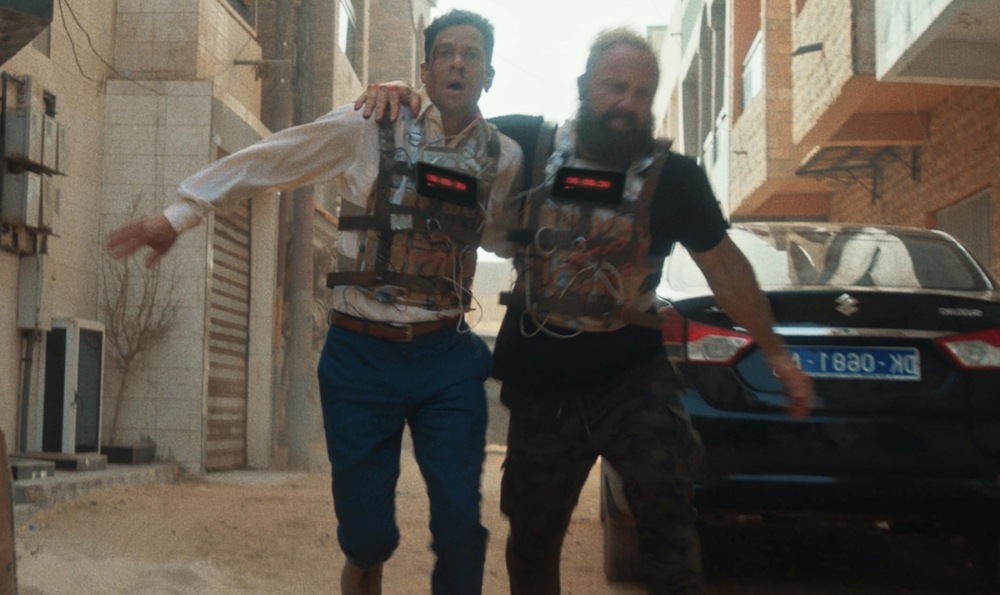
“The idea was pretty simple. Two guys with bombs strapped to them, and that’s it. Because, of course, action movies and thrillers all work on suspense and suspension of belief in a way, and so the idea of having a bomb is easy, because you know that when it hits zero, something bad will happen.
“And the entire movie is about that – and if you watch the film carefully, when the bombs come to zero, something good will happen, but something bad also. Or however you choose to see it … There are two ways of seeing the end of the movie, and that’s why people need to see it,” he says.
In common with most independent filmmakers, Hollywood is a factor in Herbulot’s films over the past 15 years. “It’s been a long love story with Hollywood. I was in Los Angeles for my first short movie, and then with Dealer. But Hollywood is a weird place, and you can work on a project for years and years, even decades.
“So, Hollywood has been my school, basically, which is the weirdest thing ever because I’m supposed to be in the French and African market. And of course, Saloum brought the most attention and opened most of the doors,” he says, predicting that Zero is less for a Western audience and more for African viewers, despite the prominent inclusion of American actors.
“Whereas Saloum was more interesting for the Western world, in terms of, ‘oh, we’ve never seen anything like that’, Zero is probably most interesting for African people, to see something that we never saw in Senegal and to talk about something that we never really talk about. I’m not saying that the movie is not for everybody. I’m just saying that it has the complete opposite sensibility than Saloum, but maybe I’m wrong on that …”
For a movie with an anti-colonialist stance, naturally it’s puzzling that the two guys with bombs strapped to them are Americans rather than French.
“That’s just where the movie is,” he shrugs. “It could honestly have been any nationality. It’s just that the actors were American, that’s all.
“Zero is about exploitation and colonialism, so it could have been anybody that is an exploitative entity. It could even have been Africans, because sometimes you also have Africans exploiting other Africans. But it’s always funny to tickle Americans, so let’s play with it.”
