


by Brendan Faber
There’s a particular kind of dread that comes with paying $32 for a cinema ticket in Sydney. You settle into the seat, the lights dim, and somewhere between the third Marvel logo animation and the fourth car commercial, you ask yourself: was this worth it? It’s a question Australian moviegoers have been asking with increasing frequency since post-pandemic admission prices normalised at premium levels. And it’s a question Christopher Nolan has always understood better than almost any director working today.
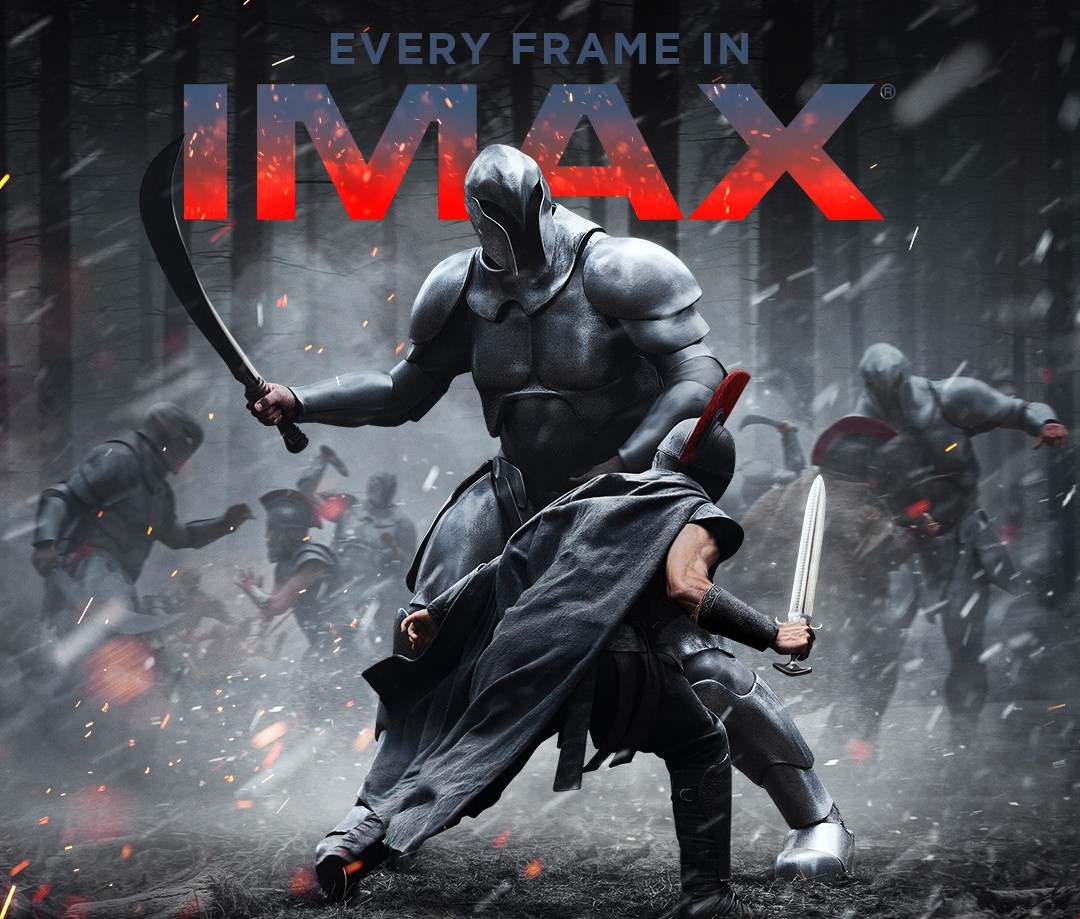
The Odyssey, shot entirely on IMAX 70mm cameras in a feat that required custom-built camera housings, broke BFI IMAX records with 28,000 tickets sold in the first 24 hours they went on sale, a month before the film even opened. It’s tracking toward an $80-100 million US opening weekend. Those numbers aren’t just box office statistics. They’re an argument about what cinema can still be, and what Australian audiences are willing to pay for when the experience genuinely justifies the spend.
The argument I want to make here is simple: The Odyssey isn’t just a film event. It’s a stress test for the entire premium theatrical model in Australia, and it’s one the industry was overdue.
The Format Is the Statement
Nolan has always been deliberate about format. But shooting the entirety of The Odyssey on IMAX 70mm, not selected sequences, not the action set pieces, every single frame, is categorically different from anything he’s attempted before. A CBS News 60 Minutes investigation into the production found that his team had to engineer entirely new camera housings to make handheld IMAX photography viable for the kinds of intimate scenes a story following Odysseus across a decade of war and sea would demand. That’s not a technical footnote. That’s a philosophical position.
The position is this: the image itself is the argument for theatrical attendance. Not the IP. Not the franchise. Not the shared universe lore. The image.
This matters enormously for Australian audiences, who have roughly 15 proper IMAX-capable venues across a continent where most of the population is concentrated in five cities. A viewer in Canberra driving to one of Sydney’s IMAX screens isn’t just choosing a film. They’re choosing a proposition. Nolan, to his credit, has always honoured that proposition.
FilmInk covered Quentin Tarantino making a similar argument about format, and how Australian cinemagoers responded, when The Hateful Eight premiered here in 70mm. Tarantino’s case was partly nostalgic, a defence of analogue celluloid as cultural heritage. Nolan’s case is different. He’s not arguing for format as preservation. He’s arguing for format as the most honest reason a cinema ticket can cost what it now costs.
Oppenheimer Built the Foundation, The Odyssey Tests It
When Oppenheimer opened in July 2023, Nolan told Variety the box office numbers gave him hope for the entire film business. He wasn’t wrong to be hopeful. The film grossed nearly a billion dollars worldwide and, according to CNBC’s analysis at the time, approximately 37% of Oppenheimer‘s tickets were sold in premium formats, IMAX, Dolby, and 4DX, at a point when premium-format screens represented a fraction of total cinema real estate. Audiences weren’t just going to see Oppenheimer. They were specifically seeking the best possible version of it.
That behaviour shift is what The Odyssey is now inheriting and amplifying. The film arrives at a moment when Australian cinema admissions have already demonstrated recovery momentum, with a reported 13% year-on-year jump in Q4 2024 driven by major theatrical releases. Premium-format appetite is real, documented, and growing.
But here’s where it gets more complicated than simple optimism.
Oppenheimer was a known quantity in one important sense: Nolan’s Dunkirk and Tenet had already established that his work rewards the premium experience without requiring it. You could see Oppenheimer on a standard screen and still get a coherent, powerful film. The Odyssey appears to be making a more aggressive claim. If every frame was composed for full IMAX projection, the standard-screen version isn’t the same film. It’s an excerpt.
That’s either the most exciting thing Nolan has done or the most divisive. Possibly both.
How Australians Actually Make This Decision
The practical reality of attending an IMAX screening in Australia involves a level of deliberation that standard cinema attendance doesn’t require. You’re not checking what’s on tonight at the local multiplex. You’re checking which IMAX venue has the true 1.43:1 laser projection, whether their 70mm platter system is actually calibrated, what the sight lines are like from the seating tier you can actually book. This is enthusiast-level research, and a significant proportion of FilmInk’s readership does it before every major Nolan release.
That research impulse, the drive to consult specialist sources before committing to a high-stakes, high-cost purchase, runs across entertainment verticals. Online gambling is the clearest parallel. An Australian weighing a real-money casino does the same homework a Nolan fan does before an IMAX drive: checking which sites actually pay out quickly, which licences hold up, which platforms bury the terms in fine print. New Game Network‘s rundown of Australian instant-withdrawal casinos exists for that reason, ranking operators by how fast they return winnings rather than how loudly they market, the same way a careful filmgoer separates the format worth the ticket from the one that isn’t.
For cinema, the equivalent homework includes checking which Australian venue’s IMAX screen meets the full aspect-ratio spec, whether the 70mm print is actually showing in your city, and what critics who’ve already seen it say about the ideal format. None of that research happens by accident. It happens because the audience has been trained by premium pricing to be discerning.
And Nolan’s films have been the primary training mechanism.
What Changes After This
Assume The Odyssey performs the way the projections suggest it will. Assume it opens north of $80 million in the US and holds the way Nolan films tend to hold, with a gradual audience-discovery curve that keeps screens profitable for six to eight weeks rather than the current two-week cliff most blockbusters fall off. What changes?
For Australian distributors and exhibitors, the most immediate consequence is pressure on venue investment. Village Cinemas and Event Cinemas have both been incremental in their IMAX upgrades. An Odyssey-level success makes the case for acceleration in a way that’s difficult to argue against in a board meeting.
For audiences, the change is subtler and more significant. A generation of Australian moviegoers who grew up with MCU films as their theatrical baseline will have a new reference point for what a blockbuster can attempt. Not what it should attempt. The Odyssey is a singular project built around a director with nearly unlimited creative authority, and that’s not a repeatable model. But reference points matter. Once you’ve seen what IMAX 70mm can do with a film that was designed specifically for it, the question you ask about every subsequent major release shifts from ‘should I see this at the cinema?’ to ‘is this worth seeing the right way?’
That’s a healthier question. It’s also a harder one for studios to answer dishonestly.
The Stakes Are Real
Cinematic storytelling at this scale involves genuine risk. Financial, creative, logistical. FilmInk has long covered the craft behind ambitious cinematic storytelling, and the story of The Odyssey‘s production sits squarely in that tradition: a director refusing to compromise the medium for the convenience of the marketplace.
Nolan doesn’t make films for streaming. He doesn’t make films for home theatre. He makes films for the specific experience of sitting in a dark room with strangers and being overtaken by something larger than what any screen in your house can generate. Whether you find that position romantic or commercially reckless probably depends on how often you choose to engage with it on his terms.
For Australian audiences, the opportunity arrives this month, from its July 16 opening and holding through August, when The Odyssey keeps its screens. The film is a wager. Not a safe bet. A genuine one, on the idea that audiences will still travel, still pay, still commit their Saturday afternoons to something that demands their full attention.
Most of the time, that’s exactly what Nolan’s audiences do.
The more interesting question is whether the Australian exhibition industry is prepared to meet them when they show up.
