


By Erin Free
In this regular column, we drag forgotten made-for-TV movies out of the vault and into the light. This week: the 1989 epic western mini-series Lonesome Dove, starring Robert Duvall, Tommy Lee Jones, Diane Lane, Danny Glover, Robert Urich, Anjelica Huston, Chris Cooper and Rick Schroder.
Yeah, yeah, okay, we know, we know – Lonesome Dove is a mini-series and not a telemovie…but this is such a stunning, wondrously entertaining, and utterly perfect piece of television that simple concepts like rules and definitions are rendered instantly redundant, like dust in the wind. In short, we don’t care! Lonesome Dove is in the column!
But why is Lonesome Dove (which was first broadcast by major US network CBS from February 5-8, 1989) on our minds right now? Well, the answer is simple. It was announced recently that a new adaptation of Larry McMurtry’s epic 1985 novel is to be produced for Netflix courtesy of showrunning duo Zoe Kazan (writer of Ruby Sparks and Wildlife) and Jeb Stuart (writer of Die Hard and The Fugitive), who are currently riding high with their acclaimed take on John Steinbeck’s East Of Eden for the aforementioned streamer. To be honest, we’re a little worried…will the new Lonesome Dove cop a contemporary, feminist-leaning approach like East Of Eden? Will characters be gender swapped? Will the focus be shifted? With no casting announcements or plot details yet made, all of that remains to be seen.
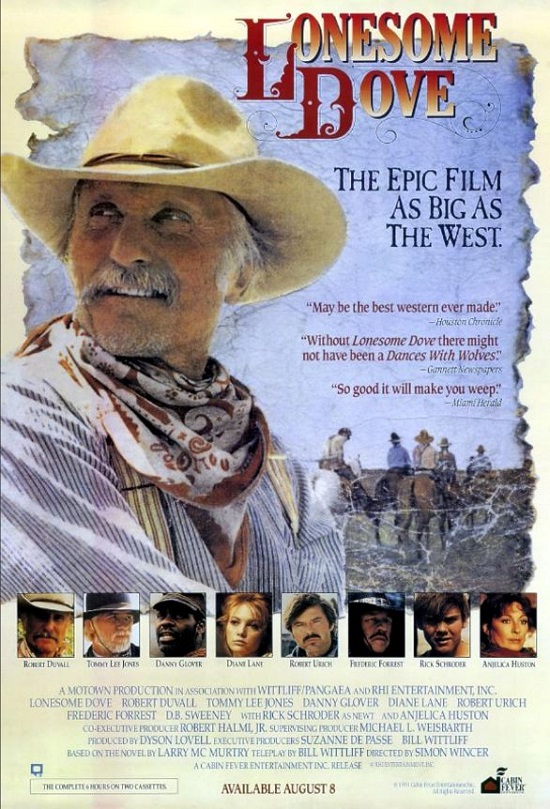
The upshot, of course, is that Lonesome Dove has already been adapted for the small screen to perfection, so if this new version is horse manure, we can just forget all about it, like we did with, say, Rob Zombie’s Halloween. Long, sprawling, nuanced, and massive in scope, Lonesome Dove by Larry McMurtry (who also penned the source novels that inspired classic films like The Last Picture Show and Terms Of Endearment) is seen by many as the ultimate western, a near-Biblical tome that takes in practically all of the tropes of that most American of genres, and juices them with the kind of authenticity and literary poetry that is all too rare.
That big, 843-page slab of western literature was astutely adapted for the small screen by the late screenwriter, novelist, photographer and one-time-only director and Unsung Auteur William D. Wittliff, and then directed with equal respect and insight by Australian director Simon Wincer (The Lighthorsemen, Phar Lap, Quigley Down Under). “The network executives looked at me as the guy who could shoot [the miniseries on] a television schedule and give it a feature look,” Wincer told Cowboys & Indians Magazine in 2014. “I wasn’t preconditioned by Hollywood westerns and stuff like that, so I brought a fresh look to the whole western genre, if you like.”
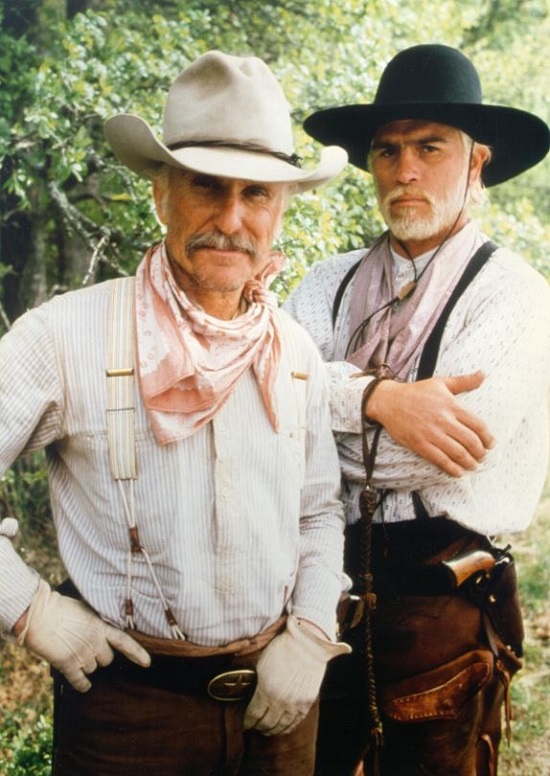
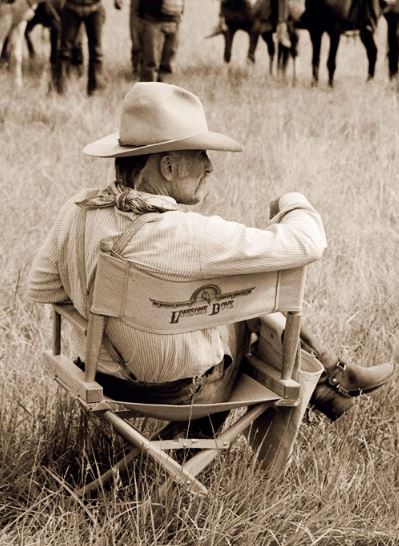
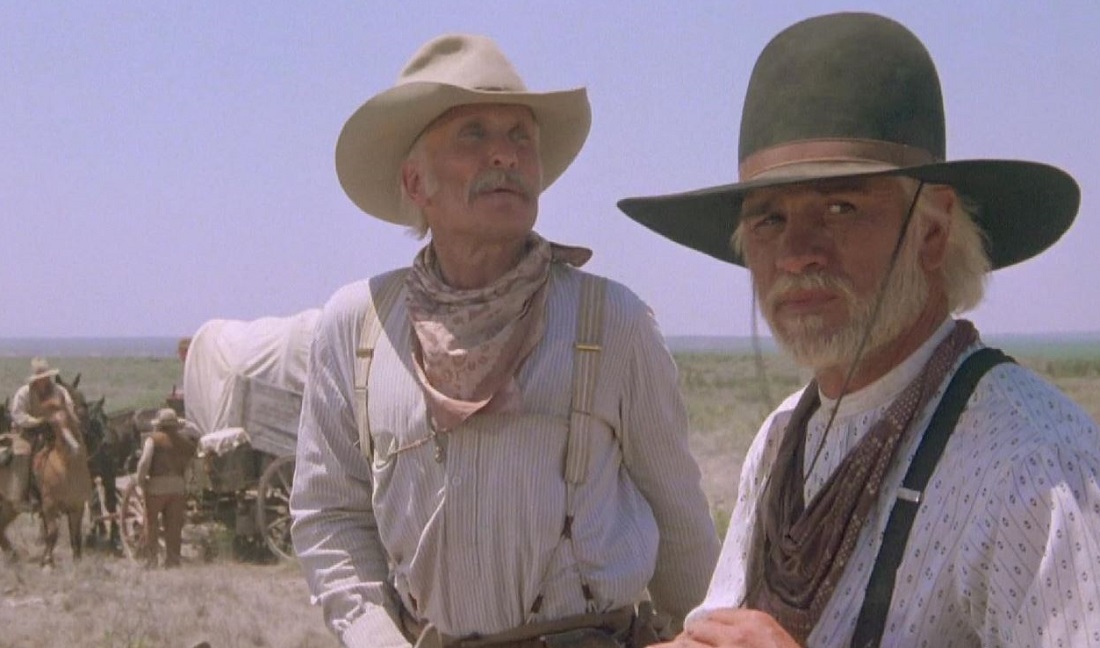
At the centre of the huge, beautifully burnished canvas that is Lonesome Dove are former Texas Rangers and livery operators Captain Augustus “Gus” McCrae (Robert Duvall) and Captain Woodrow F. Call (Tommy Lee Jones), who embark on a long, arduous cattle drive from the eponymous Texas border town to the seemingly promised land of Montana. What ensues is an epic journey to rival even that of The Odyssey, with gun battles, cattle stampedes, murder, injustice, horror and great beauty all encountered along the way.
The leading performances of Robert Duvall and Tommy Lee Jones are a joy to behold. As old friends who have seen it all, their chemistry infuses every scene, with Duvall’s plucky, rowdy, upbeat Gus perfectly counterpointed by Jones’ Woodrow, a stoic, serious man for whom a smile is a true, hard-earned rarity. They are a great western duo, slowed by age but enrichened by experience, and Robert Duvall and Tommy Lee Jones (both of whom would frequently return to the western genre) deliver career-best work in roles seemingly tailored for them.
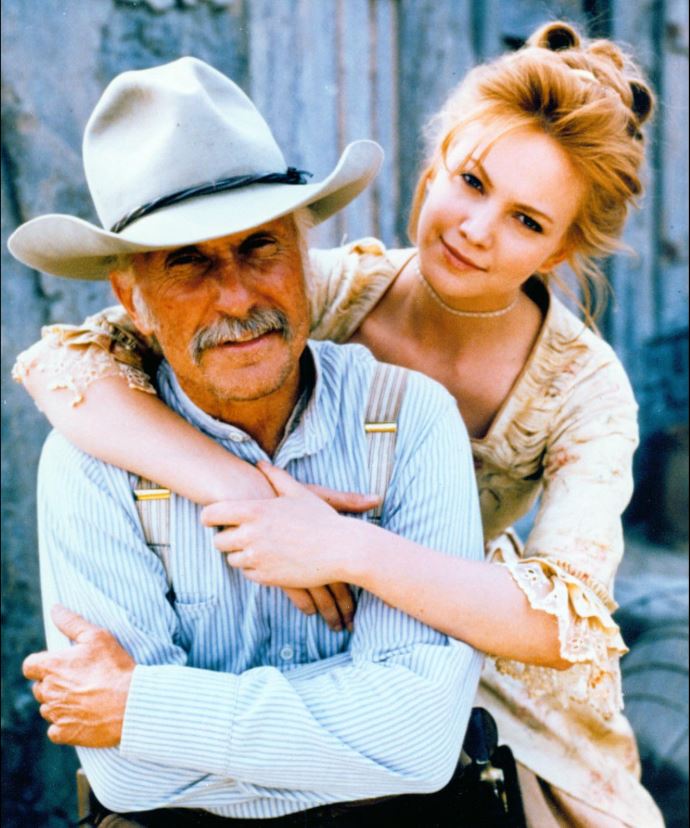
These two mighty actors get extraordinary support from a great cast, all of whom fully embody their rich, finely drawn characters. Never more beautiful or fetching, Diane Lane is perfect as Lorena Wood, the quintessential “hooker with a heart of gold” who Gus loves, while Danny Glover is the very picture of warmth and dignity as Joshua Deets, former scout for the Texas Rangers and cherished friend and colleague of Gus and Call. TV great Robert Urich is moving as the deeply conflicted Jake Spoon, a former Texas Ranger who can’t stay out of trouble, and Anjelica Huston radiates pure, feisty goodness as Gus’s former love, Clara Allen. One-time child star Rick Schroder, meanwhile, is impressive in one of his first more mature roles.
There are many, many more fine actors in smaller roles: Frederic Forrest (truly great as the evil and utterly repulsive Native-American/Mexican bandit Blue Duck…even though the casting isn’t really appropriate, and would never wash today), Chris Cooper (as sensitive lawman July Johnson), D.B Sweeney (as trail ramrod Dishwater Boggett), Glenne Headly (as Elmira “Ellie” Johnson), Barry Corbin (as Deputy Roscoe Brown), William Sanderson (as “Lippy” Jones), and more. Even Steve Buscemi turns up as a wild-eyed, nasty piece of work!
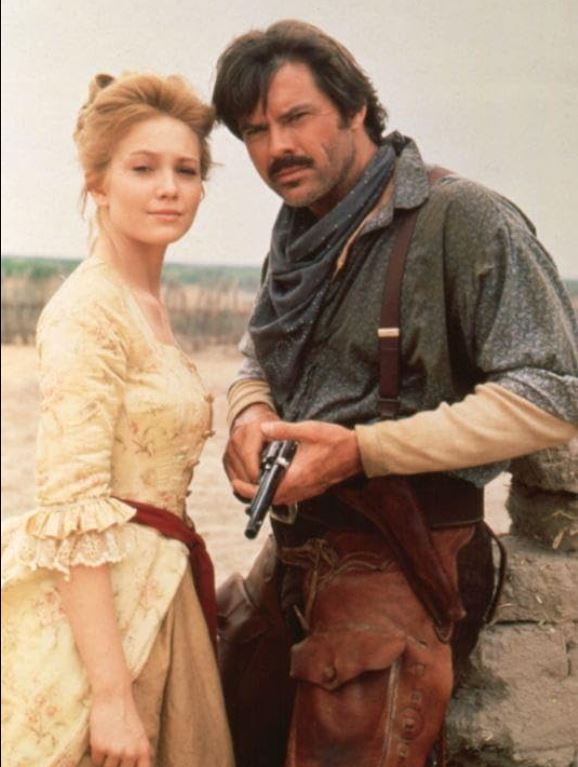
At a time when the western was in one of its many dead periods (it will never really die, despite what various shortsighted, dim-witted commentators often say), Lonesome Dove was a massive success. It rated through the roof; received glowing reviews; likely inspired future westerns like Dances With Wolves; and scored a mammoth 19 Emmy Award nominations, winning seven, but surprisingly not in any of the major categories, save for Simon Wincer’s Best Director gong.
The hugely popular Lonesome Dove also inspired various sequels (1993’s Return To Lonesome Dove, 1994’s Lonesome Dove: The Series, 1995’s Streets Of Laredo) and prequels (1996’s Dead Man’s Walk, 2008’s Commanche Moon), some based on Larry McMurtry’s work, and some not. All of these mini-series, telemovies and series are entertaining and well worth a look, but they undeniably lack the true sweep and grandeur of the original. Robert Duvall and Tommy Lee Jones didn’t return for any of these subsequent projects, with the impressive likes of Jon Voight and James Garner saddling up instead.
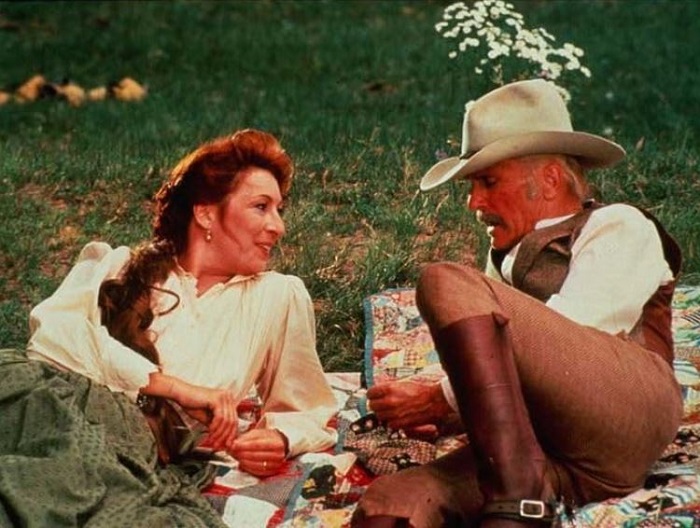
Ambitious, exciting, affecting and often heartbreaking, Lonesome Dove is indeed one of the greatest westerns ever made, and one of the finest pieces of television you’ll ever see. In short, it’s a masterpiece, and it casts a long, inky, black shadow over every western that has followed it.
“I think every director in Hollywood wanted to do Lonesome Dove, because it was such an extraordinary, wonderful book,” Wincer told Cowboys & Indians Magazine in 2014. “And I was the lucky guy who was chosen, likely because I was a television guy who had directed a few features but could still handle a television schedule and work with actors. That was it, basically. It wasn’t because of my great creative abilities. I was just following what Larry McMurtry wrote. And I would include in that, what Bill Wittliff wrote. The thing about directing is, you’re only as good as the material you have to work with. And when you get material as great as this, you’re halfway there.”
Availability: Lonesome Dove: The Mini-Series is available to buy on Blu-Ray.