


by Erin Free
With the powerful new documentary Changing Track, first time Aussie director Tristan Kenyon crafts the highly affecting tale of three Australian athletes in training for The Paris 2024 Summer Paralympic Games.
“Producing, writing and directing all at the same time on a tight schedule is achievable, but it should also be considered a form of torture,” director Tristan Kenyon laughs to FilmInk. “I always thought my mental load for essential production tasks was pretty close to infinity, but I eventually worked out that it was quite a lot less than that.”
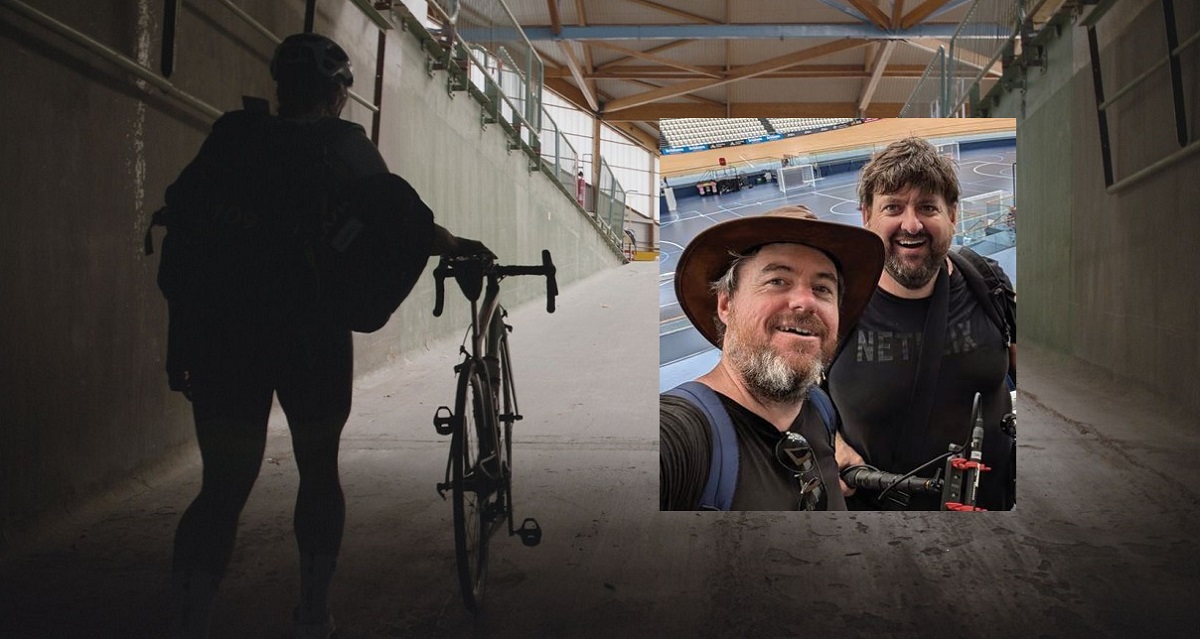
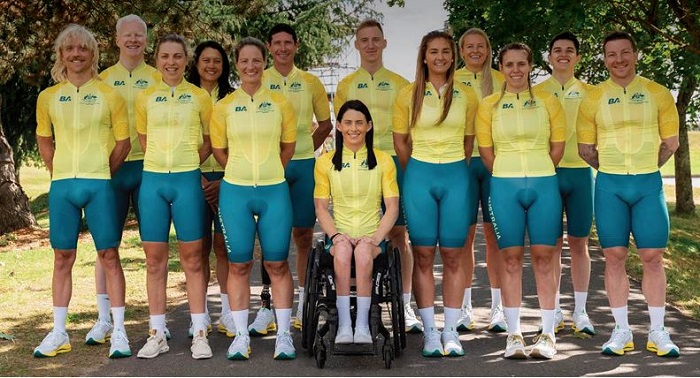
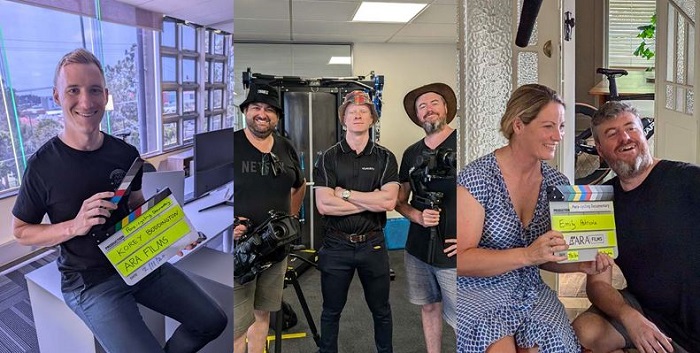
When Edward Federman – the co-founder and CEO of ARA Group, and a keen patron of the arts and literature – approached Tristan Kenyon with the idea of producing a documentary about the Australian Paralympic Cycling Team, the director wasn’t quite sure just how big this project would become. ARA Group’s director and producer of video and photography since 2016, Tristan Kenyon had made several short films, and had much experience in corporate filmmaking, but making his eventual feature debut with what would become the documentary Changing Track represented a major challenge. The first person Tristan brought onto the project was his brother Timothy, a seasoned cinematographer and producer. With the ARA Group a major supporter of the Australian Cycling Team, Tristan was allowed unrivalled access to the squad, resulting in an incredibly intimate and close-up piece of filmmaking.
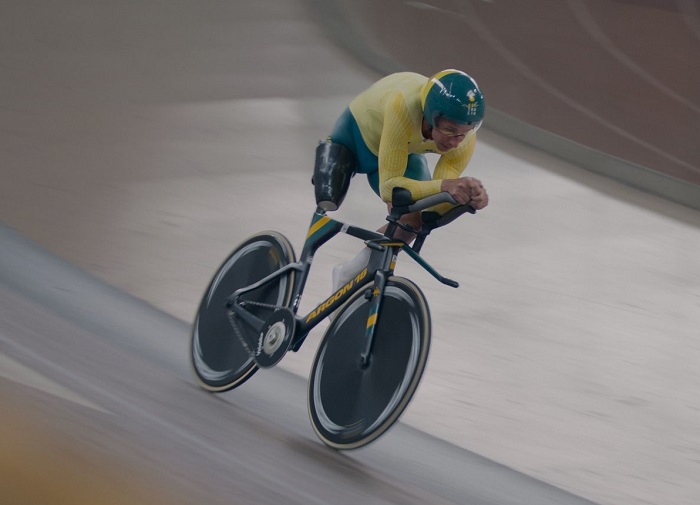
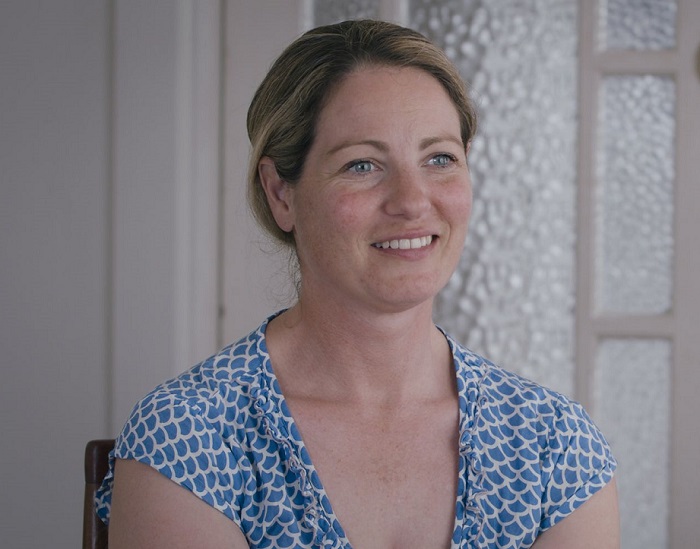
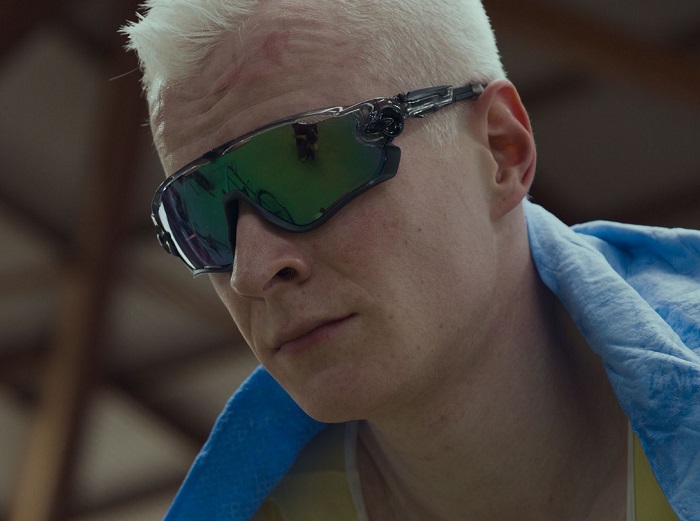
With a tiny crew, Tristan headed off to France to follow the Australian team while they were in preparation for The Paris 2024 Summer Paralympic Games. While tracking the team, Tristan Kenyon found his story in the form of three athletes. Formerly fit, successful and happy, Emily Petricola’s life shifted irrevocably when she began to experience numbness in her body and was eventually given a diagnosis of MS; sports and action enthusiast Korey Boddington lives with disability after two shocking childhood accidents; and Kane Perris, born with Albinism and resultant partial blindness, has suffered through his whole young life dealing with the bitter after-effects and psychological trauma of schoolyard bullying.
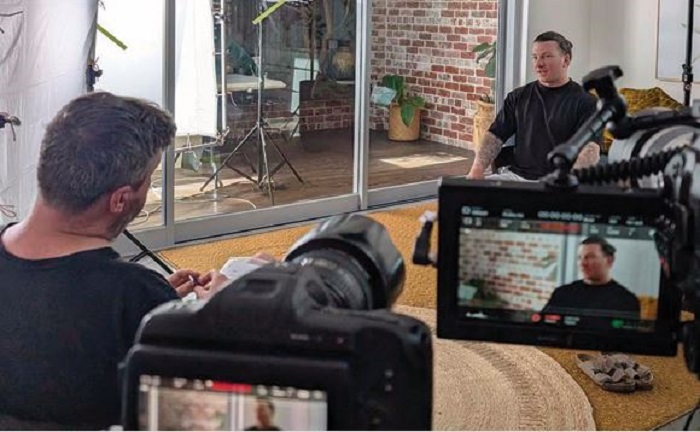
As well as in-depth interviews conducted after The Paralympic Games, Tristan and his brother Timothy also put together a stunning array of images that give Changing Track a quiet sense of visual poetry. The resulting documentary draws you right into its finely syncopated rhythms, and takes you on a fast-paced journey of wrenching emotion and burning ambition.
What were your first thoughts when your executive producer Edward Federman brought the concept of this project to you?
“Over the nine years that we’ve worked together, we’ve often discussed books that would become great films. One day over lunch, Edward made a promise that we would make a film together and we shook hands. In early 2024 when he asked me if we could help support the Australian Cycling Team by creating a YouTube channel or a documentary, my first thought was that a documentary was naturally going to beat a YouTube channel any day of the week. My second thought was the Sydney 2000 Paralympic Games that I watched with my brother Timothy; we were fascinated with the achievements of the athletes, despite their disabilities. There was so much we wanted to know about their stories leading up to that moment on the start line and focusing on the para-cycling team would be a great way to finally explore those feelings. My third thought – a growing level of concerned energy now – was that I didn’t really know anything about cycling. I rung Timothy and asked if he wanted to co-write and co-produce with me. The first thing he said was, ‘I don’t know anything about cycling.’ We both agreed that cycling was the vessel for a much deeper story and that the only way to learn about cycling would be to make the movie. And that’s what we did!”
You were on your own in the Paris training camp…was that difficult?
“It was very important that our crew had a small footprint in France because we knew the team were there to do a job and we didn’t want to disturb that focus, so I went over on my own. I only met the team for the first time in person at Bordeaux airport as they got off the plane. As an introvert, the idea of just casually sauntering up to someone and striking up a conversation is pretty scary, so having to do that with a giant camera in my hand and they’re a world champion Paralympian was simply terrifying! It took a few days to gain the team’s trust and I did feel a lot of pressure, which I know was mostly built up by my own anxiety. I found myself on the phone to my partner on the third night in tears wondering if I had made a mistake. I sent some footage to our editor Romain Mongin in Australia that night who cut together an amazing teaser trailer in a matter of hours. I showed it to the team and the excitement was amazing. Things changed and I knew I was doing the right thing. France was hard work. It was incredibly exhausting with lots of heavy equipment, very early starts, long days of filming, and late nights managing all the media and preparing everything for the next day. The silver lining was that the footage takes a long time to transfer to hard-drives and here I was in Bordeaux and Paris, cities that I had never been to before, so I guess I would say my coping mechanism was to stroll the amazing streets that are filled with so much history and beauty.”
Though you touch on many of the members of the cycling team, you really focus on Emily Petricola, Korey Boddington and Kane Perris. How did you make that decision?
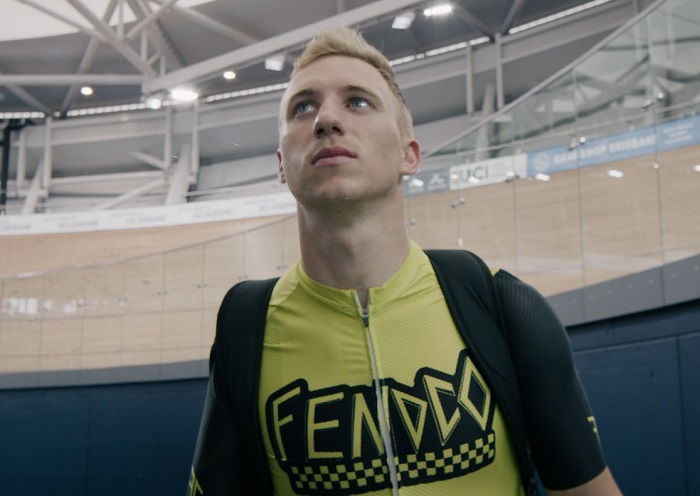
“It became clear for us as we began looking at all the athletes’ stories and relationships with each other that we would focus on Emily, Korey and Kane, along with his cycling pilot Luke Zaccaria. It’s natural to wonder how an athlete becomes eligible for the team and this is determined through a process called classification which we touch on in the film. Emily and Korey represent an acquired condition – disease or a traumatic injury – and Kane represents a congenital condition, that being in his case Albinism, resulting in low vision. Their personal stories and journey to the present day really grabbed us and spoke to so many rich themes that we wanted to explore throughout the film. We love the relationship between Korey and Kane, the bond between Kane and Luke, and their bumpy road together as a Tandem pair, and the raw emotional honesty that Emily was trusting enough to share so openly with us.”
Did all the athletes know this would be the structure of the doco? Did anyone else think they might have been the “star” of the show?
“The athletes were not aware of the exact structure of the documentary, but during our development stage over Zoom and even before that in France, we communicated that we wanted to explore the ‘why’ rather than the ‘how’. I recall making it obvious in France that I was not a very sporty kind of person and that I had deliberately not researched the sport before coming along so I could learn my own way. We were interested in their stories more than the specific times they rode or the technical details. Although we focus in detail on Emily, Korey, Kane and Luke’s stories, we feel that all the athletes and support staff that appear contribute significantly to the overall themes and message of the film.”
Did any of the athletes express any concerns about being involved with the project? Or were they all in, so to speak?
“Despite the media attention surrounding controversial topics such as classification that pop up every time the Paralympics comes around, everyone was really excited about this project once they got to know me in France. After spending so much time with them over there and then Timothy and I meeting with them all over Zoom calls for further research and then traveling around Australia to spend more time filming with them again, there was a level of trust that we had built where everyone seemed really comfortable with what we were trying to achieve.”
Was the doco created in the editing room, or were the concepts and structure “written” from the beginning?
“Changing Track is a non-fiction drama film. Both Timothy and I come from a drama background with scripts, storyboards and everything else in-between, so we developed a structure for the documentary that hit the major moments that any drama film generally hits. We knew the themes we wanted to explore and had a basic idea of our structure quite early in the project. By the time I had returned from France and we had finished our development period, we were ready for the Australian portion of the film shoot. By this point we had a very rich story structure that helped steer the interviews and keep them on track. There were definitely aspects of the story that developed organically through the interview process and Timothy and I would spend time in transit and hotel lounges refining the story as we went. The more interviews we completed, the tighter our structure became and that translated well for our editor Romain Mongin.”
What was the biggest challenge during the making of Changing Track?
“The biggest challenge was pulling a feature documentary together from concept to completion in just over one year with an extremely small crew. We developed a working relationship with our key creatives in post-production that meant their work was carrying on during principal photography and in some cases was helping inform our final shoots. Our editor Romain Mongin was piecing together the film based on our structure script and our music composer Anthony Ammar was developing an entire score based on unique emotional story arcs that we would provide for inspiration. By the time we were heavily into the edit, Anthony had nearly an hour of beautiful soundtrack for us to work with while our colourist Keiran Lee tied together the visual journey of colour and our sound designers at Rumble Studios brought the soundscape to life.”
How important was the relationship between you and your brother in getting Changing Track made?
“Timothy and I grew up wanting to make movies together. We’ve both been in this industry wearing different hats for more than twenty years now, so getting an opportunity to work on our first project together since 2011 has been fantastic. We have a unique way of being able to approve or reject a shot or task without a single word. It is a brotherly language that is all in facial expressions and small impressed or unimpressed noises. I would hate to be the person who has to take minutes in a meeting with us, but I would love to see the notes. That said, just like any regular siblings, we can definitely get under each other’s skin from time to time and bicker about small things, which Emily Petricola found absolutely hilarious while filming.”
Are you hoping to change perceptions and some prejudices with the film?
“Awareness, understanding and a reminder to accept the others that we share our world with is something that I would love an audience to walk away with after watching this film. One of the very important themes in Changing Track is invisible disability and invisible suffering. Many of us have gone through periods of depression, darkness or sadness in our lives, and some of us have or will in the future experience a traumatic event that will have a major effect on us. The athletes in this film are amongst the most amazing, humble and supportive people I have met in my life. Timothy and I hope that anyone watching the film can relate in their own way to the challenges that these athletes have and continue to face every day and see them as a beacon of hope and an inspiration for their own lives.”
Changing Track is available now to buy and rent on Digital
Click here for our review of Changing Track.
