



By Alireza Hatamvand
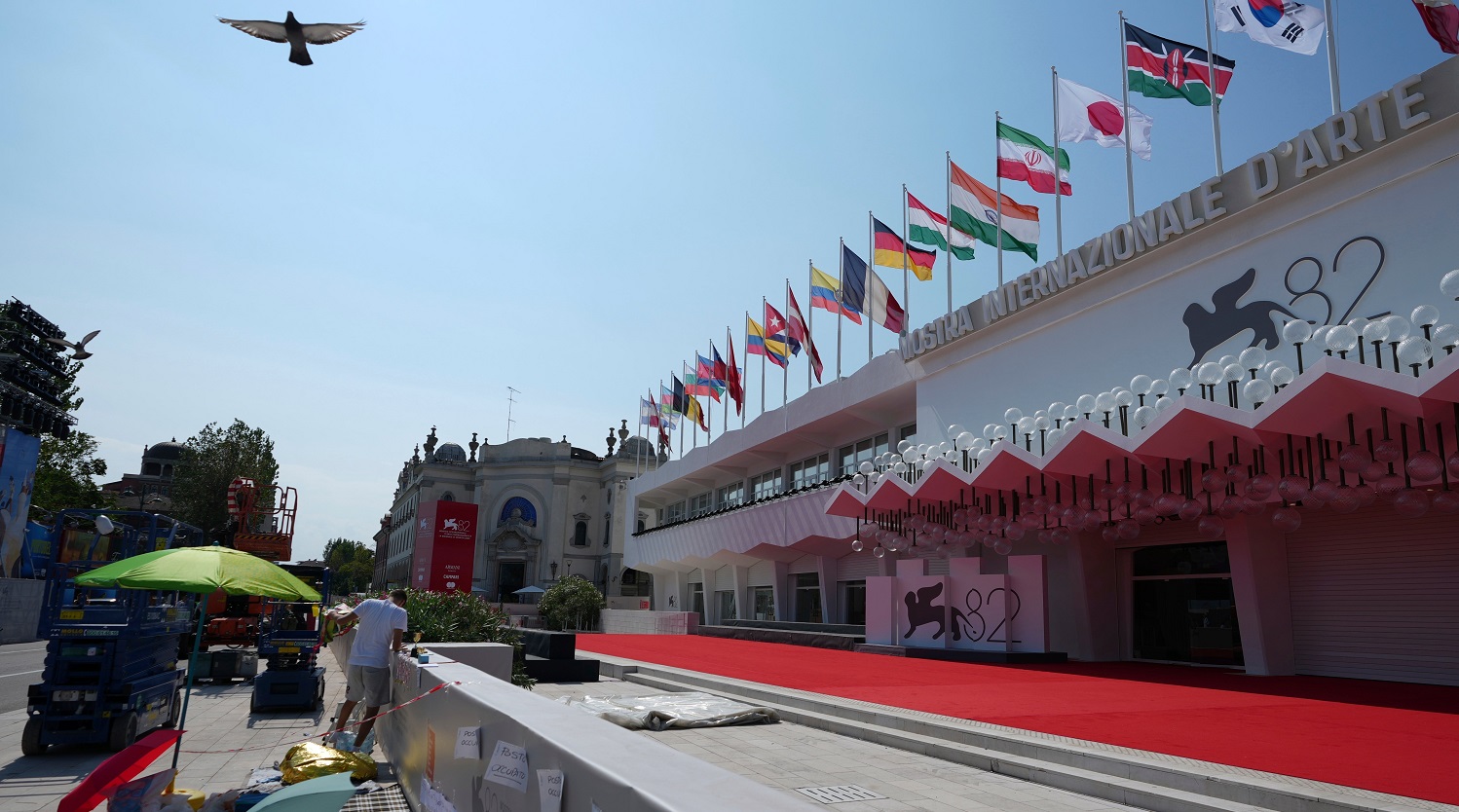
With The Venice Film Festival about to capture the cinematic world’s attention once more, we take a look back at the essential annual event’s often chequered history.
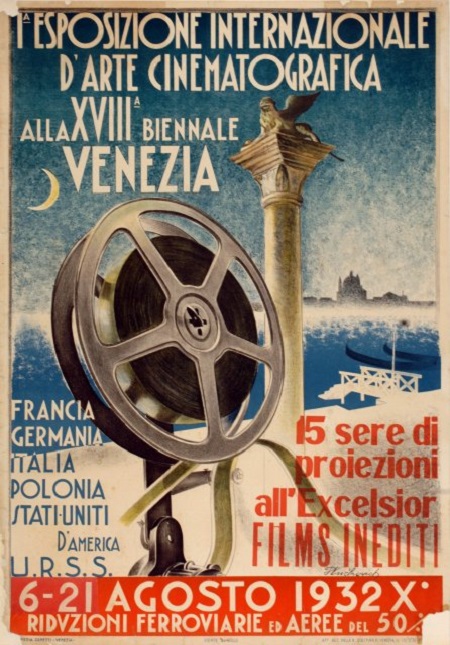
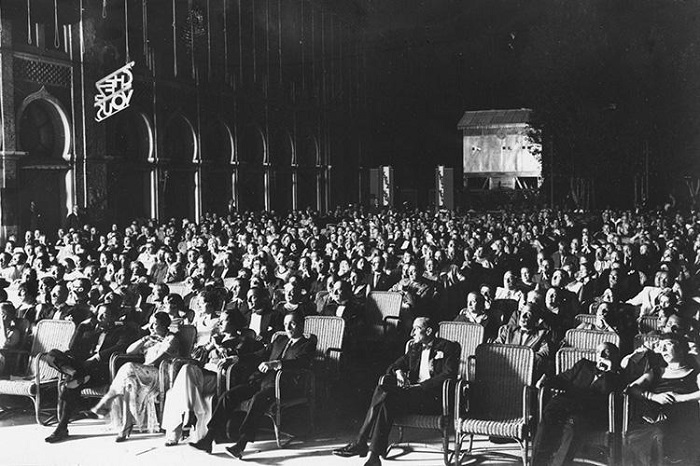
Ninety-three years ago, on a hot summer night, on the terrace of The Excelsior Hotel on the island of Lido di Venezia, before the eyes of guests that included high-ranking fascist politicians, prominent directors, actors, critics, and Italian aristocrats – in a space that combined art, politics, and wealth – the beam of a projector lit up a white screen, and Rouben Mamoulian’s Dr. Jekyll And Mr. Hyde was shown, marking the birth of The Venice Film Festival…a festival that, for ninety years, has shaped the currents of world cinema, turning Tarkovsky and Kurosawa from talented young men into towering directors, and becoming the model for all the festivals that followed.
Chapter One: The Founding Of The Festival And The Early Years, 1932–1935
In 1930, an Italian writer complained: “Why shouldn’t there be a cinema inspired by the Fascist Revolution that could match the cinema inspired by the Communist Revolution?” The truth is, the artistic scene of Fascist Italy never became as fully captive to propaganda as the Communist Soviet Union’s did. Yet Mussolini and his allies were far from idle. What dictator would object to building a global media image?
In 1932, Giuseppe Volpi, former finance minister of the Fascist regime and Mussolini’s friend, proposed The Venice Film Festival to highlight Italy’s modernity and cultural strength under fascism. The initiative was set in motion through The Venice Biennale, with Volpi taking the lead as its president. Mussolini supported the idea, and with that, the first international film festival came into being.
The reality is that Volpi, beyond his political aims, also had a genuine attachment to art and culture. The Venice Film Festival cannot be regarded as a purely propagandistic move. Especially in its first years (up to 1936), the films and award winners did not have a strong ideological character; their artistic and commercial aspects were more in focus. Very quickly, the festival brought benefits to Italy, putting the country’s name forward as modern and cosmopolitan, and attracting renowned filmmakers such as Max Ophüls, Jean Epstein, Gustav Machatý, and Abel Gance to make films in Italy.
Of course, Mussolini and Volpi did not stop there, and took personal advantage of the festival as well. In its first edition, no official prize was awarded. But in the second edition, in 1934, the festival became competitive, and a prize called The Mussolini Cup was introduced for the best foreign-language film and the best Italian film. The foreign prize went to the brilliant documentary Man of Aran by Robert J. Flaherty, the father of documentary cinema, and the Italian prize was awarded to Teresa Confalonieri directed by Guido Brignone. In the third edition, in 1935, The Volpi Cup was introduced for Best Actor and Best Actress. Interestingly, even the fall of Fascism and the great transformations of the festival did not change its name; after 90 years, the award is still given as The Volpi Cup, in honour of the festival’s founder.
Chapter Two: The Rise Of Fascism And World War II, 1936–1945
In 1936, The Venice Film Festival was separated from the artistic section of The Venice Biennale. This opened the door for Fascist organisations such as the Ministry of Culture and the Italian Federation of Entertainment Industries to take full control.
The following year, the festival experienced something that had never happened before. Jean Renoir’s La Grande Illusion was screened. Although it received a minor prize, Mussolini personally stepped in to make sure that this French anti-war film would not take any of the festival’s main awards.
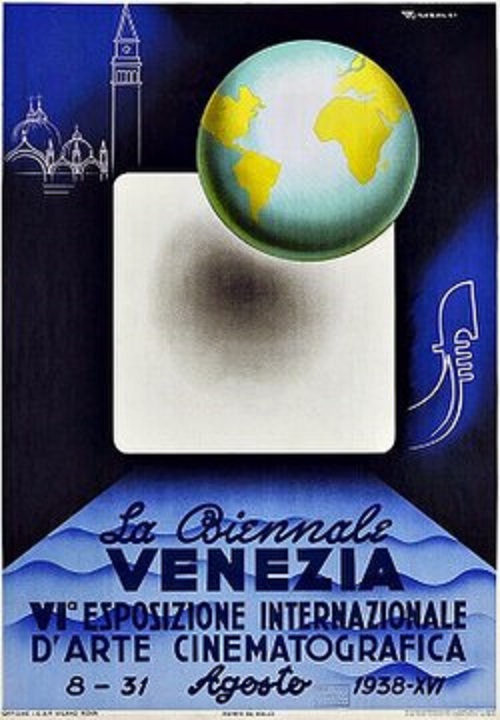
By 1938, the grip of Fascist and Nazi institutions over the festival had become unmistakable. Leni Riefenstahl, the well-known filmmaker of the Nazi Party – whose works are still regarded as artistically important – won The Mussolini Cup for Best Foreign Film with Olympia, her documentary on the 1936 Berlin Summer Olympics, produced with full Nazi backing. The prize for Best Italian Film went to Luciano Serra, Pilot, directed by Goffredo Alessandrini – a film that not only reflected Mussolini’s expansionist and militaristic aims, but that had also been co-written by Mussolini’s son!
These moves led the British, French, and American jury members to resign. The French saw the chance to launch a new festival that could challenge Venice’s hold over Europe. In 1939, The Cannes Film Festival was founded. Yet, only a day after its opening, Nazi Germany invaded Poland, forcing the event to be canceled. Its first edition had to wait until 1946.
Between 1940 and 1942, The Venice Festival was no longer what it had once been. It had become completely dominated by Fascist and Nazi politics. The broad participation of foreign countries disappeared, leaving only films produced by the Rome–Berlin Axis. During those three years, the event was even renamed Manifestazione Cinematografica Italo-Germanica. Today, those editions are not officially counted in the festival’s history.
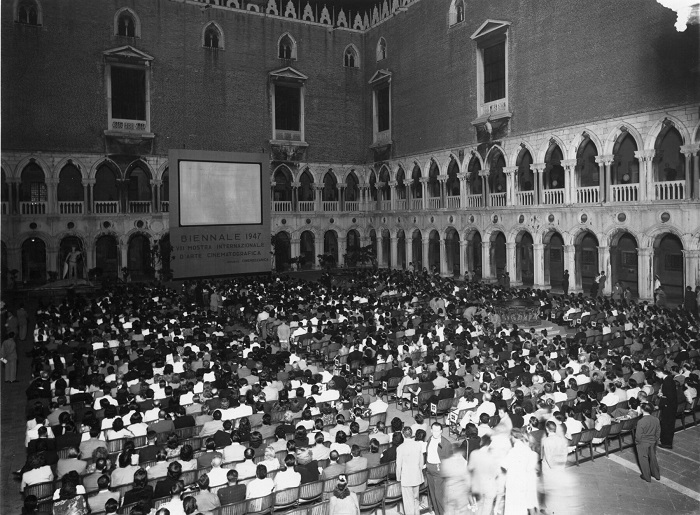
Mussolini fell in 1943. With Italy collapsing into chaos and war, the festival could not continue. But as its roots were always in art, not Fascism, after the war ended in 1946, Venice’s festival rose again, carrying forward the spirit of cinema that no regime could ever fully control.
Stay tuned for Part II…
