



by Dov Kornits
Writer/Director Gideon Heine with Producers Guy Toledano and Robert Fantozzi, discuss the new Australian indie feature film, Wish You Long Life.
With accessible tech and an urgency to say something and to show what you can produce, more and more Australian filmmakers are not waiting for permission from local government screen agencies and their potential for funding. “Foundations, friends, family and fools,” answers Wish You Long Life writer/director Gideon Heine when we ask how his debut feature was financed.
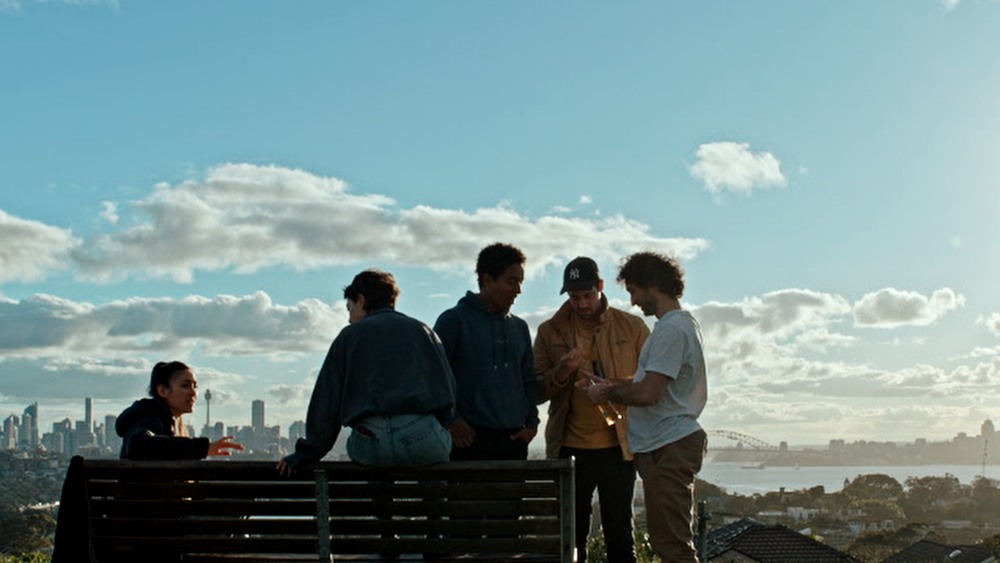
Wish You Long Life is the story of childhood friends Adi, Maya and Reuben, who have gone in separate directions in adulthood. When one of them passes away, the other two reunite to remember and to also try to grapple with their shared cultural identity, both Australian and Jewish.
“The film very much stems from one question,” says Heine. “What happens when you start hiding the part of yourself that your people fought to preserve?
“I grew up in Melbourne, in a Jewish family, with grandparents who survived the Holocaust. So, questions around memory, identity and belonging were always part of my life. I also grew up in a generation where, I think, many of us were trying to work out what parts of our cultural identity we wanted to hold onto, and what parts we wanted to leave behind.
“Wish You Long Life was born from that. The story of childhood friends who had grown up with the same history, but responded to it in completely different ways, intrigued me. One embraces that identity, while the other becomes more distant and fearful from it. Then something happens that forces them back into each other’s lives.
“What interested me wasn’t simply telling a story about antisemitism. It was asking what antisemitism does to people, psychologically and socially. How it can make you question whether you should speak, whether you should hide, and ultimately what it costs to suppress parts of yourself.
“The film became a story about friendship, grief, and belonging, but underneath all of that, is a question I think a lot of people can relate to: how much of yourself are you willing to give up in order to fit in?”
“We became involved with the film in the simplest manner – through mutual connections,” says producer Robert Fantozzi. “Our director of photography, Scott Pope, was already attached to the project. Scott approached Guy [fellow producer and Robert Fantozzi’s life partner, Guy Toledano] and me, asking if we were interested to meet with Gideon, as he was looking for feedback on the script. We read it, we liked it, but this was initially disappointing to Gideon. He was hoping we’d have more negative feedback, given that Scott hyped him up that Guy and I were harsh critics. Pretty funny that Gideon was hoping for a grilling from us, but instead he received enthusiasm. From that point, our conversation led to us becoming attached as Producers.”
“That initial script read and meeting with Gideon was particularly interesting for me, because he was looking to me to give insight into Maya’s characterisation,” adds Toledano, referring to the female protagonist in the film. “Specifically, she is a character of Middle Eastern Jewish ancestry, so Gideon wanted the perspective of a Middle Eastern Jewish woman. I very much appreciated the care with which Gideon wrote the character, as well as how well he took my feedback. The fact that it grew into a partnership which brought the film to life made this experience all the more special.”

Gideon, does one character, more than others, reflect your view/experience, and how?
Gideon: “Having immigrant parents, I spent a lot of my childhood with my grandmother. By extension, I deeply connect with Hannah, portrayed beautifully by Tomi Kalinski. She is the guiding light through the darkness in this film. It’s true to say that Australia is home to the most traumatised community in the diaspora, as we have the highest per capita number of Holocaust survivors. Most of my community’s grandparents came out of Buchenwald or Auschwitz. To have Yiddish as a spoken language in the film, reaffirms one of her strongest lines, said to young Reuben: “We had to hide. We came to Australia so you didn’t have to hide”. I think it is a really beautiful aspect of this film.”

We have heard from a few people that subject matter like this, in the current environment, particularly in the arts, requires vetting from collaborators for fear of things going south very quickly. Was that your experience?
Robert: “There’s no official requirement to vet crew and collaborators, but it is definitely necessary for this film. Antisemitism being what it is, you just never know how people will react once they learn more about the production. Therefore, we made sure to have the necessary discussion with every crew member we brought on. Thankfully, everyone we worked with was sympathetic to what the Jewish Community is going through right now, whether they were Jewish or not.”
In the same breath, was there extra support from certain quarters because of the subject matter?
Gideon: “We’ve had wonderful support from parts of the Jewish community, cultural organisations, museums, and people involved in preserving Jewish history and storytelling. This is also an Australian story, so it really showcases many different people from many different backgrounds coming together.”
Is it too soon to include December 14 in the storyline?
Giddy: “December 14 isn’t included simply to make the film more topical. It’s unfortunately part of the world of these characters, and it’s a world we also inhabit. The events of the past few years have changed the way many Australian Jews experience their identity and their sense of safety, and pretending that hasn’t happened would actually make the story less honest.”
Guy: “It wasn’t an easy discussion. We were already neck deep in developing the script, as well working towards the actual shoot, when December 14th happened. The emotions surrounding what happened, and what it would mean for the film and its viewers, wasn’t lost on us. Ultimately, it didn’t feel right to avoid addressing it, but it wasn’t simply a matter of adding the event in. We knew we had to be delicate and respectful.”

What were the inspirations for the film in terms of style/approach?
Gideon: “The film moves between warmth and discomfort. There are moments of humour and friendship, alongside much darker material. That’s deliberate because Jewish life isn’t one emotional register. There is grief, but there is also music, food, friendship, absurdity, family and celebration. In terms of films that influenced the stylistic choices we made, I always said this is Garden State meets A Real Pain, with a hint of Spielberg whimsy.”
Wish You Long Life screens at the Jewish International Film Festival in November, more here. Head to the film’s website for more information.
