


by Gill Pringle in LA
Some movies entertain us, while others remind us how much courage it can take to change the world.
Being Heumann, the new film from Oscar-winning filmmaker Siân Heder, belongs firmly in the second category.
It tells the remarkable true story of Judy Heumann, a woman who refused to accept the limitations society placed on her, rising to became one of the most influential figures in the American disability-rights movement.
Starring Ruth Madeley as Heumann – who contracted polio as a toddler, forcing her to use a wheelchair for most of her life – the film takes us back to 1977 when Heumann grew tired of being fobbed off by officials who refused to take her calls. Rallying a group of disabled activists, they would occupy a federal building in San Francisco for 26 days.
Their mission was to force the government to enforce Section 504 of the Rehabilitation Act, legislation designed to protect people with disabilities against discrimination. What might sound like a relatively straightforward political protest became an extraordinary demonstration of solidarity, determination and human resilience.
Heumann was not simply fighting for herself. She was fighting for millions of people who had spent their lives being overlooked, excluded and treated as though their needs were somehow less important than everyone else’s.
Based on true events, Being Heumann is the revolutionary, irreverent and deeply human story of the least likely people trying to pull off the impossible and change the lives of millions.
“This story took place 50 years ago, but it feels incredibly relevant to me in the current moment that we’re in,” says Heder for whom this story is particularly meaningful territory, having became internationally recognised with CODA, her 2021 film about a hearing daughter growing up in a deaf family. The movie won Best Picture Oscar, while Heder received a further Oscar for adapted screenplay.
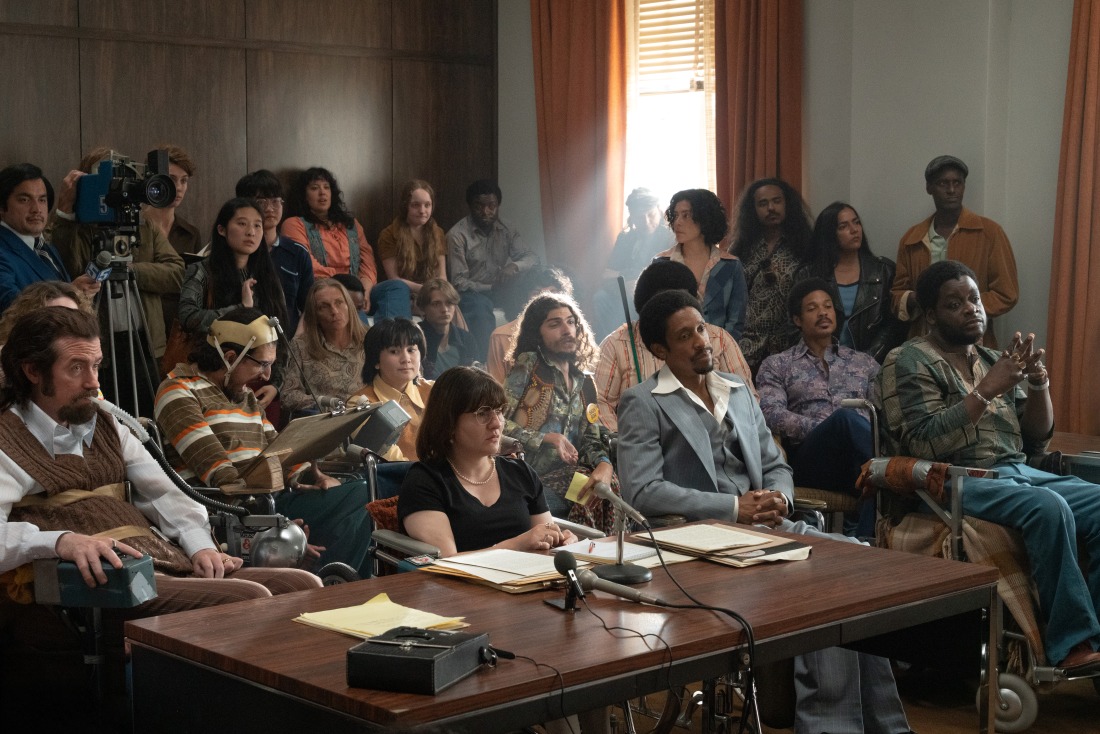
“I think we’re in a time right now where a lot of people are being marginalised and made to feel invisible, and this was a time when collective action worked, when it was not just these 100 people that entered this building; the Black Panthers showed up and fed them. The gay community in San Francisco showed up. The United Farm Workers showed up,” says Heder passionately.
“It became this intersectional moment where a lot of people came together to support this group in the building because it was like, if we are going to disenfranchise this marginalised group, then we’re all in trouble. And I think that’s a moment that we’re in right now; we have to raise our voices together because the powers working against us are more powerful than ever.
“And this is a time where I think we need to, as the little people, or the people that are being pushed down, have to understand the power of being in community,” she argues.
What makes the story especially compelling is that Heder is interested in the person behind the historical achievement. Judy Heumann was a forceful campaigner, but she was also a woman with humour, warmth, friendships and an enormous appetite for life.
Heumann died three years ago, aged 75, following a lifetime of supporting disability rights. She went from becoming a political foe of Washington DC to Special Advisor for President Obama and, earlier, in the Clinton administration as Assistant Secretary of Education for Special Education and Rehabilitative Services.
Finding the right actress to play the dynamic Judy Heumann was crucial.
“It was so important to me to find authentically disabled actors,” says Heder who was delighted to discover British actress Ruth Madeley, casting her in the title role.
“Judy was disruptive, and she could be difficult. Thank God. She’s somebody who I have looked on and admired from afar, and I was very aware of her status as an icon,” says Madeley, 39.
“And I think for me, one of the biggest joys was finding where that comes from. She wasn’t born an icon. She wasn’t born a leader. She had years and years of being so aware from such a young age of discrimination, of hardship, of having to fight. She watched her mum fight for her from such a young age, and I can completely relate to that,” says the actress whose own mother, a nurse, advocated for her after Ruth was diagnosed with spina bifida before she was born.
“And this wasn’t just one event. This was years and years, every single day of having to fight for access in a world that was not designed for her. And not just physical access, access to school, access to education, to a job, all of those things, and being told that she was the problem. ‘You can’t do this because you are that way’,” says the actress who, while using a wheelchair for her whole life, has overcome her disability to enjoy an impressive career with recurring roles in Doctor Who and sci-fi series The Rook.
“For me, one of the biggest joys was learning why this happened in this moment. Why did she lead people into a government building and tell them, ‘We all have to stay here’? And I think it was just a culmination of years and years of frustration and rage and feeling so unbelievably judged and scrutinised. And, within that, her deep, deep care about her community never wavered. And that, for me, is at the root of everything,” says the actress who was awarded a BAFTA Breakthrough award, appearing in TV series Nightsleeper and The Rapture.
“She cared so much about the end goal that sometimes she could be a little bit abrasive because she was so desperate for this not to fail. So, for me, I think understanding the why helps me understand why people rooted for this tiny woman from Brooklyn who changed the world. It was the biggest privilege of my life to portray all of that,” she says.
Heder is clearly emotional as she talks about the film, surrounded by her amazingly accomplished disabled cast in a West Hollywood hotel.
“I’m just so grateful to have discovered all of these talented actors who could bring these people back to life and let the world know who they were, because people need to know Judy’s name,” says Heder who became good friends with all her cast in the process.
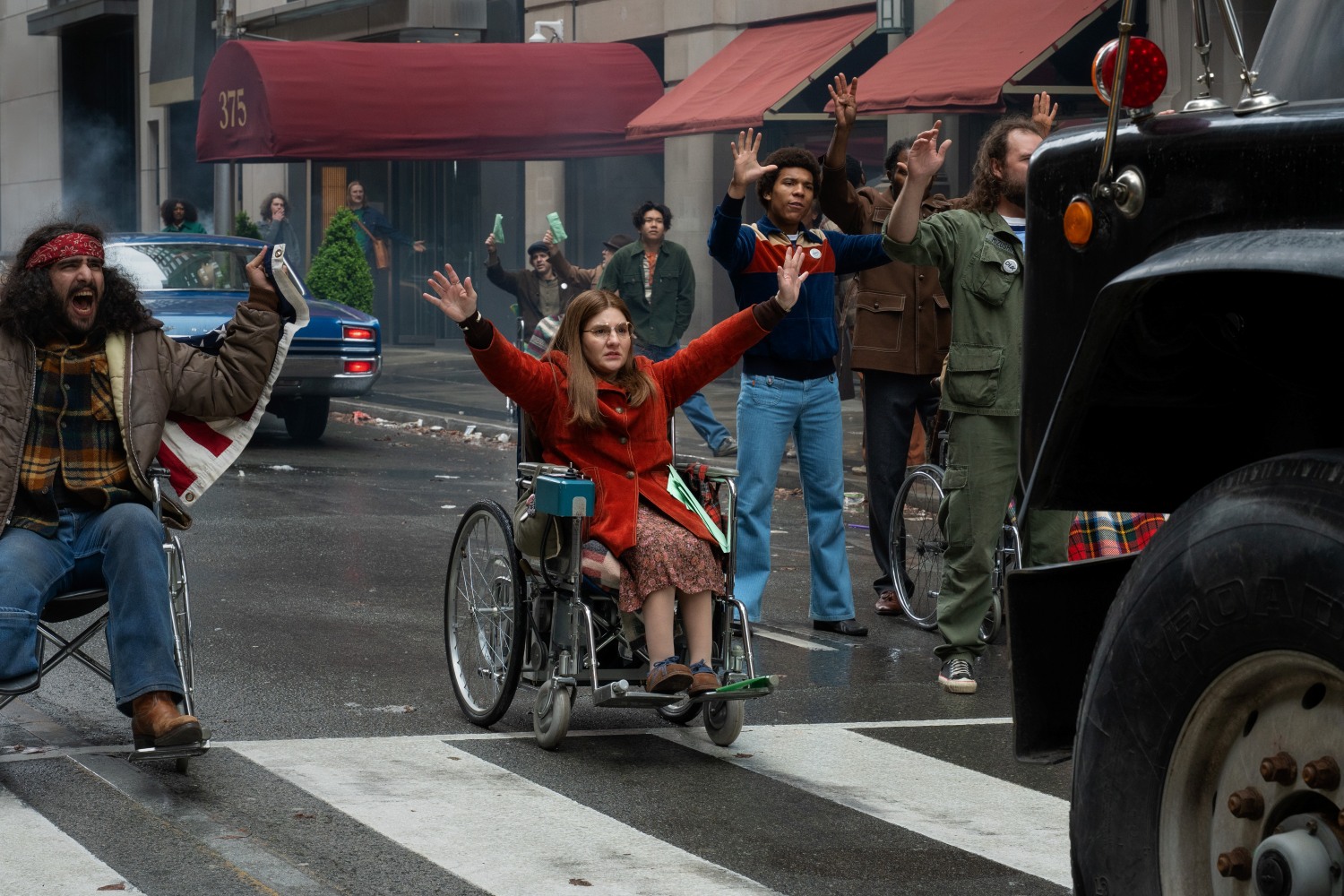
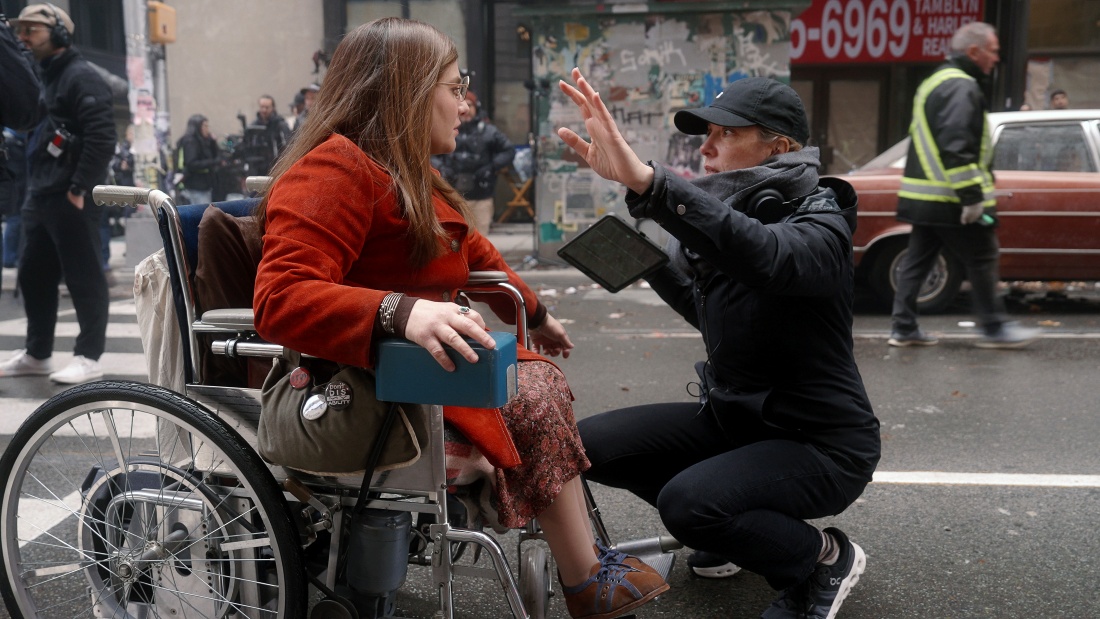
“And what Ruth did with this role in every scene . . . she’s in every scene, her rolling into traffic to stop a truck and being like, ‘I don’t need my stunt person. I’m just gonna do that because Judy did it and I wanna do it’,” recalls the filmmaker.
Mark Ruffalo brings star power to the movie as government bureaucrat Joseph Califano, whose resistance to the activists becomes a central part of the dramatic struggle.
The actor had his own personal reasons for wanting to be involved in the project, after his actor friend Christopher Thornton was paralysed in an accident many years ago – Ruffalo directing his friend in the 2010 drama Sympathy for Delicious about a newly paralysed DJ.
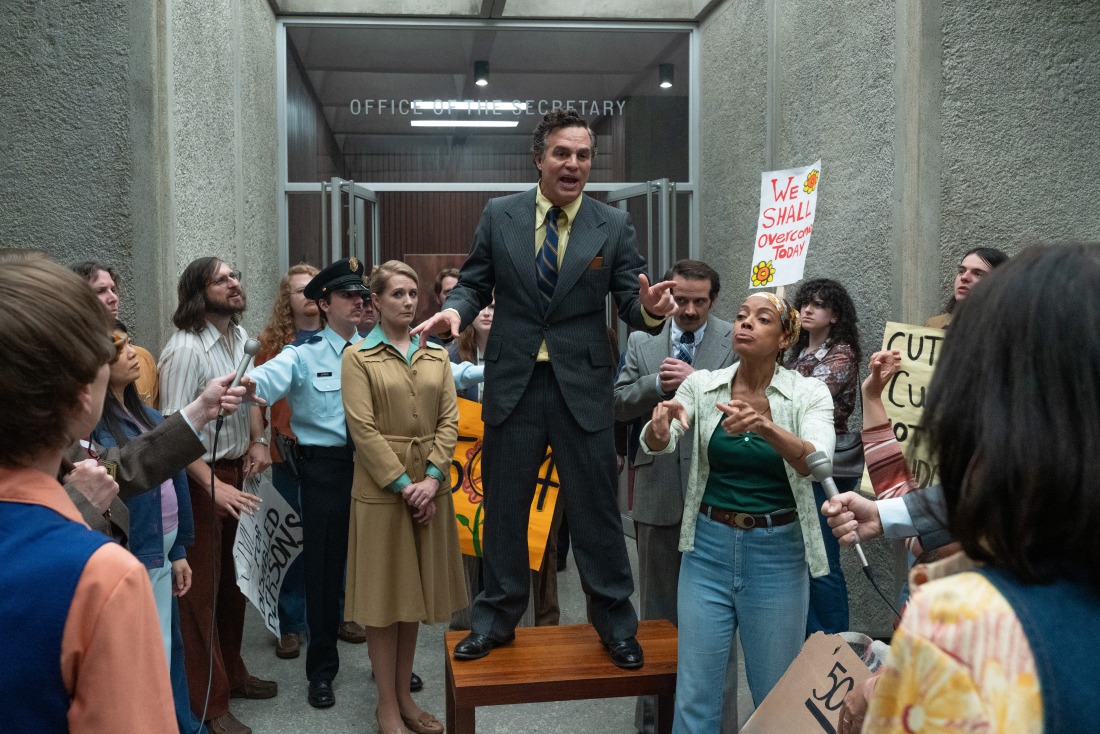
“Christopher has a reoccurring role on The Pitt right now. And it’s a role that really doesn’t have anything to do with him being in a chair, which is a testament to Judy and to the work we’re all doing here, and what this movie was about for all of us,” says Ruffalo.
“I personally know, even today, how hard it is for him. I’ve carried him up three flights of stairs at the subway where we got off at the wrong stop because the subway wasn’t running any longer, so we had to go up three flights of stairs. I left his chair at the bottom and carried him to the top. Or we’re at a friend’s house, and it’s just part of our lives, and so I know his struggle. It’s very personal to me, And I also love activists. These are the people who change the world. And they don’t take no for an answer. And they fight against the inevitable.
“And they’re the ones who people think are crazy and hopeless, and they don’t care – they do what they have to do here on this planet. And we need them, and we have to celebrate them. And so, I was happy to be asked to be part of it,” says Ruffalo
“I don’t wanna play the bad guy. But Sian and I talked about how funny he was and how conflicted he was. And at the end of the day, he does do the right thing.
“So yeah, I know what it’s like to make a movie with a lead who’s in a wheelchair, of figuring out all the ways to make it accessible for them. And so, this movie’s a celebration of something that’s very personal to me,” he adds.
For Heder, Being Heumann demonstrates her remarkable ability to tell stories about people whose experiences are rarely given the attention they deserve, as she did with CODA.
Her earlier film, Tallulah, starring Elliot Page and Allison Janney, also explored complicated relationships and people living on society’s margins. Across her work, Heder has shown a sensitivity to characters who are imperfect, vulnerable and frequently misunderstood.
With Being Heumann, she takes that interest into the world of political activism, but she never loses sight of the personal experiences that make the larger story meaningful. Importantly, the production also employed a substantial number of disabled actors and made accessibility a priority behind the scenes.
Being Heumann is ultimately about much more than one protest or one extraordinary woman. It is about the power of ordinary people standing together and refusing to be ignored.
Being Heumann is streaming now on Apple TV.
