


By Travis Johnson
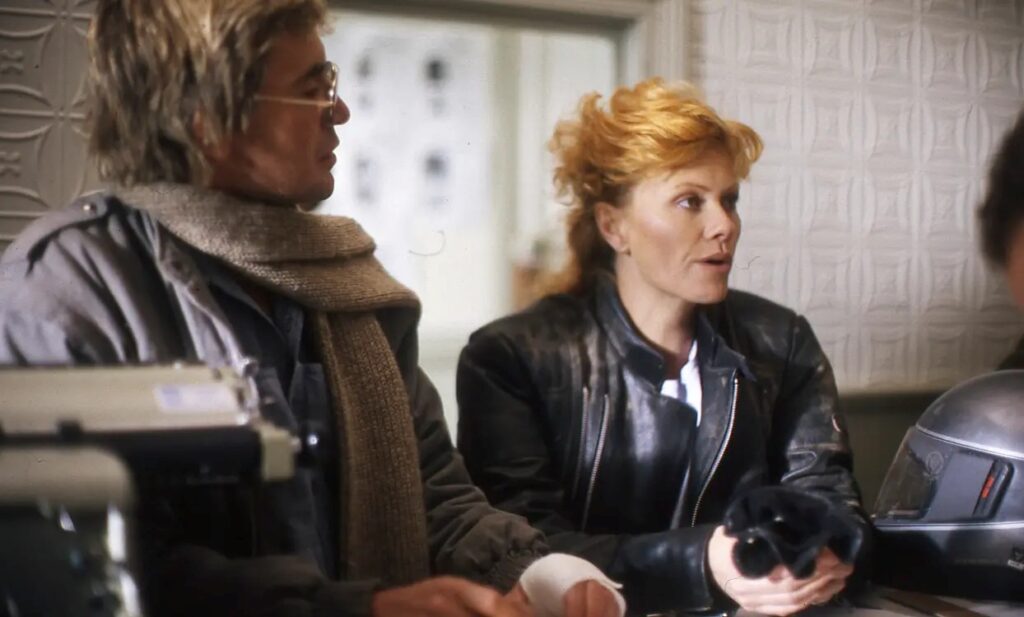
Shot in Western Australia and released in 1988, Steve Jodrell’s film Shame stars Deborra-Lee Furness as Perth lawyer Asta Cadell who crashes her motorcycle near a small town in Western Australia, where a ‘boys will be boys’ culture allows rape and violence against women. Drawn to help a young woman (Simone Buchanan) who has been gang-raped, Asta becomes the flashpoint for a rebellion by the town’s women, who stand up and rally against abhorrent behaviour that has gone unpunished.
Critically acclaimed at the time of initial release, the film has now become a bona fide cult classic. We spoke with Jodrell about the film in 2018, when it was first restored.
Like many Australian films, Shame was largely unavailable for a long time, but is getting rediscovered. What is it about the film that still resonates with audiences 30 years later?
I would like to think that it’s a strong story that has withstood the test of time. Apart from the shoulder pads and retro hair styles, I reckon the themes are sadly, as relevant (some might even say more relevant) than when the film premiered 30 years ago. Issues of sexual assault and domestic abuse are unfortunately a powerful and disturbing blight on contemporary society. Perhaps nothing has changed; it’s just that social media makes the issues more prominent today.
Can you give us a quick rundown of the film’s genesis? Who generated the story, how did you become involved, and what appealed to you about the project?
The genesis of Shame lay with the extraordinary talents of Michael Brindley and Beverley Blankinship. Beverley (then an actor) originally devised the story as a vehicle for herself. She and partner Michael worked on the story for some time (I seem to remember that Mike proudly claims he was the only male to be ever funded by the Women’s Film Fund). The script was shopped around for some time and, I believe, was held by producer Joan Long for a while and offered to several directors. I believe Joan finally relinquished the rights and forwarded the script to Paul Barron who immediately was drawn to the story. I was Head of Production for Barron Films at the time, read the script and pleaded to direct. It was the best script I had encountered for a very long time. I think I worked with Mike and Beverley for over a year before Paul finally secured funding. According to Mike, the Australian Film Commission readers’ reports were all virulently negative, but Paul never showed them to us.
Richard Kuipers wrote about the film having the structure and iconography of a Western. Can you tell us about Shame’s genre influences?
It was a very conscious decision on the part of Michael and Beverley. In fact, the name and structure is based on the George Stevens 1953 film Shane starring Alan Ladd, Van Heflin and Jack Palance. Mike used to say: “We just replaced the horse with a motorcycle”. It didn’t hurt that Beverley rode a motorbike, although by now it was becoming quite clear that her name wouldn’t secure the necessary funding.
Another very conscious decision by the writers was to style the story as a B-grade drive-in movie. Our greatest fear was that the film would become arthouse fare – preaching to the converted. Beverley wanted women to take their boyfriends to the drive-in. It was totally serendipitous that we ended up shooting in the West; the film was originally located in northern NSW. Although (as a Sandgroper, I say with some pride) more than one critic has said that this film would never have been made anywhere else in the country.
What were some of the difficulties you faced mounting a feature production in rural Western Australia?
About half of the production schedule was spent in Toodyay, a small wheat belt town about 90 kilometres from Perth, and the location for ‘Ginborak’ (from the aboriginal: ‘gin’- woman and ‘borak’- abuse). It was mostly a delight to shoot there; the locals were very supportive and many appeared in the pub scenes and street scenes. I say ‘mostly’ because the nights were very cold and the last part of the film is set entirely at night. The final scene with almost the entire cast was scheduled for the entire night but the generator broke down and another had to be found and brought up from Perth three hours later. If you look closely, the last few shots were shot at dawn and graded to look like night.
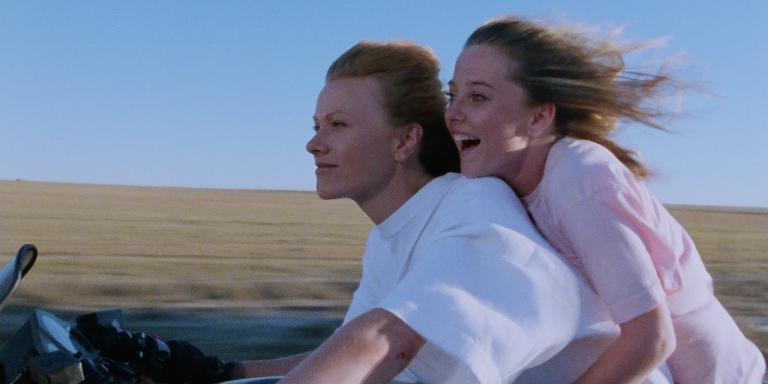
WA has hardly ever been a feature film hub but the crew was sensational – their effort and commitment never flagged. We were among the first to shoot using the new Panavision Super 16mm format and unfortunately encountered a great deal of neg scratching. Director of Photography Jo Pickering was tearing his hair out trying to communicate with the east and unfortunately quite a lot of reshooting was required. It was Jo, together with grip Karel Ackermann, that devised the moving camera rig on the bike trailer so that we could get the very authentic shots of Deborra and Simone riding. Unfortunately, Deborra-Lee Furness injured her ankle early in the shoot so most of the bike riding was doubled, primarily by production manager Deb Copland, but also third AD, Chris Lynch.
I was blessed with an outstanding producer in Damien Parer: always supportive, always upbeat even in the depths of my despair. I remember one night in Toodyay we finished at 3am (two hours over schedule) and the whole crew were instructed to assemble on wrap at the Town Hall. When we got there, Damien and production coordinator Susie Campbell had lit up the approach with candles and installed decorations and a jukebox and just enough alcohol to revive our spirits.
What was the casting process like? How did you cast the supporting characters and extras, who have an ‘Australian-ness’ about them that is palpable.
Firstly, thanks to Sydney casting director Sue Manger, the roles of Asta (Deborra) and Lizzie (Simone) were the easiest instances of casting I have ever experienced. They were both perfect for the roles and everyone agreed.
I was blessed with a solid principal cast including Tony Barry, Gillian Jones, David Franklin and Peter Aanensen. The remainder were cast from WA and again I was blessed to be able to draw on the entire acting community of Perth who were largely unknown in the east, therefore ‘unknowns’ and could bring an air of freshness and authenticity to the townsfolk of Ginborak.
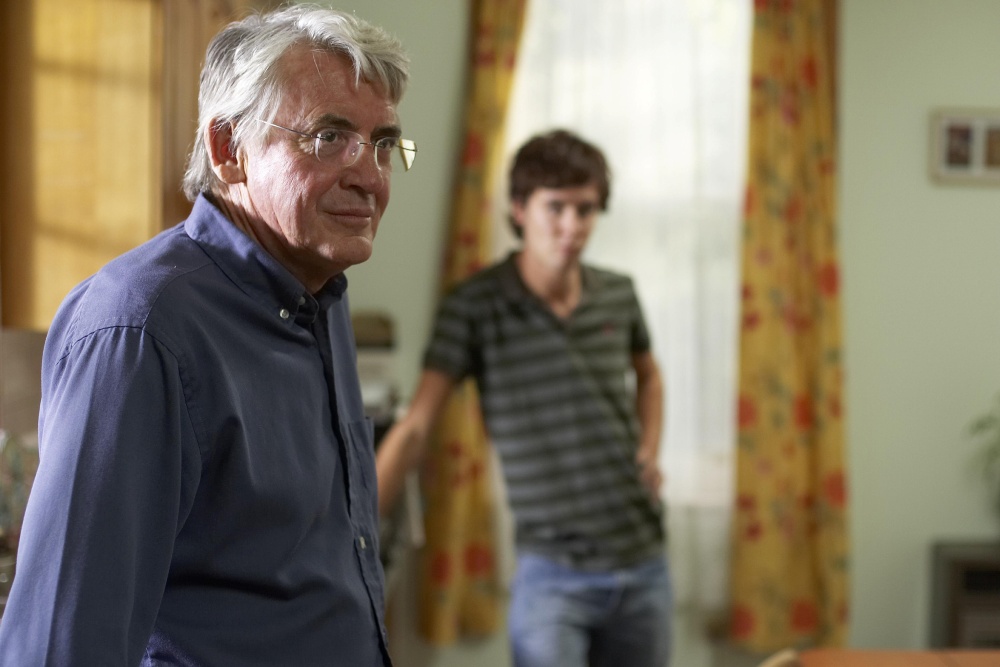
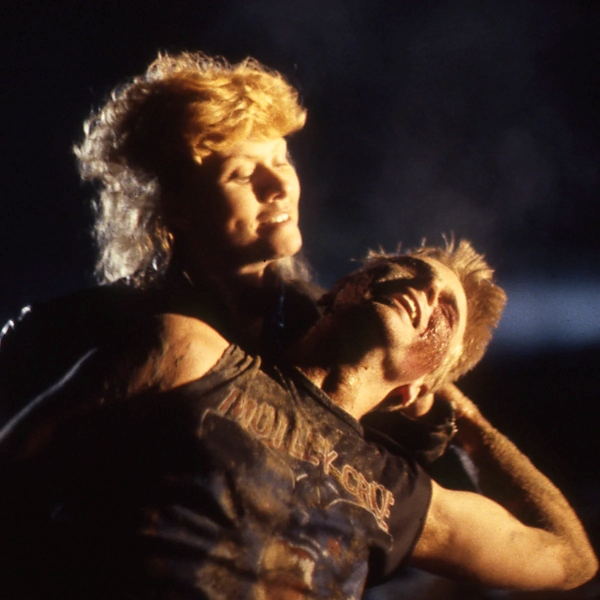 Thankfully, Damian Parer had budgeted for two weeks of rehearsal prior to shooting; almost unheard of for a low budget feature. The success of this strategy was two-fold. Firstly, it enabled the entire speaking cast to extensively workshop (in the presence of writer, Michael Brindley) and bond in a manner that proved, as you state, ‘palpable’ on the screen. Secondly, it allowed time for Tony Barry and Simone Buchanan to meet with assault victims and their fathers and thoroughly ground themselves in the characters. I think it was initially very difficult for Tony to believe that a father would reject his daughter but after involving himself with ‘real life’ fathers, he (like me) was given a steep learning experience.
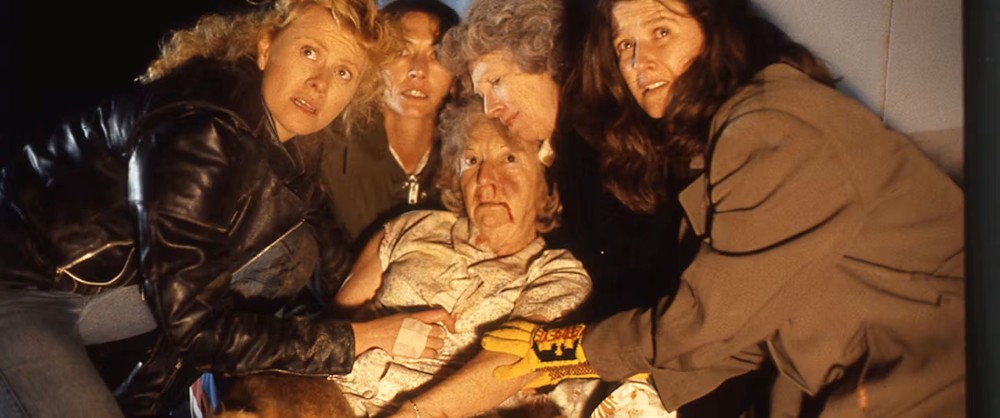
I also hasten to add that the so-called ‘Australian-ness’ character of the film is due to the power of the writers, especially Michael Brindley. One of my favourite colloquial interchanges occurs between the townswomen when they gather at the Curtis house. Rita regales the girls with a story about her hubbie:
So then he says: If you won’t get me me dinner, I ain’t gonna root youse no more.
So what’d you do Reet?
Got him his dinner!
They all laugh. Rita digs Fay in the ribs
Come on- you like a bit, don’t ya? When it’s nice?
Fay looks down.
Yeah… when it’s nice…
What was the cinema landscape like back in ’88? What kind of space or audience was there for an independent feature like this?
In the ’80s, Australian Cinema was dominated by 10BA, the Government tax incentive program that allowed between 120 and 150% return for film investment. To pinch a phrase from Dickens, it was the best of times and the worst of times. Production exploded and many exceptional films came out of this period… but even more projects that proved less than exceptional. I’m quite clear that Shame would never have been made without 10BA. Paul Barron secured a financier (UAA films), who was never really comfortable with the subject matter. Legend has it that UAA commissioned a complete rewrite from the US but fortunately Paul and Damian withheld it from us.
On its release in 1988, Shame was competing for cinema attention alongside films such as Crocodile Dundee 2, Man from Snowy River 2, The Light Horsemen, Evil Angels, High Tide, and Young Einstein. If I was to look for a film similar in nature, I’d have to go back to 1985 for another Barron project, the excellent Fran [also screening at Revelation] written and directed by Glenda Hambly, starring Noni Hazlehurst.
What was the audience and critical response like at the time? Were there any quotes or opinions that really stood out?
Although it opened to generally critical acclaim, Shame did far better overseas than in Australia.
Local reviews include:
Shame is a winning chameleon of a movie which will bring audiences to their feet. This hard-hitting modern drama – one of the best to come out of Australia – is high-class entertainment which manages to change shape at will (Rob Lowing, Sun Herald)
Not since Wake in Fright has a film explored the mindless violence underlying the macho, mateship image of the Australian male… Despite the involvement of director Steve Jodrell and co-writer Michael Brindley, this is a feminist film. (David Stratton, Sydney Morning Herald)
What makes Shame most of all a powerful comment is not the notions either of a hero with breasts or of the women of the town’s working class and some of their menfolk finally exposing their anger, but rather the film’s statement about how easily a community can degrade itself once acceptance of the first sin opens the door to the rest (Dougal Macdonald ,The Canberra Times)
Unfortunately Stratton in his review, also voiced an opinion that was to be commonly repeated across Australia and overseas:… the film seems to endorse a woman resisting rape by fighting back, and while the well-trained Asta is able to beat her male antagonists, many a less resourceful would-be rape victim would surely be bringing even more violence on herself if she tried the same tactics?
Overseas reviews included:
Three cheers for Shame. It grabs you and shakes you and makes you the better for it (New York Post)
Shame may be the most powerful movie you’ll see this year (Parade)
There hasn’t been an action heroine of this calibre since Sigourney Weaver did battle with the mother from another planet (Village Voice)
Blunt and angry, Shame has the mesmerising effect of a stick of dynamite with a slow fuse (Los Angeles Times)
The film provokes several new questions for every one it answers as it takes the B-Level action genre seriously enough to turn it on its head and eventually shatter its limits (New York Times)
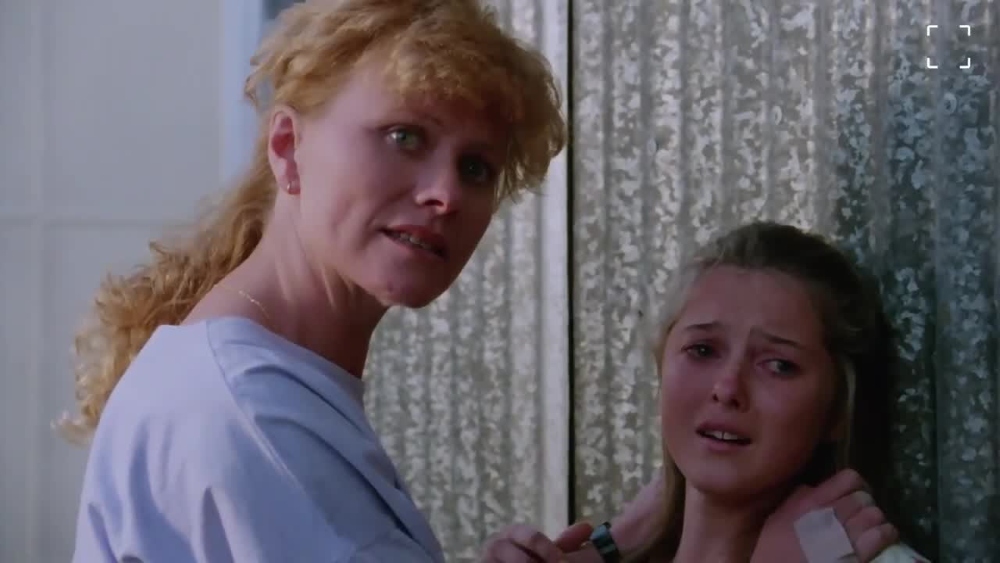
The film was clutched to collective breasts by female audiences – and all too often rejected by male critics and male audience members who were quick to claim that ‘this sort of thing might happen in macho Australia but not here’ (or in Australia, ‘this might happen in outback towns but not in the cities’). I had a very angry male audience member at the London Film Festival accuse me of dishonouring my gender. I found sadly, that many men felt their gender attacked, that it was one sided, that we had taken the exception and made it into the norm. And remember, this was 30 years ago.
On the other hand, I was often approached after overseas screenings by women who tearfully thanked me and shared their personal stories. Deborra, who was feted as a hero at the Seattle Film Festival, tells similar tales of horrific tales of abuse privately recounted by female audience members.
In 1988, Deborra won the Film Critics’ Circle of Australia Best Female Actor award and Best Actress at the 1988 Seattle International Film Festival. Beverly and Michael won the FCC’s ‘Best Screenplay Award’.
Shame enjoyed a very successful tour of the international film festival circuit, including New York’s New Directors/New Films at MOMA, Chicago, London, Milan, Hof, and Santa Barbara.
Shame was denied eligibility for the AFIs. Can you shed some light on that situation?
The story is now approaching apocryphal territory and you should really ask Paul Barron. I believe a low grade print (perhaps a double head or non-optical workprint) was submitted for assessment at the 1987 awards. Paul withdrew the print after assurances that it would not affect his chance of resubmitting the following year. Unfortunately, the AFI rejected the submission the following year and we lost all chance at local honours. I’ve never been one for awards (unless they’re peer driven) but I’m sure I speak for Paul when I mourned the opportunity of paying tribute to our magnificent cast and crew and the writing excellence of Mike and Bev.
David Stratton was later to say in his book, The Avocado Plantation:
Shame should have scooped the pool at the 1988 AFI awards. The AFI won no points at all in the industry for its ham-fisted decision over Shame, and the film’s box-office career undoubtedly suffered as a result of the bureaucratic bungling.
So there’s another reason why I’m ecstatic about Shame‘s resurgence. We may have lost the original seal of approval from the AFI, but Shame lives on today – and with an entirely new audience, most of whom weren’t even born when we first rode into Toodyay.
Shame screens on 8 July 2025 at the Revelation Perth International Film Festival

Good on you, Steve!
Great piece Steve and I LOVE all the review quotes!! I’m very thankful that “Shame” has a second life in these painful times.
Also – huge congrats to Bev & Mike, Paul & Damien, cast & crew for a stunning film.
1983 AFI “winner” best short film category ‘A Town Like This’!!!!
Fabulous interview, Steve. Congratulations on this powerful piece of Australian cinema history.