

by Flynn Shan Benson
Worth: $18.00
FilmInk rates movies out of $20 — the score indicates the amount we believe a ticket to the movie to be worth
Cast:
Tony Leung Chiu-wai, Luna Wedler, Enzo Brumm, Marlene Burow, Léa Seydoux
Intro:
… radical in its attention to its characters’ lives: they are treated as both historically particular and singular, in the way that each rose is beautiful and unique.
Early in Ildikó Enyedi’s new film Silent Friend, a neurology professor (Tony Leung, in a rare English language performance) points to a colourful model of the human brain and asks his class to tell him what it is. A brain, they answer. No, he says with a wry smile, it’s painted plastic. This Magrittean moment sets up a story that is interested both in science and the limits of its formulations, in our models of the world and the need to think beyond them.
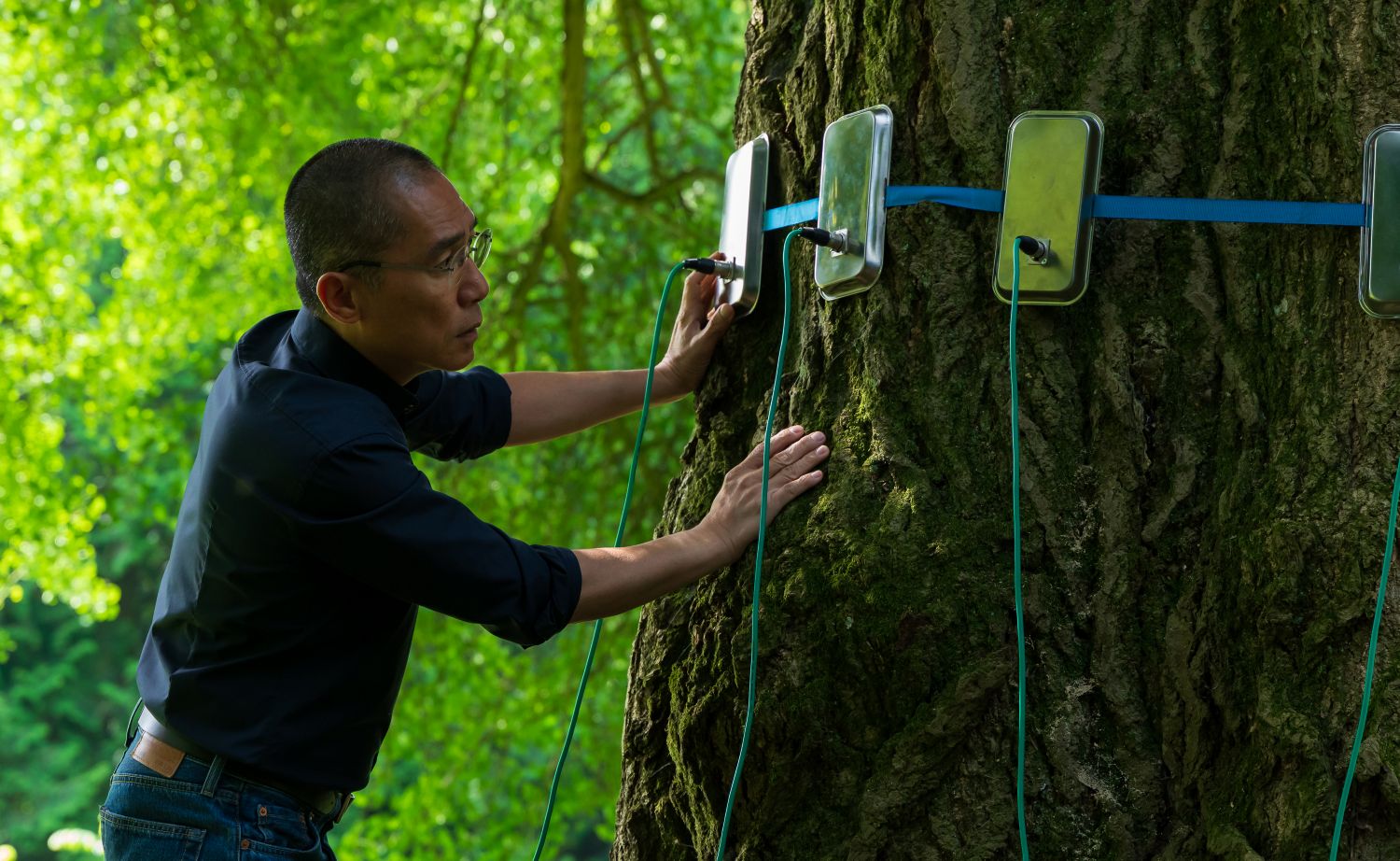
The film starts in early 2020, when Tony Leung’s professor begins a stint at the University of Marburg, despite speaking little German and being unable to stomach the local pork knuckle. After Covid renders the campus almost deserted, the expat academic has video conversations with a French professor (Léa Seydoux, in an amiable, incidental role) and experiments in gauging the consciousness of the verdant natural world around him.
Alongside this story, Enyedi shows us the same campus in the black-and-white early 20th century, when a fiercely intelligent woman (a dazzling Luna Wedler) is trying to become a science student. The imperious professors of the examining board consider her an affront, and try to embarrass her, first intellectually, making her quote Linnaeus verbatim, and then sexually, using floral reproduction to make crude double entendres. With bitter humour, Enyedi shows us how biology is both destiny and otherwise.
In the final concurrent section, we see the same campus after the social revolution and flower children of the ‘60s, this time in rich 16mm. A boy from a farming family (Enzo Brumm) and an urban bourgeois girl (Marlene Burow) both find rebellion in the freedom of university life. Though he is less open to the new sexual freedoms of this world, and she more dismissive of his interest in classical writers, their dynamic eschews the clichéd to find something more tender and unexpected.
It is inevitable that, as these different sections play out, points of overlap are found — most notably in the majestic Gingko tree. But the film is not burdened with any heavy thematic conceit — no laboured analogies are made between the disparate romantic pairings. The film’s harmony is found in nature, which is always foregrounded — literally, in the many shots framed by foliage, but also in moments when a character photographs flowers, or watches an owl in the trees.
While Enyedi offers some visual experimentation, tunnelling into the root network of the vast Gingko, exploding into abstract colours during a psychedelic sequence, her film is more radical in its attention to its characters’ lives: they are treated as both historically particular and singular, in the way that each rose is beautiful and unique.
By the end of Silent Friend, none of the scenarios come to any definitive conclusion. To Enyedi’s credit, this feels less like a failure to resolve the film’s dramatic threads than a natural consequence of a work that pays such careful, reverential attention to the different forms of life around us. In the sustained shot of the Gingko tree that closes the film, we come to feel that, regardless of the particularities of plot, of the foibles and cruelties that drive human relationships, things in nature will merely grow — as long, of course, as we have not desecrated our planet beyond repair.
