


by Nataliia Serebriakova
Worth: $18.00
FilmInk rates movies out of $20 — the score indicates the amount we believe a ticket to the movie to be worth
Cast:
Adam Driver, Mayim Bialik, Tom Waits, Cate Blanchett, Vicky Krieps, Charlotte Rampling, Indya Moore, Luka Sabbat
Intro:
… quite literally the old, familiar Jarmusch that audiences remember from the 1990s.
Jim Jarmusch’s triptych Father Mother Sister Brother, which won the Golden Lion at the Venice Film Festival in September, focuses on family relationships, and it is quite literally the old, familiar Jarmusch that audiences remember from the 1990s.
In form, the new film resembles Coffee and Cigarettes, and in content it recalls Broken Flowers, though it is slightly less piercing and a bit more detached.
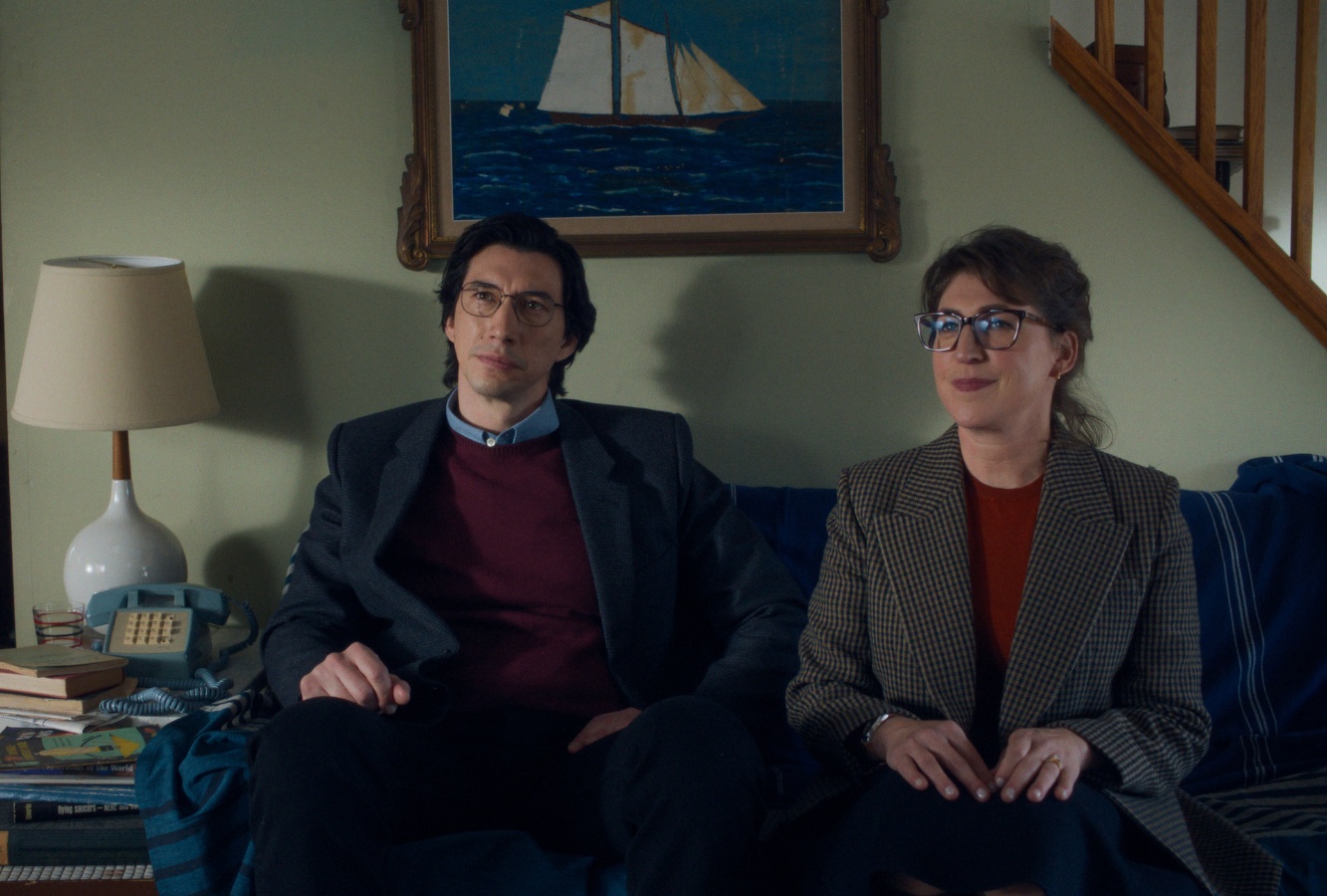
In the first part, Jeff (Adam Driver) and Emily (Mayim Bialik) drive into the American countryside to visit their aging father, whom they haven’t seen in a long time. As their conversation unfolds, it turns out that Jeff has been helping their father financially, sending him money for home repairs. The siblings bring their father (Tom Waits) a box of various treats — from Italian spaghetti to cans of tuna. At the father’s house, they become slightly confused upon discovering real leather sofas hidden under the slipcovers, and a genuine Rolex on their father’s wrist, even though he insists that it’s a Chinese knockoff. After drinking some ice water — the only refreshment in the house — the children head back, vaguely suspecting that their father is pretending to be poorer than he actually is.
In the second story, Timothea (Cate Blanchett) and Lilith (Vicky Krieps) visit their elderly mother (Charlotte Rampling), joining her for the traditional annual tea gathering. Their mother, a British writer, keeps her daughters in line. At this prim and proper table, no one seems to have anything to talk about except horoscopes.
In the third, “Parisian” segment, a brother and sister sort through boxes and photographs belonging to their parents, who died in a plane crash; this is the warmest part of the film.
Jarmusch seems to genuinely grapple with the theme of alienation within family ties and suggests that real emotional intimacy between parents and children is often revealed only at the moment of the parents’ death. The siblings in the third part gradually realise how little they knew about their parents while they were alive. The brothers and sisters in the first two parts still have a chance to understand their parents better, yet an insurmountable barrier of distance stands between them.
The three stories are united both by recurring themes in the dialogue — such as conversations about the usefulness of water — and by visual motifs. In all three parts, the characters watch skateboarders passing by in slow motion. This slow motion technique, seems to have migrated into Jarmusch’s new film straight from Ghost Dog: The Way of the Samurai, known for its meditative pace. And indeed, Father Mother Sister Brother does not rush anywhere either — instead, it invites the viewer to fully enjoy Jarmusch’s signature irony.
