


by Cain Noble-Davies
Worth: $16.50
FilmInk rates movies out of $20 — the score indicates the amount we believe a ticket to the movie to be worth
Cast:
Olivia Hargroder, Julia Savage, Penny Downie, Elijah Williams, Chris Bunton
Intro:
… insightful and poignant …
Independence is a difficult thing to aspire to when society views you as someone wholly dependent on others. This is an obstacle that most people encounter just over the course of growing up, becoming their own person as part of coming of age. But when that journey involves disability or other conditions that a person cannot ‘grow out of’, that aspiring, that coming of age, can feel like it will take an entire life to accomplish, if at all. Determining how much assistance a person may need to set their own path is case-by-case, but there are often so many broad strokes made on both personal and societal/bureaucratic levels, that everyone tends to get lumped together into the same bucket of people who (one would hope) will reach adulthood, only to spend all their time insisting to everyone around them that they are, indeed, not children.
This is the dilemma that takes centre stage in Boss Cat, the first feature film from production studio and disability advocacy organisation Bus Stop Films.
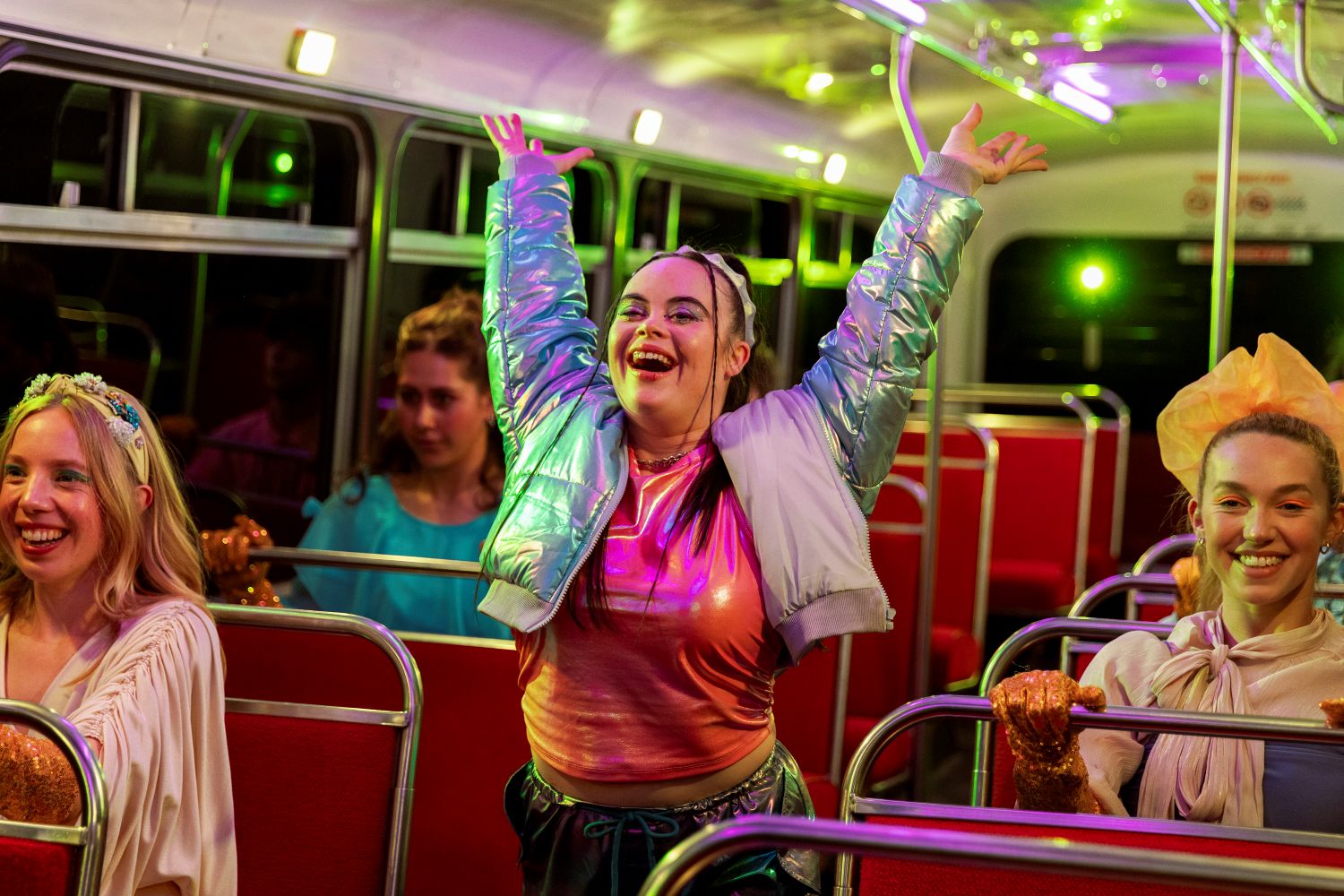
Having recently lost her mother, Sonja (Olivia Hargroder) deals with her own life plans for transitioning towards independent living at her own pace being irrevocably disrupted, with her and her sister Emma (Julia Savage) now under the care of their grandmother Doris (Penny Downie). There’s a prominent subplot about Sonja getting involved with a local krump dancing troupe, but much like with her disability (Sonja, along with Olivia Hargroder herself, was born with Down’s Syndrome), the film never lets her be defined as any singular thing. Older sister, budding performer, disabled young woman, romantic, lover of cats, Taoist; she is all of these and more.
Atop the stunning photography of the Blue Mountains, the vibrant dance choreography, and occasional dips into fantastical mindscapes, the dynamic between Hargroder and Savage is what holds everything together.
Hargroder’s performance bursts with energy and charm, whether she’s finding liberation in overcoming childhood trauma, being endearing and cute opposite Chris Bunton, or imbuing her dance steps with the pent-up frustration at how the world continues to treat her.
Just seeing Savage on the big screen again is a delight in itself, after her powerful and physically intense turn in Blaze, and not only is her chemistry with Hargroder incredible, her own frustrations and growing understanding of her big sister’s woes contrast excellently with the well-meaning but thoroughly unhelpful steps taken by Downie as the control freak doing what she think is best, regardless of what Sonja herself thinks.
The mixing of drama and comedy is remarkably consistent, but its true merit comes from its overall perspective as a piece of disabled art. Ever since she tore through Tropfest in 2009 with the short film Be My Brother, writer/director Genevieve Clay-Smith has been a strong and important advocate for disabled actors and filmmakers being directly involved in the filmmaking process, not merely having films made about them, with Bus Stop Films’ (which she co-founded) lengthy body of work resulting from direct collaboration and mentorship programs. That collection of shorts has borne a lot of fruit with that methodology, giving a voice and presence to talent that are often neglected, but with this feature-length showcase of that method, she and her troupe hit on something genuinely special.
Boss Cat is a film about disability, predominantly featuring disabled performers, that never feels like it’s made for, or even groomed to suit the tastes of, abled audiences.
There’s an interior quality to it, to its understanding of societal attitudes, and its championing of disabled people being allowed to find their own way in life by the path they themselves map out, that is beyond refreshing to witness. Not a single drop of inspo-porn ‘they are brave just for being there’ condescension, but a story that feels lived-in and grounded and gives an authentic view of everyday life while disabled, not stopping where the consensus may get ‘uncomfortable’. To call this level of honesty ‘brave’ or ‘inspiring’ only serves to imply that there are founded reasons to be scared or discouraged to exist as they truly are, a stance this film emphatically refuses to placate. It embodies the phrase “nothing about us, without us”.
Boss Cat is everything disabled representation, both on-screen and out in the world, should be. Its depiction of the social model of disability makes for one of the most insightful and poignant to make it to the big screen in years.
The cast are all fantastic, from Olivia Hargroder’s barycentre performance to Julia Savage lighting up the frame once again to Penny Downie’s heartfelt odyssey into allyship, the presentation does the local film scene proud both in production values and visual panache, and not for nothing, but its understated portrayal of Taoist philosophy in practice is beautiful both in its rarity and its efficacy.
Industry puffery often describes films about disability as something that can change lives, but if this world maintains even a semblance of sense, Boss Cat might actually do so, both for the people who created it and the audience who see something of themselves, not just others, in its story. Because needing a helping hand sometimes should never make you feel like less of your own person.
