


by Gill Pringle at San Sebastian Film Festival
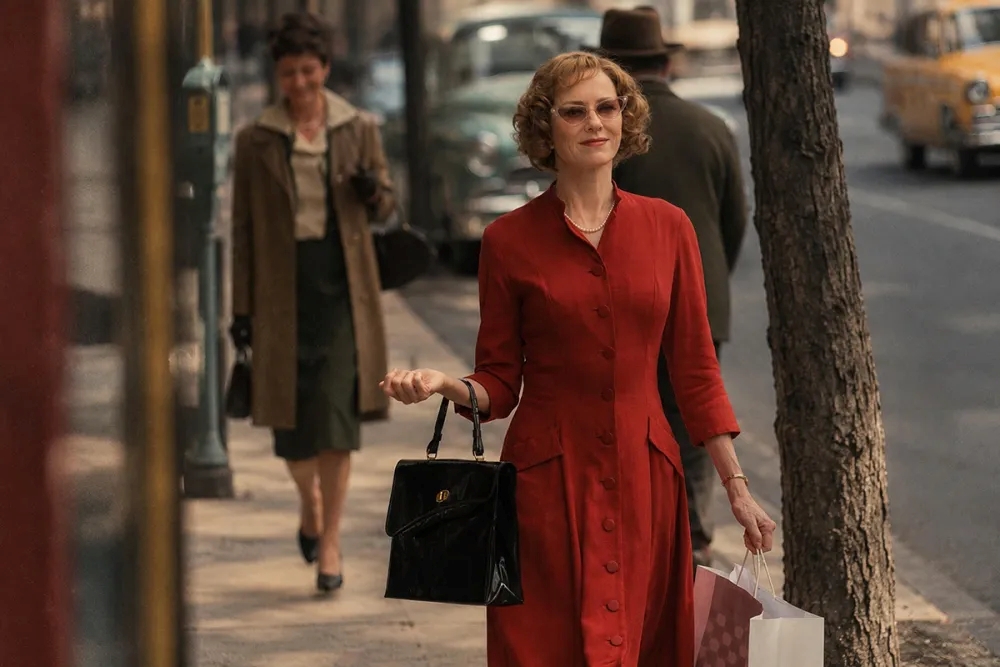
“I’m of an age right now where some could joke that I’m in the ‘villain era’,” teases Naomi Watts, 57, whose latest film, The Housewife, sees her portray a violent Nazi guard, hiding in plain sight as a housewife in 1960s Queens, New York.
“But this is an extreme one [villain] and not a joke, and so I just felt compelled to be part of that story,” she says, talking at the San Sebastián Film Festival where she was awarded the festival’s highest honour, the Donostia.
Based on a true story, The Housewife follows Tye Sheridan’s eager New York Times journalist who, in tracking down a potential Nazi officer, befriends the suspect’s charming wife – only to discover that she was a sadistic death camp guard notorious for dispensing lethal punishments.
“Hate is definitely on the rise, and it’s a very, very scary time with what is going on in the world globally. And we must be vigilant, and we must pay attention, and not let this happen again,” argues the actress.
“This film was compelling to me – even eight years ago when I first read the script –but it’s become even more so,” she says of this re-telling of the case of Hermine Braunsteiner Ryan.
Born and raised in Austria, Braunsteiner worked in several Nazi concentration camps, committing crimes for which she earned a modest prison sentence and partial amnesty following Germany’s defeat in WWII.
But In 1958, she would marry American construction worker Russell Ryan (Luke Evans), and become a US citizen, settling down in suburban Queens.
However, after being exposed by legendary Nazi hunter Simon Wiesenthal, it triggered a story in the New York Times, leading to her becoming the first ever war criminal to be extradited from the US to face trial in West Germany.
“I like the idea that this film will hopefully give people the chance to take away a conversation, spark debate and rethinking, and look back at what transpired then, and not just the events of what happened before and how and why it led to that moment and the aftermath,” says Watts.
“And it was a scary time, and we need to do whatever we can to avoid being back there again.”
Reflecting on her storied career – highlights including her Oscar nominations for Alejandro González Iñárritu’s 21 Grams and J.A. Bayona’s The Impossible – she talked about her rocky career start.
“It was not exactly a smooth ride. It wasn’t an easy trajectory. There was so much rejection; a lot of people telling me I wasn’t going to make it. I was too this, not enough of that, not right for this or not right for that. I was being told what I couldn’t do, but I just kept going,” she recalls.
“I had this resilience, but it was a full ten years of rejection, and then I met David Lynch, and David Lynch saw me, and all those wounds from all that rejection now appeared as growth.
“He gave me the role that you couldn’t even dream for. He really just changed my life. He gave me a different understanding of what it meant to act, to trust instinct, to embrace uncertainty, and to not be afraid of the strange or the unexplained,” she says of her first big break in Lynch’s Mulholland Drive.
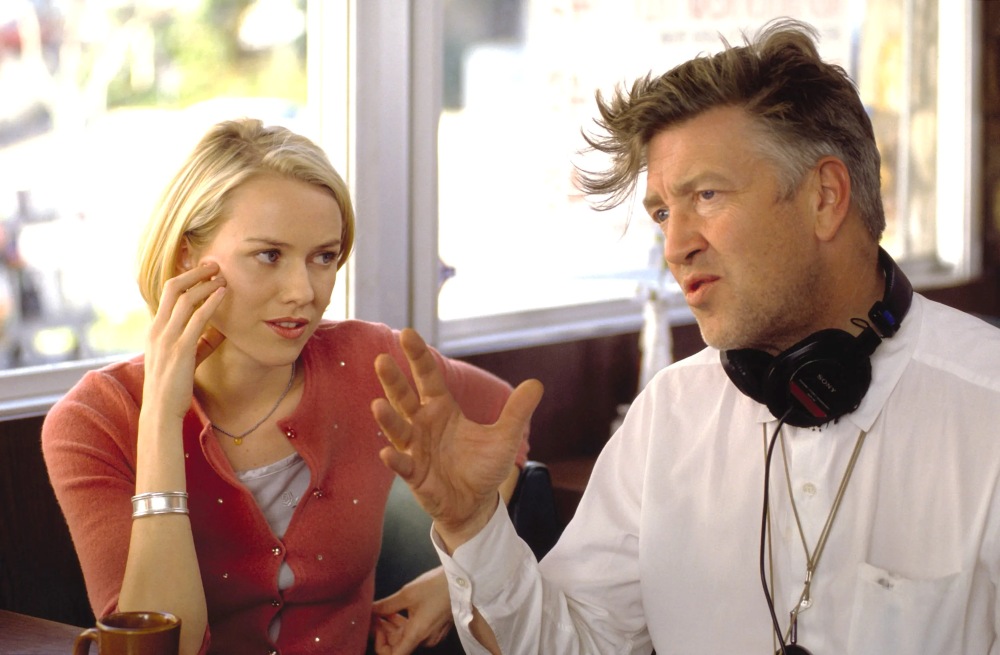
“But more than that, more than anything, he believed in something in me before I fully believed in myself, and that is a gift that you never forget,” she says, in dedicating her Donostia to the memory of the late great filmmaker.
“Mulholland Drive led me to so many things – working with some of the greatest in cinema: Cronenberg, Haneke, Iñárritu, Juan Antonio Bayana, Peter Jackson, and all those directors who embraced me along the way.
“But I started – by Hollywood standards – quite late. I launched with Mulholland Drive, when I was 30, 31 maybe, and I was told at the beginning that I better get my skates on because it all finishes at the age of 40. I was told that it’d all be dried up and finished by the age of 40 so I’m grateful beyond words to be part of shifting that narrative,” she smiles.
“And here we are today in my late 50s now, and, I mean, look at the Emmys just last week. The number of women in strong categories over 50? So that’s heartening to see. I do think things have changed. Women are consumers of film and TV, their stories should be reflected. And I’m grateful to be a small part of that shift.”
But, of all her many film projects, she believes The Housewife is a story that demands to be heard.
“Producer Robbie Brenner called me up and said, ‘I have this piece of material. It’s been on the blacklist’. And my agents told me this was a wonderful script. And of course, when I read it, I turned the pages in shock and awe of this story which was something that I had not known.
“I found it just very compelling, very scary, but something that was necessary to remind us of where we were, and in terms of how it relates today.
“And hopefully, this film sparks a dialogue, and we don’t give answers. We hopefully send you away with questions: How did this happen? And who would you be? Who do you relate to in this story? What do you have to say? And what is your thinking? How can we avoid this happening ever again?”
If The Housewife lands in an era where stories of feminine violence seem to be in the zeitgeist – be it with Ryan Murphy’s Monster: The Lizzie Borden Story or with the real-life mistrial of U.S. mum Lindsay Clancy accused of strangling her own three children – then Watts took a deep dive into the circumstances of women who commit murder.
“It’s interesting, and I think there are very few stories of female Nazis out there, and this one is particularly extreme.
“But monsters don’t have to look like ogres or scary people that come from under our bed in the middle of the night, They are amongst us. And when I was researching the film, I definitely went to all kinds of weird places on YouTube, looking at serial killers and documentaries, specifically about the Nazi regime, and it was very confronting, sickening,” she says.
“But it was important for me to understand and tell the story in the most authentic way. She was someone who committed atrocious war crimes and yet was trying to erase that fact and get on with her life in the most simple of ways.
“And that was my job to deliver that story, it was hard to be in that mindset on a daily basis, and I think Ben can attest to how conflicted I was after each scene, especially some of the darker moments,” she says of shooting the film helmed by Canadian first-time director Ben Shirinian.
“But we have to tell these stories. Storytelling is so important, particularly now.
“Cinema is one of the greatest art forms, I think, in that we need to see our stories reflected, and we need to see confronting stories, and I am proud to be part of the LGBTQ community and represent,” says the mum of two from her previous relationship with Liev Shreiber, with both giving full and united support to their trans daughter Kai, 17.
“Minorities are being attacked right now, and it’s frightening and unacceptable, And so my heart is with those communities, and particularly my family. So, I’ll do whatever I can to represent and stick up for minorities like that,” she vows.
She lights up when speaking of her chosen profession. “You never really know what’s going to happen when you walk onto a set. You can prepare for everything, and then something unexpected happens, and suddenly you’re alive.
“You spend your life trying to inhabit other people, and somehow along the way, you discover more of yourself. And that, to me, is the joy of being an actor, I absolutely love it for that reason, and I’m still learning, and I’m still growing, and still discovering.”
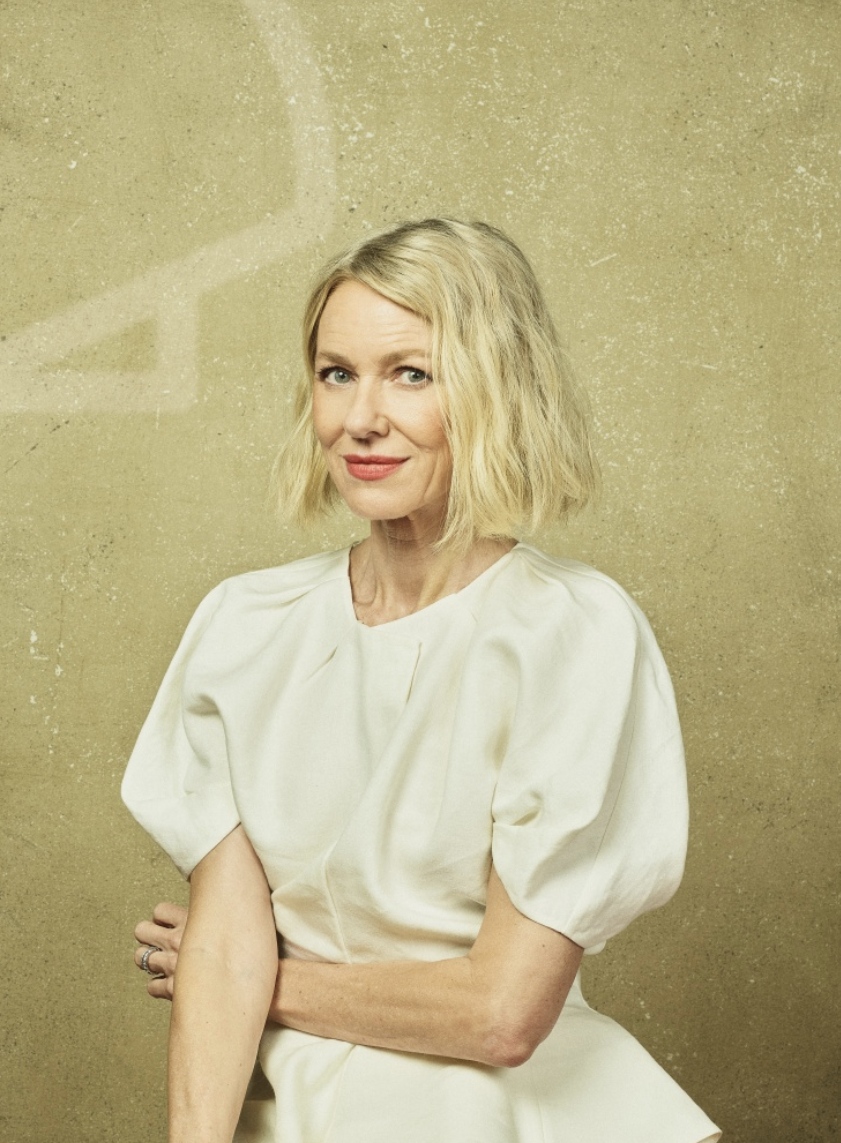
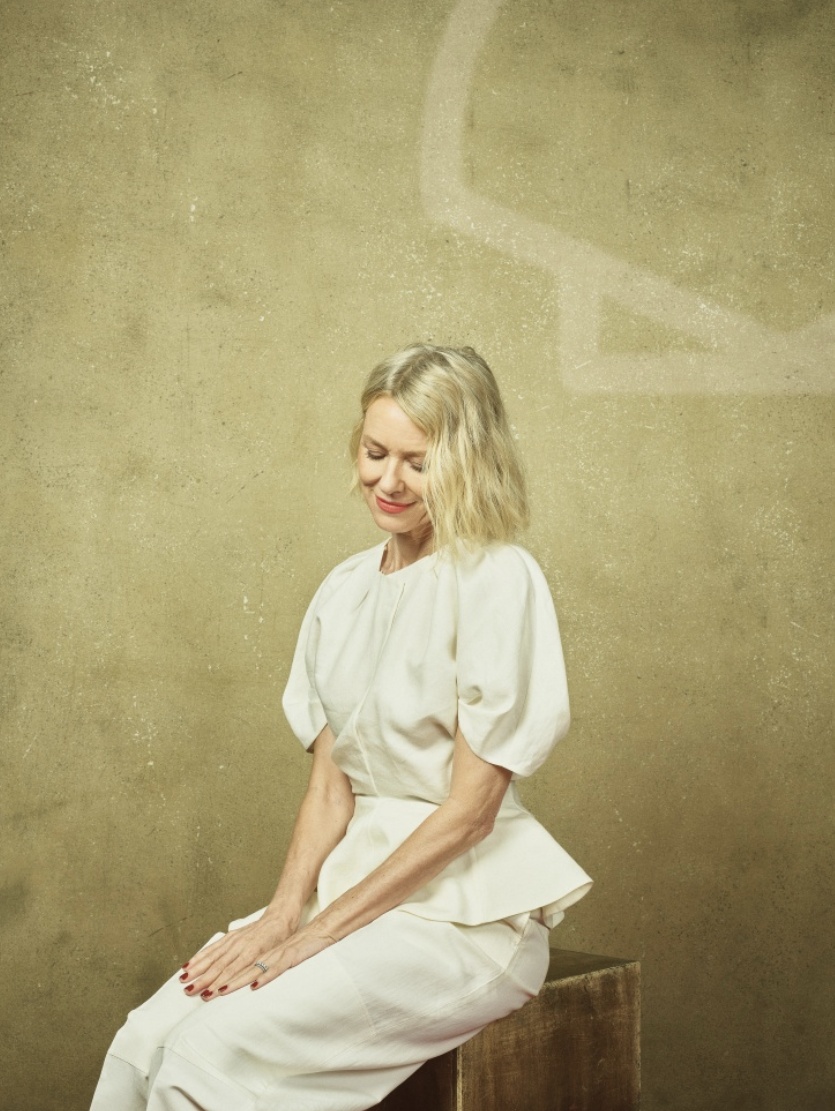
Main Image: Naomi Watts, star of The Housewife, Jorge Fuembuena, 19th September 2026 / San Sebastian Festival Archive / CC BY-NC
