


Aliza Xie
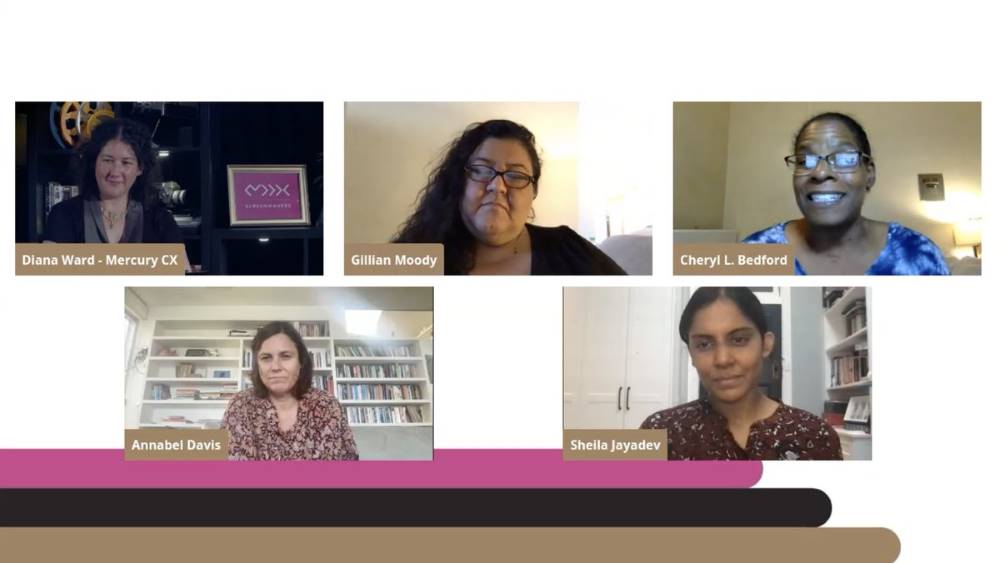
This report will outline the issues relating to diversity in the Screen Industry as discussed in the MCX Screenmakers Conference. It will explore the conversations from the ‘Creative Outlaws – Challenging the Status Quo: In Conversation’ session, facilitated by Michelle Cheng (SBS) and featuring writer siblings Benjamin Law (The Family Law, Waltzing the Dragon) and Michelle Law (Homecoming Queens), as well as the ‘Diversity Means Big Business: Panel’, featuring Annabel Davis (Co-Curious); Cheryl L. Bedford (Women of Color Unite); Gillian Moody (Kalori Productions); Sheila Jayadev (Emerald Pictures).
Before I talk about diversity and the issues surrounding it, it would be useful to unpack why it is important to talk about this topic. Diversity is important because it allows people to feel seen, especially those from minority and marginalised backgrounds. It allows for an authentic and truthful representation of people from different backgrounds, as seen in real time in our multicultural, Australian society.
Diversity has become a more prominent term in recent times. It seems to have become a checklist in some projects, where diverse acts are employed just so that they can say they have ‘slapped on’ the diversity sticker. One recent film that openly mentions this is Late Night, directed by Nisha Ganatra. Mindy Kaling plays the character Molly Patel, who is labelled as being a diversity hire in her new workplace.
According to Benjamin Law, a lot of thought is not put into checking off this criteria, resulting in a lack of complexity in diverse characters, in particular. A point made was around it being okay to make Asians do bad things if there were other Asians who were not doing just bad things. A problem arises when Asians are represented as only doing bad things – the one-dimensionality.
In terms of how one can represent diverse people in a truthful and authentic way, one of these ways is to have people behind the camera who have lived experience and empathy with the marginalised experience. For example, Moody stated that indigenous stories should only be told with indigenous people’s input and perspective. Their involvement is paramount because so often in the past they have been portrayed as tokenistic or involved as part of a bad news report.
In the panel, when confronted with the issue of the lack of stories from POC, Bedford highlighted these issues: white supremacy and exclusion by familiarity. She claimed that white people do not want to be marginalised, so will be the dominant party. People want to see stories that remind us of a familiar person or situation; if that story is unfamiliar, audiences (even directors, producers, etc.) might not relate to it and people behind the scenes might not know what to do with it. This gives way to a kind of narrative sovereignty.
As for first nations creators, there is some hope for more indigenous people to be seen on screens, as there is funding from the government available. The hope is that this changes the narrative for not just the first nations people but also people from Western Sydney, a community that has been demonised, especially recently with the lockdown. With the gift of film, some of the pervading negative and narrow-minded narratives and perspectives can be changed. One question that was raised was: is the funding enough for all the damage caused by marginalised people’s ill-representation in the past? It is a question that hangs in the air.
All in all, here were some of my takeaways: Have complexity in the diverse characters on screen. One question you can ask yourself when casting and writing for them is – are they equally as complex as the characters around them? Having diverse people in writing and casting positions helps in this area.
For POC who are trying to get their stories out there but are told otherwise, know your boundaries and stand up for them. Know the story you want to tell. For discrimination, in any sense of the word, speak up and out. Risk your career, because not having a job does not compare to the injustice of going to jail because of the colour of your skin.
For all content creators in general, in all that the term encompasses, those who are trying to knock down the door but the door is not budging, create your own rooms. You have the platform and technology. Save the gold to yourself and ask to be credited for it.
And let’s keep talking about diversity. As diversity continues to be a topic of concern, let us take advantage of that and make steps to overcome those barriers and progress towards a more inclusive screen industry.
