



by Helen Barlow
When Ludivine Sagnier reclined beside a pool in Francois Ozon’s 2003 film Swimming Pool, the image went all over the world. The fluent English-speaking French actress, who had been acting since the age of ten, announced herself as a force to be reckoned with in a film which was itself a tour de force.
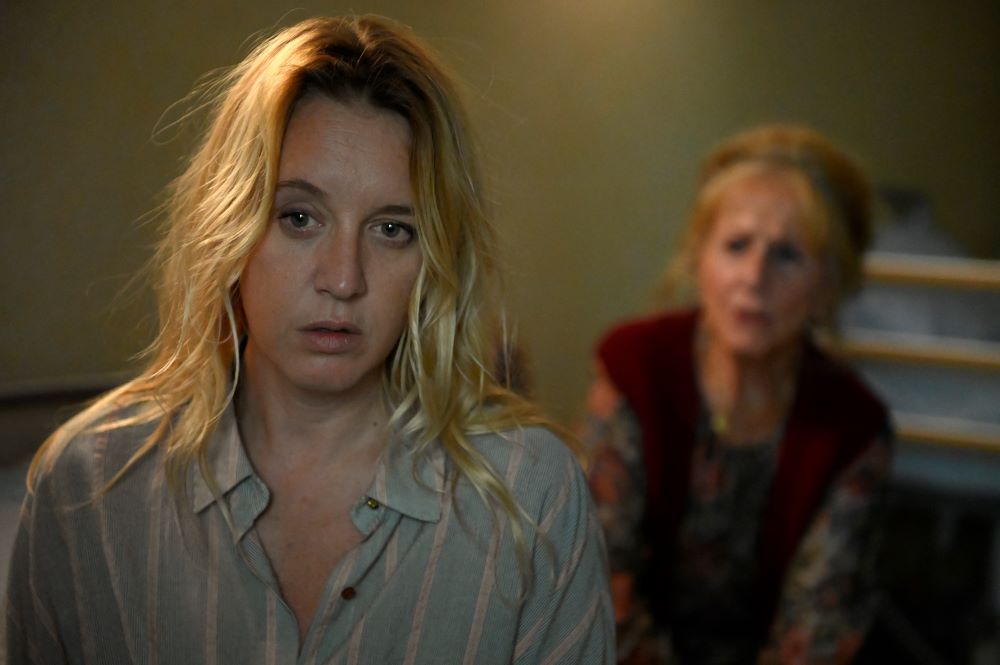
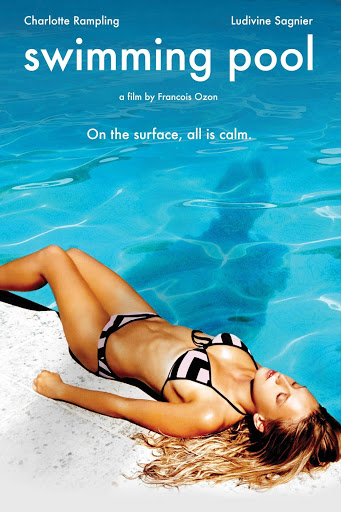 Swimming Pool marked Sagnier’s third film with Ozon after 2000’s Water Falls on Burning Rocks and 2002’s 8 Women and she has now made her fourth Ozon film, When Fall is Coming, which recently picked up two awards at the San Sebastian International Film Festival, for Best Screenplay and Best Supporting Actor (Pierre Lottin). In the film, Sagnier plays Valerie, the 40-year-old daughter of protagonist Michelle (Helene Vincent).
We meet at the Venice Film Festival where Sagnier, now 45, had previously spoken about her turns in the Paolo Sorrentino series, 2016’s The Young Pope and 2019’s The New Pope, both alongside Jude Law.
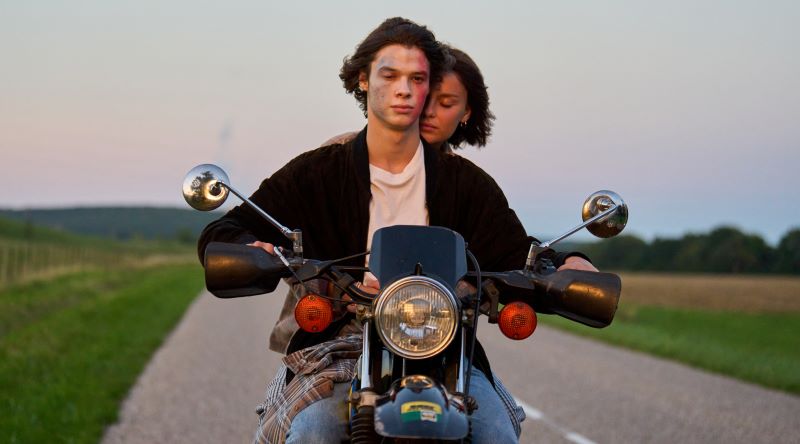
Today, we are discussing the French film And Their Children After Them, by the directing brothers Ludovic and Zoran Boukherma, who adapted Nicolas Mathieu’s 2018 prize-winning novel. Sagnier plays Helene, the working-class mother of the protagonist, Anthony, played by Paul Kircher, who won Venice’s best young actor award for his performance in the coming-of-age story, which spans four summers between 1992 and 1998 in northeastern France.
Sagnier has acted a lot in English. Australia’s P.J. Hogan cast her as Tinker Bell in 2003’s Peter Pan, and more recently she appeared in Napoleon starring Joaquin Phoenix. She has worked a lot in television, in the series Franklin starring Michael Douglas and The Serpent Queen alongside Samantha Morton. She has also appeared in the hugely successful Netflix French-language series Lupin.
You are a real stand-out in And Their Children After Them.
“That’s very kind. Actually, I was really proud to be part of this project. As with a lot of French people, I’d read the novel during the summer and was blown away by the realism. I like how the movie’s directors transferred the epic energy, the romantic energy and how they depicted this coming-of-age moment, which is so specific, so painful and full of desire. You don’t know what it’s going to be like and personally, I was Anthony’s age during the ‘90s and my mum was a secretary who was Helene’s age – and she also wore the same kind of suits!”
You’re playing your mother.
“Absolutely. And my mother used to drive the same car. So, it was really weird, because in reading the script I was facing my own childhood, and then I was facing my mum’s adulthood.”
How was it to work with Paul Kircher?
“I had a crush on Paul for two movies already, Winter Boy and The Animal Kingdom. When we did the readings, I felt that there was something going on between us. Maybe it’s because I’m the mother of three daughters, so I was happy to have a son finally, and we worked so easily together. I had a natural authority with him. He would listen to me all the time, and we still have a mother and son relationship. He calls me whenever he needs advice for anything sentimental or professional. I’m his second mum in some way.”
Are you friends with his real mum Irene Jacob (the star of The Double Life of Veronique and Three Colours Red)?
“Of course, Irene greenlit our relationship. She’s very happy that we connected so well.”
You live in Belleville, an artistic Parisian milieu that is very different from where Helene comes from.
“Yes, Belleville is very mixed, socially, ethnically, everything. I like mixing. I like diversity in all forms including a diversity in acting roles. I had the responsibility to portray Helene, not as an 11th arrondissement actress, but as a working-class woman. I really tried to embody this part. I didn’t go on a diet.”
Yes, we thought you looked a bit…
“Fat? Yes, I like that. I like that full body, because if you look like a pin-up, it doesn’t say the same thing. For actors, our body is our tool, the make-up and the colour of the hair. It’s not the most glamorous, but I love that.”
The realism of it?
“Definitely. I felt I could connect with her.”
The film’s directors, Ludovic and Zoran Boukherma, are bringing new young blood to French cinema, which is good.
“Absolutely. And I think it’s interesting because the producers gave them the opportunity to get away from their reputation as genre movie directors from their previous films (The Year of the Shark and Teddy) because they’re more than that. In France, and I guess globally, when you are tagged as a genre filmmaker, it’s really difficult to escape that tag. But the producers, Alain Attal and Hugo Selignac, don’t care about what people say. They just believed in them, and they gave them enough budget to fulfill their vision. I think that’s very clever. And I think the brothers are going to be around for a long time and it’s going to be fascinating.”
You’ve reconnected with Francois Ozon on When Fall is Coming.
“I have a small part in this movie; it was just to have fun together. And I’m very pleased, because we hadn’t worked together for 22 years.”
In Swimming Pool, you became a sex symbol for a moment in that bikini. How was that?
“It’s far away now.”
People remember that movie.
“Absolutely, it’s great. I’m very proud, because it really launched my career internationally. It’s good to be remembered.”
Can you speak about When Fall is Coming?
“It’s a very small, intimate drama, because it’s only four actors, Helene Vincent, Josiane Belasko, Pierre Lottin and myself. The older women kind of sum up their lives and their relationships with their children. So Josiane has a son, and Helene has an ungrateful daughter … Oh dear, who I have the privilege to portray. And the women deal with aging and all that. It’s really interesting and funny somehow.”
Are you going to work in English again?
“Not for the moment.”
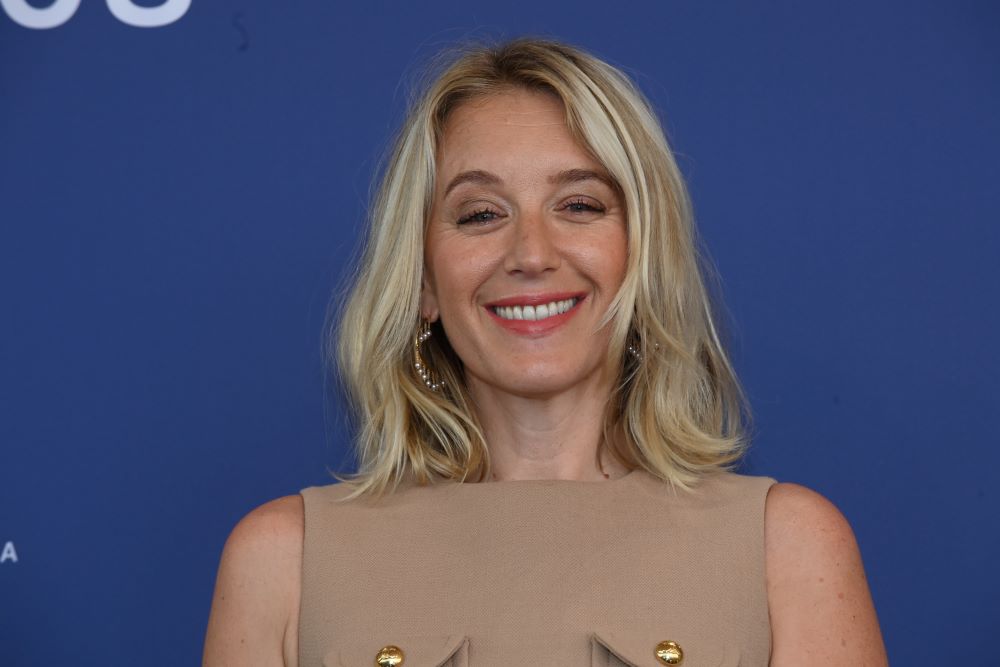
Few French actors speak fluent English like you do.
“It’s funny, because I don’t really realise my level in English. I always feel that it’s not good enough. Yesterday, I did an interview in English with Gilles Lellouche (who also appears in And Their Children After Them). He was like, ‘Oh my God you speak English very well’. I never speak English except when I work in English. Otherwise, I have no opportunity, so I forget it. I have a game on Google called Word Coach which is like a vocabulary test in English and when I’m waiting or whatever, I play it. I try to test myself in order to keep the words in my head.”
You appeared alongside Samantha Morton in the recent English-language series, The Serpent Queen, which has been a success.
“I play the aristocrat Diane de Poitiers, who was the rival of Samantha’s Catherine de Medici. Diane’s a mean woman and I really enjoyed playing the villain. She couldn’t be more different than Helene in And Their Children After Them. That’s what I like about my job, having variety in the women I play.”
How was working with Samantha?
“She’s great. I love her. She comes from a working- class, terribly difficult background and she’s just magnificent. She’s kept that same reality and I think it’’ important. We really became close, and it was such a privilege to work with her. She really is so subtle.”
