


by Julian Wood
We spoke to the director from her home in France. When asked about the impact that all of the recent attention has had on her, she quips, in lightly accented English: “Oh yes, I am changing roles now. Before it was all about making films, now it seems to be all about talking about them!”
Anatomy of a Fall is both a portrait of a strained marriage and a courtroom drama, although the question here is not so much whodunnit but why did they did it.
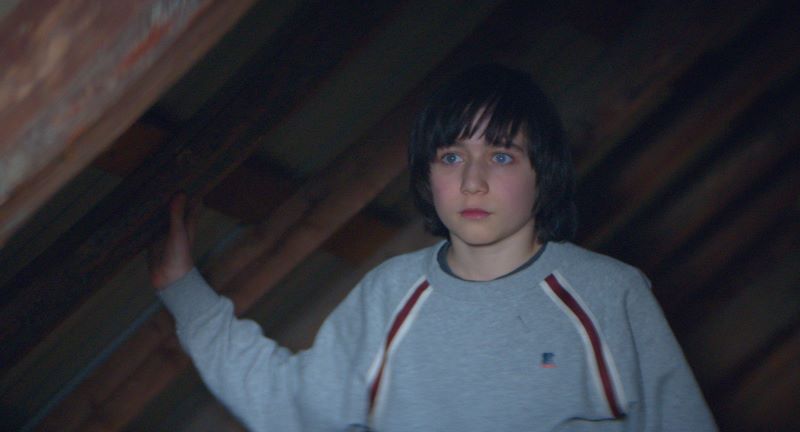
The central couple in the film live with their partially-sighted young son in a snowy chalet. We ask Triet if the setting was important, given how it traps the couple, as well as featuring in the evidence of the fall that starts the film. “Yes, the country element is very important,” she elaborates. “When I sat down to write the film, I had this idea of artists who were choosing to be very isolated on purpose, so they could concentrate upon their work. It also reminded me of a Marguerite Duras story, in which there are these people who dislike the mountains and the fields and these beautiful views that they live among, and I thought that was an interesting idea.”
Was it always her intention to shoot in the French Alps? Triet reminds us that when she conceived of the film, France – like everywhere else – was in Covid lockdown. “Everyone was thinking, ‘oh, maybe we should move to the countryside’. But really, that is just an idea, and they won’t necessarily go there…” Triet’s couple does, with disastrous consequences.
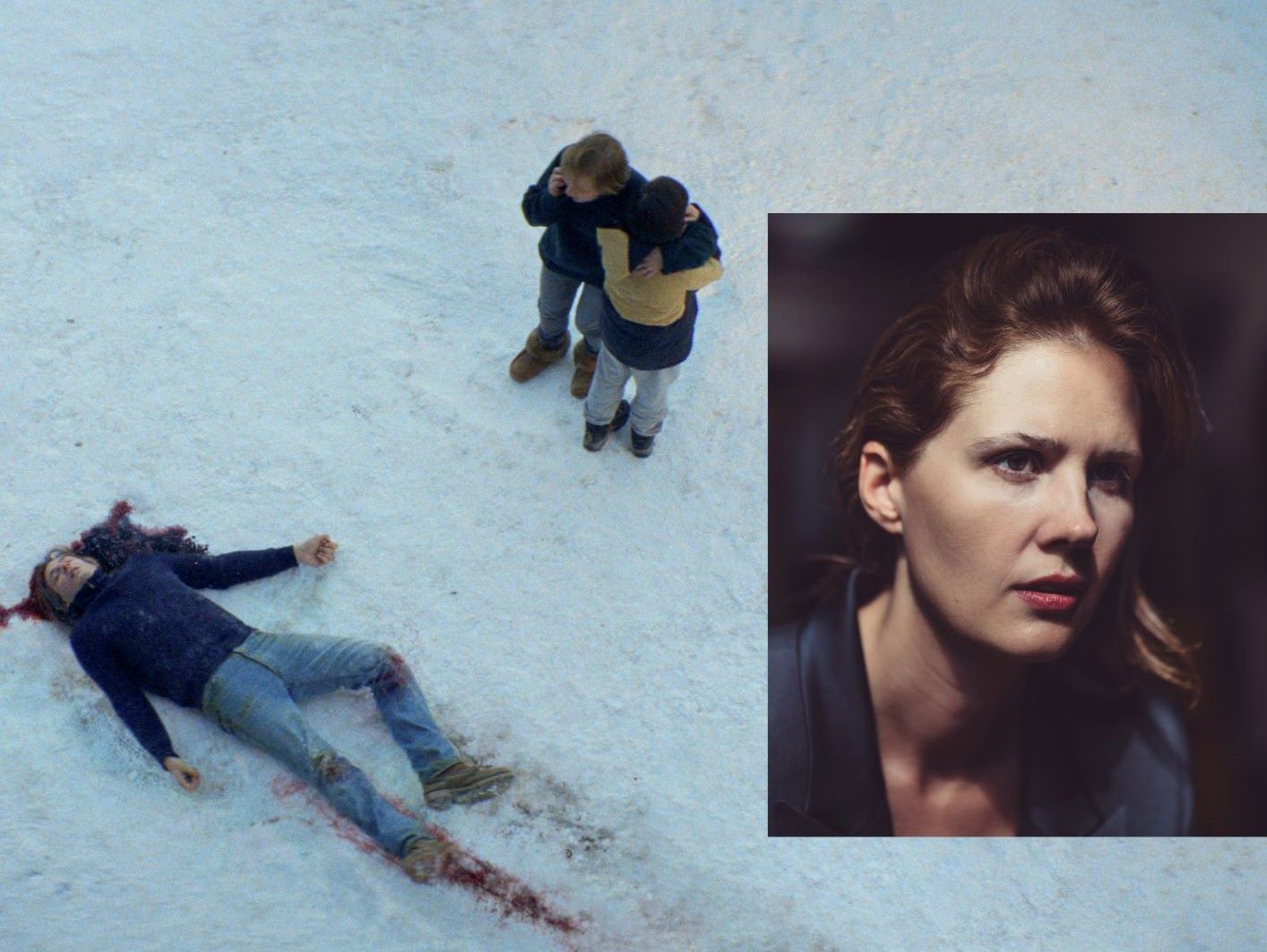
The filmmaker also reveals that she was inspired by Stephen Frears’ Dangerous Liaisons. “You know at the end, there is the body and the snow and the blood? It was a big memory for me. When you have the blood in the snow like that, it frames it in such a stark way.”
Anatomy of a Fall revolves around a trial, with the media, as much as the public, obsessively following proceedings. The media’s reporting could actually change the profile of the case. In this age of social media and contested truth, how does Triet feel about the idea of trial by media? Her answer confirms our suspicions that today’s truth is fragile.
“Both social media and traditional media, in different ways, passes judgment so quickly, so carelessly in a way, but the trial has to proceed much more methodically of course,” she says. “In the film, the media do this and they don’t have all the information really. But they think that they can understand things simply, whereas in fact, what is right and wrong is very complicated. The media think they are right and that their interpretation is right, but is it? I feel the film is very contemporary in that sense. It is very complex. Unfortunately, with the media always involved, people can be judged before they have been charged. And, also, Sandra [the protagonist who is on trial] is doubly judged as a woman/wife.”
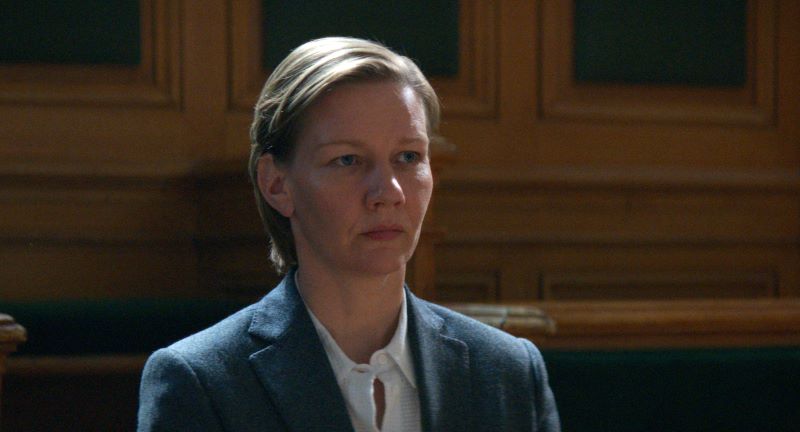
The film could so easily have ended far more ambiguously. Did Triet and her collaborators [including her life partner Arthur Harari, who co-wrote the film] play with the idea of alternate endings? “Yes, a bit, but you know, I am not very happy when movies are finishing like this. I don’t like it when they are too clever. Like they are saying, ‘I am playing with your nerves’. The ending was very complicated to realise actually. We had a lot of different issues. But I think the main thing was to be true to the spirit of the film; the movie is based on doubt.”
Anatomy of a Fall has one particularly long and amazingly acted scene where the husband and wife have a no-holds-barred, heartbreakingly frank exchange. How was this to shoot? Triet initially comes at this with a quirky side story.
“We have a very young woman who had just started in the movie business and she had to hold the boom mic up for all that time. And the scene, of course, was way longer to shoot than it is in the movie, so she was having to hold the mic out for 20 minutes or so. Her arms must have been killing her; luckily she was young and strong.”
Triet then thinks about the weight of the scene and adds: “Yes, it was very hard. We knew it would be, so we set aside two full days to shoot it. At one point, my DOP [Simon Beaufils] was in tears with all the emotion of it.”
Is it important that both the characters in the story are writers? Both feel that they sacrificed aspects of their life and work, and potential books, to look after each other. There is mutual resentment, which is perhaps a part of many long-term relationships. Triet clearly thinks that this is one of the main themes of the film but, she also says, it could be true of any artist really, not just writers. The key point is that we only have one life, and time is the most precious thing of all.
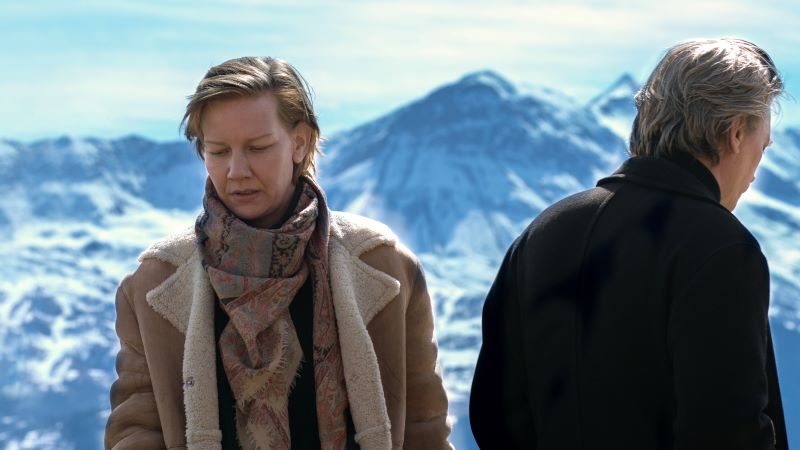
“Yes, they are writers, and they perhaps see the world in a certain way, but more importantly, writing takes time, and they are conscious of that too. You know, they say ‘you stole my time’, ‘took my best years’, etc’. It was important to base this film on the idea of the amount of time that they have given up. Maybe that is universal. We can say ‘I loved that person’ but [when the relationship breaks down] we say, ‘I lost 10 years of my life to them’. If you do something – write a book or two books or whatever it is – that is all time and opportunity cost and the idea that they are writers was good to show that idea.”
Anatomy of a Fall is in cinemas 25 January 2024
