



by Gill Pringle
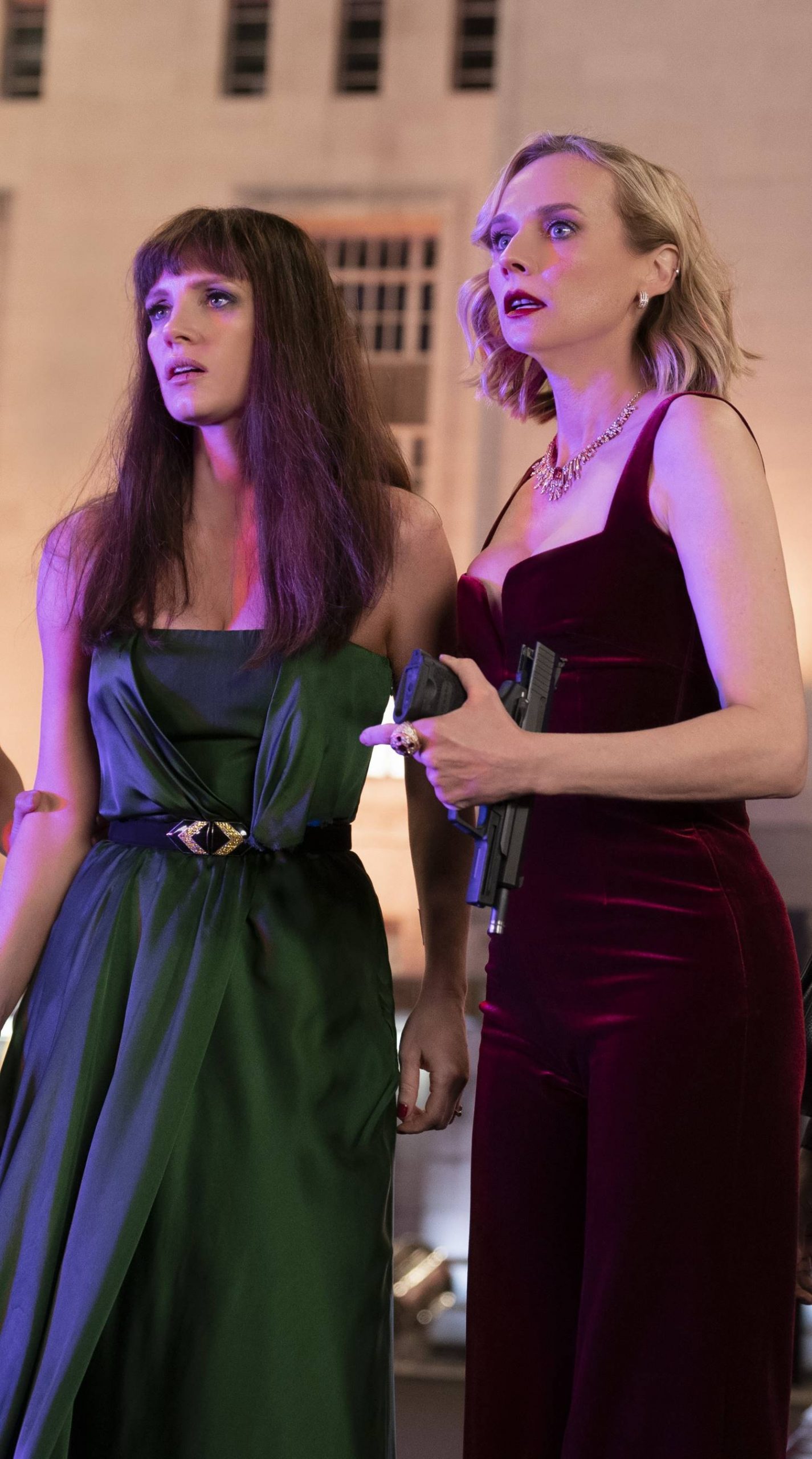
Jessica Chastain’s all-star female spy thriller, The 355, takes its name from the enigmatic female spy known only by the code name ‘355’.
The identity of the real-life operative who played a pivotal role in George Washington’s Culper Spy Ring, has been described as the last remaining mystery of the American Revolutionary War, helping to convey vital information about British troop movements to American generals.
The numeric signifier was part of an elaborate system developed to keep all the agents’ names and locations secret. Hundreds of years later, the woman’s name is still unknown, but her groundbreaking accomplishments have not been forgotten: Women working as intelligence professionals today sometimes referring to one another as 355.
It proved to be the perfect title for an action film that gathers an ensemble of A-list international actresses in a globe-trotting espionage thriller.
Spotlighting the various talents of its eclectic mix of female characters, each is a specialist in a facet of spycraft, be it combat, field ops, cutting-edge tech, marksmanship or psychology. As a collective, they are smart, savvy, sometimes lethal – but, together, they are unstoppable.
The genesis of the film began at the Cannes Film Festival in 2017, when Chastain was serving on the festival jury, noticing posters all over town advertising action movies starring international male stars, prompting her to wonder why – with so many respected international actresses – no one had thought to bring them together in a single film.
Turning to writer-director-producer Simon Kinberg (Mr. & Mrs. Smith, Sherlock Holmes, Deadpool, Logan, The X-Men) with whom she had previously worked with on The Martian, Chastain found a like mind, quickly recruiting Penélope Cruz, Diane Kruger, Lupita Nyong’o and Fan Bingbing to join them in a co-operative where everyone would share creative ownership over the film.
A year later, Chastain’s Freckle Films announced The 355 and the film swiftly went into production, filming in exotic locales around Paris, Morocco, Shanghai and London.
FilmInk catches up with Chastain and Diane Kruger to talk guerrilla female filmmaking.
The 355 was in production within a year of the initial pitch. Why do you think that it was an easy “sell”?
JESSICA: I just think the industry has under-valued women for so long that they didn’t understand what they could have done. I mean, we over-sold the projections of what we thought we would get, in terms of making this film, and it was such a lesson to me because in putting this movie together, I was thinking “has this ever been done?”, “I don’t know how to do this”, and my feet were to the fire in trying to put this together financially because I had to front money. Everything about it was so difficult and I was learning at such a steep curve, but it was clear from the moment we went to Cannes and announced the film that there was an appetite for it and, at that time too, we had multiple studios try to buy the whole thing, to buy the world and make this film. But it was important for us that the actresses own the film and so that’s why we didn’t sell to one studio.
I also kinda felt like, “you guys could have made this film years ago, if you wanted to”, so now we’re gonna make it on our own and see how we do. It was exciting and I guess it was a justification of what I felt – this was something that people wanted to see.
We read a lot about female pay disparity. How has the place of female actors evolved?
DIANE: I think people are more aware of it, but I feel like we still have a long way to go. I think it is moving finally and we’re heading towards the right direction. If anything, I think we created a space to be able to be heard and for that to be an open discussion. I feel like it’s going to take women who have created a position of power, like Jessica, to really follow through, so I applaud her. I also applaud a producer and director like Simon who is not afraid of that, who equals women the same way because you can’t do it alone, right? It’s gonna take the men to step up to the plate as well.
JESSICA: It’s also amazing that the women are the owners of this film. That is something that really hasn’t happened before, and I like the idea that moving even beyond gender with this idea that creators and artists can own their work… That’s exciting for me.
Did you take part in the casting and have the last word?
JESSICA: I don’t want to have the last word on anything to be honest! I like a conversation that’s between people and a collaboration but, yes, it’s like a wish-list for me. Like with Diane, for example, I had the opportunity to see her performance in In The Fade at Cannes and I feel like the industry has not allowed these women to take up the space that they can take up.
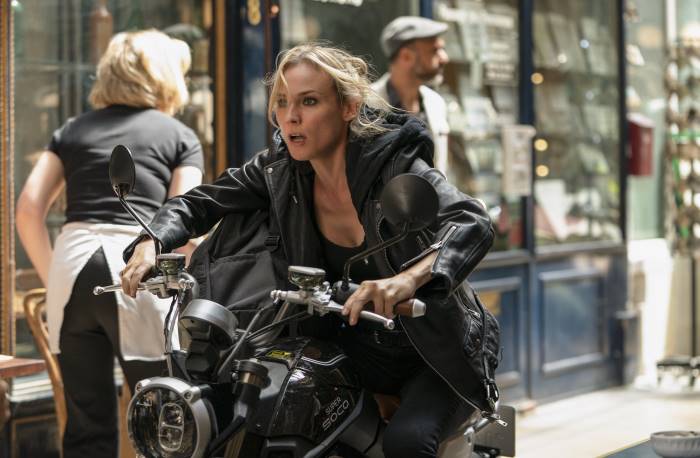
Someone like Diane, especially after this job, she can do anything because you watch her performance in In the Fade and then you watch her riding a motorcycle in this, and I’m like, “I don’t understand how this is the same woman!?” So, yes, I absolutely had a say in casting and with locations and it was kinda amazing, and that’s never happened before.
How did you build all the characters?
JESSICA: The film, to me, is against nationalism and against borders – and this idea that you overcome great obstacles by working together and so it was important for us, not only to create an international cast but also to have the actresses collaborate and contribute to their characters and I found we learned so much about each character from what each actress brought to it and Simon was really great about incorporating as much as he could.
DIANE: Jessica and Simon really did something that a lot of big studios are scared of; bringing the actors to the table and having a real discussion about each point of view and what we can individually bring to the characters. I think that’s really what sets this film apart and you can feel it. The camaraderie that you see on the screen was genuinely there because everyone felt invited and heard and valued and I think that makes for a better work experience, for sure, but also for a better movie because you feel like you want to be there, and you want to defend what you stood up for and what you believe in.
We don’t often see such gritty girl fights like the one you two share. How did you prepare?
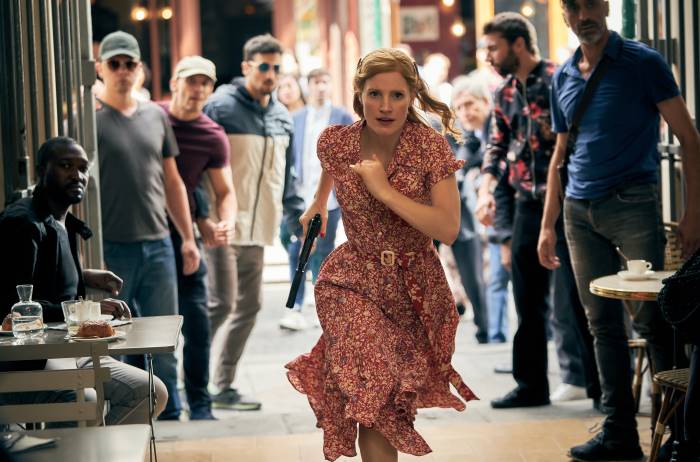
JESSICA: We trained for weeks before the cameras even rolled. Diane and I were in a room learning the whole fight and we did it. I underestimated the foe and the strength that she has, and I was sore for days afterwards because she really kicked my ass but …
DIANE: It was intense and it did feel like bootcamp at times. We’d get there in the morning and do boxing and stretching and very precise work with the stunt people to get it right. It felt like learning a dance. And then when you actually do it, you add that little adrenaline rush that you get. I was sore for days too, let’s be honest.
JESSICA: When I was younger, I was a ballerina, so I really love dance. When I started to work on films, I realised the physical choreography that’s required, in some aspects, is like a dance because there’s a rhythm to it and a counting. If you’re not where you need to be, you could hurt your partner.
You both trained with legendary stunt coordinator Jimmy O’Dee (Game of Thrones, Batman Begins, The Bourne Ultimatum and Skyfall), who is known for bringing a sense of reality to action films. How was that?
JESSICA: He was creating movement that made sense. It never felt like he was making me into a superhero, that I was doing things that would not be possible. We see a lot of choreography [in action films], but to really see what the characters are going through, that for us was the most important aspect of it. You feel the weight behind each move.
DIANE: There’s a sense of empowerment in being physically active on a movie set. You feel like you could fight any man that comes your way.
Jessica, can you also talk about undergoing height sensitivity training, so that you could comfortably perform the scenes on the UK’s Tilbury Docks, walking along a six-inch wide iron beam suspended 19 feet above ground, before jumping from a platform 23 feet in the air onto the deck of a boat. Obviously, you were wearing a safety harness but, still, it must have been scary?
JESSICA: The whole crew was standing around, and they started to take me up in the crane. I thought I was jumping from one place, and then the crane kept going up. I got up there, and I really felt, this is the moment of truth here. Jimmy saw that I was a bit afraid, and he said to me, “Jessica, if you’re not comfortable, let’s go down right now. We’ve got your stunt person who can do it.” I suddenly thought, “I am not getting down unless I jump down” – and I did. I had talked about wanting these characters to feel human in that they also have fear… They carry fear into the things that they do just like living, breathing humans would. So, I used my personal fear when I was up there and let it happen. After the first time, it was good fun. But you really feel your stomach drop – and you really hope that that wire’s going to hold.
What was it like working with Penelope Cruz and also casting her as a Colombian in these days where, if you are not cast as what you are supposed to be, then people get annoyed?
JESSICA: Well, what I think people don’t understand is that all of the actors were cast before the script was even written so, no matter what, we had our actors. And, to me, this film was the most inclusive in terms of casting from anything I’ve ever worked on. We had Lupita who was born in Mexico City; Edgar Ramirez is from Venezuela; we have a deaf actor play a character; it’s international in so many aspects that I was really excited to work with Penelope and develop her character as it made sense to her and as it made sense to me, and I think that’s thanks to Simon. So, for us it was a collaborative, creative, inclusive experience unlike any set I’ve been on.
Do you have anything in common with your characters?
DIANE: Marie is a German operative, somebody who is very methodical and efficient. There’s nothing else going on in her life other than the job. Marie and Mace are cut from the same cloth; they are very type A, both of them. Unsurprisingly, they do not like each other from the get-go because they are too similar. Over the course of this movie, they gain each other’s respect – it’s this beautiful cat-and-mouse relationship. I guess, if there’s anything in common, then I’m German like Marie although, to Jessica’s earlier point, my character was originally French and we considered keeping her French for a long time and then decided, why? Let’s just make her German. But I can be stubborn sometimes too, so I suppose that’s very German. And I’m definitely not as bad-ass but I’d like to be, so I’d like to think that’s my alter-ego.
JESSICA: But you do have a motorcycle license?
DIANE: I do but that’s not really that bad ass.
JESSICA: But that’s really great. I don’t have a motorcycle license! My character Mace is definitely more of a loner than I am. I’m not a loner. I guess I like to break rules a little bit so maybe I have that in common with her. I don’t like being told what to do. My CIA agent, Mace, is hot-tempered, impetuous and prone to violence. Sometimes her temper gets her into situations that she should not be in. She leaps before she thinks, and she’s sarcastic, which I never get to be in movies.
DIANE: Jessica is one of her generation’s best actresses. She brings such thoughtfulness to every role she’s ever portrayed, and Mace is no different. She has brought an amazing amount of depth and sensitivity into her character. She’s tough as nails yet soft and vulnerable.
The 355 is in cinemas now
