



by Gill Pringle at San Sebastian International Film Festival
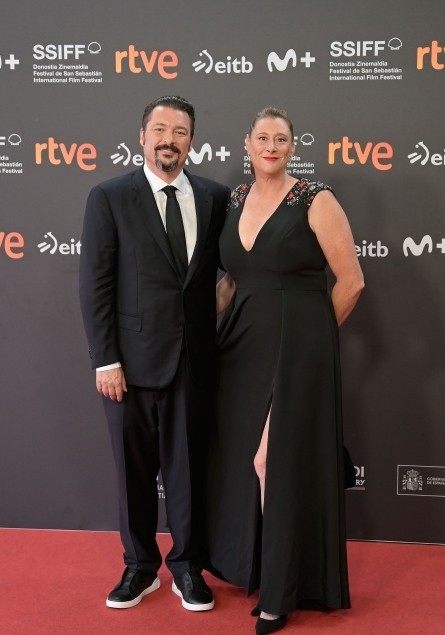
Writer Director James Vanderbilt is forevermore indebted to Russell Crowe for sticking by his film Nuremberg – based on Jack El-Hai’s book The Nazi and The Psychiatrist – for the best part of a decade.
Not only that – but for committing to portray Hermann Göring, the notorious former Reichsmarschall, Hitler’s second-in-command.
If most Oscar-winning actors would shy away from playing such a hated historical figure, then Crowe was intrigued at the prospect of portraying him as not just a twisted narcissist but also as someone quite charming. “Russell really wanted to make sure that he was the human version of Hermann Göring,” recalls Vanderbilt whose film played in the Official Selection at San Sebastian Film Festival.
“We talked a lot about it, and he said to me: ‘Look, it’s not a great mental space to live in for me,’ but he fully committed and fully invested in it, and did an incredible amount of research.
“He travelled around Germany to the different places in Göring’s childhood. He really put himself in depth into it. And I’m just eternally grateful for the commitment and the work that he did.
“He wanted to play Göring as a human being. When we were in pre-production, I remember him saying to me: ‘I’ve started thinking of him as Hermann, rather than Göring. Because I have to think of him as Hermann. Who is Hermann? What is Hermann feeling right now? What does Hermann want now?’ I thought that was brilliant.
“And he’s Russell Crowe. He doesn’t necessarily need to do that anymore, but he was as hungry an actor as I’ve ever seen, anyone I’ve worked with, and that was a true gift to me,” says Vanderbilt, recalling how Crowe signed on to the film more than eight years ago, sticking by it during a long period of financing struggles, as money dropped in and out.
Set in the immediate aftermath of WWII, as the world grapples with the unveiled horrors of the Holocaust, we meet Rami Malek’s U.S. Army psychiatrist Lt. Col. Douglas Kelley – assigned with the extraordinary task of assessing Göring’s mental state along with other high-ranking Nazi officials.
As the Allies – led by the unyielding chief U.S. prosecutor, Supreme Court Justice Robert H. Jackson (Michael Shannon) alongside Sgt. Howie Triest (Leo Woodall), David Maxwell-Fyfe (Richard E. Grant), Gustave Gilbert (Colin Hanks), Col. John Amen (Mark O’Brien) and Burton C. Andrus (John Slattery) – navigate the monumental task of creating an unprecedented international tribunal to ensure the Nazi regime answers for its atrocities, Kelley gets to know his ‘patients’.
But he soon finds himself locked in a psychological duel with Göring, whose charisma and cunning reveal a sobering truth: that ordinary men can commit extraordinary evil.
Ask Vanderbilt why he believes Crowe stuck by him all this time, he says, “I don’t want to toot my own horn, but he just really responded to the material; the idea of playing a character like this. He worked with a vocal coach. He learned the German. He did all of the things that you would really want him to do,” he says of the Oscar-winning actor.
“And he shaved for the first time in six years. He said: ‘I haven’t seen my face in years!’” remembers Vanderbilt.
“What I really wanted from him was to portray Göring as the magnetic character in real life. He was described as the best dinner party guest you could ever want, believe it or not. He was charming and all of these things and it felt like I needed somebody who had that magnetism, that movie star quality, who could seduce you in a way, the way that he sort of seduces Dr Kelly. Russell was just committed and game for anything,” he says.
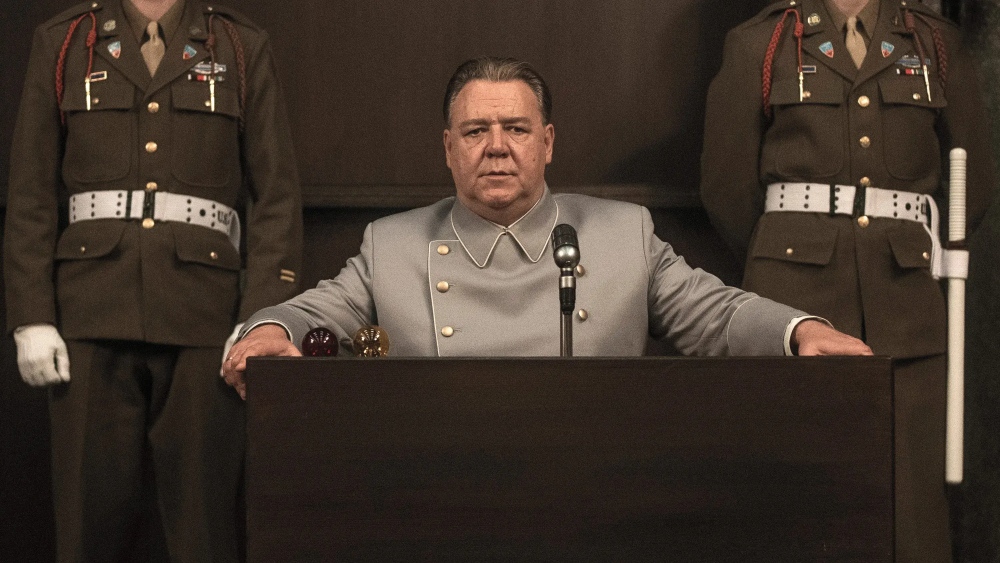
From the moment Crowe’s Göring enters the screen – within the first minutes of the film – we note that he is vastly arrogant and also very overweight.
Naturally we’ve watched Crowe put on weight and take it off for various roles throughout his career, even putting on weight for his role opposite Ryan Gosling in The Nice Guys.
But Vanderbilt is not giving away any clues this time. “A magician never reveals his tricks,” he teases. “I’m not going to give away any secrets of things we may or may not have done, but I think, if you watch the film, the transformation that occurs in the movie is, physically, pretty striking,” teases Vanderbilt, who hails from the storied New York Vanderbilts, and is best known for writing Zodiac and The Amazing Spider-Man.
To set the scene of Vanderbilt’s Nuremberg, the film is set at the end of WWII after the defeat of the Axis Powers and Adolf Hitler’s suicide, when the Allies were faced with answering a difficult question: what to do about the surviving members of the Nazi regime that had been captured in the liberation of Europe?
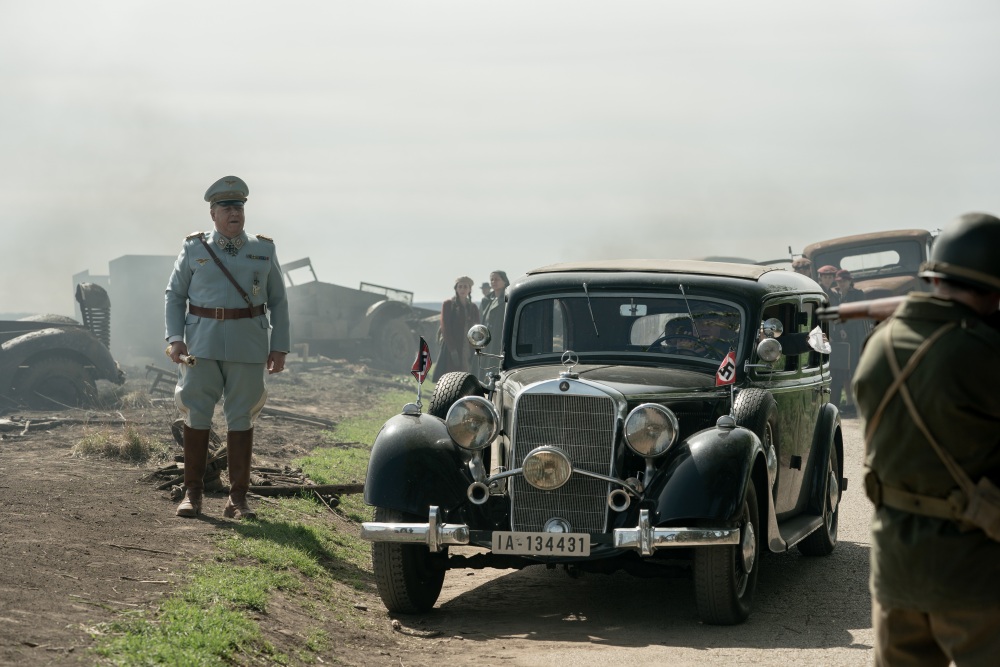
Winston Churchill wanted to shoot them, and Joseph Stalin wanted a show trial that would by default lead to shooting them, while the newly inaugurated U.S. President Harry S Truman insisted on a real trial to bring them to justice. The answer, ultimately, was as unprecedented as the crimes themselves: to hold an international tribunal at Nuremberg, a city synonymous with the rise of the Third Reich.
The Allied countries – US, UK, USSR and France – faced significant legal, ethical, and logistical challenges in their pursuit of justice. The notion of an international criminal court had yet to exist and there was no template for prosecuting a regime for crimes against peace, crimes against humanity, wars of aggression, and conspiracy. The world had never attempted to put an entire leadership on trial for orchestrating atrocities on such a monstrous scale.
Led by United States Supreme Court Associate Justice Robert H. Jackson, the Allies must set to work establishing a framework for a trial.
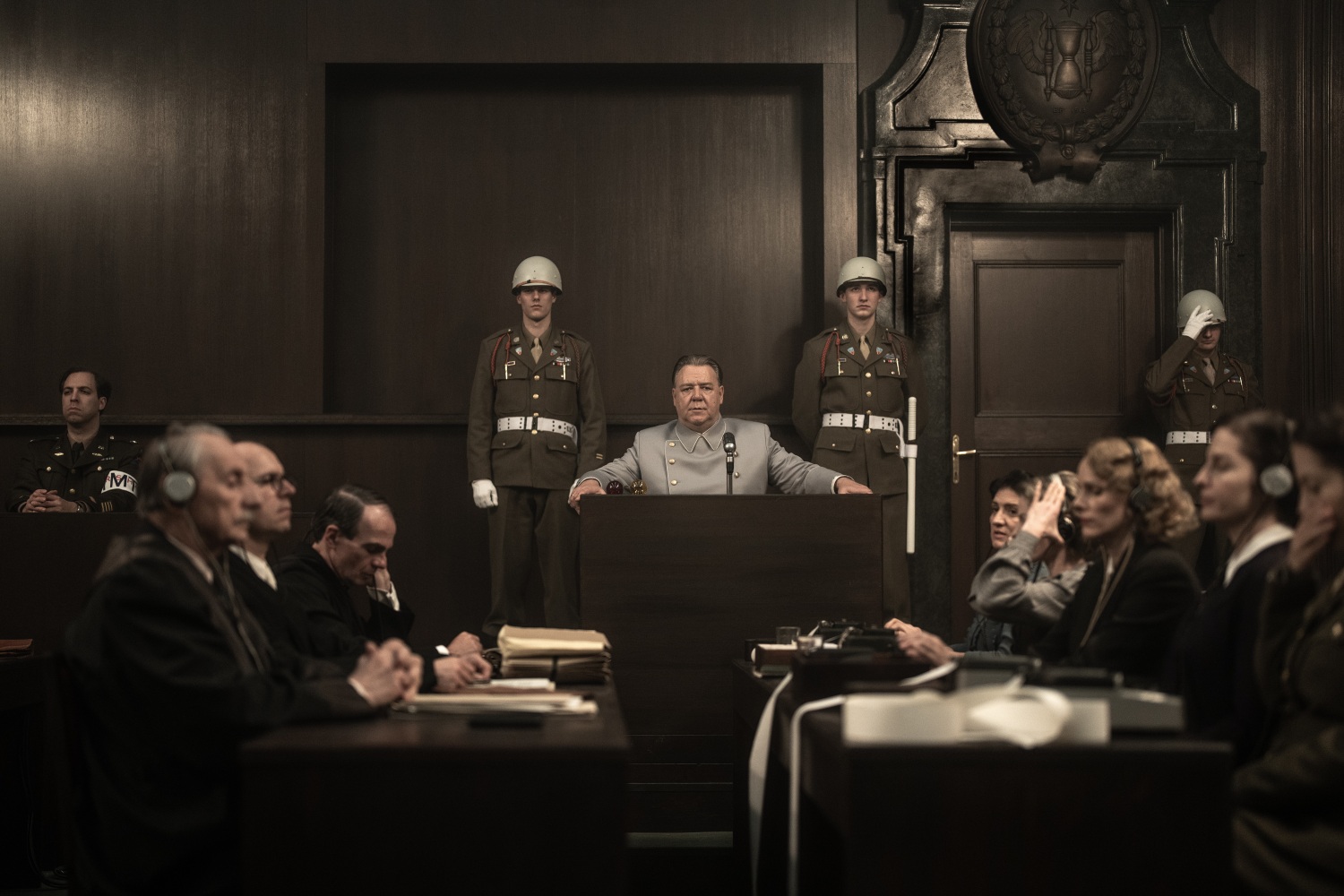
All the actors came together to build the tension for the final courtroom showdown between the Nazis and the prosecutors – when footage of the camps would be shown.
“That was something that from the very first draft, where I said: We’re not going to recreate anything. We’re not going to do anything other than present what was presented in the courtroom. And, in reality, they showed almost an hour of footage in the courtroom that day, while for us, because it’s a film, we show about six minutes,” he says.
If most of us have seen those horrific images over the years, then Vanderbilt asked the actors and extras not to watch anything prior to shooting.
“We built the set to the scale of the original Nuremberg courtroom and brought in 300 extras. We had a moment of silence before we rolled the footage from the camps. I don’t want to say that no acting was required at that moment, but those images are as potent today as they were 80 years ago and that was the hardest day, but it was something that was important to all of us to put in the film and to show in the film,” he says.
“But after the first 25-minute take, the entire courtroom of extras applauded for Michael [Shannon] and Russell – just watching those two gentlemen put on a master class,” he says.
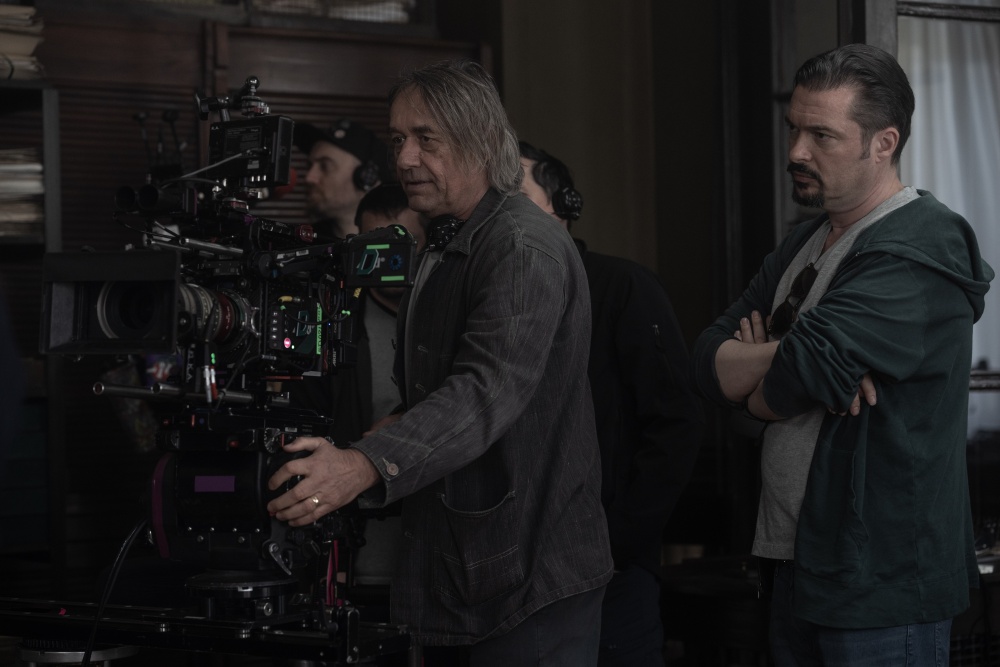
If the mood on the Budapest set was often somber, ask Vanderbilt how cast and crew dealt with it, he says simply. ‘With alcohol.’
“I really wanted to explore that idea of what is the nature of evil,” reflects Vanderbilt. “I wrote the film 13 years ago, and I felt like it was timely then, and I think it’s timely now, and I think unfortunately, it’s going to be timely in the future.”
Nuremberg is in cinemas 4 December 2025
