


by Anthony Frajman
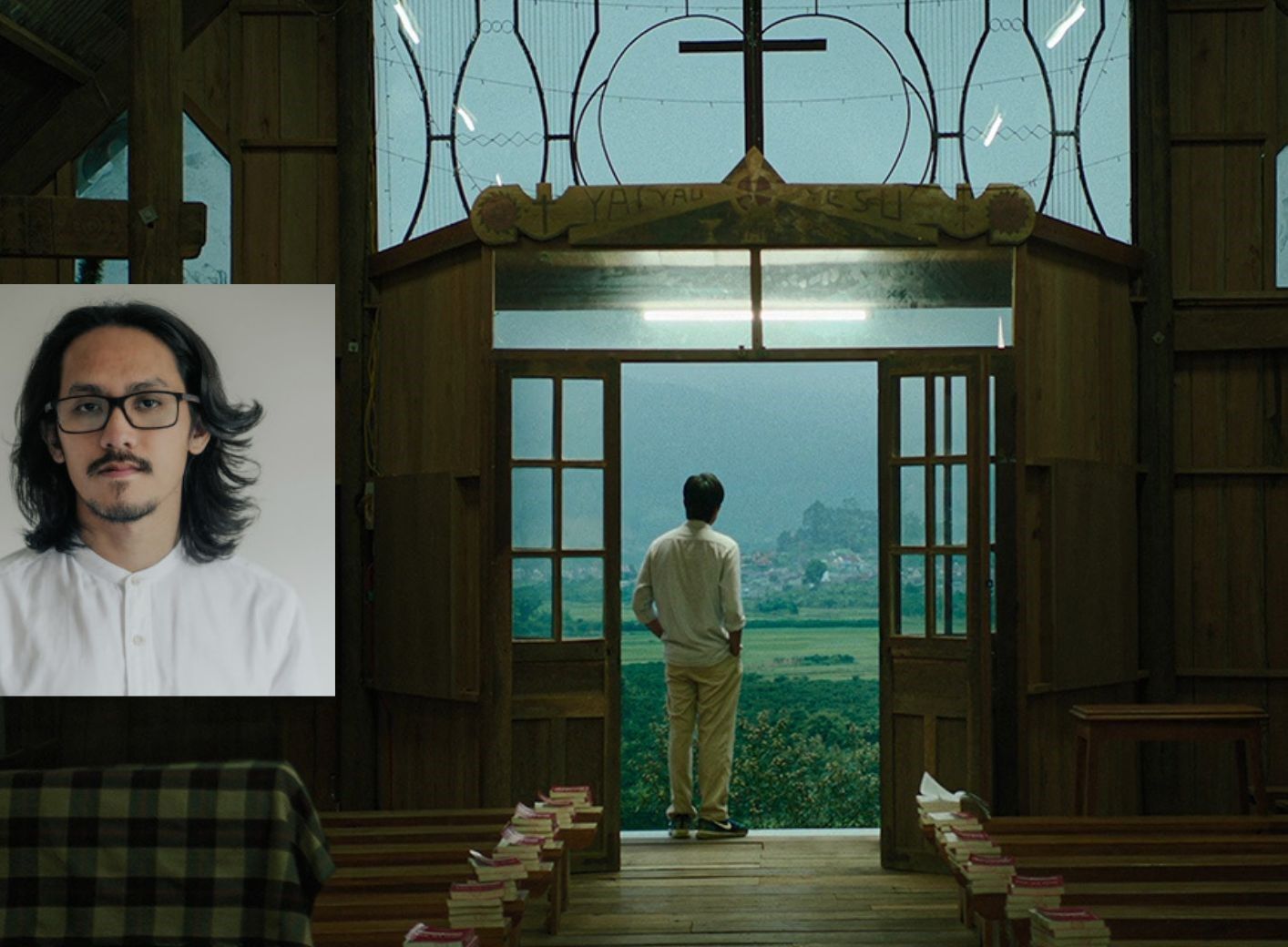
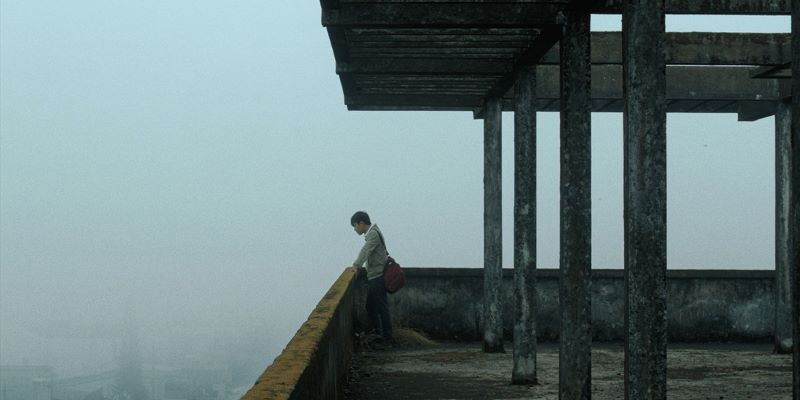
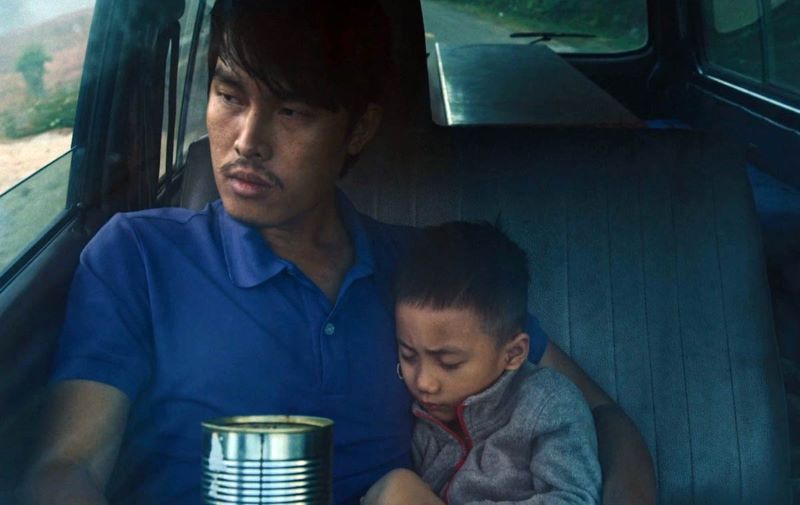
A compelling, three-hour work of slow cinema (though he dislikes this term), which has drawn comparisons to the work of Apichatpong Weerasethakul, and which was made over several years, Inside the Yellow Cocoon Shell follows Thien (Le Phong Vu), a young man who takes a trip across rural Vietnam with his young nephew when his sister-in-law dies, to return her body to his hometown. As he makes his way, the trip begins to change Thien’s entire outlook.
It’s a film that marks the arrival of an exciting director on the international stage.
We spoke with Pham Thien An at the Melbourne International Film Festival.
Why choose this story for your debut feature?
“I wanted to make this film as my first film because I wanted to tell the story of my journey. It’s about my home, Saigon, about my work, and about the times of fun I’ve had, and also about this soul-searching journey of myself. And I wanted it to be close and personal to me for my first feature film.”
In the film, you use a lot of long takes. Can you talk about why you wanted to use them?
“So, first of all, I wanted to use long takes because I want to challenge myself as an ambition. I’ve made short films that explored this technique and for this feature film I really wanted to continue challenging myself with this technique. But furthermore, I wanted to use the long takes to give the audience space. And I want to give them time as well, to put themselves in the shoes of these characters and be in this world; how time in reality and time in the film becomes overlapped, with these long takes. And I wanted the audience to really feel like the reality and fiction are collapsing onto each other and becoming one. You can’t really tell the difference between reality and fiction, or that the border between them becomes very blurry.”
The film borders on documentary style. Can you expand on this?
“I wanted to use these documentary aspects that you mentioned to (support) reality that is depicted in the film. For example, there is a very long and memorable scene in the film (where Thien talks) with this veteran. And the scene depicts reality as it is, and the idea is that it invites the audience into this world that can exist in real life, and that element of realism then allows me to push the audience’s perception of reality with images of dreams and fantasies and imagination.”
Inside the Yellow Cocoon Shell is the first film from Vietnam to screen at Cannes. Have you been pleased with the global reaction to it?
“As a filmmaker, my focus is on filmmaking and I wasn’t paying much attention to what the audience might think. I was very surprised to find the film was selected for the Cannes Film Festival. And I was even more surprised to find that the audience took interest in the film. It wasn’t until much later when I started reading pieces of criticism and analysis on the film. I realised that there were many aspects of the film that are so fascinating and so captivating to even me as well!”
You worked with a very small crew on the film. How difficult was this?
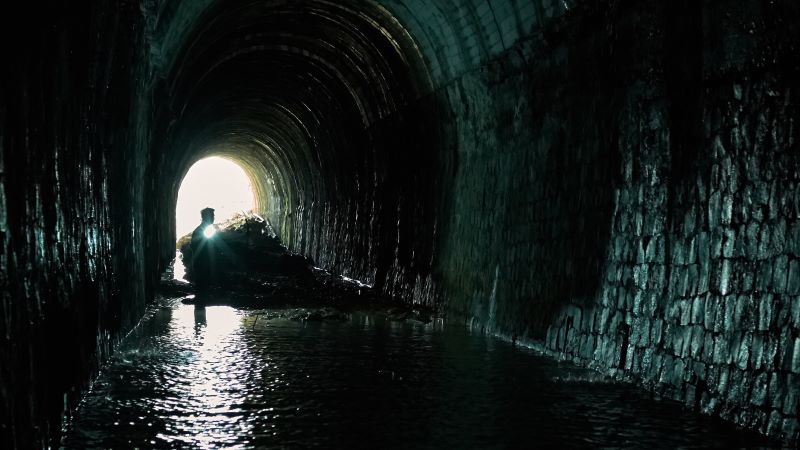
“We started production without a large budget. But at the same time, I wanted to keep the crew small because then the passion is what I look for in these people. And as we looked at all these scenes and worked together on this film, there are moments where you see the church being built and these relationships between the actors, especially the child actors as well. And I cherish these moments and I wanted to share these moments with this small crew, where everyone is acutely focused on realising this piece of cinema. And at the same time, because I don’t have a lot of money, I know that this small crew are people who I can trust and who I know have a lot of passion in this project, as much passion as I do. And obviously, having a small crew, the level of professionalism that the film might have will be less than what you would think for a standard film. But I much prefer that level of passion that I get from my crew who have become my friends and family, rather than having a large crew that I can’t connect with.”
Did having such a minimal crew allow you more freedom in some ways?
“Yes, it did allow me a lot of freedom, in the sense that most importantly, I had a lot of time. I think that with the large crew and a lot of professional people involved, their professional input might push for the sets to be completed in one or two days, or a very short period of time. But with the people who worked on this film, I had a lot of time to think up the scenarios and think up the sets that I wanted build. I think the small crew allowed me to do that.”
You shot the film in stages over a period of 110 days, over a few years. Did this slow process of making the film prove advantageous?
“We started in April 2020, and we pretty much completed everything in April 2022, which is a very long time. I think that having that long period of time really helped and allowed me to adapt to our locations. And also, the crew became very close. We worked together and also pretty much lived together as well. There are a lot of scenes where we only needed a really small number of people. For example, sometimes it was only me and my wife, who’s the production designer of film. And we could just get these scenes out of the way quickly. But at the same time, having that long period of time allows me to think a lot about the film and see where it’s going.
“There is a modern Vietnamese idiom, once you throw a javelin, you have to follow the javelin. And that ties to that close relationship with the crew who started out without a lot of budget. But then, once they’d already started, we have to stick to our guns an continue finishing this film that we’ve set out to make.”
How much improvisation was there during filming? There seems to be quite a bit in the film.
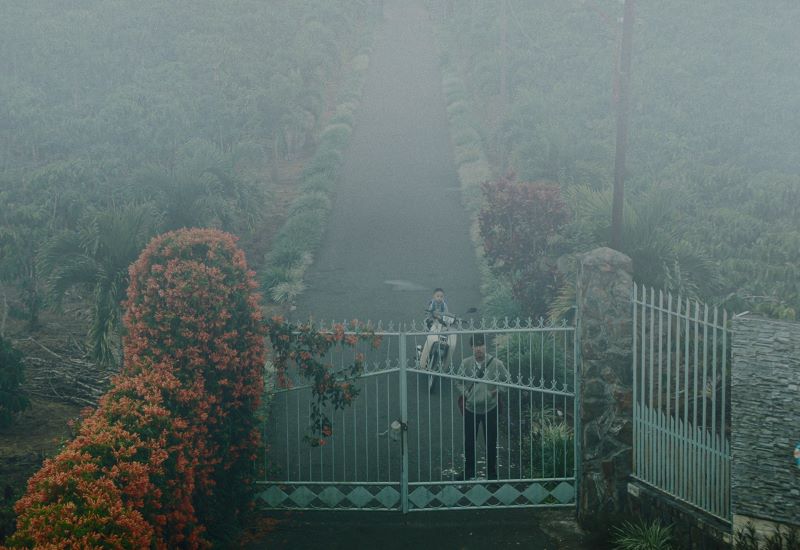
“A lot of it still ties to the script in terms of what I want to show, but there are things that happen, these happy accidents or chance encounters that occurred while in production that I found were more interesting as a story. And I want to include that instead of what I originally planned. I still wanted the buffaloes, I still wanted the mist, but while those scenes existed while in production, they developed further with a lot of chance and a lot of these unplanned moments and one of the most interesting things is that scene towards the end of the film where the motorcycle breaks down. But while we were shooting that, the motorcycle started making these weird noises. And so, I decided to come up with something different and we emptied the tank of the motorcycle, we moved the camera out of the way and made it a still, extreme long shot. And the scene would then be Thien pushing the motorcycle on this winding road. And we wanted to see if there would be anybody who comes up and helps him. And the first time we did that, somebody came up to Thien. It’s a person who’s transporting wine, and this person was not part of the film at all, he was just a normal person. And I think it depicts such an interesting thing about Vietnamese culture, that people are so friendly that they would just help a random stranger they meet on the road. And that ended up being in the film. And the person transporting wine is a completely random stranger who we didn’t plan to be in there. It’s one of those beautiful chance encounters that I think made the film more special.”
Do you agree with the term ‘slow cinema’ or do you think it’s too simplistic?
“It’s a simplistic term, but I think at the same time, it helps the audience to understand the type of film this is.”
How has the reception at home been to the film?
“The reception at home in Vietnam has been quite surprising to me. The most surprising aspect is that there has been a lot of analysis, a lot of philosophical analysis and religious analysis of the film. And I think that, very interestingly, that criticism and analysis comes from people with Buddhist backgrounds instead of Catholic backgrounds like the characters in the film. There’s been a lot comments on how I am too young to make this film because there are a lot of faith aspects, that I wasn’t mature enough to make a film with these kinds of elements.
“I think that a lot of these audiences found that the film was difficult to watch. But at the same time, a lot of people went into the film against their will. And when they came home, the image from the film doesn’t escape them for the next three or four days. It takes a lot of time for them to escape these kinds of hauntings.
“A lot of people couldn’t watch it or they walked out halfway through the film. And those are the kind of things that I didn’t really bat an eyelid to. I kind of expected it for a film that was long and difficult to watch like that. A lot of Western audiences don’t understand the significance of the names of the characters, and how they can reflect the morality of these human beings.”
What do you think was the biggest challenge making the film?
“I think the greatest challenge with creating was the budget. I think that there were times where we had a lot of difficulty to get investments for the film and even found it very difficult to borrow money for the film. And another problem was that production took a really long time. And even though the crew was already small, and they’re my friends, there are those who had given up. So, with only four crew – including my wife – we could not complete this feature.
“I had to look for people who could contribute to this project. And that was very difficult as well.”
