



by Gill Pringle in Jeddah, Saudi Arabia
The very definition of a global superstar, Idris Elba launched his career in the UK before moving to the US where he achieved worldwide recognition for his role in TV series The Wire.
Today, the House of Dynamite star is looking to potentially retire from being in front of the camera, developing a growing taste for directing after making his 2018 directorial debut with crime thriller Yardie, filmed between Jamaica and London, and more recently filming his short movie Dust to Dreams in Nigeria plus an upcoming one shot in Ghana.
Once tipped as the next James Bond, today Elba has a very different future mapped out for himself – one that involves shoring up his director credentials while also becoming more involved in humanitarian initiatives.
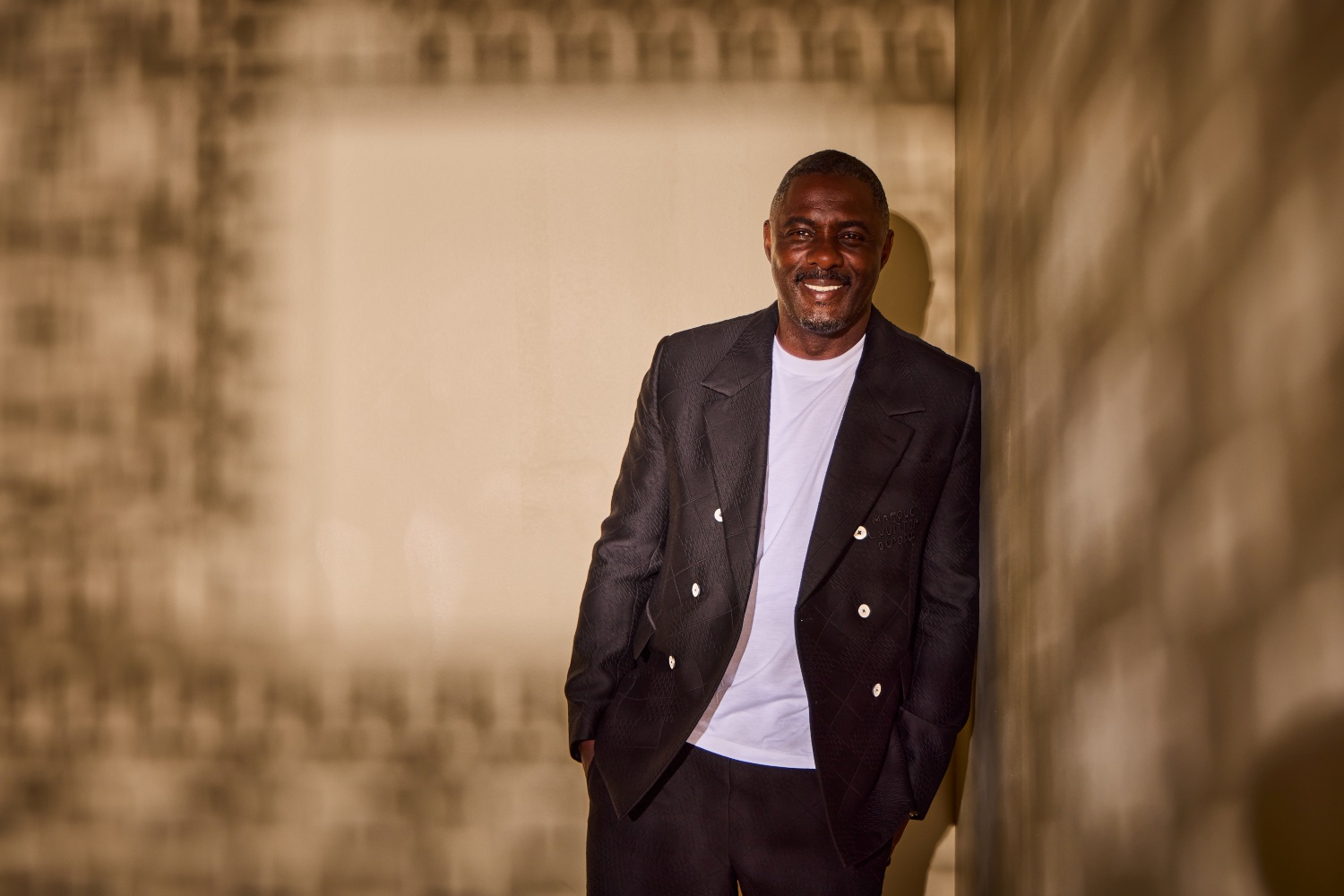
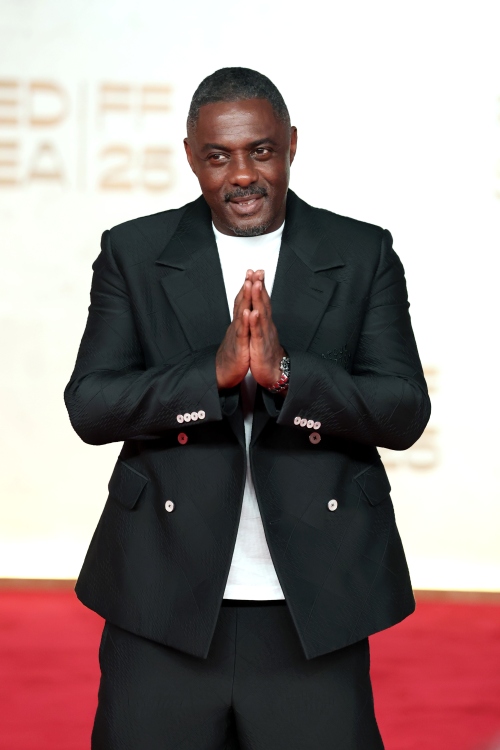
“I’m paying it forward,” vows Elba while recently attending the Red Sea International Film Festival in Saudi Arabia, where he screened Dust to Dreams.
An early beneficiary of King Charles’ The King’s Trust – formerly known as the Prince’s Trust – he recalls, “The Trust gave me an opportunity via a cheque and some resources. I was 14 or 15 years old when I auditioned to get into the National Youth Theatre program,” he says explaining how he was all set to join a travelling show of Guys and Dolls when he learned that he would have to pay for his board while taking the show to places like Greenland and Japan.
Encouraged to audition for the Prince’s Trust, the organisation helped offset his costs, supplementing his income working odd jobs in tyre-fitting, cold-calling and night shifts at Ford Dagenham where his dad was also employed.
So, while the actor’s Elba Hope Foundation announced a joint effort with The King’s Trust in 2024 – an effort to provide creative mentoring for hundreds of young people taking part in courses in DJing, theatre, visual arts, events and enterprise – Elba’s upcoming Netflix documentary about The King’s Trust will serve as an expansion of the relationship, as well as a celebration of the organisation’s upcoming 50th anniversary.
It’s not difficult for Elba to understand how just one lucky break can change a life, recalling how he was homeless when he won his breakthrough role in iconic HBO series, The Wire.
“I had a really bad stint. I was with my partner at the time, and we weren’t getting on. It was a tough time, and I just had to go back to basics,” reflects the Luther star who was living in the US at the time.
“I was living with the culture. I was living in the hood. I was DJing. I was working as a doorman. I was just surviving. And I was surviving with people from New Jersey, where I lived, and a community in Brooklyn and the Bronx,” he says.
“My daughter at the time had just been conceived, and it was this really rough time,” says Elba, 53 whose daughter Isan, now 23, was born about the same time that he would win the role in The Wire.
“As soon as I wrapped my head around the idea that this acting thing might not work … I just couldn’t make money, I guess, I just became part of the culture to some degree. So, I wasn’t going in [to The Wire audition] doing an accent – I was surviving as a person in America.
“I walked in there just like my character, just like my community, and they had no clue, and I didn’t realise that I was doing a good accent. I just was being who I was,” he says.
“That was the single change that happened to me. It was less about pretending to be American, but just being who I was at the time that got me the job.”
Elba is currently shooting an adaptation of Neil LaBute’s play This is How it Goes in Ghana – a very different version to the one he starred in twenty years ago in London’s West End.
“Neil LaBute’s play is based originally in the Midwest. It’s about a husband and wife who invite a lodger into their house. And the original is a black man married to a white woman and a white man comes to move into a house next door, and it’s about what happens to their relationship. It’s about marriage and also about racial dynamics.
“I bought the rights of the film and transposed the story so it’s a white man and a black woman and a black man comes to live in the house.
“And of course, the Midwest is very different from England in terms of racial dynamics, so transposing it was a lot of fun to do, but it was also very difficult to make it happen in an authentic way,” says Elba who is making the psychological drama for Apple TV, starring Daredevil’s Charlie Cox and Sinners actress Wunmi Mosaku – also featuring in the film himself.
Elba believes that younger audiences are becoming more open to watching challenging and foreign films because of the streaming revolution. “The Korean film industry has been a shining example of how a culture – whose language we might not know – has grown without being diluted. That’s why it’s important that we try and tell these stories, why we have film festivals and dialogues and communities that actually push the agenda,” he says.
Furthermore, he believes that by opening up barriers to filmmaking brings cultures and people closer together. “I’ve been quite public about the possibilities, the opportunities in Africa for the media sector – which is news, which is fashion, which is music . . . there’s a huge opportunity across Africa for that to be more developed. I’m really interested in that, and what I’ve been doing, actually, rather than just speaking about the infrastructure, is looking at policy that supports filmmakers and the creative sector, because the policies are really important; how governments support young people in that sector.
“We really need some revision, even in big industries like Nigeria, government policy around copyright, around licensing, around financing, around tax incentives, which are primitive compared to the rest of the world. That’s where my focus has been, working with governments, information secretaries mainly; ministers who have a focus on the creative sector, and trying to basically help them devise plans, policies to help us do that. But eventually my main goal is to build studios and schools – or schools attached to studios, and building a workforce.
“And education plays a massive part with the growth of the industry. A lot of people think about the creative arts as singing and dancing or acting. But there’s a higher infrastructure behind it that young people can be educated on in bridging the policy side to the performance side,” he finishes.
Main image by Tristan Fewings/Getty Images for The Red Sea International Film Festival)
