


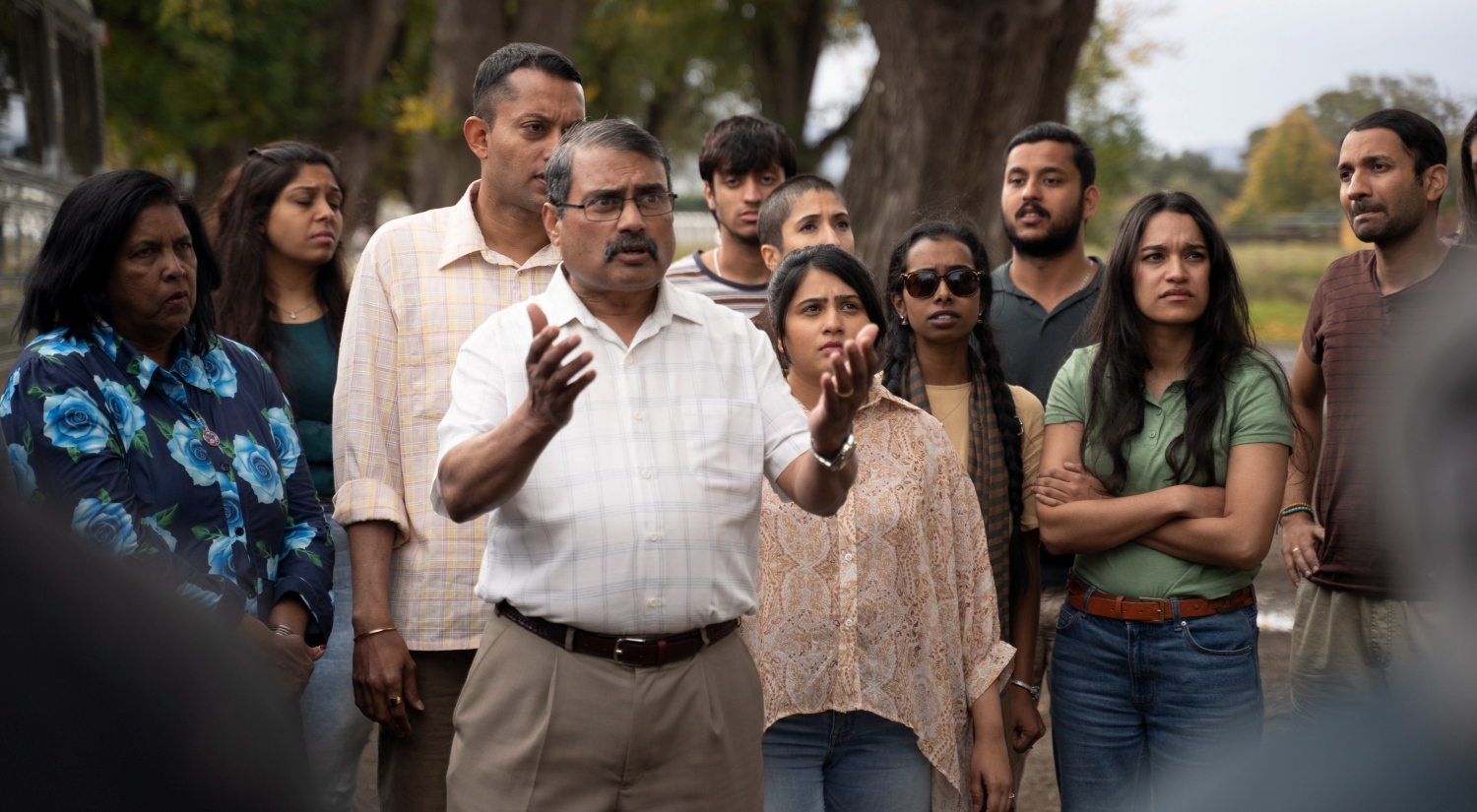
by Dov Kornits
It’s been quite the journey to get this feature film out. You must have had objections based on the subject matter in the politically correct climate that we’re in?
Tony: “Oh, look, I haven’t really been exposed to it that much except from if you look at the comments on YouTube originally with the web series or just people that you meet who actually say something about it. It’s kind of dangerous, but I’m not going to die from it. And we’re careful. I don’t think we’re doing something evil. I think we’re actually doing something good. It’s great supporting Indian actors who live in Melbourne and would like to work. And the story just came out of the blue. [Web series creator and film co-writer] Rob Hibbert tells the story that he went into a pie shop in South Melbourne, a new pie shop called the Australian Pie Company. And guess who was serving behind the counter? The only person serving was a genuine Sikh Indian. And that’s where it all came from. Jason and Tori had been on this for years too. We started shooting a pilot and then we got some money for the online series and then we were with the ABC for a while and that been won’t quite work out.”
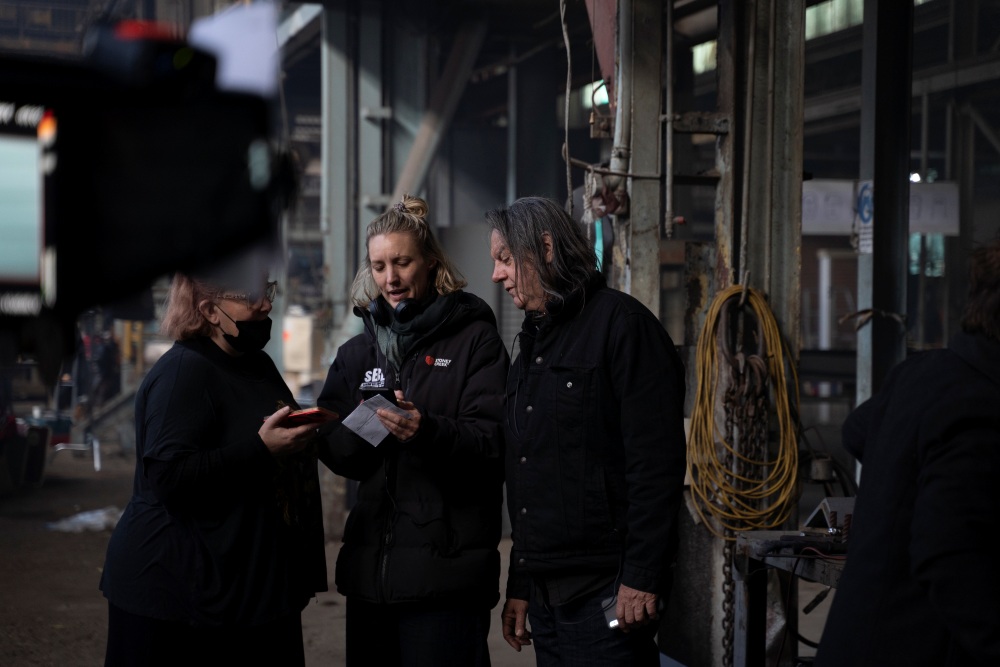
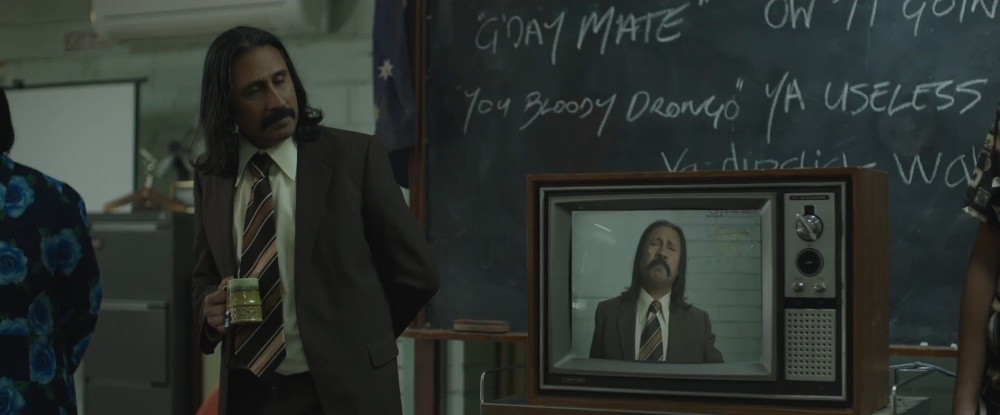
Jason: “It has had its usual trials and tribulations. It’s been like any financing in this current theatrical market. Actually, the comedy works in reverse. The issues around race, but also celebration of Australian culture at the same time, really seemed to have engaged a broad audience. And if anything, we were really careful at the beginning to make sure that we had executive producers and creative partners on the film, that really ensure the cultural integrity of the project. So, Robert Santiago is a really good point. He’s one of the lead actors. He plays Professor Dillip and he has been strategically involved at every point of the process, right through the PR, the editing, the offline. He’s been a great custodian of making sure that the tongue-in-cheek side of the comedy of the film isn’t hurtful and doesn’t offend. But all good films, I think, need to offend a little bit or confront people. And that’s what Tony’s vision was very much about. It’s not a film about race. It’s a film about cultural interpretation, if anything, and having a laugh.
“The film has a Tony Rogers sensibility. I think when you have comedy or maybe even horror, you want a director that has a strong sense of self and voice. I think that the oxygen in this film, the quirkiness of the characters, the art department, right down to the Big Pineapple, that’s Tony Rogers. We’ve been collaborating for 30 years and Victoria’s been collaborating with us for 15. That’s how strong the creative relationship is and there’s just a loyalty factor there and a belief in Tony’s sense of humour.”
Tony: “It’s also awesome to give so many Indian talent here the opportunity and give them a platform. Some of them have been acting for a long time, some of them less, and it’s so nice to be able to support them in that space as well. Vikrant Narain (below) is incredible. Acting is the most important thing in his whole life, in the whole universe. And that’s just great that we could do something with him. It’s a turning point in his life. I’m really happy for him.”
We live in an age of virtue signalling. Are you guys prepared for any pushback?
Tony: “Oh yeah, we’re prepared. I understand why we are and it’s good that people are talking about this stuff, but really and truly, we’re all people. It’s just all there is to it. People could criticise us for writing a story about a group of Indians coming to Australia, but then, we’re dealing with Australian comedy really and who’s better to write it? Chum Ehelepola actually [who serves as Executive Producer on the film]! He doesn’t really want to be an Indian in films. He just wants to be a person, which I think is really interesting. But he’s helped us along the way. He was there on set with us. He made a whole bunch of suggestions. So, we have had people backing us up from that nationality.”
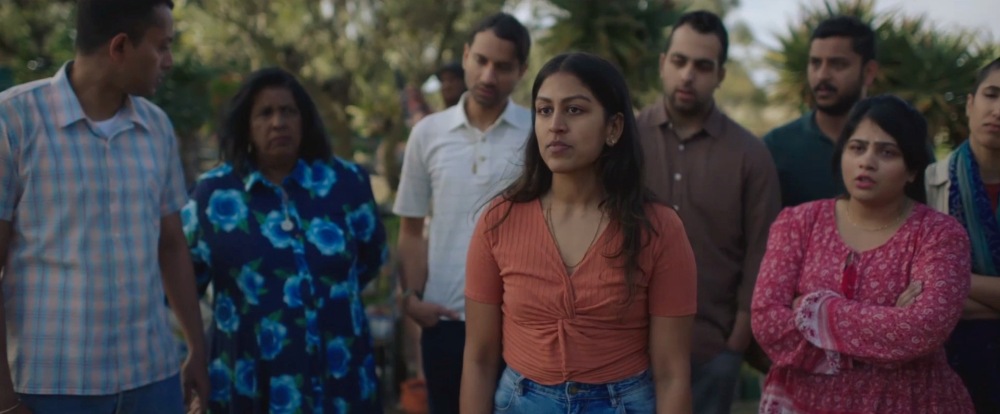
Jason: “Yeah, Ria Patel’s (above, centre) been very good too. She’s the female lead role and she’s an EP on the film and really, really critical in that space as well.”
Victoria: “I also think that it doesn’t matter where you’re from. A lot of the content and the humour, you can be a Kiwi, as I am. You can be Canadian, you can be English. Everyone’s had the same experience with Australian language and culture. It’s not just an Indian Australian. We’ve had a lot of people from overseas watch it and that the gags are the same. You read them and you’re like, ‘What is Minimum Chips?’ ‘What are they talking about?’”
There’s a moment in the film where you touch on ‘How to Talk Americans’. Is there franchise possibility?
Jason: “We have had lots of inquiries from the UK and the US. We nearly made a US variation on the same theme. And that was with Mandalay Entertainment in the US. They looked at doing a TV series and a feature recreation of it. But we just wanted to use the Australian and Indian release to leverage it into other parts of the world. The strategy in India is around larger cities. A lot of people speak English as a second language but giving it a really solid India release there and using that as a launchpad for the rest of the world, hopefully the UK, Ireland, places like that, where Australian culture resonates and rings true.
“Australia is in such favour in the US right now. Interestingly, through the horror genre, the Australian accent’s been normalised over there as well. Maybe not our sense of humour, but because of the Indian diaspora in the US, there is an argument for a TV series and a whole bunch of things like that, given the strength of the audience, and the loyalty we’re seeing from them.”
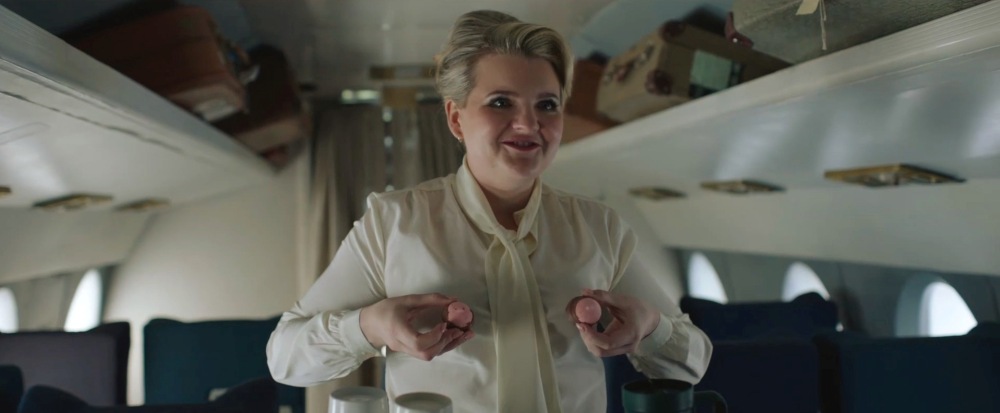
You cast a bunch of comedians in the film.
Tony: “I think I know more comedians than anyone else in this country and that’s because I’ve done a lot of work with comedians. For example, Danielle Walker (above), no one else has given her a gig. She is phenomenal and she deserved a gig. But there’s also Dave Lawson and Richard Davies (below, on set with Tony Rogers), we did a previous series with them called Bruce The Series, which almost got up on the ABC. I’ve known them since they were kids virtually.”
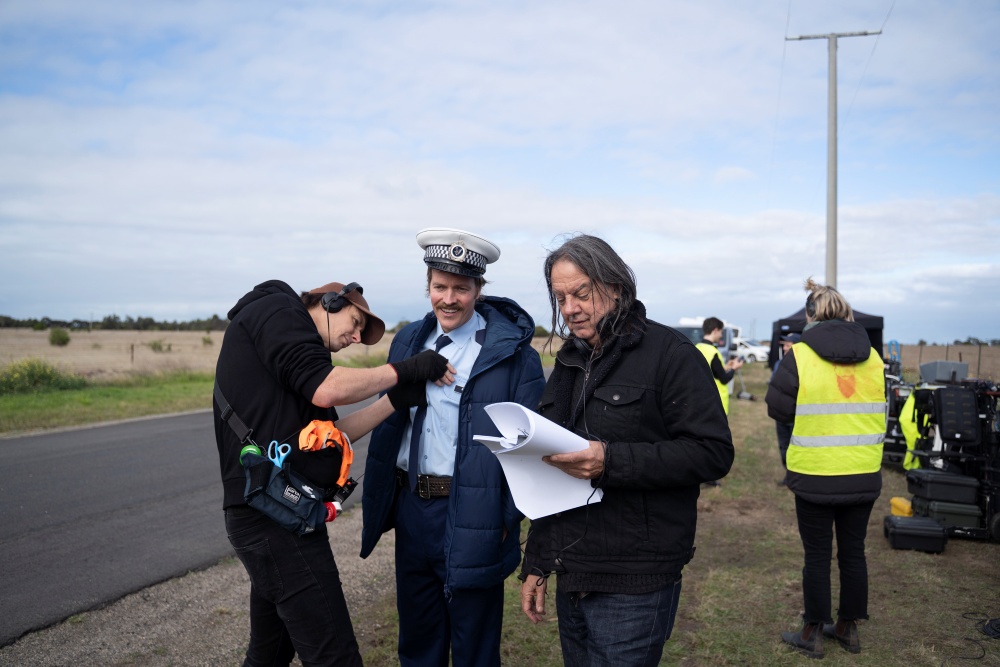
Do they bring a certain gravitas?
Tony: I think a lot of comedy actors are better than the straight ones because they have had to deal with audiences in pubs. Something about comedy people, like Ben Knight, (below, on set with Tony Rogers and Vikrant Narain) for example, he’s a comedy guy really, but he’s just a phenomenal actor.”
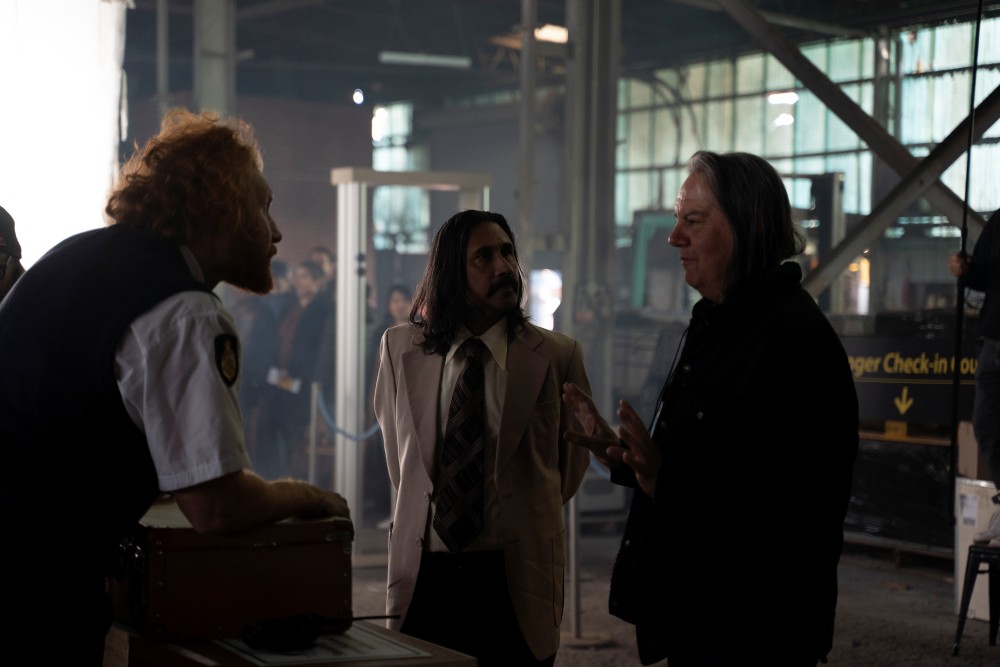
How to Talk Australians: The Movie is in cinemas now.
