


by Dan Slater
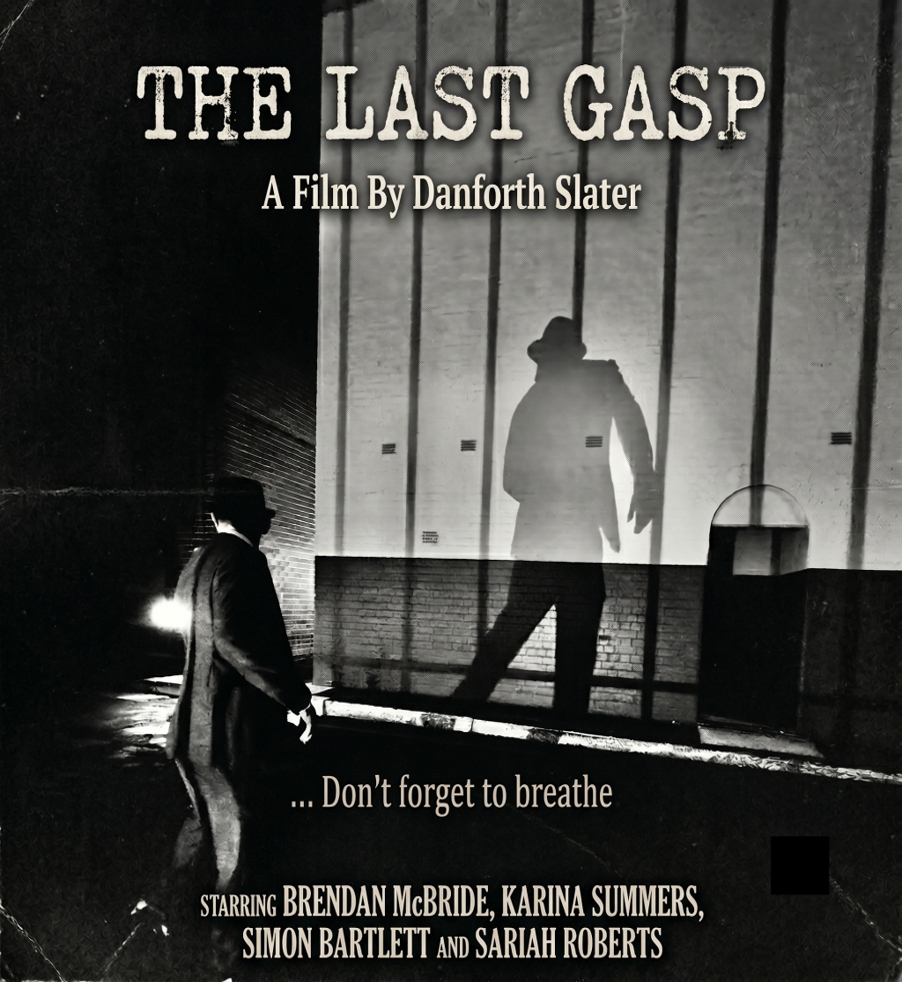
Philadelphia. 1958. What were we thinking? These two seemingly innocuous words, the first that appear on screen in The Last Gasp, do not accurately represent the utter ridiculousness of setting your first major film project in a foreign country, in a decade only remembered by octogenarians. Yet it seemed so obvious at the time. To me it was obvious, anyway. It’s classic film noir! Of course, it has to take place in the US within a specific twenty-year period. I picked a city and narrowed down the year, almost at random.
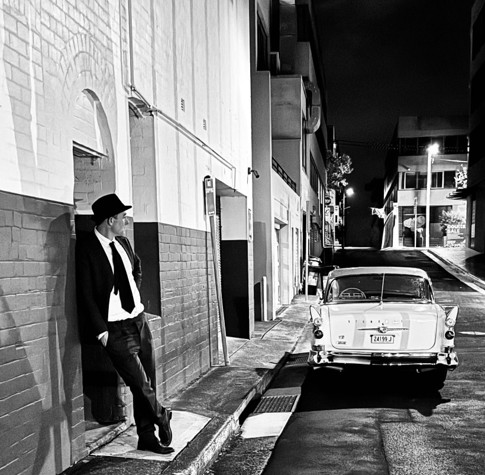
1958 saw what many consider the last classic noir, Orson Welles’ Touch of Evil. The Last Gasp would represent a latter day continuation of this period, trigger a rebirth of the genre in much the same way J K Rowling did with the wizarding thing. Well, one can but hope. And Philadelphia? How was I to know that city had the most unique and difficult to master accent in the whole of the US? That’s something I only discovered when we began interviewing actors. Sure, as the writer/director I could’ve changed it but what the hell … how hard could it be?
I’ll leave the answer to that question largely in the imagination of the reader. Suffice it to say, we leaned heavily on America’s eastern seaboard, representing the full gamut of domestic accents and a colourful immigrant population. Plus, I now know how difficult it is to remove from shot a chunky and perpetually restless digital watch. (Thanks, Hank!) To some degree, it was fun sourcing old props and locations on a Gofundme budget, and I got to insert some fun Philly slang into the script. Try ‘Nut-ass son of a bitch’ for size. Some words had to be used strictly in context, like ‘hoagie’ (sub-style sandwich) and ‘shoofly’ (a type of pie), but I stopped short of the all-purpose-therefore-incredibly-confusing ‘jawn’.
Still, we boarded the good ship Naïveté and ploughed onward. As much as noir is defined by the downward spiral of fortune experienced by the main character – our protagonist, Chester, has a really bad couple of days – getting the lighting correct is paramount in achieving the iconic chiaroscuro look that made the genre’s early examples stand out from their contemporaries. Fortunately, as it was back then, this is a perfect choice for a low-budget operation.
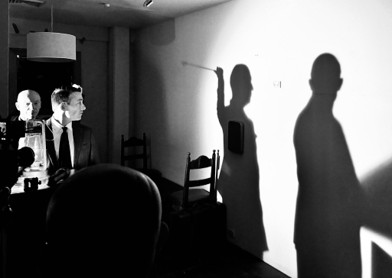 The Italian word translates as using high contrast to create depth and drama, particularly on a black & white palette. Yep, good old b&w. The colour grading will be child’s play, I thought to myself, if it’s even necessary at all. Wow – I could cringe. The word ‘wrong’ doesn’t begin to cover it. More like it was just one more of so many layers of wrongness stacked upon each other that I inadvertently built a sort of Obelisk of Erroneousness, a physical monument to my misjudgment that the cast and crew could fall to their knees and worship. Nevertheless, on the last day of the shoot, and most difficult lighting-wise, we beautifully captured the exact shadowplay I’d written for the climactic scene, and all was well with the world. Havaguwwun! (‘Have a good one’)
Dan is currently editing 30 and 45 minute versions of The Last Gasp for the 2026-27 festival circuit.
