



by Sonny Baker
There is a unique stillness that descends upon a cinema audience during a great poker scene. Unlike car chases or gunfights, the action here is internal; the violence is psychological. Directors have long understood that the card table is one of the most effective settings for stripping a character down to their core, revealing their desperation, their arrogance, or their genius without a single punch being thrown.
The power of these scenes lies not in the cards themselves, but in what they represent. A hand of poker in a film is rarely just a game; it is a microcosm of the film’s larger conflict. Whether it is a battle for financial survival, a duel of wits between a hero and a villain, or a final grasp at redemption, the stakes on the felt always mirror the stakes in the narrative. By slowing the pace and forcing the audience to scrutinise every glance and bead of sweat, filmmakers create a pressure cooker environment that drives plot momentum more effectively than any explosion ever could.
Analyzing The Le Chiffre Showdown In Casino Royale
When Martin Campbell rebooted the James Bond franchise in 2006, he centred the film’s conflict around a high-stakes poker tournament at the Casino Royale in Montenegro. The shift from baccarat (Bond’s game in the novels) to Texas Hold’em reflected the modern world’s obsession with the sport, but the execution was pure cinematic theatre. The confrontation between Bond and the financier Le Chiffre is a masterclass in editing and tension. The scene is not merely about who holds the better cards; it is a battle of egos where money is simply the ammunition.
Campbell uses the game to dismantle the Bond archetype before rebuilding him. We see Bond fail, misread his opponent, and nearly die from a poisoned martini, all within the rhythm of the tournament. The climax of the hand, involving a staggering $115 million pot, relies on a suspension of disbelief regarding the statistical probabilities, but it delivers an emotional payoff that defines Daniel Craig’s iteration of the character. It establishes him as a reckless gambler willing to risk everything on a gut feeling, setting the tone for the rest of his tenure.
Character Development Through Assessing Tells In Rounders
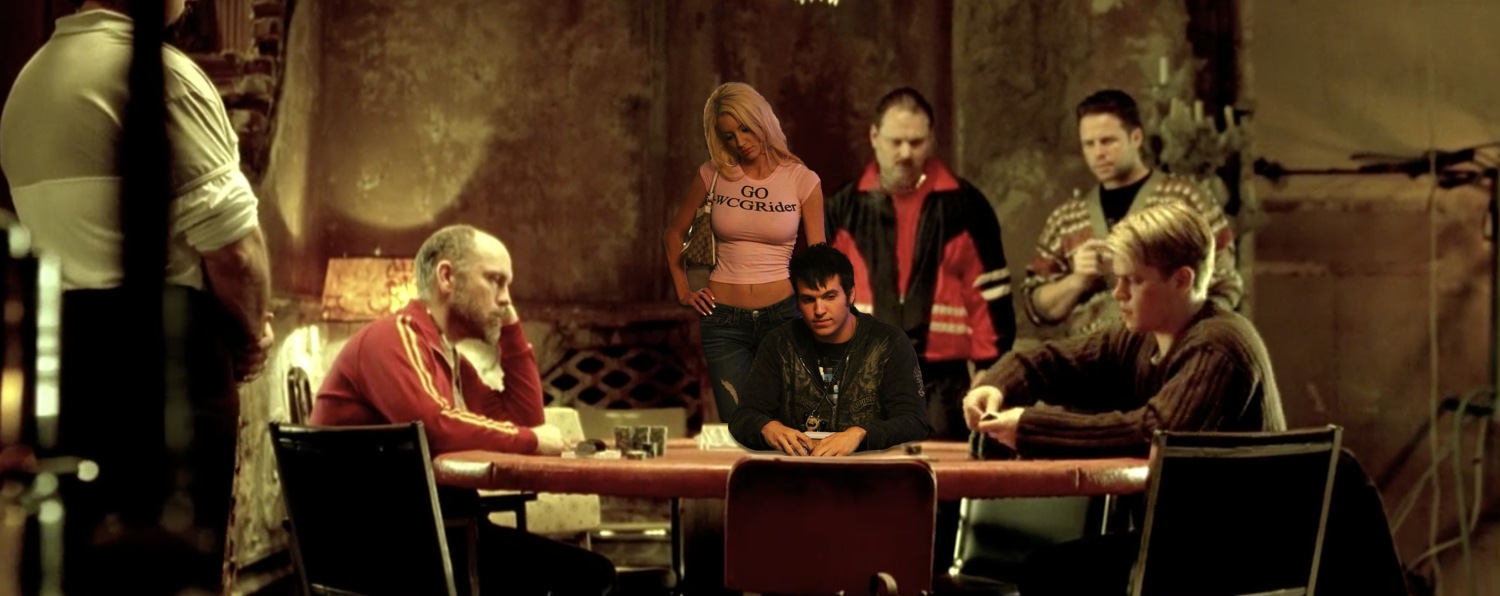
If Casino Royale is about the glamour and the spectacle, Rounders (1998) is about the grind and the psychology. Directed by John Dahl, the film is widely credited with launching the modern poker boom because it treated the game with intellectual respect. The opening scene, where protagonist Mike McDermott loses his entire bankroll to Teddy KGB, is crucial because of how it motivates Mike’s journey. The film treats poker as a skill, a trade that requires discipline rather than just luck.
The final showdown is a brilliant inversion of the opening failure. McDermott spots Teddy KGB’s “tell”, the way he handles his Oreos, and uses that information to dismantle the mobster psychologically. It is a moment of pure character development; Mike has learned to master his own impulses and read the humanity in his opponent. The tension in Rounders comes from the claustrophobic atmosphere of underground clubs and the palpable sense that one wrong move could cost Mike not just his money, but his life.
Balancing Cinematic Thrills With Real World Security
One of the most common tropes in poker cinema is the danger lurking around the underground game. Films often depict dimly lit backrooms filled with smoke, illicit weapons, and the constant threat of a raid or a robbery. This narrative device heightens the drama, making every bet feel like a life-or-death decision. However, this Hollywood depiction stands in stark contrast to the modern reality of the game, which has moved largely into regulated, secure environments where player safety is paramount.
While cinematic heroes often navigate dangerous backroom parlours, modern players prioritise security above all else. Those looking to replicate the thrill without the Hollywood-style risk can find the safest options here for verified platforms that ensure fair play. While movies frequently feature the unbeatable Royal Flush to resolve a plot, the actual odds of being dealt this hand are a staggering 1 in 649,740, making it a statistical anomaly that rarely occurs in professional play.
The enduring appeal of the high-stakes movie genre lies in its ability to make intellectual combat feel visceral. Audiences are drawn to the archetype of the “cool cooler”, the player who remains calm while chaos erupts around them. The visual language of the poker movie, with its close-ups on chips and the slow turn of the river card, has become a staple of visual storytelling that transcends the game itself.
Furthermore, the symbiotic relationship between cinema and the game continues to evolve. The cultural impact of these films is measurable, with industry analysis showing that iconic poker movies have helped fuel the stratospheric growth of the game over the last two decades. As long as directors can find new ways to capture the tension of the bluff and the euphoria of the win, the poker scene will remain a vital tool in the filmmaker’s arsenal, proving that sometimes the quietest scenes scream the loudest.
