


by Gill Pringle at the Red Sea International Film Festival in Jeddah, Saudi Arabia
Featuring 138 feature films and shorts from 67 countries in 34 languages from both established and emerging talent, this month’s inaugural Red Sea International Film Festival [RSIFF] held in Jeddah, Saudi Arabia, was met with remarkable global goodwill.
Setting out with a goal to share stories from not just Saudi Arabia itself – homegrown filmmakers representing about a fifth of all entries – but also to spotlight the entire Arab region, RSIFF hosted a remarkable 48 Arab premieres alongside 25 World Premieres, with many filmmakers and actors in attendance.
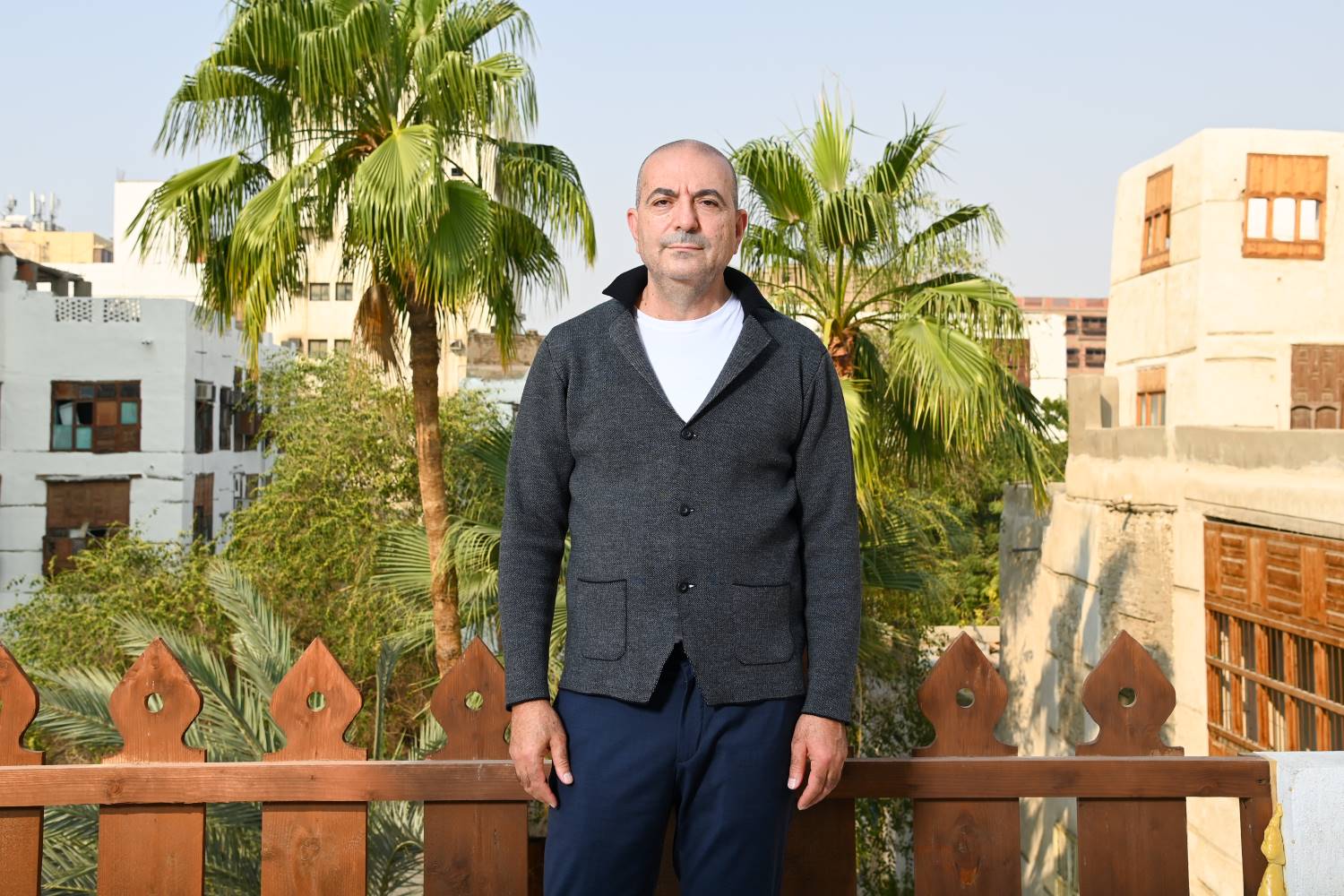
Palestinian filmmaker Hany Abu-Assad was here with his gripping thriller Huda’s Salon, just weeks after its well-received debut at the Cairo International Film Festival.
Abu-Assad brings all his international experience – directing Idris Elba and Kate Winslet in The Mountain Between Us (2017) and Jeffrey Dean Morgan in The Courier (2012) – to bear in this taut twisty tale about a woman whose visit to a hair salon turns into a nightmare when she is blackmailed by its owner, herself blackmailed by Palestinian special forces.
A co-production between Palestine, Egypt, Qatar and The Netherlands, the film sheds light on the continuing cat-and-mouse games played between the secret services of Palestine and the rebels trying to help the Israelis; a visceral tale of one person lost between two dead end choices.
When FilmInk asks Abu-Assad if he based his story for Huda’s Salon on any real-life women, he says cryptically, “Let’s say I knew the secret service could sexually exploit vulnerable women in Palestine. Not every woman will fall into that trap because a woman in Palestine who has a supportive family will go back to the family and tell them what happened. But there are some parts of our society that aren’t supportive, so some women fall into the trap of being a traitor. This happens,” he says alluding to Huda’s choice to only blackmail women whose husbands are ‘assholes’.
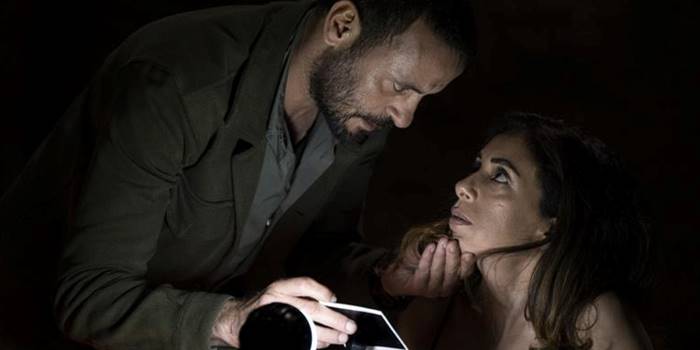
“My function is to make questions. Not just about the theme but also about cinema. I tried to make, from the outside, a very simple three-character movie – but full of contradiction where you as an audience has no idea what’s going to happen next, but also question what is good and what is bad? Who’s the traitor and who’s the victim? Yes, she’s the traitor, but meanwhile she was so loyal to Reem,” he says talking about Huda’s final victim.
“All these things are important for us to question in order to find the bad in us – because I believe we can all go bad or good, depending on our circumstances. But if we are aware of the complexity of life and the complexity of the human mind, then we can fight the bad in us from a better way. So, this is all from the human point of view. But, from the cinematic point of view, I want to explore the objective and subjective viewpoint about how good has no meaning, if there is no evil.
“I want the film to force you to ask: who am I? Am I somebody who is just watching or am I somebody who is emotionally involved,” says the director-writer.
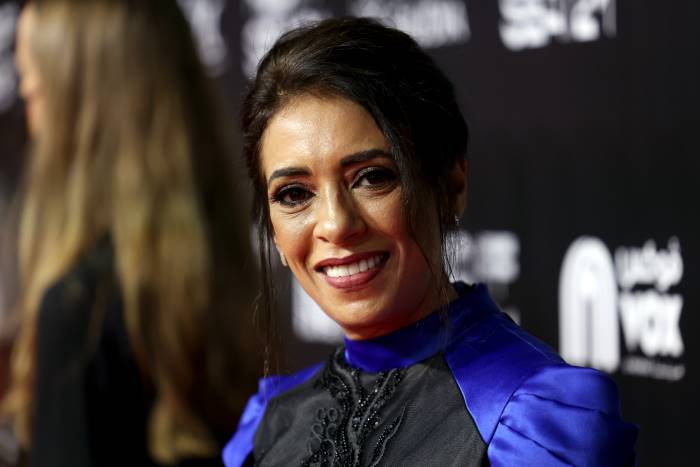
Actress Manal Awad, in the title role of Huda, says she saw no need to visit any real beauty salons in order to get into character. “Maybe because I am a Palestinian and I live in Palestine and I know so many stories since the occupation; how he tried to destroy everybody’s life. Even Huda, who is just a normal woman. She’s not a fighter, just a normal woman but, still, the occupation devastated her life. As a Palestinian woman living in Palestine, I understand this woman,” she says.
Unfortunately, Huda’s Salon is unlikely to be shown in their Palestinian homeland.
“It’s not allowed,” says Awad.
“But, we will show it eventually…” encourages Abu-Assad. “My friends and family were shocked by the film. It’s very heavy to them – especially the women because, in general, men can’t understand: why would a woman feel vulnerable because of her naked body? So, female audiences were devastated by the film. I never saw such a reaction.
“I also showed it to women who work in the field of protecting victims of sexual harassment and they were very happy with the film, hoping it can help in their cause to protect more women in society,” he adds.
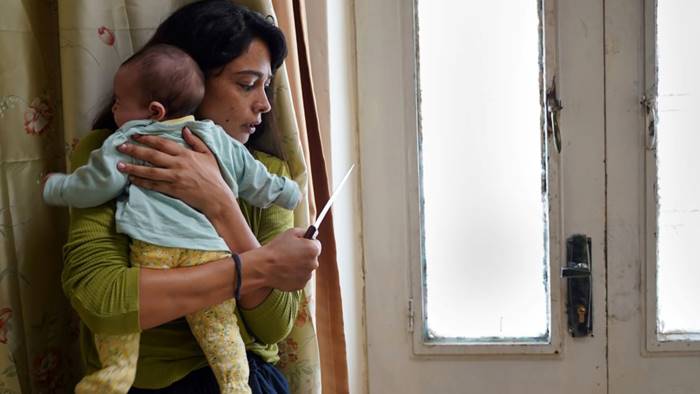
For Awad, it was important to tell this story about how the continuing war effects the women in different yet equally harsh ways as the men. “I hope that women’s voices and their stories are more shared – in the Palestinian cinema and in the world’s cinema,” she says.
“Traditionally cinema is for men’s stories, but we women have so much to tell, and they go into situations that should be shown in the cinema – and bad situations happen to women. She’s not only the wife or the fiancée or the teacher. Women can have really extreme situations that they need to survive, and they need to do things just to survive, and I wish more directors would have the same courage as Hany and say: ‘c’mon, women are suffering. Let’s face it and put it up on the big screen and support their suffering and spread a message that this has to stop’. This has to end.”
Bringing Huda’s Salon to RSIFF and the Saudi region, where women have typically been oppressed, was an important step. “I think it’s very important because every small step will build on other steps. It starts with a movie and then a movement will come out of it and another voice will come out of it. Even if it’s from a country where human rights are not on top of the world – at least there are voices that are rising and that’s important,” says Awad.
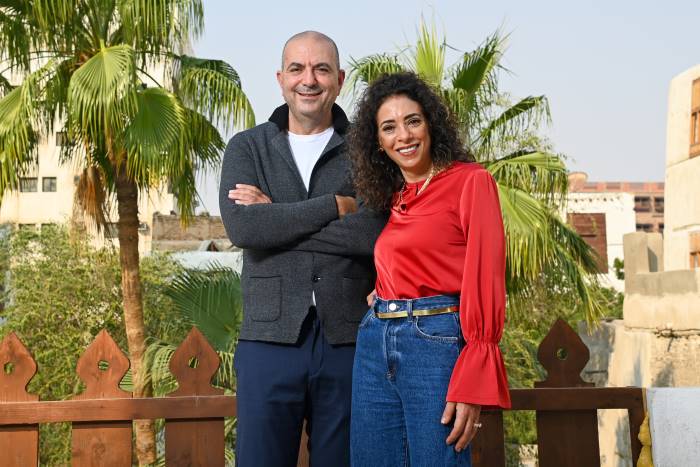
Abu-Assad has long been celebrated for his style of conveying tough messages in an easily digestible thriller/spy format and, to this end he next plans to work with Hugh Jackman in another twisty thriller, The Good Spy. “The script is not ready and the writer will start on a new draft in January and hopefully when it’s ready, I will do it. I would love to have Hugh Jackman and I think he is still attached to it,” he says.
“I love thrillers and probably this is why I chose the thriller and spy genre. The suspense allows us to open our minds to different aspects of life. I use the genre in order to tell social issues. It’s very simple. It can just be entertaining if there is no commentary, or you don’t see anything. But, I use this genre to make comments and to ask questions about our existence and our society. I like to ask whether, as a species, is human existence good or bad?”
Huda’s Salon is screening at the Palestinian Film Festival, November 2 – 20, 2022
