


by Boris Clay
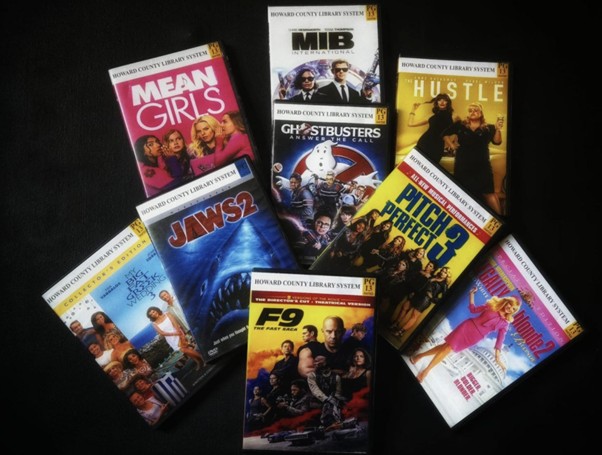
Browse the new releases at any cinema right now and you will notice something. Amid the titles, the numbers stand out. Part two. Part three. And over there, remarkably, part seven. It is easy to look at that landscape and conclude that something has gone wrong — that Hollywood, unable to generate genuinely new ideas, has retreated into an endless loop of its own greatest hits, mining nostalgia for profit while original storytelling quietly suffocates.
It is a compelling argument. It is also, on closer examination, considerably more complicated than it first appears.
Franchises Are Older Than You Think
The instinct to romanticise a pre-sequel past requires confronting an uncomfortable fact: that past largely did not exist. The films most frequently cited as examples of original, unrepeatable cinema — Alien, The Terminator, The Godfather — are themselves franchise properties. The original Alien has spawned nine feature films and six shorts. The Godfather generated two sequels and a television series. The Terminator has produced six films, a TV series, and an anime adaptation. Some of those follow-ups performed exceptionally well. Several are genuinely excellent films in their own right.
The concept of the film franchise — interconnected stories sharing settings and characters, driven by the appeal of returning to familiar worlds — has existed since at least the 1950s, when it developed conceptually alongside the comic book series that were popular at the time. An established hero facing a new challenge: that formula predates virtually every film most people would name as a touchstone of cinematic authenticity. Sequels are not a symptom of modern decay. They are as old as the medium’s commercial ambitions.
What has changed is the scale, the systematic nature of that ambition, and the degree to which franchise logic now dominates studio decision-making at every level.
The Psychology of Why We Keep Watching
Understanding franchise cinema requires understanding something about how human memory actually works — because the studios certainly understand it, and have structured their entire output around it.
Human beings are not reliable archivists of their own experience. The brain continuously rewrites memory, erasing information it deems unnecessary and filling gaps with reconstructed detail. One consistent pattern in this process is the softening of negative experiences over time and the amplification of positive emotional associations. The result is a structural tendency toward nostalgia — a longing not for the past as it actually was, but for an idealised version of it that the brain has assembled from emotional highlights.
The word nostalgia itself derives from the Greek for “longing to return home,” where home represents not a physical place but a felt sense of safety and belonging that we associate with formative experiences. This is precisely why the films we encountered in childhood occupy a special category in memory — not necessarily because they were better, but because they arrived at a moment when emotional impressions were being formed most deeply.
Film studios did not create this mechanism. They simply recognised it and built a business model on top of it. A sequel to a beloved film does not need to be good to generate interest. It needs only to promise a return to something that the audience already carries as a positive emotional memory. The quality threshold is therefore different — and in practice, considerably lower — than it would be for a genuinely new property requiring audiences to invest from scratch.
The parallel with other entertainment industries is instructive. Just as someone might navigate the offerings of a platform like Fair Crown — where the sheer volume of available options can make it easier to default to the familiar rather than explore something genuinely new — cinema audiences increasingly default to franchises not because they have evaluated the alternatives and found them wanting, but because the familiar requires less of them. Comfort is not the same as quality, and the distinction matters.
Beyond nostalgia, there is a second psychological mechanism at work. Research into how audiences engage with fictional characters suggests that strong identification with a character produces neural activity in the ventromedial prefrontal cortex — an area associated with self-reflection and processing information about people we care about. The stronger the identification, the more the brain processes that character similarly to how it processes people in the viewer’s own life. Characters we have followed across multiple films, whose relationships and development we have watched over years, trigger this mechanism more powerfully than new characters can. We are not just watching a film. We are, in a neurological sense, checking in on someone we know.
The Economics of Safety
Given this psychological foundation, the commercial logic of franchise cinema is not difficult to understand. Sequels are, from a studio executive’s perspective, fundamentally safer than original properties. The audience is pre-established. The brand is known. The characters require no introduction. The world needs no explanation. The marketing practically writes itself. Why take the risk of introducing something genuinely new — which requires audiences to decide whether to care — when you can offer something they already care about and simply charge them to revisit it?
The numbers validate this reasoning repeatedly and emphatically. In 2024, Inside Out 2 topped the global box office with $1.7 billion in revenue. Moana 2 — a sequel that reportedly operated with a minimal advertising campaign — crossed $1 billion internationally. Of the approximately 200 films that received wide theatrical releases last year, only around a quarter were original properties. The pattern is not new, but it has become more pronounced with each passing decade. Since 2000, original films in the top ten highest-grossing releases of any given year can be counted without removing your shoes.
The studios are not behaving irrationally. They are responding to incentives that audiences have created through their own viewing choices. The criticism and the box office receipts tell different stories, and in the film business, the box office receipts win every time. Even projects that generate significant critical backlash — what internet culture has termed “hate-watching” — contribute positively to a franchise’s commercial performance. A sequel that people watch angrily is still a sequel that people watch. Studios have noticed.
Where the System Breaks Down
None of this means the criticism of franchise cinema is without merit. The economic safety of sequels has produced a genuine quality problem that serious film observers are right to identify and name.
When the commercial success of a project is substantially decoupled from its creative quality — when audiences will turn up reliably regardless of whether the screenplay is good, the characters are developed, or the story offers anything new — the incentive to invest in those elements diminishes. The result is visible across large sections of contemporary franchise output: recycled plotting, two-dimensional characters, humour calibrated to the lowest common denominator, continuity errors that suggest fundamental disrespect for the source material, and remakes of properties so recently released that they cannot even claim nostalgia as justification.
The dynamic creates a peculiar cultural feedback loop. Studios produce lower-quality franchise content because it sells. It sells partly because audiences, habituated to franchise consumption, continue purchasing it even when they know it is inferior. Critics who argue for originality and quality find themselves in the paradoxical position of watching genuinely ambitious, original films underperform commercially while the properties they consider mediocre set box office records. This is, for the intellectually honest observer, a situation that implicates the audience as much as the industry.
The Case for Optimism
The situation is not, however, as irreversible as the most pessimistic reading suggests. Original cinema has not disappeared. It has been pushed toward the margins of the theatrical landscape, but those margins still produce remarkable work.
Coralie Fargeat’s The Substance, a surreal and genuinely unsettling body-horror film with no franchise attachment and no built-in audience, found its viewers and earned approximately $80 million — respectable commercial performance for a genuinely experimental film. The Brutalist, Conclave, The Wild Robot, and a number of other original or semi-original properties released in recent years have demonstrated that audiences for ambitious, non-franchise cinema still exist and still show up when the work earns their attention.
The theatrical ecosystem is also not the only measure. Streaming platforms, whatever their other effects on the industry, have created distribution channels for original work that would previously have struggled to find audiences at all. Films that might once have disappeared from a two-week theatrical run now accumulate viewers over months and years, building the kind of gradual cultural presence that was previously available only to franchise properties with marketing budgets large enough to create opening-weekend dominance.
The Responsibility Belongs to Everyone
The honest conclusion here is that the franchise dominance of contemporary cinema is not something that happened to audiences — it is something audiences participated in creating, and something audiences have the power to influence, even if not to control.
Studios respond to commercial signals. When original, ambitious films perform well, studios notice. When audiences refuse to reward poor-quality franchise entries with their ticket purchases, studios notice that too. The relationship between creative quality and commercial success in cinema has never been perfectly aligned, but it is not entirely disconnected either.
Hollywood is not dying. It is adapting, as it has always adapted — to television, to home video, to streaming, and now to a media landscape fragmented across more platforms and formats than any previous generation of filmmakers has had to navigate. Franchises will not eliminate original cinema. The two will find an equilibrium, as competing forms always do.
The question worth asking is not whether sequels should exist — they will, regardless — but whether audiences are willing to hold them to a standard. That starts with showing up for the good ones and thinking critically about the rest.
What is your take — are franchises suffocating cinema, or simply giving people what they want? Leave a comment below and share this piece with anyone who has ever complained about sequels while buying a ticket to one.
