


by Dov Kornits
Co-writer/producer Fiona Bergin and co-writer/director Fintan Connolly recharge the private eye genre with their compelling Dublin-set thriller Barber starring Aidan Gillen.
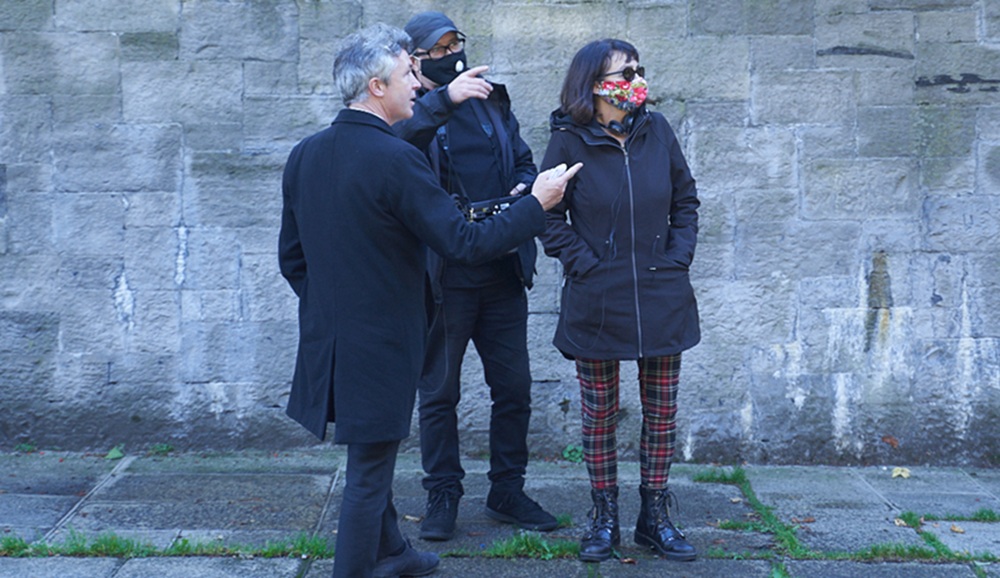
“I came out of a multimedia course and started making documentaries for Irish television,” writer/director Fintan Connolly tells FilmInk of his entry into filmmaking. “I made documentaries for many years. It was a good grounding, making documentaries about social issues. Then I met Fiona Bergin, and it came to a point when I wanted to make a movie. I’ve always loved movies since I was a kid. So that’s how it started. It was kind of organic. Barber is our fourth feature, and it’s our most successful one.”
The creative relationship between Dublin-based co-writer/director Fintan Connolly and co-writer/producer Fiona Bergin has indeed been a fruitful one, with the duo collaborating on 2000’s Flick (the tale of a Dublin drug dealer), 2005’s Trouble with Sex (an emotionally complex relationship film) and 2012’s Eliot & Me, a family film starring Connolly’s daughter, Ella Connolly. Now the duo is back with the neo-noir crime thriller Barber, which sees them reunite with their Trouble with Sex star Aidan Gillen, who has stolen his fair share of scenes in the likes Game of Thrones, Peaky Blinders, The Wire, Some Mother’s Son and Queer as Folk. In Barber, Gillen fully inhabits the character of Val Barber, a bisexual Dublin private investigator hired by a wealthy widow to find her missing granddaughter…
The film feels very much like an adaptation of a piece of crime fiction…
Fiona Bergin: “The whole private eye idea was something that we were just interested in exploring. It’s an interesting genre, and everybody knows the general flavour of it. There haven’t been very many private detective films set in Dublin, which really sets it apart.”
Fintan Connolly: “It was more influenced by films than books. There are many films I would’ve seen as a kid late at night on the BBC like Klute and The Long Goodbye, Harper, The Drowning Pool… they’d certainly be reference points. There was a whole series of slightly edgy films with that conspiratorial kind of vibe, like The Parallax View. I just loved them, especially Klute, it always stuck in my mind. It’s a moody kind of background for a story. Dublin is a moody city… They were the influences.”
Dublin looks very European, and very cool, in the film…
Fiona Bergin: “It’s an attempt to get away from the more traditional Irish kind of themes, and to do something a little bit more modern.”
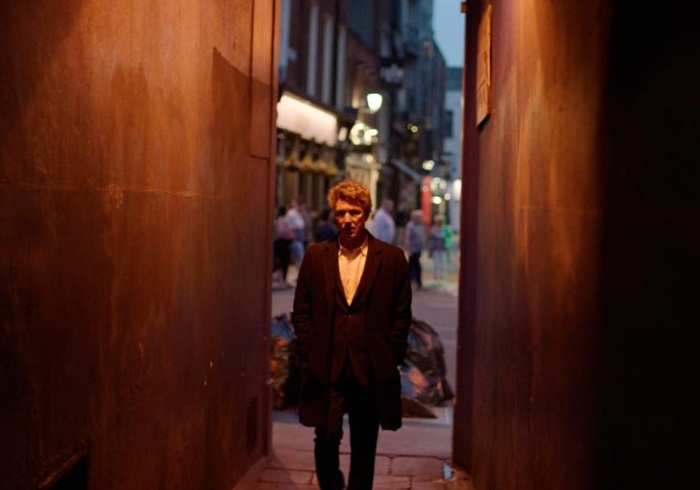
Fintan Connolly: “There has been a fairly rapid transformation in Irish society over the last 20 years from a more repressive Catholic state to a more modern European, high-tech place. That was something we wanted to capture as well, the whole change. We wanted to focus on the gleaming new part of the city as well as the old Georgian part.”
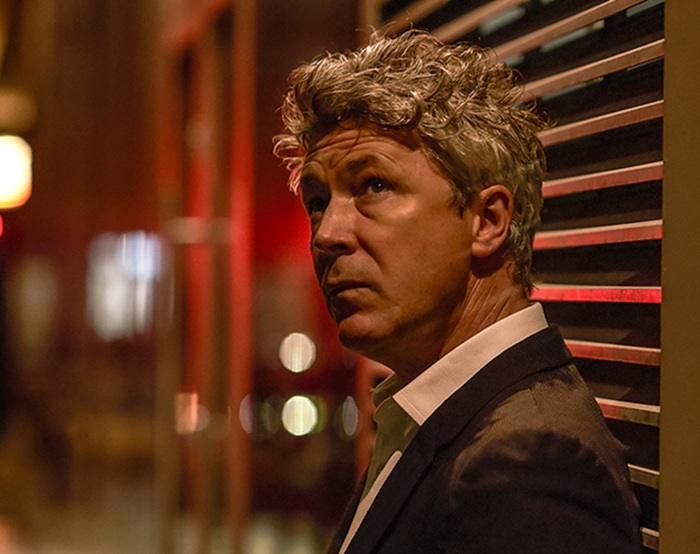
Val Barber is such a well-rounded, three-dimensional character, and he also happens to be bisexual. What was your thinking on that?
Fiona Bergin: “The idea of him being bisexual was there from very early on. That was a way to look at how much change there had been in Ireland in an easy way because of the sexual repression in the country. That was always a part of his character from the very beginning.”
Fintan Connolly: “Also, in terms of the transformation in Irish society, we had the referendum on marriage equality in 2016, which was a big moment. It was just another angle. We thought it would be interesting to have a bisexual private eye character. Aidan was also in Queer as Folk. So, it was something that he felt comfortable with.”
Fiona Bergin: “He didn’t have to do very much in that regard.”
Fintan Connolly: “As little as possible is always good… that’s the direction we give. Do as little as possible!”
Fiona Bergin: “The bisexuality thing was always there, but it’s just a part of his character. It was also about secrets and him having to keep that a secret and the idea of secrets in the story. So that’s also a big part of it, the fact that you had to be secretive about who you were and how that informed the story and the old notion of secrets and being an outsider.”
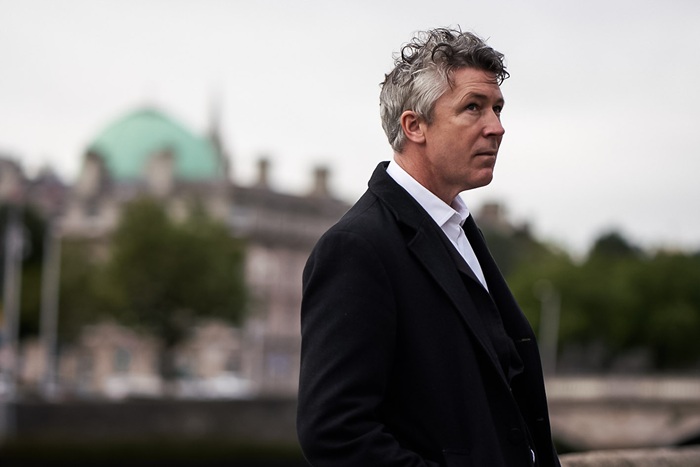
Fiona Bergin: “Aidan brought an awful lot to that character. He even brought his own costume! He brought a lot of pathos; he was a very subdued kind of hero.”
Fintan Connolly: “We did a teaser a few months before we filmed, and he turned up in the black suit and we had a white shirt, so that really became his look.”
Fiona Bergin: “Because we made it in a period between two Covid lockdowns, the whole thing was very low-fi.”
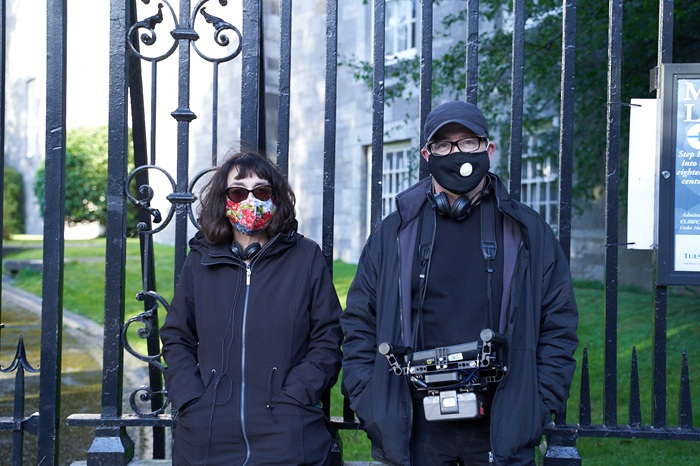
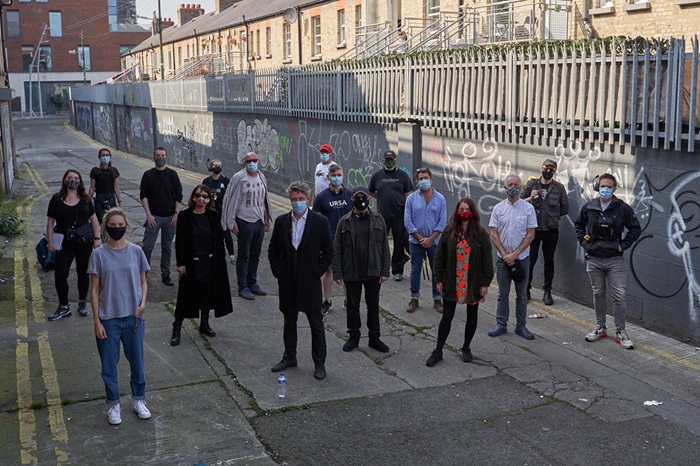
Fintan Connolly: “We were one of the first films to shoot after the Covid lockdowns. And then there was another lockdown when we finished shooting. We didn’t hammer it home, but you can see in the background that there’s masking and social distancing. So, it’s kind of like a time capsule from that time. It was quite efficient in the shoot. It wasn’t a time for socialising or hanging around. It was a very small crew. There was always a concern. We were tested every couple of days and if somebody got Covid, we’d all have to shut down. There was an extra edge, which meant we were quite mobile and moved quickly around the city.”
Was this always going to be feature film? Considering the genre, was there pressure for it to be a TV project?
Fiona Bergin: “We always wanted to make it a film. Now since we’ve made the film, there has been some talk about doing a TV thing, but we’re actually now going to do a sequel. We’re hoping to do that next year.”
Fintan Connolly: “A TV series would be quite a big commitment, but we’ve decided that we’d like to just do a follow-up. But who knows? We might make another two…we’re working on that. Fiona’s writing it at the moment. It’s set in Dublin again, with another case and more about his personal life.”
How is the film scene in Ireland right now?
Fiona Bergin: “It’s competitive obviously, but there’s quite a lot of stuff being made now in a way that there wouldn’t have been about ten years ago. It’s pretty healthy.”
Fintan Connolly: “The model here has borrowed a bit from Australia, with regards to Screen Australia, regional boards, and tax breaks. It was only in the mid ’90s that we really started making films. Critical mass has built up now, and there’s a steady stream of films. Some of them are doing very well, and some of them are traveling, and many are not. It’s probably not too dissimilar from Australian cinema.”
Fiona Bergin: “It’s perfectly fine for films to stay in their own territories and to serve their own audience. It’s not like French filmmakers are thinking, ‘Oh, I hope I break out all over the world.’ That wouldn’t even occur to them. It’s just the English thing that makes us think that films have to be global, but I don’t think that’s necessarily so. Local filmmaking is a perfectly legitimate thing.”
Fintan Connolly: “It’s been very gratifying that Barber has travelled to all the English territories. It got released in the States. It got released in the UK and now in Australia and New Zealand.”
Fiona Bergin: “That’s a plus, but the idea of local filmmaking is also a good thing.”
Fintan Connolly: “Australia was ahead of us. Just like I liked American films from the 1970s, I also remember coming in at the tail end of Australian films from the ’70s and ’80s, like Don’s Party, Newsfront and Heatwave. It’s kind of neglected now, but I love that film. Anything with Judy Davis. And also, anything by Fred Schepisi… The Devil’s Playground and The Chant of Jimmie Blacksmith, which I saw as a teenager. They were just great.”
So, where to next for Val Barber?
Fiona Bergin: “Well, you’re going to have to wait and see. All I can tell you is that it’s five years later.”
Fintan Connolly: “The tagline for Barber was ‘Everybody has a secret’, and I think the tagline for the new film will be ‘Someone knows.’”
Barber is available now on DVD and digital.
