


by James Mottram
In a world where films like The Odyssey, The Hunger Games: Sunrise on the Reaping and You Can See Everything are all pushing well over two-and-a-half hours, there’s something to be said for the miniature-pieces that mark the recent career of Paweł Pawlikowski. His 2013 film Ida, the story of a novice nun who discovers she’s Jewish, which won the Oscar for Best Foreign Language Film, clocked in at 82 minutes. Cold War, his 2018 tale of two lovers loosely inspired by his own parents, was just six minutes longer.
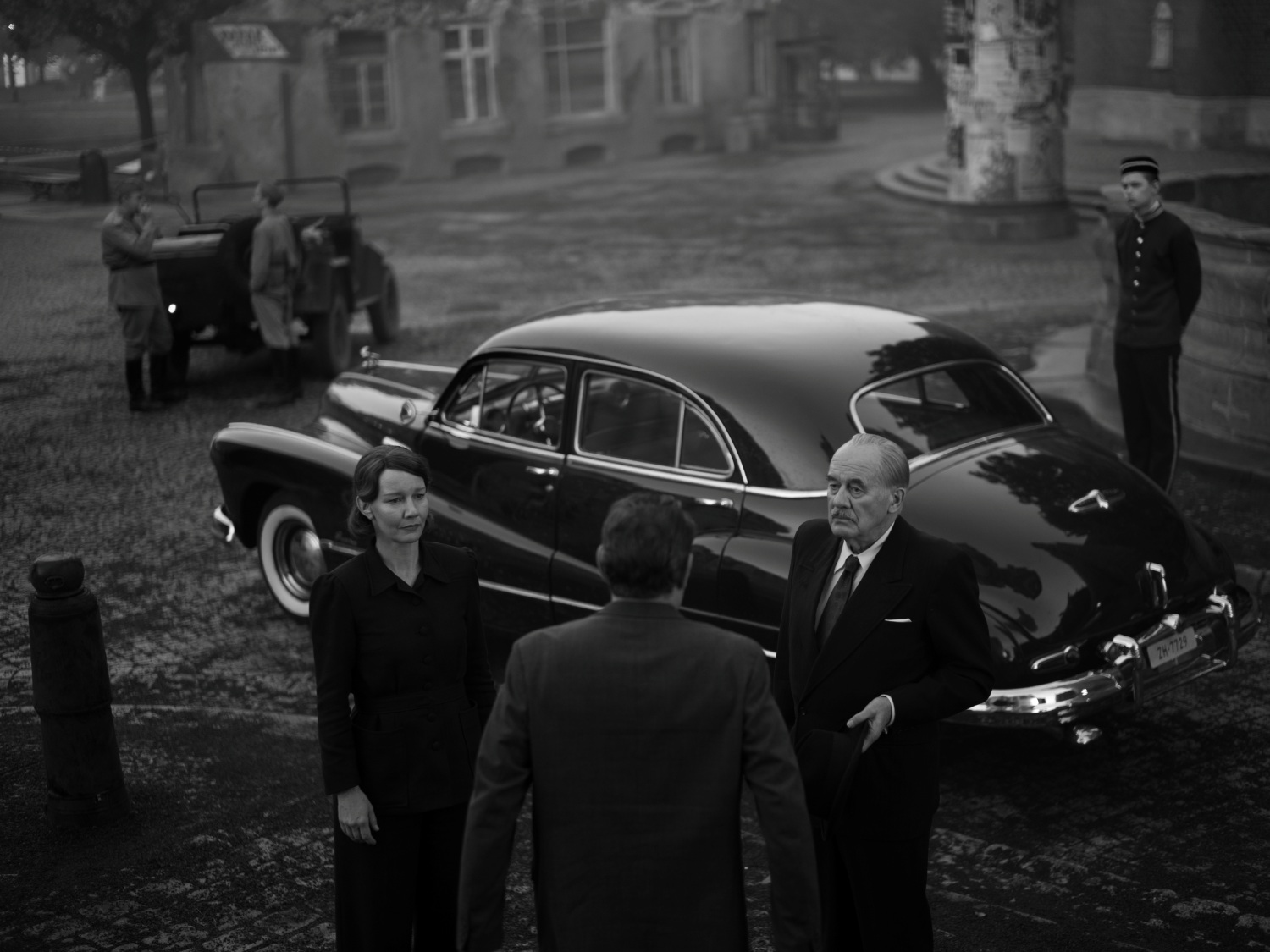
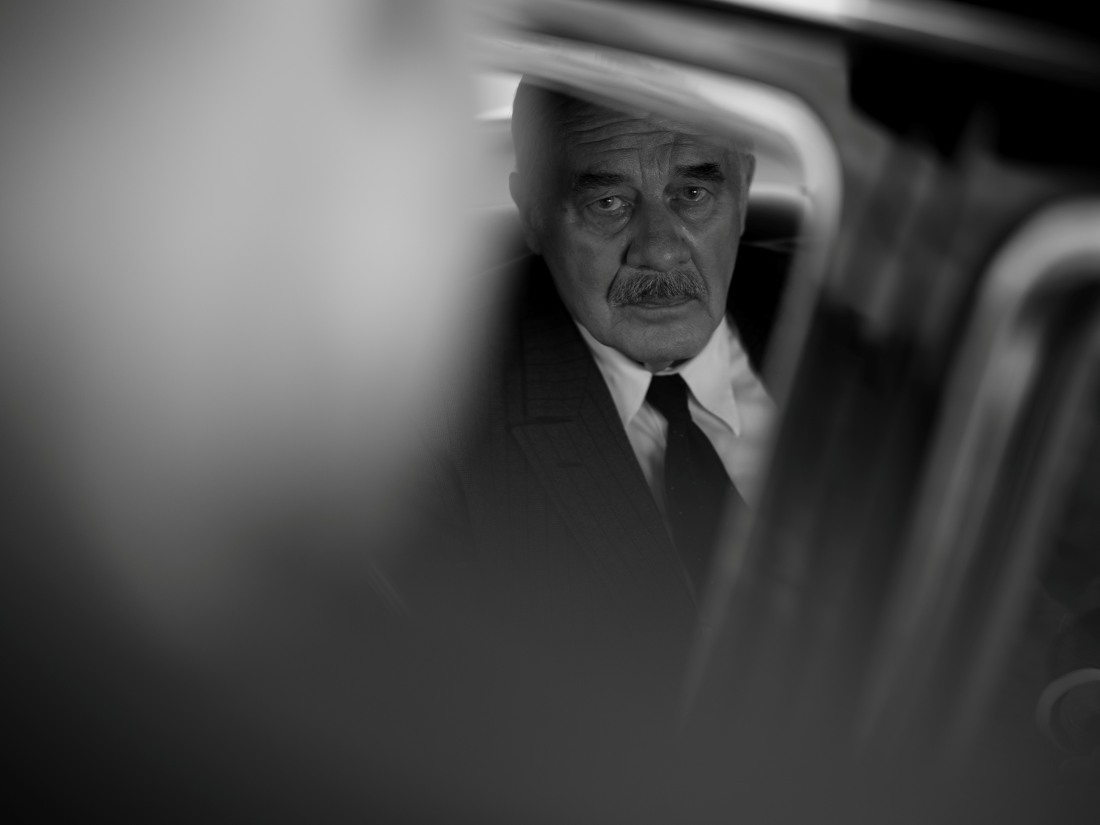
Now comes Fatherland, which also runs to a brisk 82 minutes. “Ah, but it’s not how long it is, but how much is in it, right?” Pawlikowski remarks, mischievously, when he meets FilmInk. Indeed, this exquisitely-made drama concerning the German writer Thomas Mann (played imperiously by Munich’s Hanns Zischler) is pregnant with meaning, despite its brevity. Set in 1949, as Mann and his daughter Erika (Sandra Hüller) take a road trip across Germany, it’s a stunning exploration of a nation in tatters, just four years on from the end of World War II.
Already, Fatherland claimed the Best Director prize when it premiered in Cannes in May – an award shared with Javier Calvo and Javier Ambrossi’s Spanish civil war tale La Bola Negra, which could well be Pawlikowski’s main rival when it comes to Fatherland winning him a second Oscar in the foreign language category of the forthcoming Academy Awards, should it get nominated. Shot in sumptuous black-and-white, Łukasz Żal’s work must also surely be in contention for a third Oscar nomination for Best Cinematographer, following his work on Ida and Cold War.
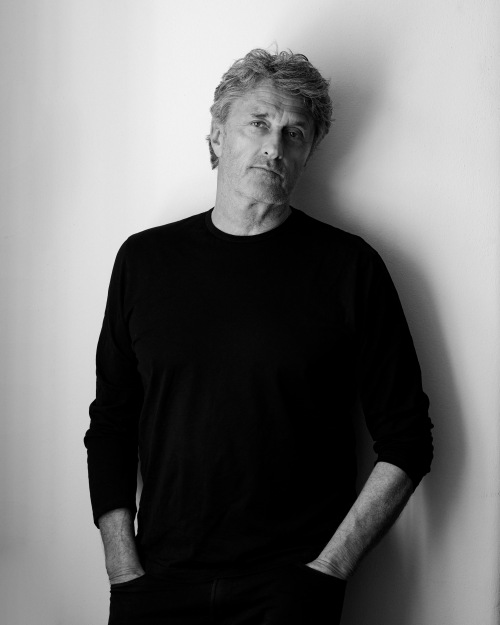
Completing a loose ‘postwar Europe’ trilogy of sorts for Pawlikowski, the film invariably shines a light on the work of Thomas Mann, one of the most influential literary voices of the 20th Century, but a writer rarely portrayed in modern cinema. Pawlikowski, who spent part of his teenage years in Germany, recalls reading the celebrated Nobel Prize-winning author of The Magic Mountain and Death in Venice at school. “I wasn’t terribly excited by his writing when I was young,” the director admits. “I preferred more visceral, emotional writing. Now, with age, I admire it more and more.”
Yet despite being handed a biography of Mann to adapt, Pawlikowski had little interest in crafting a cradle-to-the-grave biopic of the author, who fled to Switzerland when Hitler rose to power and moved to the USA at the start of World War II. “Having read it, I thought there was this one episode which was quite interesting; in ‘49, when he goes back to Europe and to Germany.” Returning to his native land to collect the Goethe prize, Mann was, in fact, driven by a chauffeur in a Buick. But Pawlikowski changed things – putting Erika in the driver’s seat.
“Erika was dramatically more interesting… she was his favourite daughter. She was the clever one, the promising one, the first child,” Pawlikowski says, calling the family dynamic “like a great Greek tragic situation”. Erika aside, the film also depicts her brother Klaus – a writer who forever lived in the shadow of his literary titan of a father. In 1949, three months before the film is set, Klaus died from an overdose of sleeping pills. “Famously, Thomas didn’t go to the funeral and neither did Erika,” says Pawlikowski, who decided to adjust the timeline, placing his death during his father’s German trip.
Keeping Fatherland as an impressionistic, picaresque work, he also simplified Mann’s cross-country journey – condensing it to a west-to-east five day odyssey. “Which is a trick I did with Ida, which is also a road movie, but in a worse car!” For Hüller, who is enjoying one of the most remarkable periods of her career, after roles in Project Hail Mary and Digger, Pawlikowski’s fast-and-loose approach to the facts worked in her favour. “Erika Mann is an iconic figure, although there was a lot of freedom in forming her because we didn’t do a biographical picture,” she says.
Like Pawlikowski, Hüller wasn’t exactly a fan of Mann’s dense prose when she read him at school. “It was a bit too early to get the scale of his writing and to understand the mastery.” It was only in preparation for playing Erika – a celebrated critic and writer in her own right, who even penned a biography of her father – that she began to appreciate Mann. In particular, his antiwar speeches, delivered on BBC radio. “They are so full of emotion and sharp intellect, and that brought him closer to me.”
Zischler’s portrayal of Mann was also key. “I think that changed my perspective on him very much,” says Hüller. “Hanns…he’s a genuine intellectual,” adds Pawlikowski. “Very refined, very elegant in his way of speaking; in his way of being; he’s got wonderful irony, which Thomas Mann had.” Zischler was “inside the material”, he adds, noting how the actor read Mann’s diaries long before they met. “He was in the head of Thomas Mann.” The same can be said of Hüller, of course. “She took this script more seriously than I did!” laughs the director. “When I took some things away, she said, ‘But I like that!’”
The actress’ preparation was wide-ranging. “What helped me most was reading her letters to her father,” she adds, “because they are very rich in information about how they were feeling towards each other, and how open they were with each other, how they didn’t spare themselves from their opinions. But at the same time, there was a very deep connection and respect for each other and each other’s work, of course. So, this was important to find out if she was afraid of him, or if he was this big figure that she looked up to, or if they had a certain level of understanding that was beyond that.”
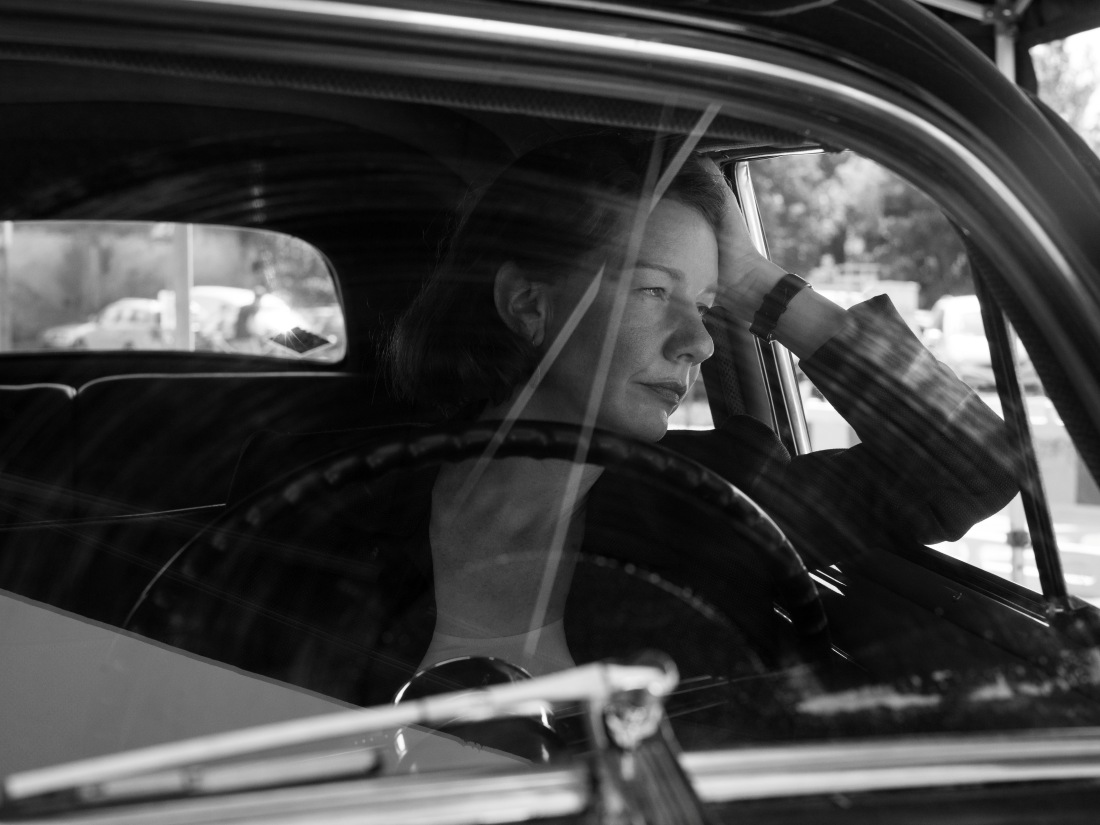
Setting the tone for the film is the stunning opening scene, in which Klaus is talking to his sister Erika on the phone. Playing the troubled Klaus is August Diehl – whose past work includes Terrence Malick’s A Hidden Life and Quentin Tarantino’s Inglorious Basterds. “I was interested in the phone conversation of Klaus with Erika… in the fact that the world lay in pieces, completely destroyed… the whole world,” says Diehl. “And a guy in the middle of it also thrown in pieces, and doesn’t even have a home anymore.”
Curiously, Diehl and Hüller have known each other for 30 years. “We studied together. In the same class. She was our youngest [student],” he reveals. His co-star was delighted that she got to team up with her old friend. “We had this phone call, which actually took place like several times… I was in my kitchen at home, and he was in Poland filming this. And I think without this opening scene, nobody would have known what she’s actually missing. Since we see his charisma and his beauty and his way of thinking in this first frame… you understand why this is such a loss.”
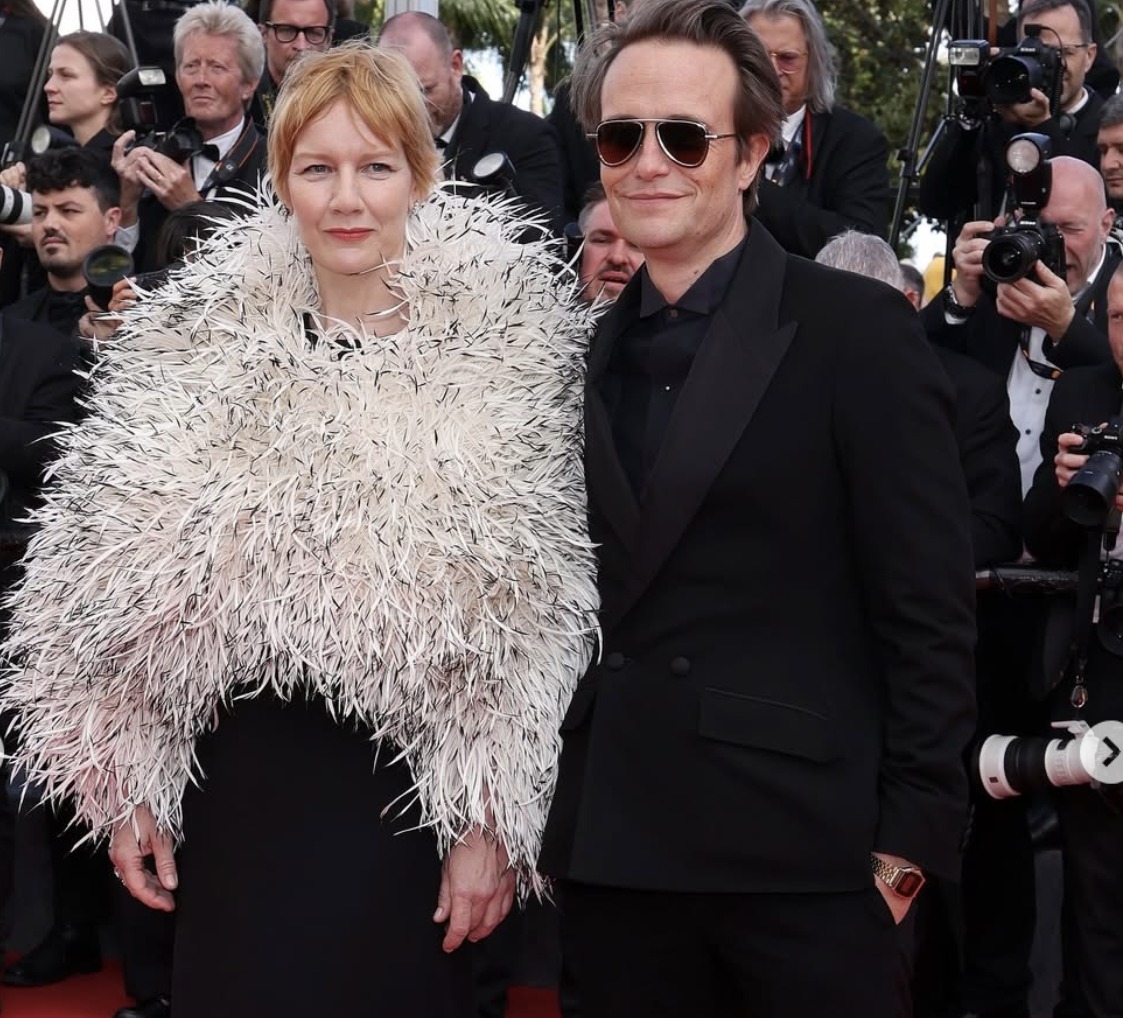
Pawlikowski was similarly taken with Diehl. “I think August helped me a lot. Not just by being a brilliant actor. It turned out that August actually knows Klaus Mann’s work really well. In fact, nobody knows Klaus Mann’s work, but he knows it. And he even brought me a book [and said], ‘You should read this. It’s really good.’ Okay, I haven’t researched my film so thoroughly! And he didn’t do it because of the film. He just likes Klaus Mann, and he knew Klaus Mann’s verbal tics as well… because Klaus was drunk and drugged a lot of times.”
Certainly Diehl – who only appears in this one scene – seems utterly immersed in the Manns [he appeared in 2008’s Buddenbrooks, an adaptation of Thomas Mann’s book], just as anyone who watches Fatherland will be. A family of intellectual high-achievers, they were a rare breed. “I mean, there is a lot to tell,” he says. “Everyone in this family made something unique. [Erika and Klaus’ historian brother] Golo Mann as well. Even Heinrich Mann, the brother of Thomas. The whole family seems to be kissed by talent, and it’s crazy. Sometimes it happens.”
Fatherland opens in cinemas on 12 November 2026
