



By Maria Lewis
There was a moment as I sat there watching Underworld: Blood Wars where I thought to myself, “What the f**k happened?” In fact, the fifth installment of the Underworld franchise was punctuated by moments like this, usually involving strong uses of the f-word and momentary shock. It was a bad movie, even by Sony’s horror franchise standards (which is saying something). It was so bad that unlike the previous four Underworld movies, you couldn’t come up with a good defence for this one. It took all the things that a specific audience loved about the franchise – from the post-Matrix urban fantasy aesthetic to the combination of science fiction and mythology set to a pulsing Euro soundtrack – and it replaced them with a movie that can only be described as Lord Of The Snow White: Game Of Thrones Returned King. If that title reads like a mess, then it’s reflective of Underworld: Blood Wars.

Yet instead of walking out of the film angry at all the potential that it just shat away, or how many of its own rules it broke, I left feeling sad. Disappointed, even. Underworld: Blood Wars is by no means the last hope for resurrecting the Hollywood horror blockbuster – Tom Cruise’s The Mummy reboot in 2017 holds that crown – but it could have been the start. From the early thirties and the classic Universal movie monsters like Frankenstein, Dracula, Mummy and The Wolf Man, horror movies that have gone after a mainstream market have been big business. They became iconic, spinning off into franchises of their own and dozens of sequels in varying degrees of quality (Bride Of Frankenstein yes, The Mummy’s Curse hell naaaaw). As the 20th century marched on, those “event horror” staples began to get replaced with a new wave: flicks like Halloween, Nightmare On Elm Street, and Friday The 13th. Those eventually spawned their own franchises and moved away from a mainstream audience, finding a means to make money by appealing specifically to genre fans.
But there was something to be learned in the nineties, and the result of that homework was the still-perfect-to-this-day-in-every-way-if-you-disagree-I’ll-fight-ya Blade in 1998; its cool-as-shit sequel, Blade II, in 2002; The Mummy in 1999; Resident Evil in 2002; the first of the Underworld films in 2003; and Van Helsing in 2004. Following a decade where Scream had been the horror franchise success story, it seemed that there was a lot to study about the blockbusters that were hitting at the time.
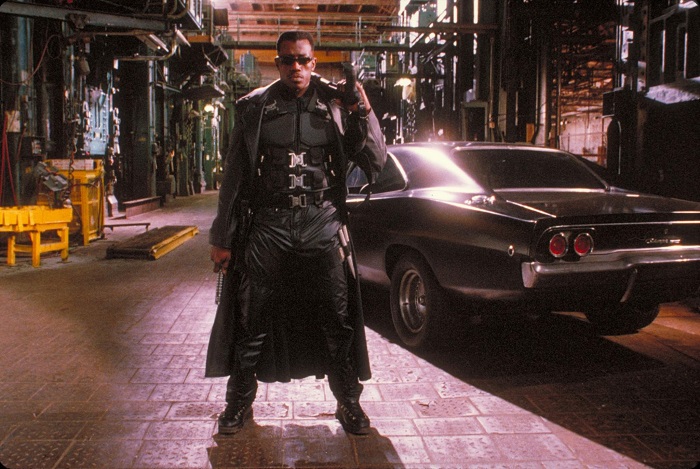
They wanted to make not only successful horror movie money, but serious blockbuster money. So with a few tweaks here, a slo-mo fight sequence there, and the odd reinvention of a classic monster myth, studios had a formula for the Hollywood horror blockbuster in the 21st century. And for a while there, things were pretty great. Your pals who wouldn’t know the difference between Ginger Snaps and the biscuit suddenly wanted to come to a horror movie with you. It helped that they were largely packaged as action films and had healthy doses of those ingredients, but there were still enough beasts and butchering to satisfy horror loyalists and civilians. Things got a little shaky with Blade: Trinity, shakier still with The Mummy: Tomb Of The Dragon Emperor, and they were altogether on the floor by the time that Resident Evil: Afterlife hit.
Since then, there have been a few concentrated efforts to get things rolling again. Daniel Radcliffe and James McAvoy’s ill-fated Victor Frankenstein was one of them, but failed largely because the final product didn’t know what it wanted to be. It was an expensive, high-concept horror/action hybrid that they should have been promoting as the next The Mummy – it had humour, heart(s), and horror – but they instead sold it as “Guy Ritchie’s Sherlock Wannabe With Two Guys You Like Less Than Robert Downey and Jude Law.” It bombed, epically.
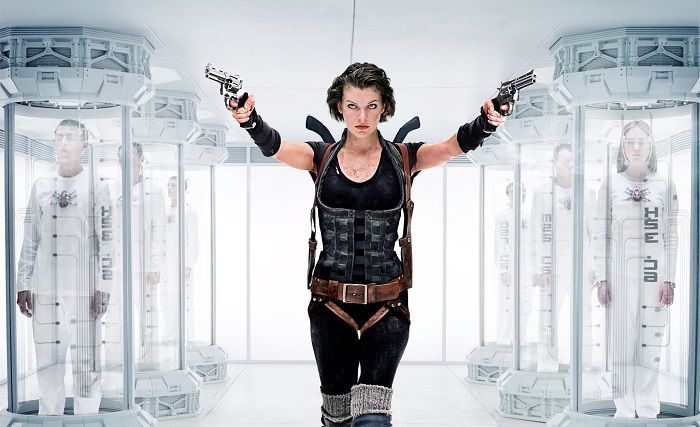
Earlier, Joe Johnston’s The Wolfman misfired with audiences in 2010, and even later installments in Hollywood’s trusted horror franchises – Resident Evil and Underworld – had some of their smallest earnings in the franchise run. We speak not of I, Frankenstein. May it rest in pieces.
So what’s left? Will they be able to milk another Underworld film after Blood Wars? As someone who enjoyed the franchise, I’m hoping that they just lay that shit down and back away cautiously. Where things were left, it seems like too much of a feat to try and put the pieces back together again. The next Resident Evil film drops in January, but pinning hopes on that seems foolish. That brings us back to one of the OG movie monsters – the mummy – who is returning in 2017, along with Universal’s hopes to reboot their classic characters. If the trailer is anything to go by (besides another woman being afforded the opportunity to sprint next to Tom Cruise), it appears to have all the elements one needs for a Hollywood horror blockbuster to hit. Plus, there’s the added bonus of the stars attached never having been bigger than Cruise and Russell Crowe. Ultimately, the hope is that we can do better…we must do better than Lord Of The Snow White: Game Of Thrones Returned King.
Maria Lewis is a journalist and author who can be seen on The Feed, weeknights on SBS Viceland. She’s the presenter and producer of the Eff Yeah Film & Feminism podcast. Her debut novel Who’s Afraid? was released in 2016, with the sequel – Who’s Afraid Too? – due for release on January 17, 2017. You can find her on Twitter @MovieMazz.
