


By Maria Lewis
Arguably there has never been a more divisive figure in horror filmmaking than M. Night Shyamalan. Heck, even calling him a “horror filmmaker” is cause for argument given that his body of work has ranged from high-concept thrillers (Unbreakable and Signs) to science fiction blockbusters (The Last Airbender and After Earth). Yet when you look at the consistent thread that runs through his work – especially in his most famous film, The Sixth Sense – a horror filmmaker is what he is. After becoming the butt of every Hollywood joke following a string of critical and commercial flops (Lady In The Water, The Happening, The Last Airbender, and After Earth), Shyamalan has officially done what people in showbusiness love the most: he has made a comeback.
Mind you, even when he fell out of favour, it’s important to note that the Indian-American filmmaker never stopped working. Not even when Mark Wahlberg battled insidious plant life. Shyamalan brushed himself off and moved on to the next project. The first sign that he was back on track was in 2015 with the TV series, Wayward Pines, which might have been a little shaky on the dismount, but otherwise performed a pretty impressive acrobatic feat on the small screen. That same year, he teamed up with horror-preneur Jason Blum and Blumhouse Productions for The Visit, a twist on the classic Hansel & Gretel tale. It was decidedly more low-key for Shyamalan – and more low budget – and felt like a return to form as he dipped his toes back into the murky waters of high-stakes moviemaking.
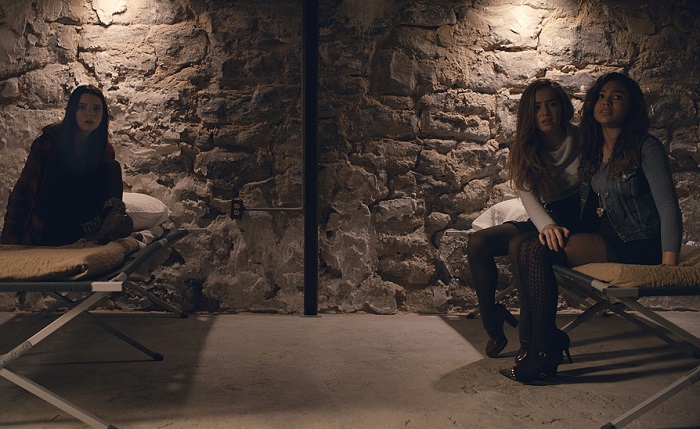
Now he has delivered Split which, by all accounts, has become a huge success for both Shyamalan and Blumhouse (who he teamed up with again). On a tiny $9 million budget, it debuted at No.1 at the US box office and worldwide has already crossed the coveted $100 million threshold – all within its first few weeks of release. Audiences, it seems, are back on the Shy train, and so too are the critics.
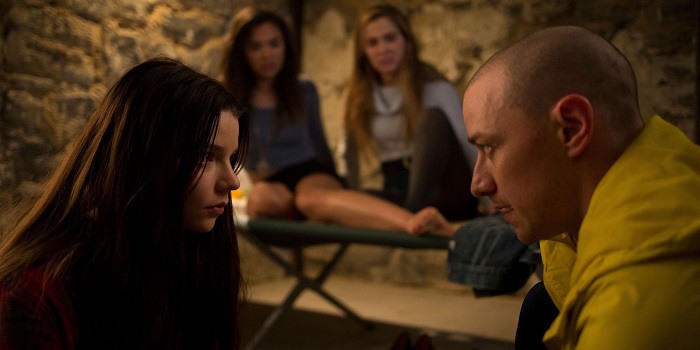
The film – which toes that line between thriller and horror – is currently his equal-second best reviewed film, sitting at 74% fresh on Rotten Tomatoes (the same score as Signs, yet behind The Sixth Sense’s 84% and slightly ahead of Unbreakable’s 68%). Yet it hasn’t pleased everyone, with the movie’s plot causing a major outcry from mental health advocacy groups who have taken issue with the character of Kevin, played by James McAvoy, who suffers from DID (dissociative identity disorder). While McAvoy’s performance has been praised, the idea of Kevin – who is just one of 23 personalities living within the same body – has even caused some to start a petition to boycott the film. You see, not all of Kevin’s personalities are nice – a few of them have a hand in abducting three teenage girls and holding them hostage in his basement. And that’s just the beginning.

Split is by no means the first horror film to portray someone with DID as a tormented killer – Psycho is the most famous – it’s just the latest. Outside of the genre, characters with DID have featured in everything from Fight Club to Me, Myself And Irene, yet nothing has been quite as divisive as Split. Already the petition to boycott the film for its “backwards representations of gender identity and mental illness” on Care2 has over 22,000 of the 25,000 signatures needed.
Australian mental health group, SANE, has publicly condemned the film after receiving dozens of complaints, with SANE’s Jack Heath telling the ABC that “films like this are going to reinforce a false stereotypical notion that people living with complex mental illnesses are inherently dangerous and violent.” It’s understandable, yet there are other damaging representations in the film that need to be examined also.

Of a small cast, Split has four main female characters – the three abducted teenage girls previously mentioned and a psychiatrist played by Betty Buckley. Already the premise of teenage girls being abducted by a man with mysterious motives is falling into horror movie cliché territory given that we’ve seen masked mad men slice and dice teenage girls in slashers for the past forty odd years. Yawn. It’s boring, it’s played out, and one surviving Final Girl isn’t enough to flip the ingrained sexism built into the subgenre on its head.