


By Maria Lewis
It seems appropriate that when we fear things – and want to communicate that fear – we go to the genre of fear: horror. And as 2016 saw people’s justified fear of the alt-right grow, so too did the art surrounding it. Yup, we may be well and truly out of the early 20th century but the past twelve months saw the Nazi horror movie make a resurgence – along with actual freakin’ Nazis.
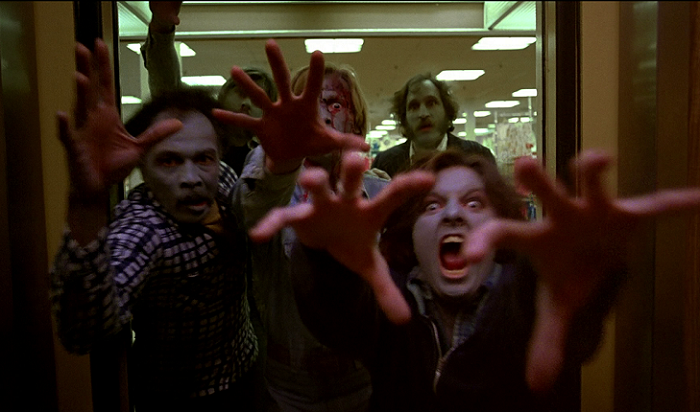
Back in the seventies, America was conflicted as it dealt with everything from The Vietnam War to the Watergate scandal, and that feeling of a deep distrust of government manifested itself nowhere more clearly than in the horror movies of the time. Society was disenfranchised with the meal that they had been told to digest, and as that feeling grew, so too did the gap between the have and have nots. The thought of a mindless, shuffling majority that digested every lie they were fed became a real and tangible fear. Along with it came The Exorcist in 1973, The Texas Chainsaw Massacre in 1974, Jaws in 1975, The Omen in 1976, Invasion Of The Body Snatchers in 1978 and both Alien and Dawn Of The Dead in 1979.
When Ronald Reagan came to power in the eighties – and so too his conservative agenda – out rolled John Carpenter’s anti-Reagan ode, They Live (and arguably some of the best punk music ever made). On the other side of the world, Japan’s social-political message was never communicated more clearly in pop culture than it was in the fifties with Godzilla – and really punched home in this year’s Shin Godzilla, while The Host in 2006 was a clear middle finger to South Korea’s apathy in the face of American Imperialism. Guillermo del Toro has single-handedly been making his thoughts on the realities of war – Spanish, in particular – known since The Devil’s Backbone in 2001 and through to Pan’s Labyrinth in 2006.
In that tradition, 2016 had some fears to work through in the very public therapy session that is horror movies. The largest fear being that if you sleep on something, if you stop paying attention and relax into passiveness, you give room for that insidious something to sprout. In Twitter terms, staying woke. Cue Britain struggling to deal with Brexit actually being a thing they voted for; Australia’s racist auntie of a political party, One Nation, gaining more senate seats than ever before; and the far-right triumphant in the US Presidential election (and with it the rise of public racism, homophobic and sexist attacks, neo-Nazis emerging out of the woodwork like gremlins fed after midnight, and genuine Apocalypse-starting shit).
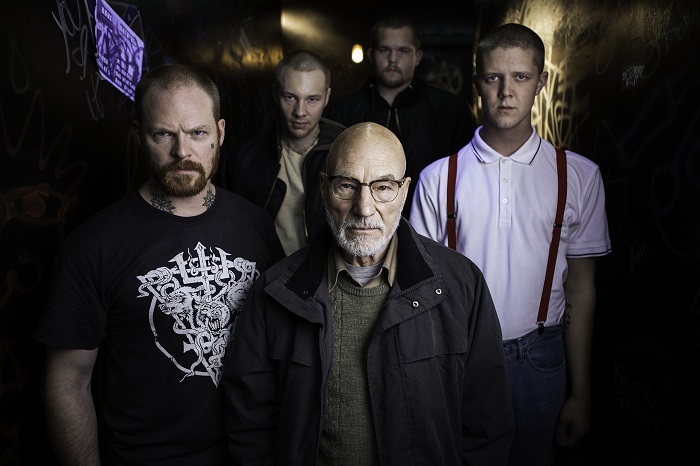
And the year isn’t even over yet. But like sensing a change in the current, the horror movies of 2016 moved with our fears. April brought the visceral and unshakable Green Room , which tracks a young punk rock band playing a gig at a rural neo-Nazi bar when things go – unsurprisingly – terribly wrong. The audience are the band in writer/director, Jeremy Saulnier’s gutsy flick, going through their emotions as they progress through shock, horror, fear, and disbelief that white supremacists still actively exist.
The not-so-secret weapon is everyone’s imaginary BFF, Patrick Stewart, as the neo-Nazi leader. He’s not an archetype horror movie villain: he’s calm, collected, and intelligent. He’s a leader with poise and grace who can tell a room full of skinheads that, “Remember, it’s a movement, not a party” on one hand, while orchestrating mass murder because it’s convenient on the other. His performance is exquisite in its subtlety, and at the tail end of the year, terrifying in its familiarity.
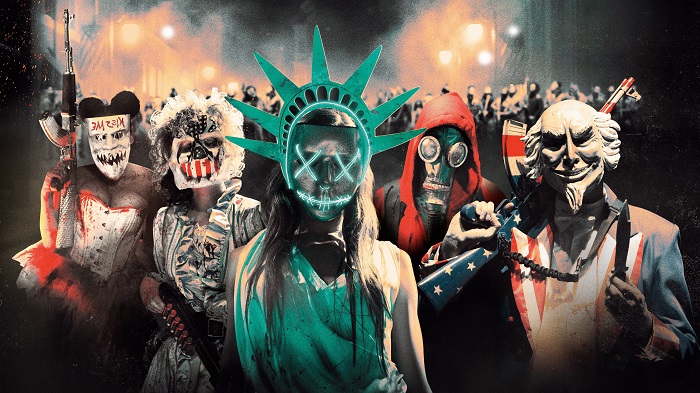
Swapping out subtlety for spectacle was The Purge: Election Year, which was less of a metaphor for the present American political climate and racial tensions than it was a documentary with better production values (right down to the Mike Pence doppelganger). If the filmmakers had hoped that releasing the third installment in the hyper-political horror franchise bam smack in the middle of the Presidential race would have some kind of positive effect, they’re probably as depressed as women who want to have rights to their own vaginas in America right now. The film follows a left-wing, blonde, female Presidential candidate – let’s call her Killary Clinton – who comes under siege during the annual purge by her opponents on the right. Cue blood splatter and very obvious dot-connecting.
On a slightly less “horror” level and more “high impact thriller” was Imperium, starring Daniel Radcliffe as a young FBI agent who goes undercover within a group of white supremacist organisations to investigate a domestic terrorism threat.
While all three of these films handle things differently in execution, they’re dealing with the same premise – the same fear – that was delivered IRL with gusto in 2016. While many other genres of film specialise in escapism, horror acts as our most potent time capsule as we look back on the things that defined and terrified us. As 2017 rolls in with a deep sense of unease and dread, so too do the horror movies speaking on some very real terrors – Jordan Peele’s Get Out, Greg McLean’s The Belko Experiment, and Stephen King’s The Dark Tower. Never has horror cinema been what its critics labeled it – a voyeuristic outlet for society’s perverted sickos and future murderers – but rather that genre often willing to tread where others won’t.
Maria Lewis is a journalist and author who can be seen on The Feed, weeknights on SBS Viceland. She’s the presenter and producer of the Eff Yeah Film & Feminism podcast. Her debut novel Who’s Afraid? was released in 2016, with the sequel – Who’s Afraid Too? – due for release on January 17, 2017. You can find her on Twitter @MovieMazz.
