


by Harry Varvaressos
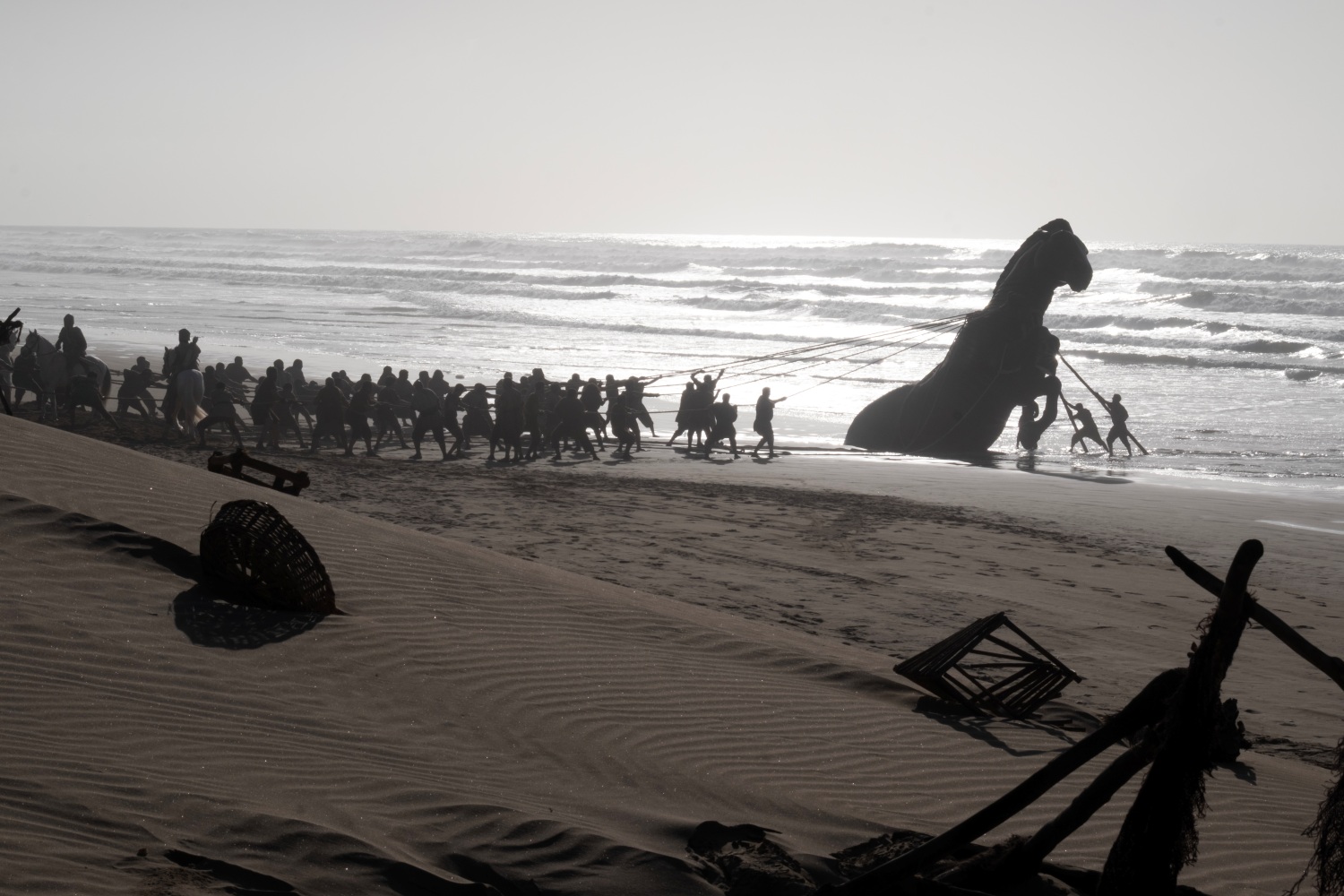
Against all odds, a story as old as time sits at the centre of modern cinematic culture. Yes, Christopher Nolan’s The Odyssey has taken the world by storm, leveraging its populist auteur’s signature brand of epic storytelling to box office returns worthy of the gods.
Even more impressively, it’s held its own against the stiffest of competition: Spider-Man: Brand New Day – incidentally, the biggest opening weekend of all time in America per Deadline and second biggest in Australia per Filmink – has stormed multiplexes, robbing the 172-minute behemoth of many of its lucrative screens.
This Homeric explosion can mostly be attributed to the storied filmmaker at its centre. Alongside building a resume of absurdly venerated Hollywood blockbusters – 2014’s Interstellar, for example, is the most “favourited” movie of all time on cinephile app Letterboxd – Nolan has consistently emphasised the indispensability of the cinematic experience.
And audiences have been swayed.
In the 41 theatres around the world listed on The Odyssey’s website as carrying its rarest and most coveted presentation – 15 perf/70mm projection in an IMAX auditorium – tickets have sold more like a Taylor Swift concert than a summer blockbuster. Australia’s only commercial 15/70 venue, Melbourne’s IMAX, is completely sold out until September 23rd.
But there are any number of premium alternatives to parse: IMAX digital, 70mm film presentation, Xtreme Screen or VMax, Screen X, D-Box or 4DX, Onyx, all offering something more elevated than the humble standard screen.
And while much has been made of the sacred 15/70 experience, including a recent segment on ABC’s 7.30, these alternatives seem to be operating on murkier terms.
So, if you’re securing seats for the buzziest movie in town, what are you actually buying?
Let’s break them down.

IMAX 15/70: The Holy Grail
Yes, this is the one you’ve most likely heard about, and it’s worth the hype.
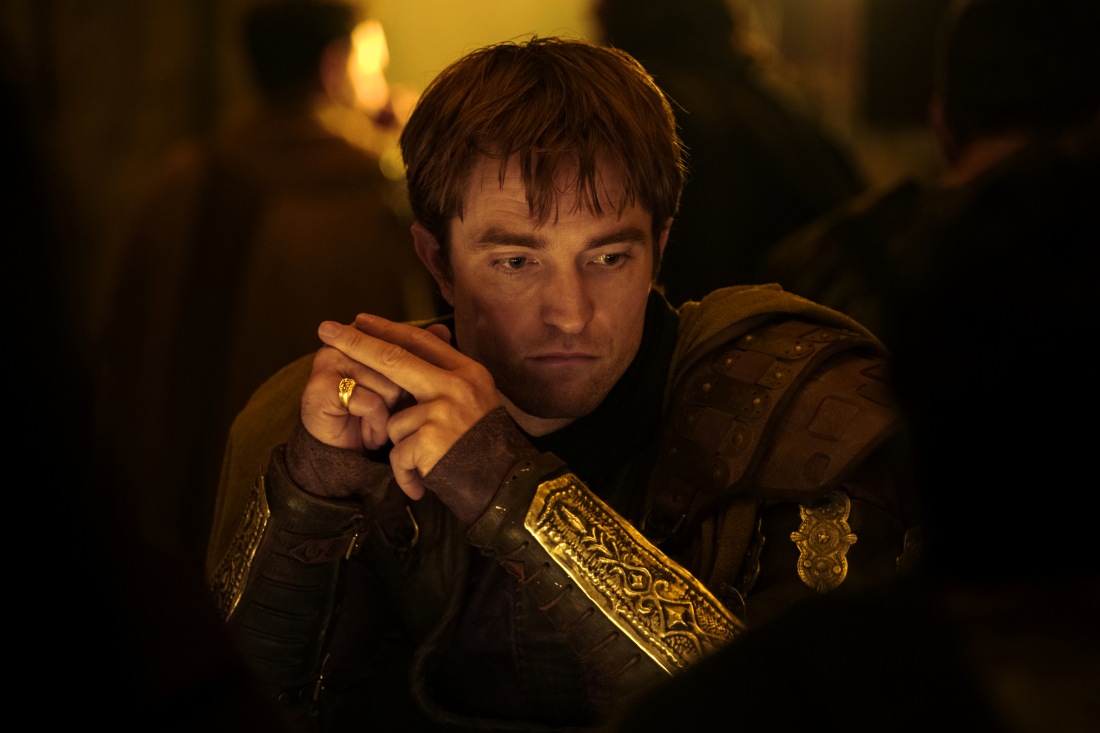
The Odyssey is the first full-length feature entirely shot with IMAX film cameras. 15/70 presentations honour this labour of love, projecting enormous film frames with an exceptional amount of photographic information, complete with a towering aspect ratio of 1.43:1 and a whopping curved screen.
By virtue of their analogue presentation, a rarity in this day and age, you also get the distinctive colour, grain and photochemical texture of celluloid – an aesthetic Nolan so evidently covets.
This is the ultimate Odyssey experience, and the one most closely aligned with Nolan’s aesthetic sensibilities. It’s also completely unavailable outside of Melbourne.
IMAX Digital
Here’s where things get considerably murkier.
While just a handful of IMAX screens project 70mm film, the overwhelming majority offer a digital iteration.
This doesn’t entirely invalidate their claim to the sacred IMAX name, but does warrant some adjusted expectations.
Firstly, their resolution is state-of-the art… by digital standards. While it’s hard to quantify exactly, film and digital capture and reproduce photographic information in fundamentally different ways. And, if you’re a film purist, gone is that signature celluloid “look” that Nolan so passionately prizes. Moreover, there’s no guarantee of experiencing the full 70mm image, as many digital IMAX screens only support a shorter 1.90:1 aspect ratio.
Yet, it’s doubtful spectators have been made aware of these differences. Like its Melbourne namesake, Sydney’s signature IMAX screen in Darling Harbour is experiencing extraordinary demand amid potentially hazy expectations.
At this revitalised site (which, in its prior iteration, offered the full 15/70 package but today only projects digital) general tickets go for $43, or $63 for the favoured back two rows of the cinema labelled “recliners.” The curved screen caters for these prized spots, but can appear to distort the image if you sit off to the side, while viewers in the closer seats may find themselves torturously craning their necks. These setbacks have already drawn the ire of spectators, particularly for the similarly hyped Dune: Part II, which led to IMAX Sydney subsequently labelling the first few rows as “front section view” at a reduced cost.
None of this has stopped ticket buyers snapping up any seat they can get, but it’s worth wondering: would consumers think twice if they knew the whole story? It’s hard not to wonder whether the IMAX brand benefits from this ambiguity – and if the reality of their consumer experience justifies the trials and tribulations required to nab a seat.
In fairness, according to Destination NSW, Darling Harbour’s IMAX with Laser is equipped to present a 1.43:1 aspect ratio, though whether its lone competitor in Blacktown can is less clear.
70mm Projection
You can find this format at hallowed Sydney venues like the Hayden Orpheum and the Ritz in Randwick – and the secret ingredient might well be love.
You get an analogue film print, the distinctive character of celluloid, and a format considerably larger than conventional 35mm, all wrapped up in the endearing bow of a nostalgic heritage establishment. Moreover, these locations offer something special: a genuine passion for the format. Both the Ritz and the Orpheum regularly program celluloid screenings of new releases and old favourites (including much of Nolan’s back catalogue), so their values align closely with Nolan’s love for analogue film.
But there’s an important distinction: standard 70mm is not the same thing as IMAX 15/70.
Standard 70mm presentation typically uses a 2.20:1 widescreen image, far shorter and wider than the IMAX frame. Add to that, many of these locations can’t necessarily compete with the multiplex experience of gigantic screens, recliner seating and surround sound. It’s a trade-off between boutique charm and corporate maximalism.

VMax/Xtreme Screen, DBOX/4DX and Onyx
Things get even more ambiguous here.
Event Cinemas’ VMax and Hoyts’ Xtreme Screen promise essentially the same thing: big screen, big sound, big seats.
It’s a canny way of making the cinema feel more like an event – and of course gives exhibitors cause to charge a premium for new, buzzy releases.
Often accompanying these sessions, or offered in isolation, are D-Box or 4DX experiences. These feature vibrating seats and special effects, either “immersing” you in the action, or annoying the hell out of you, depending on your disposition.
What remains frustratingly oblique is the aspect ratio they’re carrying.
Theoretically, large format screens can be equipped to project 1.85:1, which is ever so slightly taller than most digital IMAX screens, but there’s minimal publicly available information and certainly no guarantee. A premium auditorium is not necessarily a premium image.
An intriguing alternative, albeit likely smaller in total size, is the Samsung Onyx screen. In Sydney, only offered at Entertainment Quarter, this format forgoes projection entirely; its LED screen offers, according to the Hoyts website, “infinite contrast” (brighter colours and darker blacks) and functions essentially like a massive television. Most interestingly, Samsung tells us Onyx screens natively support a 1.85:1 image – though this information is difficult to verify with respect to specific locations.
That being said, it’s hard to imagine Nolan – a staunch proponent of cinematic projection – getting excited about a supercharged TV screen.
Lastly, the new fangled Screen X, offered at Sydney’s Hoyts Broadway, Campbelltown and Blacktown, splays its image across three adjacent screens, creating a panoramic effect. Echoing The Odyssey’s unprecedented fully-shot-for-IMAX claim, Spider-Man: Brand New Day is the first feature “shot for” this shiny new format.
Given that the height of the frame is a big part of why IMAX 15/70 is deemed superior to other formats, an incredibly wide alternative is certainly… a choice.
So what to make of all of this?
Well, all of these formats offer a state-of-the-art experience in their own way, and none could reasonably be labelled a rip-off. But the branding certainly doesn’t tell the whole story. And for The Odyssey, that matters perhaps more than any other film in history.
So before you shell out for the deluxe experience, ask yourself: am I looking at the full picture?
