


by Christine Westwood
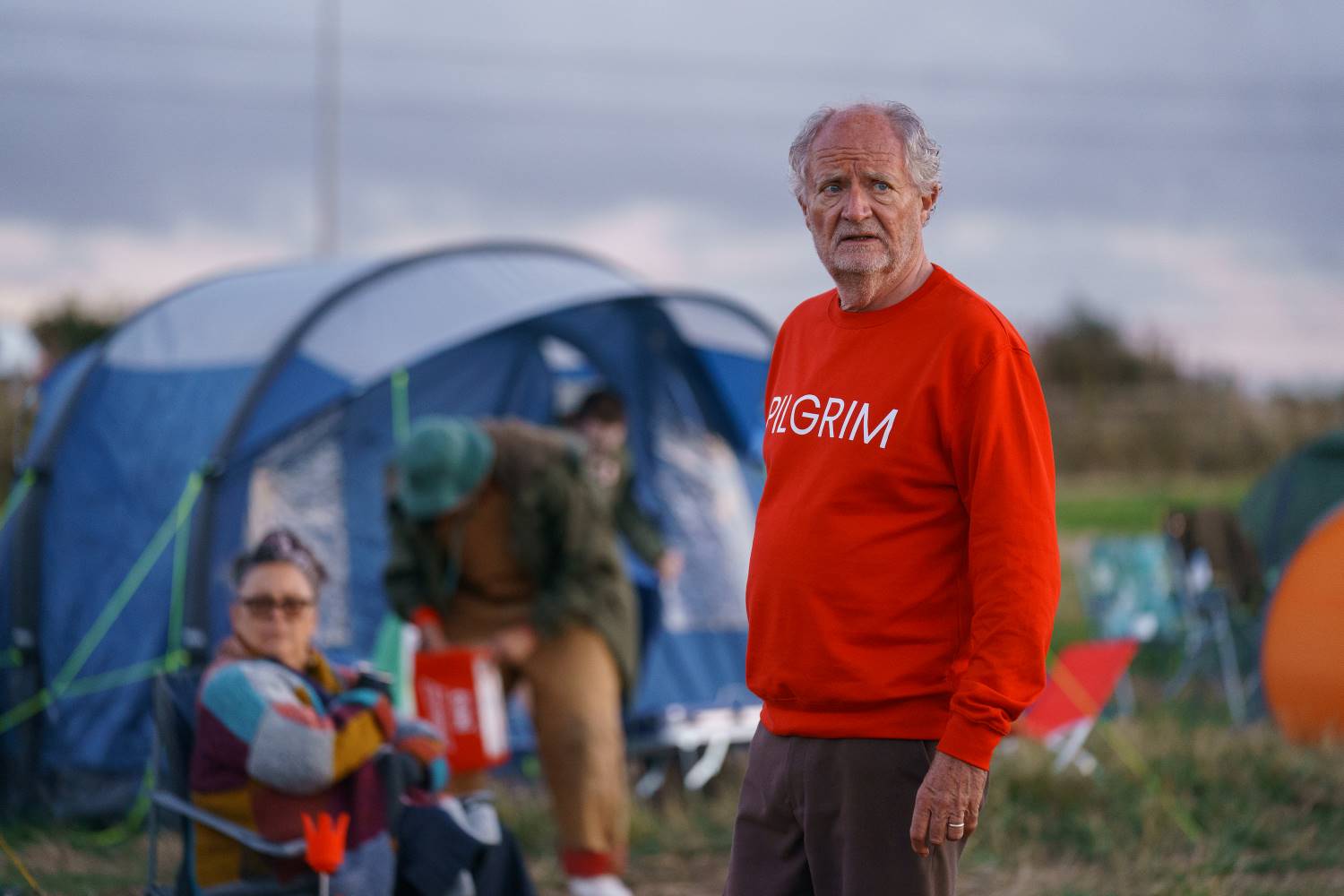
What makes someone hit the road and leave everything behind? A call to explore, an urge to release the past and reset life into a more meaningful pattern, or, as in Harold Fry’s case, an epiphany that he must repay a lifelong debt before it’s too late.
The first glimpse we have of Harold finds him gazing through the curtains to life outside. His suburban home and marriage to Maureen are bleak and empty. Versatile Jim Broadbent plays timid retiree Harold as both an innocent and a shutdown man. His pilgrimage halfway across England, leads him to the opposite of both.
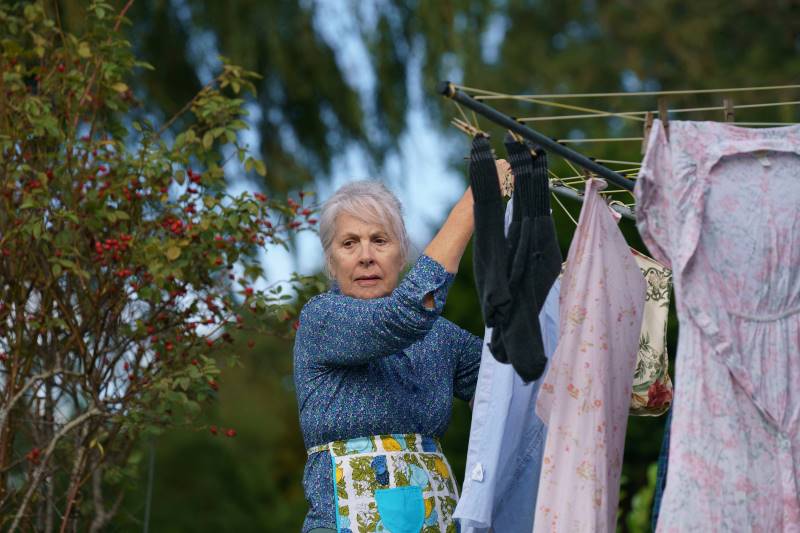
Broadbent is always watchable, opening himself to the camera for us to extract or project every emotional nuance. He is in virtually every scene, often in tight closeup, and he pulls it off beautifully as he draws deeper into an awareness of himself, and the facade cracks in key turning points. Penelope Wilton offers a terrific counterpoint as Maureen. Seething with repressed terror and spite, she has an equally powerful story arc.
There’s an array of characters who Harold meets along the way, reflecting modern Britain’s cultural diversity. Many are ordinary people, offering small acts of kindness. Part of the theme is to remind us of humanity’s essential goodness, and our natural interconnectedness, through time and distance and across social groups and ethnic lines.
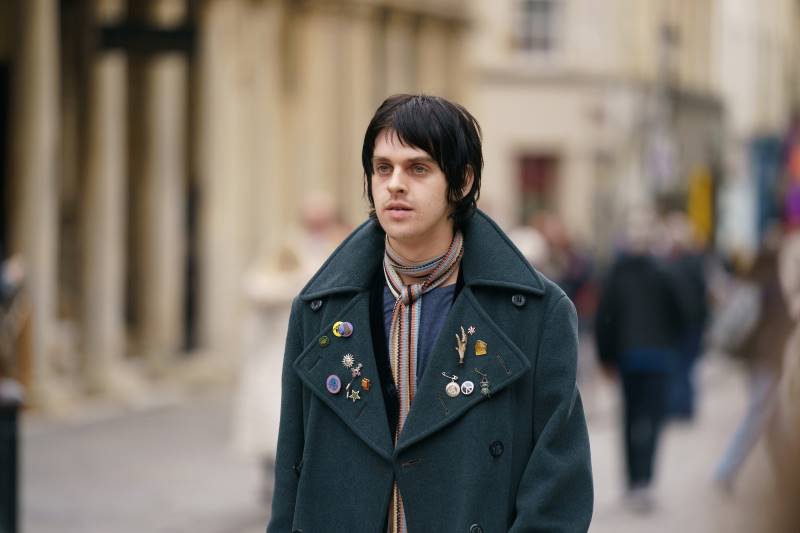
A key character is David Fry, the troubled son of Harold and Maureen, who Harold cannot connect with. In a beautiful piece of casting, Earl Cave (son of Nick) embodies a poetic, intelligent soul trashed by drugs and a fragile emotionality. His screen presence anchors the heart of the film and Harold’s redemptive quest.
The film boasts a predominantly female crew, headed by director Hettie MacDonald, who worked on Dr Who and a beautiful adaptation of Howard’s End, also for TV. She also made the beautiful coming-out-coming-of-age film Beautiful Thing back in 1996. Rachel Joyce – the author of the book upon which her own screenplay is based, is also credited as one of the film’s executive producers. Director of Photography Kate McCullough has an impressive portfolio including The Quiet Girl and Normal People. Here, she treats Britain as another character, doing justice to its varying landscape, from Sussex in the south to imposing Derbyshire peaks and wild Northumberland. She reveals plenty of quiet countryside, rolling green hills, farms and woodland, punctuated by towns where retail stores cram cheek by jowl with medieval architecture, and cathedrals in sight of motorways.
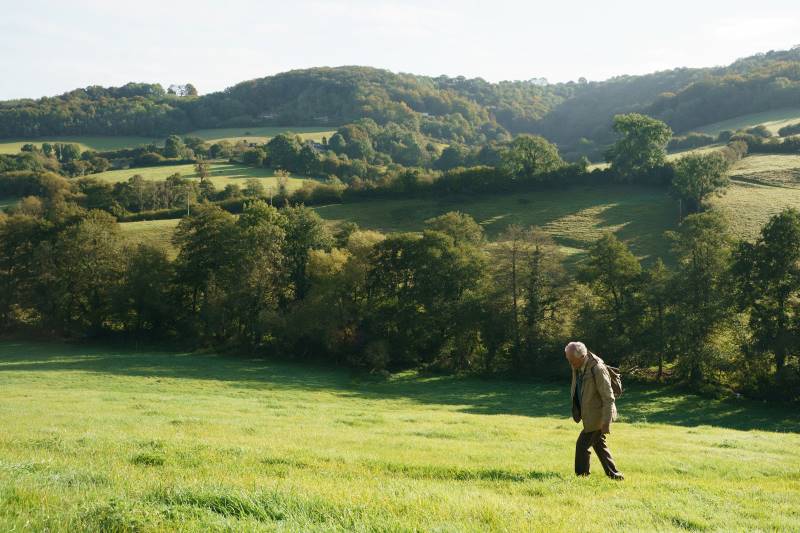
The story is one of mindfulness, where inessentials are stripped away, and small things are felt and become meaningful again. These things include words that are spoken or unsaid. Direction and edits support the theme with lovely reflective details, dew on grass, fox cries at night, while the script cuts sparingly to the bones of each scene. The handwritten letter may come back into style after the nostalgia evoked here, and old fashioned mailboxes.
In a nice piece of synergy, Broadbent had narrated the original audible book, so he knew Harold well, something he drew on when he came to embody the pilgrim on screen. He spoke enthusiastically of his role at the red carpet premiere in London.
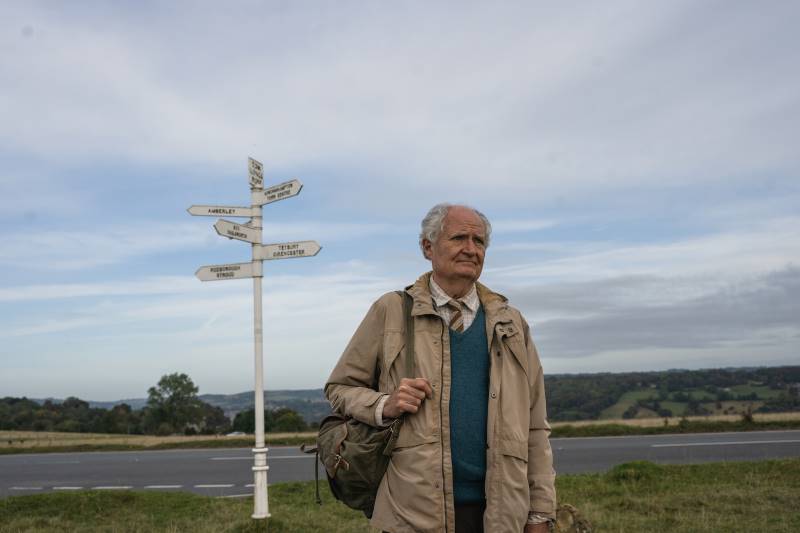
“That’s what makes it so exciting, such a lovely part to play, not only has it got the journey, but he has an emotional journey; it makes it an interesting acting task. He starts off so repressed, then finds himself engaging with strangers and he realises the journey isn’t just about his goal [to visit old friend Queenie] but to face up to what’s inside him. It’s a strong story, very powerful.”
