



by James Mottram
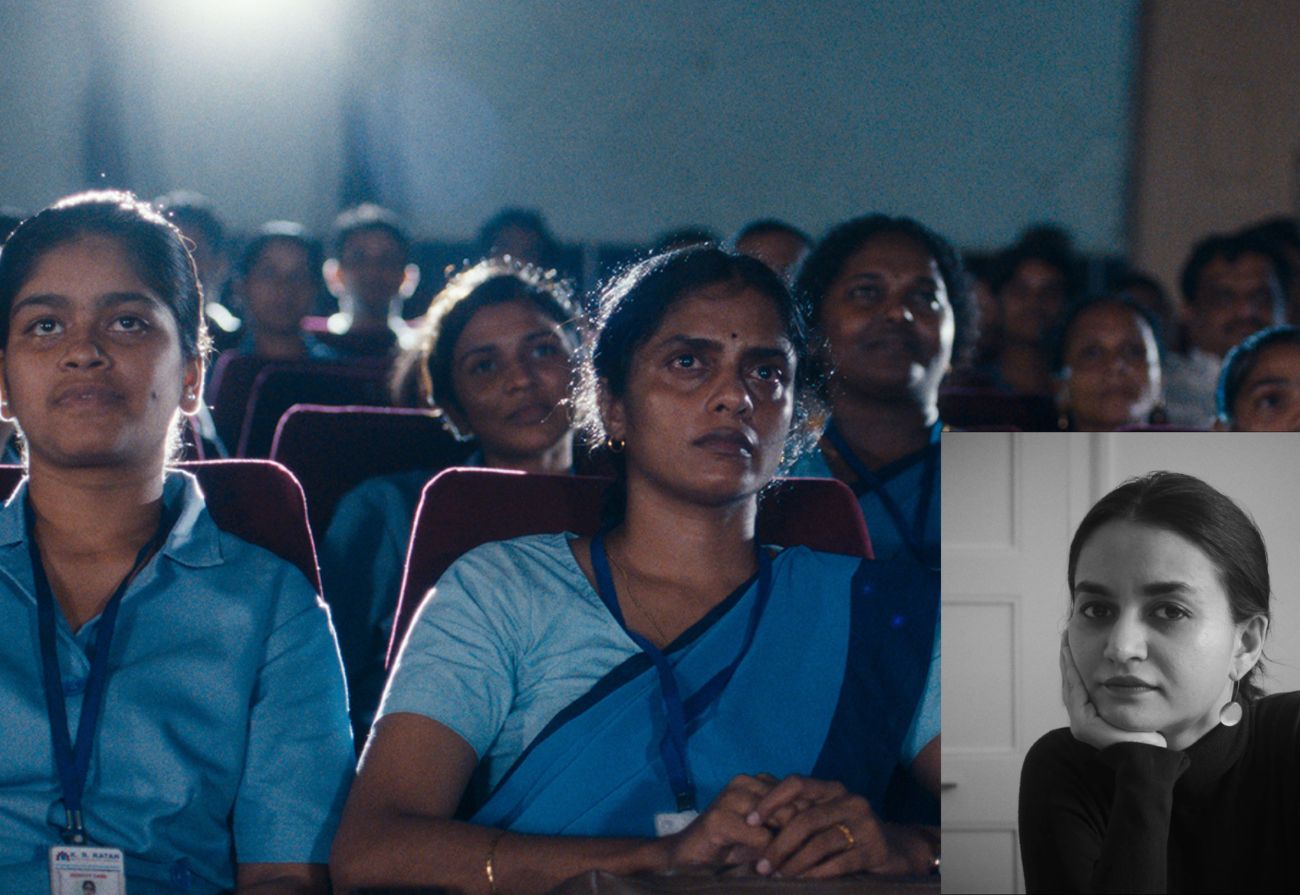
“It’s been a good year for us,” declares Payal Kapadia, the director of the beguiling Mumbai-set drama All We Imagine as Light. She’s talking about the way Indian cinema invaded the Cannes Film Festival earlier this year. While her film was the first Indian movie in Cannes’ main competition for thirty years, other films playing across the festival included the cop procedural Santosh and the curious marital tale Sister Midnight. “I was really happy, because there was one Indian film in almost every section, which is really cool,” says Kapadia.
Nonetheless, there was trepidation leading up to the big day. While Kapadia recalls plenty of actors and directors showing their support for the film, it was “super nerve-wracking” to see her film play out in the vast Palais. “You’re there in this giant cinema, and you’re really worried about how it’s going to be. So, when people like it, you just feel the relief that you didn’t get booed!”
Rather than being booed, the film went on to win the Grand Prix at the festival (effectively, the second place prize, behind Sean Baker’s Anora). It was, she says, “totally bizarre” that the film won. “I had no expectations, but then it was like winning the lottery. Because I think, more than anything else, it helps a lot for a film like this to get seen. I got a distributor in so many countries. I got a distributor in India. And that has been possible because of this prize.”
Cannes prize or not, All We Imagine as Light is a unique work of considerable artistic merit. Telling the story of Prabha (Kani Kusruti) and Anu (Divya Prabha), two nurses who share an apartment, it’s a compelling portrait of female friendship. While Prabha’s husband has long since left for Germany, Anu is embroiled in a secret relationship with a young Muslim man named Shiaz (Hridu Haroon). They’re very different women, from different generations, but forge an unexpected alliance as events unfold.
The daughter of famed video artist Nalini Malani, Kapadia took inspiration from her own life when she was in her final year of film school, and two family members were working in different hospitals. “I ended up spending a lot of time with some nurses there who became my friends. Also, it was at a time when it was the end of my film school, and I would be returning to Mumbai to work, along with a lot of my girlfriends who would also be moving there. So, I was thinking a lot about Mumbai and space for women and work and what that means.”

In particular, Kapadia was interested in women in India who strive to be financially independent. “That doesn’t really happen in our country, or, I think, in the subcontinent, because there are all these family ties that don’t allow you to make the choices you want to make so easily. I was trying to question these feminist ideas that we’ve been told from a western point of view, which don’t completely apply to our context. And through having women who are working, I felt that these questions could be explored.”
Shot by the talented DOP Ranabir Das, the plot is filtered through a dreamy depiction of Mumbai, inspired by Kapadia’s own time growing up there. “Mumbai, for me, is full of contradiction, as most big cities are. It’s a city where, for women who work, it’s a little bit easier to navigate than some other parts of India. It’s a very work-based city. A lot of people come from different parts of India to work in Mumbai to be able to earn better and have a career like this. So, that kind of opportunity exists, but it’s also a really expensive city and not easy to live in.”
Kapadia was particularly taken by the idea of Mumbai as a multilingual city. “Language can be something that is both alienating, but also a creator of private space, because you can suddenly start speaking a language that no one else understands, and then you can say something very sexual in a very public place. That was another aspect of the city I wanted to highlight. So, the film has three basic primary languages, which are Malayalam, Hindi and Marathi, but it has snatches of other languages also, like Bengali and Gujarati and Tamil.”
Kapadia also shows the city during monsoon season, when torrential rains lash down, lending the film a brooding quality. “The rain also means so many different things, because in the movies, in a lot of older Hindi movies, I grew up watching the rain. The monsoon season was supposedly very romantic, and you would have all these song sequences with the couples walking around in the rain. But actually, it’s a very difficult time for people who actually live in Mumbai, because the rain is so much that sometimes you can’t get to work. You have to take the train. And the train stops in the middle of nowhere because it’s flooded. You have to wade through water.”
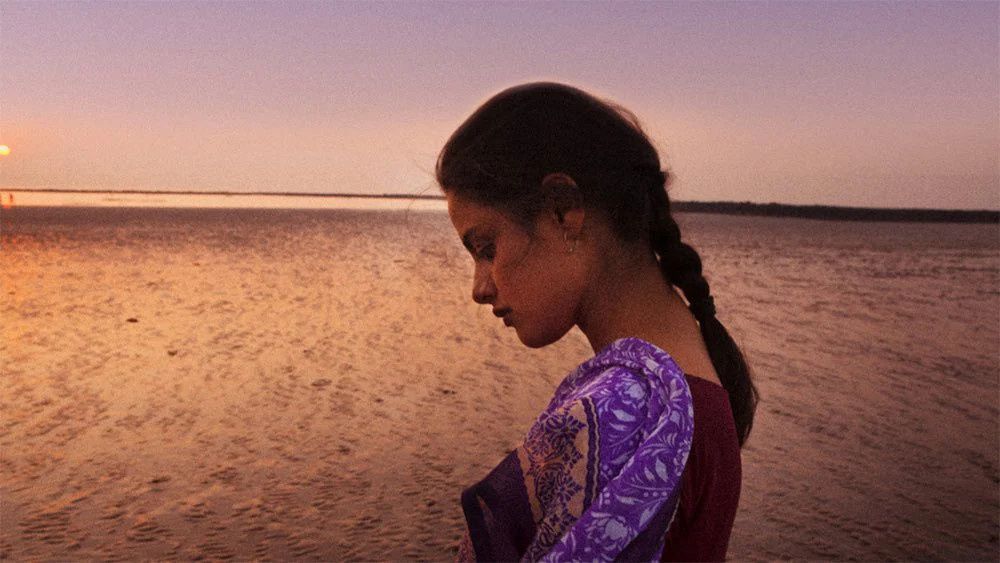
Fortunately, it’s not all gloomy clouds in All We Imagine as Light, especially when the final third of the film sees the characters head to the beach in the region of Ratnagiri. It’s a huge contrast to Mumbai, sending viewers’ spirits soaring. “There is a long history of association between this district and Mumbai city, because a lot of people who live in Ratnagiri come to work in Mumbai,” Kapadia adds. “The train goes exactly to the centre of the city and stops there from Ratnagiri… so there is a historical, geographical connection between these two places. I wanted to draw this line through the film.”
Having studied her craft at the Film and Television Institute of India, Kapadia graduated and then made her full-length debut with A Night of Knowing Nothing, which won the Golden Eye for Best Documentary when it played in Cannes in 2021. With this in mind, she feels that All We Imagine as Light boasts traits from her documentary background. “Oftentimes, we didn’t have permissions to shoot everywhere, or the money to get the permissions, because it’s not a very big budget film, and shooting in Mumbai is really expensive. Sometimes it was just me and my cinematographer going around with a DSLR camera.”
This guerrilla style approach worked wonders. “The good thing about working with [DOP] Ranabir is that he doesn’t get too obsessed with the quality of the image… it’s more about whether we get the feeling of the city without being intrusive. Now, in India, if you go with a big camera and put it up somewhere, everybody’s going to come and look at what you’re doing. So, you have to see where you find that balance. Do you want to have people stare at you? Or do you want to not have such a great image quality, but get a feeling of the city more effortlessly?” And ‘effortless’ is exactly how this film feels.
All We Imagine as Light is in cinemas on 26 December 2024
