



by Annette Basile
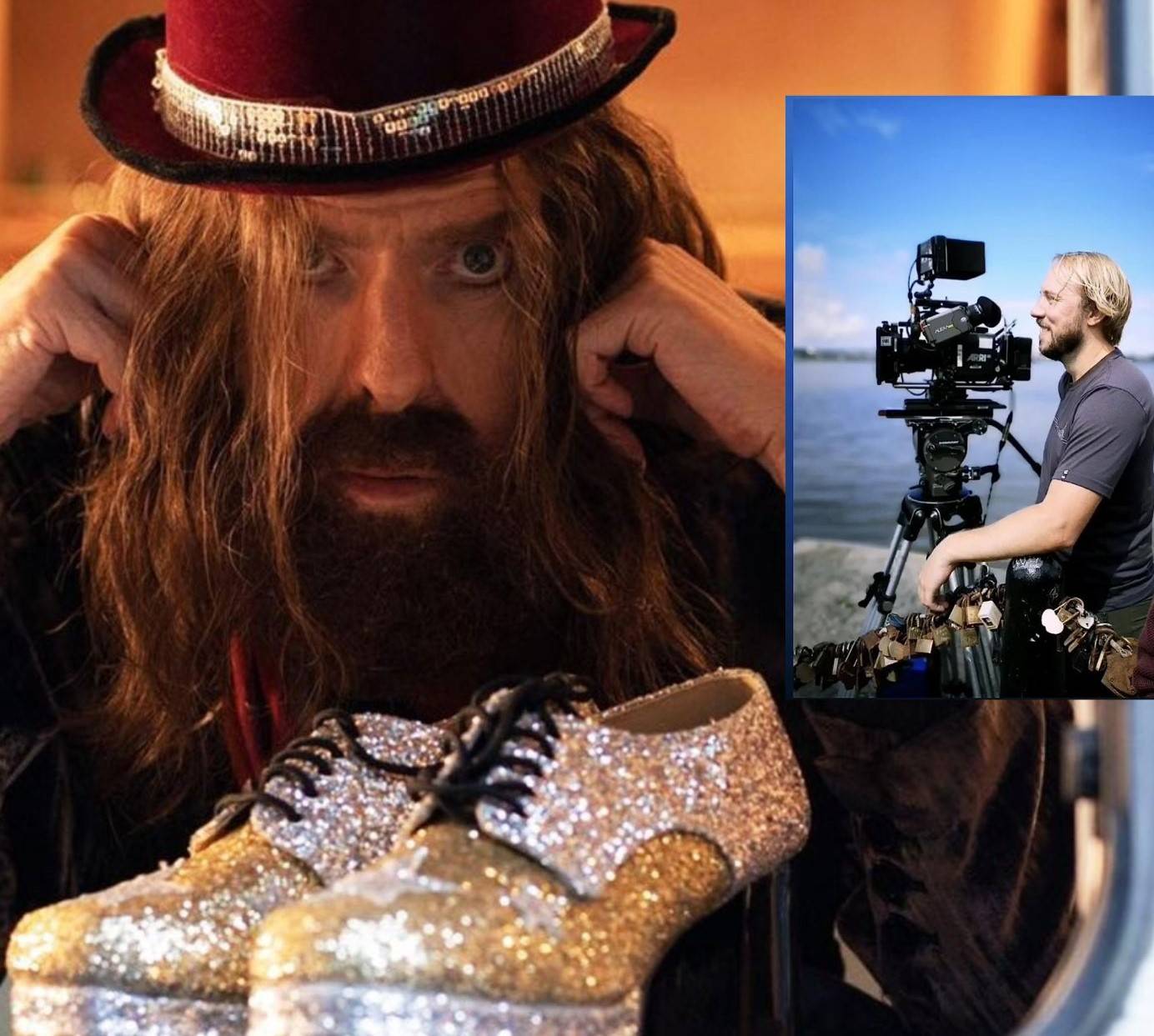
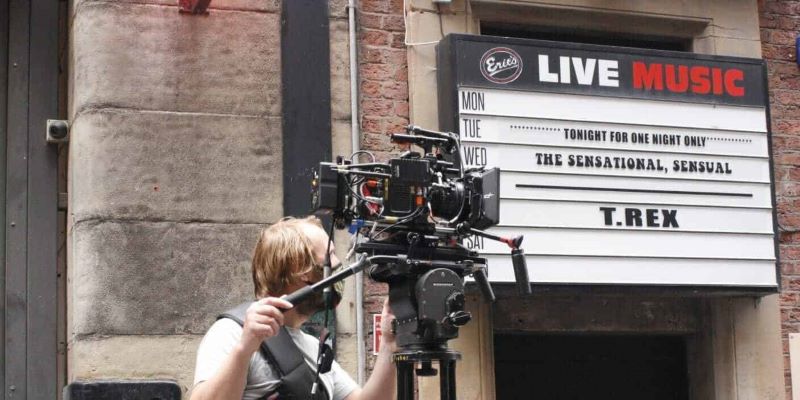
Budget limitations on an independent film can sometimes be a blessing in disguise, says cinematographer Richard Swingle. “It breeds ideas.” He’s referring to an early scene in feature film Bolan’s Shoes, where a group of kids from a Liverpool children’s home are watching glam rock proponents T. Rex – fronted by Marc Bolan – on stage in the 1970s.
Instead of seeing the kids in a big concert hall surrounded by a cast of thousands, the camera focuses on this particular group of kids in a beautifully framed scene. The lights go down, you sense the kids’ anticipation. The music explodes, and so do the cheers. We never see the band or the rest of the audience.
“I’m sure, early on, when they conceptualised the big T. Rex concert, that they were going to have stand-ins, a big stage and employ extras and all that stuff,” explains Swingle. But it wasn’t financially feasible, and writer/director Ian Puleston-Davies thought that there was a “kind of a beauty to just being with the kids and not seeing all of the other stuff.”
He was right. It’s a gorgeous scene that Swingle added some of his own creative touches to. “That was when I came in and said, ‘we can imitate the stage lighting, so you see the kids being lit up, and their faces lighting up, and standing and cheering when the music starts. We don’t have a need to cut to what’s happening’.”
Rolan Bolan – son of Marc – was involved in the film as an associate producer. The younger Bolan, who was only two years old when he lost his dad in a road accident in 1977, didn’t attend the film shoot and didn’t cross paths with Swingle. The cinematographer, however, has heard that the Bolan clan were happy with the finished product. “They were really keen on the way it was done,” says Swingle. “I think, also, because it’s not a biopic, it lives up to the perspective that kids would have growing up of T. Rex – it still feeds into that iconism and doesn’t break down the mystique.”
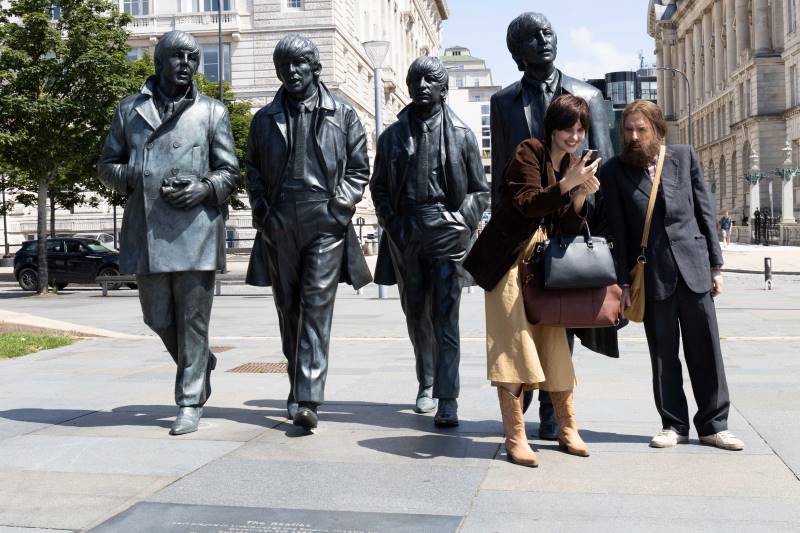
While part of Bolan’s Shoes is set in the ‘70s, much occurs in the present day. It follows a couple of the now-grown T. Rex fans (played by Leanne Best and Timothy Spall, above), who experienced tragedy and trauma right after the concert. The film delves into serious subject matter, but this well-plotted story is, ultimately, an uplifting cinema experience, powered by a fortified script, authentic performances, strong visuals and, of course, the glam T. Rex soundtrack.
Best and Spall are excellent in the film, and Swingle has nothing but praise for the thesps. Asked specifically about Spall, the cinematographer says: “Tim’s so cool. He’s such a good guy. He’d turn up on set – to the caravan [where his character lived], for example, after perhaps me, Ian and the production designer had set it up … He would come and collaborate on that, make decisions and remove certain things. He’d say, ‘That lamp wouldn’t be straight, it’d be tipped over’.”
Spall shines in the film’s dramatic climax, which takes place at night on the Welsh isle of Anglesey. Night shoots can be challenging. Asked about the location shoot and whether there’s any movie magic involved, Swingle explains that it was a combination of the real deal and creative trickery.
“We shot that scene on the summer solstice in the UK, and you only get a four-and-a-half hour window of night light. So, instead of having 10 hours of shooting time, you’ve suddenly got four hours, and even towards the end at 11pm, you’ve got fading blue light in the sky, and by 3 or 4 in the morning, it’s coming back up again. Just the amount of material we had to cover and obviously having actors with rain machines on the cliff top and all that sort of stuff, it was super challenging.
“So, we started figuring out if there were any portions early on in the sequence that we could shoot day for night, so you turn up and film around 4 in the afternoon as the light’s fading, and then with some clever grading work with our colourist Tom Cairns, we managed to make that look like the early hours of the evening.”
Did the filmmakers choose the toughest and longest day of the year to shoot their night scene? “No. It was a massive disadvantage, completely by coincidence due to the scheduling… It was just purely when the funding came in, probably Timothy Spall’s availability was a factor, same perhaps with Leanne Best. It just so happened that the way the schedule fitted that the time when we needed to be filming in darkness was the brightest time in the year [laughs]. So, not a choice, just a challenge. A fun one that I think we overcame.”
Swingle – who was the proverbial kid with a camera, “dragging” his mates to the park to get them to act out scenes for his own short films – is too young to have grown up with T. Rex, but he had already discovered them, thanks to his dad’s record collection. The cinematographer’s interest in music is a deep one – he’s an accomplished guitarist. It’s his “side hustle”, and when not working on a film, this Englishman from Brighton plays folk-influenced music in bars in his new adopted home on Queensland’s Sunshine Coast.
Swingle met his partner, a Queenslander, in the UK and moved with her across hemispheres. Although he’s now based here, he continues to work in the UK. His CV includes films such as Interview with a Hitman starring Luke Goss and the upcoming The Stork Club starring Joan Collins, Craig Fairbrass and Nigel Havers.
He’s been in Australia for roughly a year and considers the local film industry to be a friendly place. “The difference between the British and Australian industries is fascinating to me, actually, especially because it’s still early days for me here,” he explains. “The duality, if you like, is that the UK has a lot going on – a huge amount of productions by comparison – not that it’s sparse here, but there’s probably 10 times the amount of productions in the UK, but it also has 20 times the amount of people,” he laughs. “So, although there’s a lot going on in the UK, sometimes it can feel a bit like forbidden fruit that you just can’t quite get access to. Australia, by contrast, to me so far, has been super welcoming. It’s easy to get meetings with people, much easier to have initial conversations. It’s a much more open industry.”
