



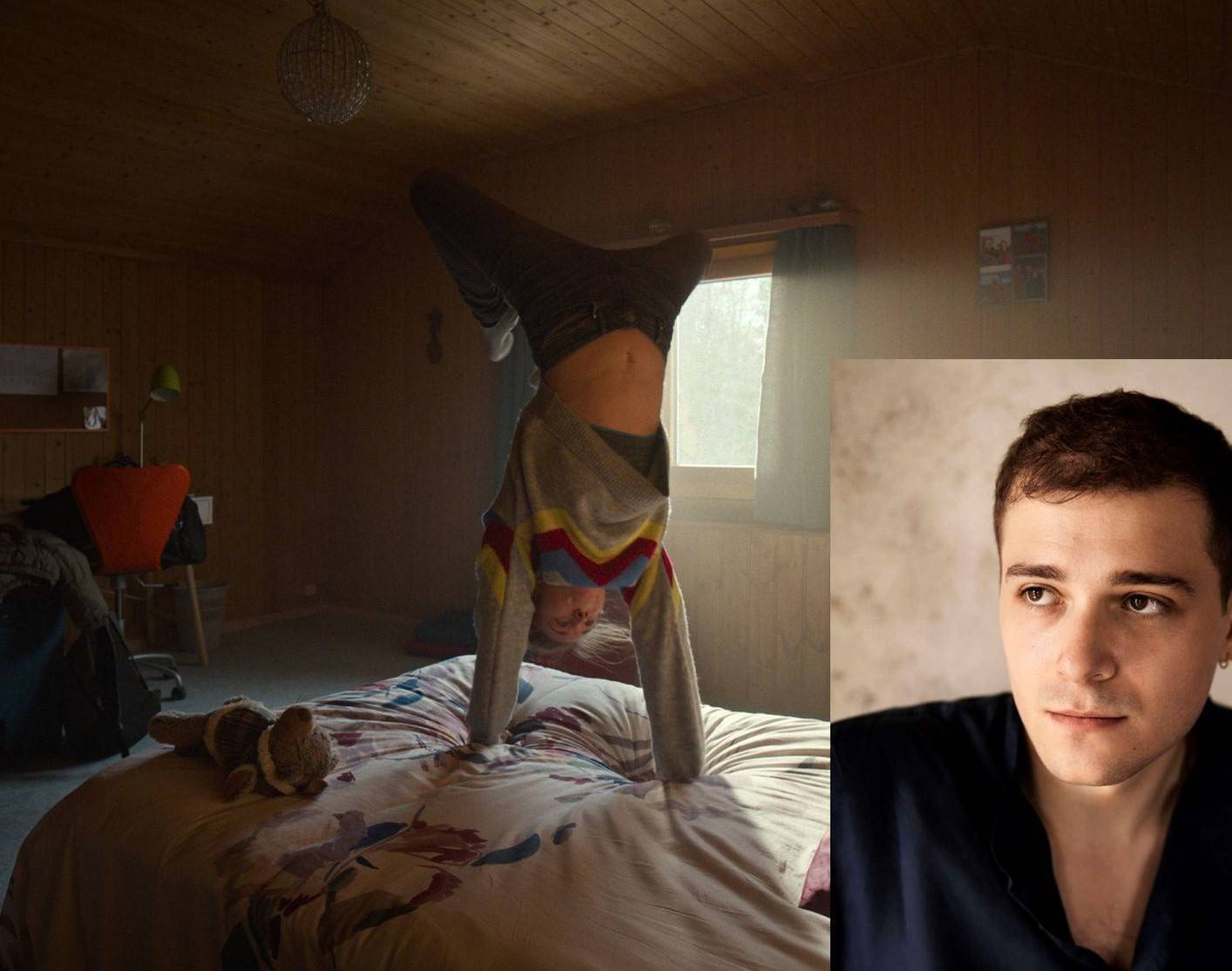
by Dov Kornits
“It’s not only about meaning, it’s also about its music,” says filmmaker Elie Grappe, who studied music before transitioning to cinema, with his debut feature Olga premiering in competition at Cannes. The music he refers to is the orchestra of different languages heard in the film.
Olga features characters speaking in Ukrainian, Russian, French, English, among other languages. The film follows the plight of the titular teenage gymnast (played by actual Ukrainian top level gymnast Anastasiia Budiashkina). It’s 2013 and she must leave Ukraine for Switzerland due to the danger of her mother’s job as a journalist during the Euromaidan protests against Russian interference.
Made well before Russia’s recent war against Ukraine, Olga proves prophetic in its narrative on a number of fronts, none more affecting than its telling of Olga’s inner conflict as a refugee who leaves her mother and friends behind in a conflict zone.
“I directed some short films about classical music and classical dance, which are universes that I know a bit from my childhood. And just after film school, I worked on a musical documentary where the main protagonist was a Ukrainian violinist who told me this story on how she arrived from Ukraine to Switzerland just before the beginning of the revolution in order to study violin. The way she told me her story and the way she was moved by telling this story, made me want to do this film.
“For me, it was a way to cross the subjects that I was interested in and to question too. First, this very passionate character, obsessional about what she does. But also, that she’s confronted suddenly with something wider and a situation way above her own. It was a way to question how you coincide your own individual desire with the course of history.”
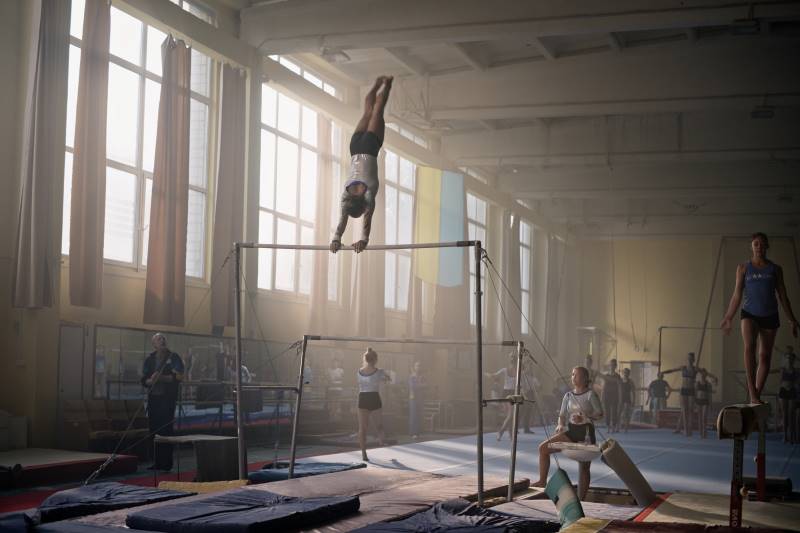
And where did gymnastics – depicted so authentically in the film – come in? “I had to learn a lot about Ukraine. I had to study a lot about this situation that I didn’t know. I wanted to start from zero with the discipline of my character. After a lot of research about Ukraine, I came up with gymnastics, which is very cinematic. It’s full of sound, movement, just like a revolution. It would allow me to make a link between the two and to show how the revolution was far away from where she is, but is interfering in her life.
“I wanted to talk about a young person who has a very, very strong passion. I wanted to picture a character, which was close to the people I had in music conservatory with me when I was young, so passionate that it was becoming an obsession and sometimes anger. When we are young, we are capable of this fire. So, it was very necessary to choose someone who was corresponding to this. And I was sure that I had to work with someone who was not going to do what I say, someone who was going to confront me a lot.
“Because I’m a guy, I’m white, I’m cisgender. And I know that in the history of cinema, there is this thing that one of my questions as a filmmaker is always going to be to choose people who are not doing what I say, who are not letting me dominate completely, the female. And from the writing, I knew that I wanted this space for Anastasiia to work with her own words when she speaks Ukrainian and Russian, and to have her own reactions and emotions. This was a whole process, it was a lot of work with her. But I’m very happy, because she brings what she is. She did things her way, and she delivers a character way above what I’m capable to write. I think that this passion she has is real, she’s really someone very strong.”
The end result is that Olga is as authentic as written drama is going to get, with the gymnastics set pieces – performed by the actual cast – striking a chord both emotional and physical; you’ve never seen female athletes presented like this on screen. What’s even better is that Elie Grappe managed to get top level performances out of his mostly non-actor cast.
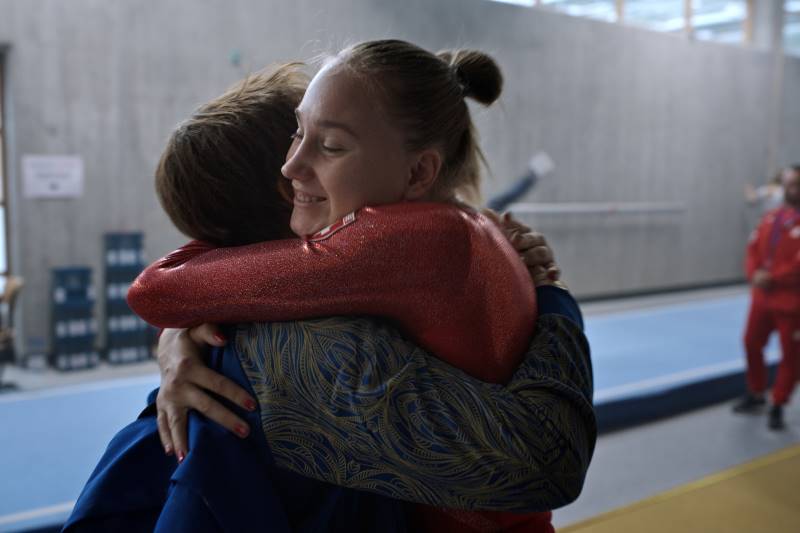
“It’s actually a process of rehearsals, but I realised that when I rehearse, it is rehearsals for me, because it’s rehearsals based on what is working for an actor and what is not. And for me, there is not one actor direction. There is one actress direction, per actress, per sequence. So I had to really understand the way they work, each of them differently, and to not to apply one method to all of them. It was a process to make them super soft towards what is cinema, what is said to camera, the relationship to other actors. But it was also making me soft towards what I learned at school, which was great, but not sufficient for this project, because I had to learn how much everybody is responding differently to this exercise of being an actor.”
Could he have envisioned the Russian invasion of Ukraine and the refugee crisis that has wrought, when writing the film?
“To this scale? Of course, no, I couldn’t predict any of that. But I have realised how much, when I was working on the script and then doing the film, and even the first screenings, the situation of Ukraine was not so known as it is today. For example, the fact that there was already a war since 2014 with the invasion of Crimea and the war in Donbas, there was already an aggression from Russia on Ukraine. And this was not very articulated for people. I realised how much the film was inspiring viewers to inform themselves on the situation.
“And after, of course, when the invasion happened, now more than one year ago, the approach to the situation in Ukraine changed completely. Before, in France, almost nobody was talking about Ukraine. And after the invasion of Crimea and the war in Donbas, every week we had articles about Ukraine. But it was still somehow as if we felt that it was far away from us. But also, concerning the question of Europe and deeper questions of what we are as Europeans… Is this a question of identity or is just a political question of gathering together? I think those questions are now completely worldwide.”
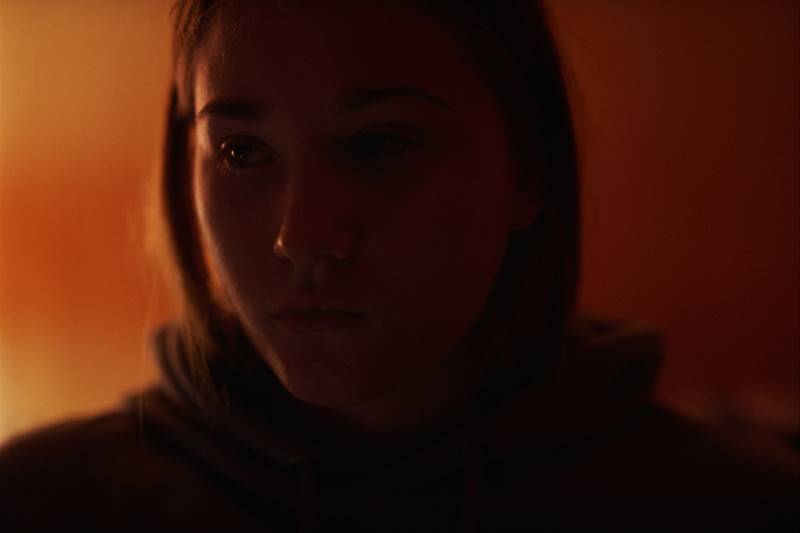
And in a case of life imitating art, Elie Grappe’s leading lady Anastasiia Budiashkina is now a refugee in Switzerland. “Yes, it happened because of the invasion one year ago, the aggression of Russia against Ukraine. Anastasiia was in Kharkiv. And so, after one month, there was many people from the film team who took care of this, but we organised that she can go away to Poland and then to Switzerland. And she was welcomed by so many great people in solidarity with her and the Ukrainian people.
“Of course, a lot of the rest of the team is still in Ukraine. For example, Roman Klympush, who is the Ukrainian line producer on the film, is now reporting for New York Times. The life of the people changed completely. And here in Switzerland, Anastasiia, she’s speaking fluent French, she’s working on different things, but mainly she’s a coach for children in a circus. She also does some coaching for artistic gymnastics.”
