


by Anthony Frajman
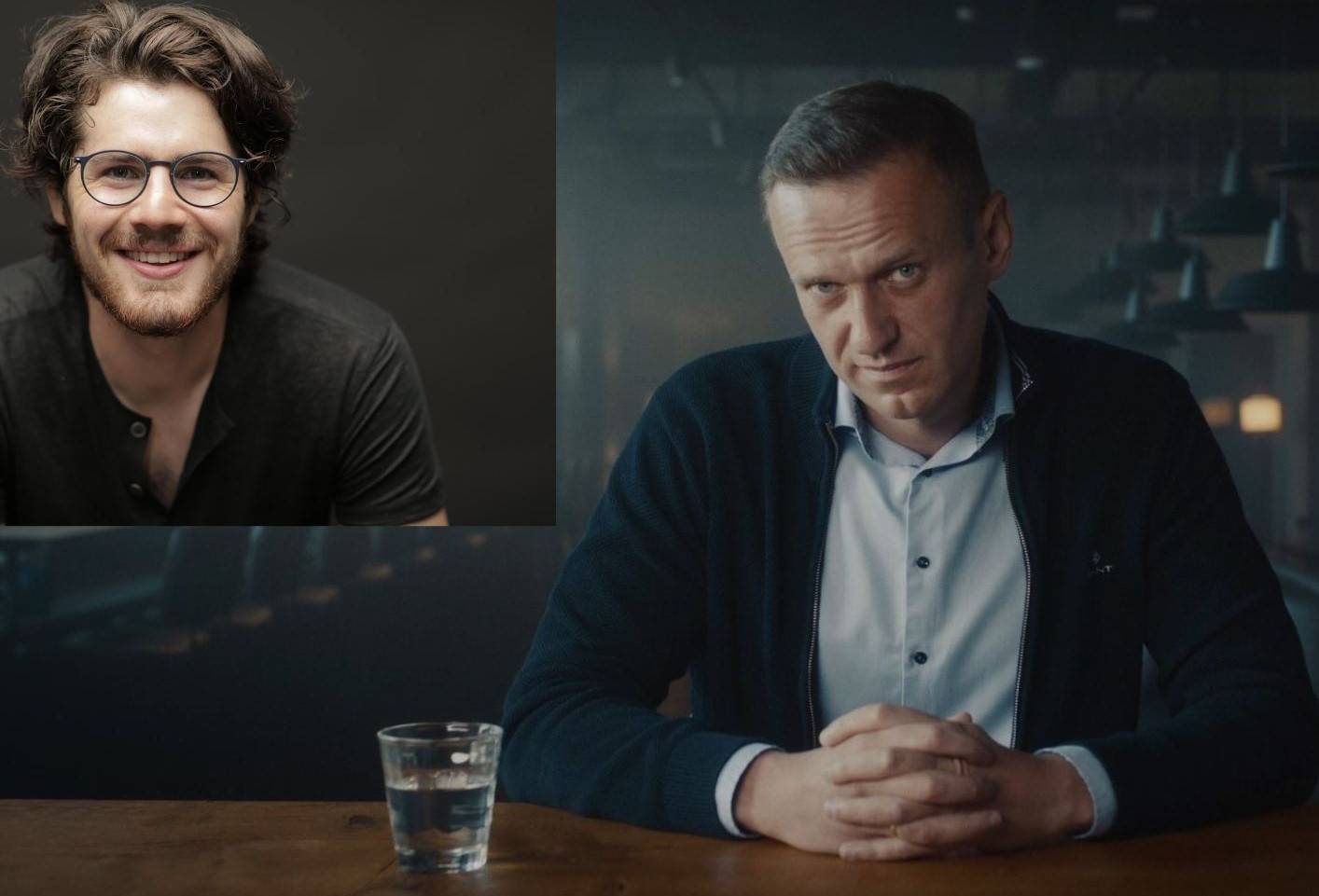
One of the most talked-about documentaries of 2022, Daniel Roher’s Navalny was made in secrecy, offering a rarely-seen, up-close look at the Russian opposition leader, following the assassination attempt made on his life.
Released to global acclaim, and sparking conversation since its release at Sundance, the film recently won the Academy Award for Best Documentary.
Roher spoke to FilmInk at AIDC 2023.
You’ve been to places like Uganda to make a documentary [Ghosts of Our Forest]. With Navalny, you were in a country you knew little about. How confronting was that when you started this journey?
“I didn’t really feel like a fish out of water. I figured out that I should take whatever I thought was going to be a liability and turn it into an asset. One of the things that I’ve been insecure about was my lack of knowledge and experience with Russia. I’m not an expert on politics or anything. But then I thought that maybe there’s a way that I can frame my outsider-ness as an advantage and having a fresh perspective on things. I think that’s how Navalny ended up peeling. It ended up working out for us, I think, in a funny roundabout way.”
Have you been pleased with the reception to the film?
“Well, it’s an overwhelming response to my work. And to the efforts of my entire team. I don’t forget that making a film like this is a collective exercise. As the director of the film, I often embody the film team, I get to be honoured by being the representative of dozens and dozens of very talented artists and storytellers and filmmakers. And chief among them are the film’s producers, the film’s editors. Reaching this mountaintop of an Academy Award is beyond exciting, and very meaningful. But again, it’s less about our personal careers and what it’s going to mean for me and more about the political mission, which is to keep Navalny’s name in the global consciousness to make sure that he has not been forgotten, to try and do whatever advocacy we can do to appeal to influential people and decision makers to ultimately dissuade the regime from murder.
“Right now, Navalny is languishing in solitary confinement in a gulag. He is in a perilous place. He can be killed at any point. And I believe that there is a correlation between his notoriety and his existence within the global consciousness and his potential survival. That’s why I really want as many people in the world to see the film. That’s why the Oscar and all of these things are so meaningful, because it ensures that more people will see the movie. That is my number one prerogative.
“I think that if you spend enough time around Navalny like I did, his worldview is oriented towards optimism. I think his natural optimism rubs off on myself and my colleagues. It’s a very, very dark, scary, sinister world, and that’s particularly evident now with this invasion in Ukraine. I think what Navalny would ask of his supporters, and would ask of all of us, is to remain optimistic and hopeful, because it’s only when people give up that they become apathetic, which is detrimental. So, I am optimistic. I’m cautiously optimistic. I’m not foolish. I’m trying to be realistic, but I think that it’s very easy to reconcile realism with optimism.”
You had a very close relationship with Alexei Navalny. How important was that and how did that come about?
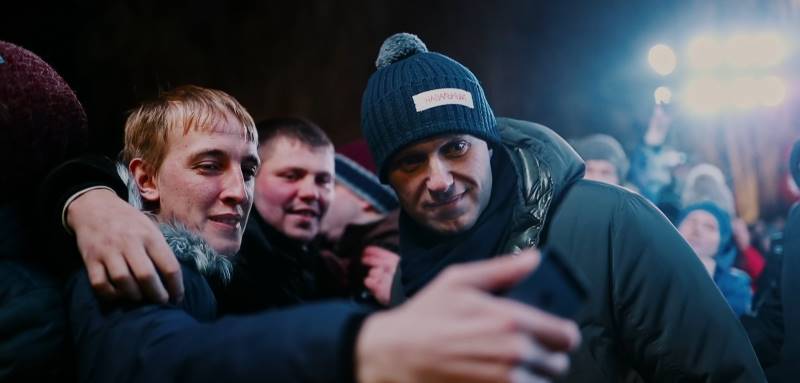
“I think that the natural connection we had, came from very early on in our working relationship, and I believe that’s why the film works. Navalny is a very charismatic, funny guy. His sense of humour is one of his secret weapons, or not so secret weapons. And we had a very similar sense of humour. So, in no time he was taking the piss out of me and giving me a hard time. And, I was dishing it right back to him. In addition to that, we would go toe-to-toe arguing about politics and public policy, and whatever news was dominating the headlines on any particular day. I think that we developed a very healthy respect and admiration for one another that was predicated on some of those values.”
Your last documentary Once Were Brothers was about The Band. Has making Navalny made you more of a political filmmaker?
“I wouldn’t describe myself as a political filmmaker. I would just describe myself as a political human being. I’ve always been very passionate about politics. I dream of one day running for office, running for Parliament back home in Canada. I think that that organic interest of mine and that passion of mine, public policy and democracy and governing, certainly drove Navalny and the interest I had in making that film.”
How much of a leap was it to go from The Band to this huge political firestorm?
“Well, I guess in certain ways, it wasn’t such a big leap. It was just making another film and telling a different type of story. In other ways it was a quantum leap. It was a complete re-imagining of what I was capable of as a filmmaker and as a director. I learned more making this film than anything I’d ever done before. I’m very grateful for that. One of the films I really love this year was Brett Morgen’s Moonage Daydream. And one of the things about that movie that I really took away was how David Bowie was constantly reinventing himself. I think that working on films that are so wide and varied in terms of subject matter is very meaningful, and keeps me inspired and keeps me on my creative and intellectual filmmaking toes in a way. This film just speaks to that notion.”
In the film, there’s a moment where Navalny makes the phone call to the Russian operatives. How do you reflect on that now?
“It was one of the most stunning moments of my life. I describe it as the most incredible thing I would ever film in my life. It’s one of these moments where you are at the right place, the right time, and you get to bear witness to history. It’s a real honour and privilege. This is why we make documentary films, to achieve things like that scene. I have a lot of gratitude because of just how extraordinary it was to be in the room for that and to get to film that, and the impact it had on history and on the life of Konstantin, the guy who was on the phone, and the life of Christo Grozev.”
You were initially going to make a slightly different film, without Navalny. What was that process like when you slowly had to shift gears?
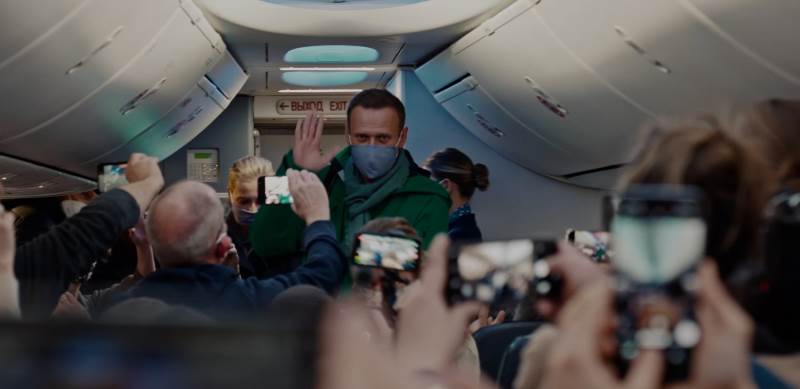
“So often, making documentaries, it’s the art of being in the right place at the right time. That’s something I say a lot because it really speaks to how this film came together, when we were working on a totally different film. What I really try and do when I’m making documentaries is to be flexible. You have to be prepared to switch gears in a moment’s notice. You think your film’s going one way, but then something crazy happens, and all of a sudden, you’re making a totally different film. Successful documentarians are able to be flexible. We were working on a film that took place in Kiev. We were in Ukraine. We were encouraged to leave the country. I was wallowing in doubt and unsure of what I was going to do next. And lo and behold, this magnificent story fell into our laps in a way, and we chased it. I convinced Navalny why we should make a documentary. I got him enthusiastic. And, the rest was history. I think it’s just about having flexibility. That’s a really important value and asset for a documentarian.”
Bulgarian journalist Christo Grozev was the one that started you on the project and led you to Navalny. How important was he?
“Christo’s vital. Christo’s pivotal, there’s nothing, there’s no film, there’s no Navalny, there’s no anything without Christo. Christo is a man who is a remarkable, unique genius. And getting to work with him was a very big honour. Christo’s someone that when you spend time around him, you feel excited. You feel like you’re in the middle of something. You feel like this guy has impact on history, and he embodies this notion that one individual can impact the world in a very meaningful way. Christo’s life is in great danger. Because of his investigative work, he has come under the ire of the Russian government. And that’s a very challenging dichotomy to reconcile with.”
Navalny is in solitary confinement. Do you know how his family is doing?
“I think everyone’s doing as well as you would imagine them to be doing. Everyone’s doing as well as they can in this very difficult circumstance. It’s hard. They miss their father, they miss their husband, they miss their guy. And I understand that. They’ve taken great solace in getting to travel with this film and seeing Alexei up on the big screen, not as he is now, emaciated and small and unwell. I think the reception that the film’s received is very meaningful for them. And they really have been touched by how the world has embraced this movie. And in turn, their Alexei.”
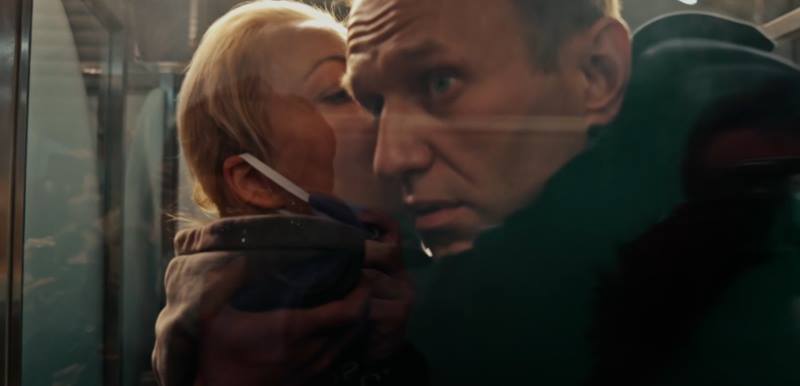
Spending time with Alexei, how did your perception of him change?
“Well, to know Alexei is to love Alexei. Trying to make a discerning, critical film of him, he is dangerously likable and charismatic. I had to maintain a healthy degree of scepticism as we were making the movie. To his credit, there was nothing that I couldn’t ask him about. He was really a good sport through and through. He really enjoyed being a documentary subject.
“For the filmmakers who read this, I like to talk about Navalny, the film subject. He was really interested in being a documentary subject, and learning how the cameras worked and learning how the filmmaking process was. That’s something that comes through in the film. The reason why we had such amazing access is because of Navalny. It’s a once in a lifetime subject. To work with someone who is so fascinated by the process, for me was very compelling. That quality that he brought to the table and his enthusiasm comes through in every frame of the movie.”
What was the post-production process like?
“Well, I think the biggest challenge for the post-production of this film was the fact that we had to do the post-production in complete secrecy. There are films whereby you have to sign an NDA, but then you’ll lean into your friend and say, ‘okay, don’t tell anybody, but this is what the film is’. You know, sort of like a wink, wink, nudge, nudge. This was not one of those films. This was created, shot, edited under a veil of complete secrecy. And we had to do that because our adversaries in this was nothing less than the government of Russia and the vast resources of an antagonistic angry nation state. That posed many challenges. All of our information, all of our data was completely encrypted. We didn’t communicate over email. We only communicated over encrypted messaging services like Signal. And we just had to be very, very careful about who we collaborated with, who knew about the project, who I told about the project. My mum and dad didn’t even know what I was working on. And we had to take all these security concerns very, very carefully, because we understood who would want to come after us, that they knew what we were doing.”
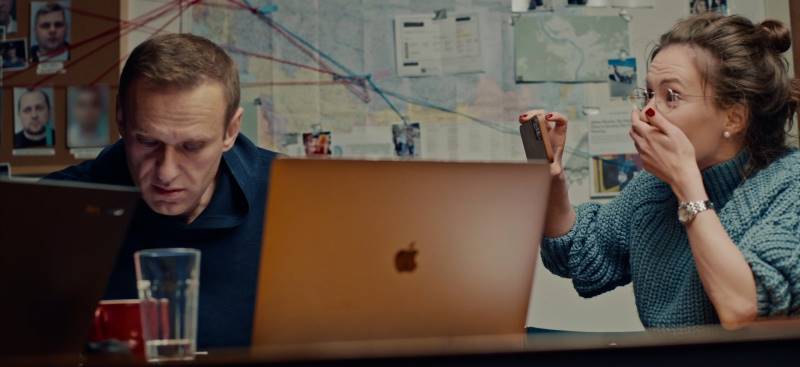
What’s the biggest thing that you’ve learned from making the film?
“I think politically, the most important thing I’ve learned making this film and getting to spend time with Alexei Navalny is that we cannot overestimate how valuable dialogue is in a democracy. In order for a functional democracy to work, we have to have conversations with people we disagree with, people we have nothing in common with. I think that value is the cornerstone of Navalny’s political outlook – the value of conversation and dialogue. And it’s especially true now as we exist in echo chambers. We only engage with people who have a similar worldview, similar beliefs. Navalny would say that is detrimental and dangerous for democracy.
“And then the second thing has to do with the filmmaking of it all. I think the biggest takeaway I had from making this film, is understanding the value of getting out of your own way as a director and really leaning into your collaborators and understanding that your idea might not always be the best idea.
“I work with two extraordinary editors on this film, Langdon Page and Maya Daisy Hawke. And both Maya and Langdon brought so many ideas to the table that I would have never thought of. You have to have the wherewithal and the strength of character to get out of your own way, and to listen to ideas that feel at first abrasive or not the right move or not the right idea. And that was quite revelatory for me, and I think that skill really made the movie better.”
Navalny is currently streaming on SBS on Demand.
